

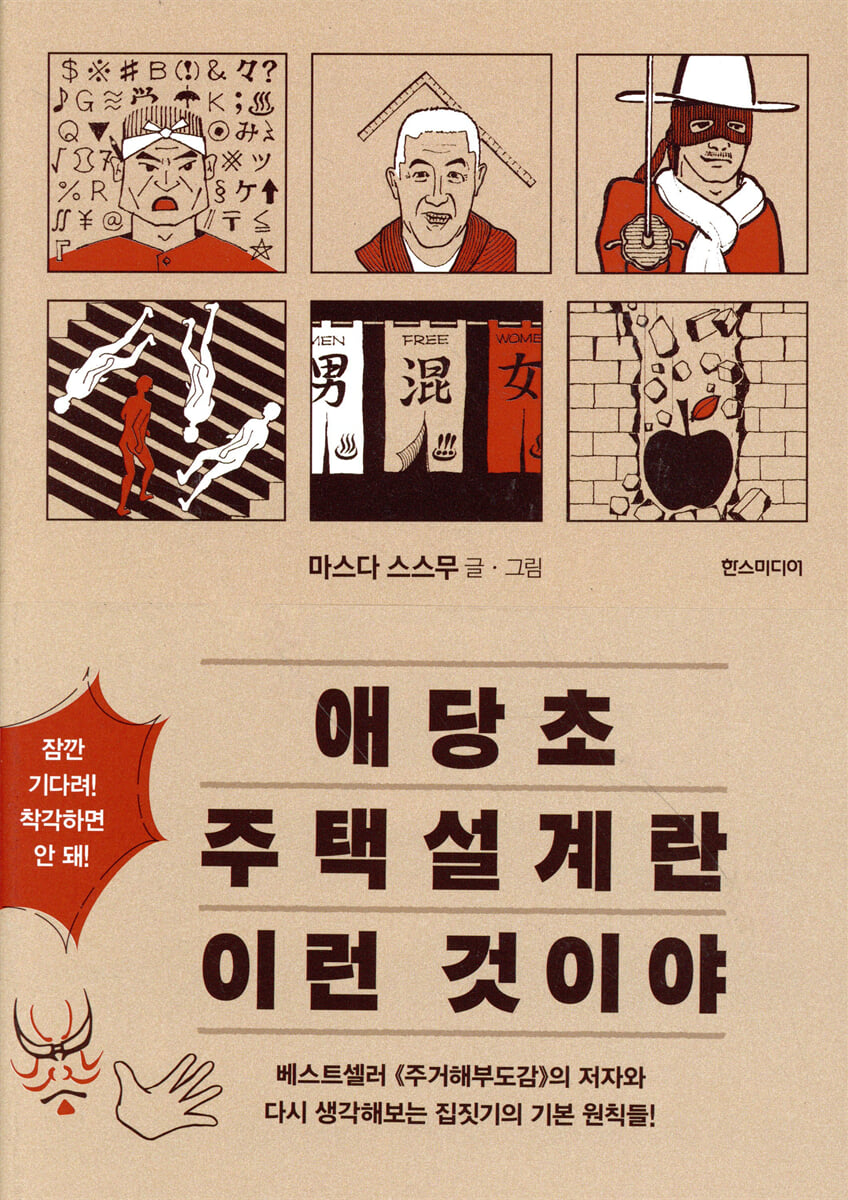
This is what house design is all about
 |
Description
Book Introduction
In today's world, overflowing with techniques and building materials, how many truly understand the fundamentals of design? Revisit the fundamental principles of home building with the author of the best-selling "Housing Anatomy Guide"! A home design lecture by Susumu Masuda, filled with humor and hand-drawn illustrations, and a passion for the field that no one else can offer.
“Housing design is the work of dealing with buildings like houses, but it is also the work of thinking about the space where people spend their entire lives.
In other words, housing design is the work of thinking deeply about people's minds and lives through architecture. "_From the preface
“Housing design is the work of dealing with buildings like houses, but it is also the work of thinking about the space where people spend their entire lives.
In other words, housing design is the work of thinking deeply about people's minds and lives through architecture. "_From the preface
- You can preview some of the book's contents.
Preview
index
preface
Chapter 1 Drawings and Sites
Basic 1: A building with dignity must have straight horizontal, vertical, and right angles.
Basic 2 There is no perfect unit of measurement
Basic 3: For Whom Are Drawings Present? Basics: Direction and Layout
Basic 4: For Whom Are Drawings Present? Application: The Elevation of Drawing
Let's start by memorizing the basic 5 terms. A dictionary of construction site terms.
The basic 6 'Zorro' is a formidable opponent.
Basic 7 Construction Site Delivery Manual? Everything in the world is easy!
Let's memorize at least these 8 basic construction site terms: People and customs
Column 1 Manual · Automatic · Automatic Control
Chapter 2: The Core of Design
Basic 9: Close the swing door! Open the sliding door!
The basic 10 windows are based on the Miseogi
Basic 11 Do as you please
Dimensions and equations of the basic 12 steps
Basic 13 Long ago, cooking and eating were the same thing.
Exclusivity and sharing of water usage in basic 14 areas
Basic 15: Rainproofing and Waterproofing Are Different
16 Basic Items Must Survive
Basic 17: 'Organizing = Storing' is not the same thing.
What is a basic 18 house design diagram?
Column 2: Initial Costs, Operating Costs, and the Law of Increasing Entropy
Chapter 3: Air conditioning and structure
Basic 19 The Strangeness of Vaporization
The basic 20-room air conditioner is a Mandam Combi.
Basic 21 Insulation is geothermal (遲熱) and laxative (緩熱)
Basic 22 Insulation, Airtightness, Ventilation, and Aeration 4-Way Diagram
Basic 23 'Heavy = Strong' is not true
The history of architecture has been a history of resistance to gravity.
Reviews
Chapter 1 Drawings and Sites
Basic 1: A building with dignity must have straight horizontal, vertical, and right angles.
Basic 2 There is no perfect unit of measurement
Basic 3: For Whom Are Drawings Present? Basics: Direction and Layout
Basic 4: For Whom Are Drawings Present? Application: The Elevation of Drawing
Let's start by memorizing the basic 5 terms. A dictionary of construction site terms.
The basic 6 'Zorro' is a formidable opponent.
Basic 7 Construction Site Delivery Manual? Everything in the world is easy!
Let's memorize at least these 8 basic construction site terms: People and customs
Column 1 Manual · Automatic · Automatic Control
Chapter 2: The Core of Design
Basic 9: Close the swing door! Open the sliding door!
The basic 10 windows are based on the Miseogi
Basic 11 Do as you please
Dimensions and equations of the basic 12 steps
Basic 13 Long ago, cooking and eating were the same thing.
Exclusivity and sharing of water usage in basic 14 areas
Basic 15: Rainproofing and Waterproofing Are Different
16 Basic Items Must Survive
Basic 17: 'Organizing = Storing' is not the same thing.
What is a basic 18 house design diagram?
Column 2: Initial Costs, Operating Costs, and the Law of Increasing Entropy
Chapter 3: Air conditioning and structure
Basic 19 The Strangeness of Vaporization
The basic 20-room air conditioner is a Mandam Combi.
Basic 21 Insulation is geothermal (遲熱) and laxative (緩熱)
Basic 22 Insulation, Airtightness, Ventilation, and Aeration 4-Way Diagram
Basic 23 'Heavy = Strong' is not true
The history of architecture has been a history of resistance to gravity.
Reviews
Detailed image

Into the book
We draw a lot of drawings.
Since the size cannot be determined from the picture alone, dimensions are provided.
A reference line is also drawn to indicate where the dimensions are pointing.
When the four elements of a drawing, a baseline, dimensions, and scale are in place, a 'drawing' is finally elevated to a 'drawing'.
When redrawing a completed, messy drawing to clean it up, the order is reversed: first, set the scale, then draw the reference lines, then draw on top of them, and finally, enter the dimensions.
The resulting drawing is a very complex picture.
We tend to fall into the occupational disease of feeling complacent the more complex something is, but the moment the client sees the drawing, he will be scared and back away.
Dimensions are particularly problematic.
For many more people than we might imagine, the mere sight of numbers makes them dizzy.
The fact that the units of measurement are millimeters also adds fuel to the fire.
---p.27 「Basic 4.
For Whom Do Drawings Exist - Application: The Elevation of Drawings"
The blueprint is a plan drawing.
And we must abandon the idea that everything will go as planned.
The fact that the refrigerator fits perfectly in the drawing is a story that first passes the premise that the refrigerator can be transported there.
The hilarious farce that ensued when the refrigerator was brought in symbolizes an important issue that must be considered in the design and supervision of a home.
For example, among the typical items brought into construction sites is built-in furniture (custom furniture).
Although it is called built-in, it is not manufactured from scratch on site. Most of the time, it is made in a workshop and then brought in.
A bookshelf that fills the room from floor to ceiling cannot be kept upright even if it is brought into the room lying down.
For built-in furniture, it is also a good idea to pay attention to the length.
The design drawings allow for as long as space allows, but materials longer than 8 characters (2,400 millimeters) must be special ordered.
---p.41 「Basic 7.
From the Construction Site Delivery Manual - Take Your Time in the World!
In today's household, the assumption that cooked food is eaten immediately is breaking down.
In recent years, it has become rare for the entire family to eat together.
The reality is that people cook enough food for everyone to eat at once and then bring it to each family member at a time when they can eat, or they eat it themselves.
Modern devices like refrigerators, preservatives, wraps, foil, and microwaves have made this type of eating possible.
Is there no need for a separate dining space in modern times? Or should we faithfully provide it for family mealtimes, which have become even more precious due to fewer opportunities? This is, of course, a decision you and the building owner must make.
However, even if you usually cook alone in the island kitchen and eat alone, if you think about the joy of inviting close friends over and throwing a party on the weekend, a full dining space may not necessarily be a waste of space.
---p.88 「Basic 13.
Long ago, cooking and eating were the same thing.
It is advisable to take out and organize items that you use on a regular basis.
But don't be mistaken, I'm not saying it's okay to be messy.
Arrange them neatly and put them on standby.
What you need to pay attention to at this time is the sorting method.
It is meaningless to command someone to “stand there.”
Anyway, after a while, it starts to get messy and messy.
So what should we do? The answer is to hang it up.
Hanging is also a mechanically stable fixation method.
If you hang it, things won't be able to escape.
How can you "store" items so they're out of sight and easily accessible when needed? There are three secrets to utilizing your storage space to build a positive relationship with your belongings.
① Avoid installing doors if possible, ② However, do not allow people to see inside, ③ Make it so that people cannot avoid entering the storage space on a daily basis.
---p.109 「Basic 17.
From "Organizing = Not Storing"
You probably already know that a set of indoor and outdoor units connected by a hose is called an air conditioner.
What flows through the air conditioner hose is ‘refrigerant.’
Like water, refrigerants also absorb heat in the form of latent heat through the change of state from gas to liquid (see page 128).
Refrigerants use this property to diligently transport heat by vaporizing and liquefying between indoor and outdoor units.
There are several types of refrigerants, selected for their ability to evaporate at a lower temperature than water and for their ability to make the device compact.
The combination of an evaporator and a compressor vaporizes and liquefies the refrigerant.
It might be easier to understand if you compare it to a comedy duo.
The comedy duo consists of a boke (the one who makes foolish remarks) and a tsukkomi (the one who harasses the boke). The compressor, which plays the role of the tsukkomi, heats up the boke and makes the atmosphere hot, and the evaporator, which plays the role of the boke, gently cools it down.
---p.131 「Basic 20.
From "Room air conditioning is a comedy combo"
Watching what was once a "home" while leading the site transform into a "sanctuary" over time is a joy that cannot be exchanged for anything else for those of us involved in the design.
This house has become a 'sanctuary' after 20 years of maintenance and repairs, as well as numerous touches to furniture and equipment.
The living room wall storage cabinet was designed during the design phase, but it was built later because the couple who own the house requested, “We want to make it after we have a specific idea of how much storage space we will need after we move in.”
Additionally, the bedroom headboard and wardrobe were made to fit the location after confirming the size and storage capacity with the owner couple after they started living there.
After completing the storage space around the living room and bedroom, the following year I received requests for consultation on smaller projects such as building a sofa and remodeling a long-used sofa table.
---p.167 「63.
From “Until Home Turns into a Sanctuary”
What exactly is "building strength"? Strength against what? Earthquake, lightning, fire, father! Yes! Strength against shaking, shock, fire, and noise.
We need to think about this with a clear distinction.
First, let's look at the soundproofing performance.
Whether it's external noise or internal commotion, it travels inside and out through the building's roof and walls.
Resistance to sound is simply affected by weight.
This is called the 'mass law'.
When comparing reinforced concrete, steel frame, and wood, reinforced concrete wins.
However, in the case of actual buildings, it is not such a simple problem because openings also have an effect.
Next, let's look at fire resistance performance.
Whether a building is fire-resistant or not depends on the non-combustibility of the building materials used.
Concrete itself is a non-combustible material and has excellent non-combustibility.
However, steel and wooden structures can also achieve equivalent fire resistance performance by covering their main structural parts with non-combustible materials.
Since the size cannot be determined from the picture alone, dimensions are provided.
A reference line is also drawn to indicate where the dimensions are pointing.
When the four elements of a drawing, a baseline, dimensions, and scale are in place, a 'drawing' is finally elevated to a 'drawing'.
When redrawing a completed, messy drawing to clean it up, the order is reversed: first, set the scale, then draw the reference lines, then draw on top of them, and finally, enter the dimensions.
The resulting drawing is a very complex picture.
We tend to fall into the occupational disease of feeling complacent the more complex something is, but the moment the client sees the drawing, he will be scared and back away.
Dimensions are particularly problematic.
For many more people than we might imagine, the mere sight of numbers makes them dizzy.
The fact that the units of measurement are millimeters also adds fuel to the fire.
---p.27 「Basic 4.
For Whom Do Drawings Exist - Application: The Elevation of Drawings"
The blueprint is a plan drawing.
And we must abandon the idea that everything will go as planned.
The fact that the refrigerator fits perfectly in the drawing is a story that first passes the premise that the refrigerator can be transported there.
The hilarious farce that ensued when the refrigerator was brought in symbolizes an important issue that must be considered in the design and supervision of a home.
For example, among the typical items brought into construction sites is built-in furniture (custom furniture).
Although it is called built-in, it is not manufactured from scratch on site. Most of the time, it is made in a workshop and then brought in.
A bookshelf that fills the room from floor to ceiling cannot be kept upright even if it is brought into the room lying down.
For built-in furniture, it is also a good idea to pay attention to the length.
The design drawings allow for as long as space allows, but materials longer than 8 characters (2,400 millimeters) must be special ordered.
---p.41 「Basic 7.
From the Construction Site Delivery Manual - Take Your Time in the World!
In today's household, the assumption that cooked food is eaten immediately is breaking down.
In recent years, it has become rare for the entire family to eat together.
The reality is that people cook enough food for everyone to eat at once and then bring it to each family member at a time when they can eat, or they eat it themselves.
Modern devices like refrigerators, preservatives, wraps, foil, and microwaves have made this type of eating possible.
Is there no need for a separate dining space in modern times? Or should we faithfully provide it for family mealtimes, which have become even more precious due to fewer opportunities? This is, of course, a decision you and the building owner must make.
However, even if you usually cook alone in the island kitchen and eat alone, if you think about the joy of inviting close friends over and throwing a party on the weekend, a full dining space may not necessarily be a waste of space.
---p.88 「Basic 13.
Long ago, cooking and eating were the same thing.
It is advisable to take out and organize items that you use on a regular basis.
But don't be mistaken, I'm not saying it's okay to be messy.
Arrange them neatly and put them on standby.
What you need to pay attention to at this time is the sorting method.
It is meaningless to command someone to “stand there.”
Anyway, after a while, it starts to get messy and messy.
So what should we do? The answer is to hang it up.
Hanging is also a mechanically stable fixation method.
If you hang it, things won't be able to escape.
How can you "store" items so they're out of sight and easily accessible when needed? There are three secrets to utilizing your storage space to build a positive relationship with your belongings.
① Avoid installing doors if possible, ② However, do not allow people to see inside, ③ Make it so that people cannot avoid entering the storage space on a daily basis.
---p.109 「Basic 17.
From "Organizing = Not Storing"
You probably already know that a set of indoor and outdoor units connected by a hose is called an air conditioner.
What flows through the air conditioner hose is ‘refrigerant.’
Like water, refrigerants also absorb heat in the form of latent heat through the change of state from gas to liquid (see page 128).
Refrigerants use this property to diligently transport heat by vaporizing and liquefying between indoor and outdoor units.
There are several types of refrigerants, selected for their ability to evaporate at a lower temperature than water and for their ability to make the device compact.
The combination of an evaporator and a compressor vaporizes and liquefies the refrigerant.
It might be easier to understand if you compare it to a comedy duo.
The comedy duo consists of a boke (the one who makes foolish remarks) and a tsukkomi (the one who harasses the boke). The compressor, which plays the role of the tsukkomi, heats up the boke and makes the atmosphere hot, and the evaporator, which plays the role of the boke, gently cools it down.
---p.131 「Basic 20.
From "Room air conditioning is a comedy combo"
Watching what was once a "home" while leading the site transform into a "sanctuary" over time is a joy that cannot be exchanged for anything else for those of us involved in the design.
This house has become a 'sanctuary' after 20 years of maintenance and repairs, as well as numerous touches to furniture and equipment.
The living room wall storage cabinet was designed during the design phase, but it was built later because the couple who own the house requested, “We want to make it after we have a specific idea of how much storage space we will need after we move in.”
Additionally, the bedroom headboard and wardrobe were made to fit the location after confirming the size and storage capacity with the owner couple after they started living there.
After completing the storage space around the living room and bedroom, the following year I received requests for consultation on smaller projects such as building a sofa and remodeling a long-used sofa table.
---p.167 「63.
From “Until Home Turns into a Sanctuary”
What exactly is "building strength"? Strength against what? Earthquake, lightning, fire, father! Yes! Strength against shaking, shock, fire, and noise.
We need to think about this with a clear distinction.
First, let's look at the soundproofing performance.
Whether it's external noise or internal commotion, it travels inside and out through the building's roof and walls.
Resistance to sound is simply affected by weight.
This is called the 'mass law'.
When comparing reinforced concrete, steel frame, and wood, reinforced concrete wins.
However, in the case of actual buildings, it is not such a simple problem because openings also have an effect.
Next, let's look at fire resistance performance.
Whether a building is fire-resistant or not depends on the non-combustibility of the building materials used.
Concrete itself is a non-combustible material and has excellent non-combustibility.
However, steel and wooden structures can also achieve equivalent fire resistance performance by covering their main structural parts with non-combustible materials.
---p.149 「Basic 23.
From "Heavy = Not Strong"
From "Heavy = Not Strong"
Publisher's Review
The author's loving advice, having worked in the architectural design field for over 40 years.
Basic principles and rules to know when starting home design
"This is what housing design was all about" is a book written by Susumu Masuda, author of the best-selling "Housing Anatomy Guide," which explains in detail "What is a house?" and organizes in more detail "Important points to know when starting to design a house."
The author, who has worked as an architect in construction sites for over 40 years, says, "Housing design is about dealing with buildings like houses, but also thinking about the space where people spend their entire lives."
In other words, ‘housing design is the work of thinking deeply about people’s minds and lives through architecture.’
Based on the author's architectural philosophy, this book questions various situations that arise during the process of designing and building a house, and contains specific, fundamental principles and standards learned through experience on how to design spaces for people to live comfortably.
The basics of home design are
Drawings are made with an understanding of the field.
A house design drawing is a document that contains a simulation that specifies the plan for what kind of house to build.
By carefully drawing the blueprints, you can anticipate and prepare for various difficulties that may arise during the process of building a house.
To this end, the author uses illustrations to easily explain how to use the tools necessary for horizontal, vertical, and right-angle alignment to increase precision when designing architecture, and the importance of setting your own dimensional system standards.
He goes on to say that a good building is made up of drawings that can be intuitively understood immediately upon seeing them, and emphasizes the principles of direction and layout of layout drawings, floor plans, elevation drawings, and development drawings, as well as detailed writing methods that can be clearly understood by the building owner and contractor.
It also provides detailed explanations of construction site terminology, practices, and customs essential for communicating with field technicians.
No matter how detailed
I can't emphasize this enough
The key to home design is detail.
The author uses doors and windows, the most basic elements that make up a home, as examples to explain the principles that must be known for efficient space composition and layout.
It also provides specific evidence that there are reasonable grounds for the direction in which the sliding door opens and the correct placement of the sliding door.
The dimensions of the treads and risers of each step of the stairs should be equal to the length in plan and the height in cross section of one step, respectively, according to the standards for making stairs, and the method for measuring the dimensions of stairs that are easy to climb up and down is also explained in detail.
It covers how various kitchen layouts, such as closed kitchens, open kitchens, dining kitchens, island kitchens, and counter kitchens, were created along with changes in lifestyle, while also discussing the principles of efficient toilet and bathroom placement according to the household members, the details needed for effective waterproofing design, and the secrets of storage space design and principles to follow for organization.
The air conditioning and insulation systems must be well designed.
You can live in a comfortable home
The principles and principles of home design covered in this book can be said to focus on the most fundamental elements in building a house.
Unique design, reasonable structure, and efficient space layout are essential elements in housing design, but the most important factor is to design a house so that its inhabitants can live comfortably without inconvenience.
In that respect, building air conditioning and insulation systems for comfortable indoor living can be said to be the most basic of the basics of housing design.
To this end, the author provides detailed information on the principles of vaporization heat that affect air conditioning, and the structure and function of air conditioners.
It also provides easy-to-understand illustrations of the basic information needed to create comfortable indoor air, including insulation, airtightness, ventilation, and airflow.
Proper house design
A book that teaches basic principles
A house is the most basic structure created by mankind to survive in the harsh external environment.
Efforts to create spaces that can protect us from wind, rain, and wild animals have led to the development of various buildings with efficient structures, and we live in houses that have accumulated such know-how.
In recent years, design tools have greatly advanced, making it much easier to design houses than in the past.
However, excessive reliance on machines can lead to unnecessary waste of energy as designers become disconnected from their physical senses.
The author, wary of this point, wrote this book in the hope that those involved in home design would return to their original, desirable state and regain the principles, principles, and sensibilities of home design.
This book, which compiles ideas that can be helpful in specific situations that arise in the field, will provide an opportunity to reexamine the basic principles of home building.
Author's Note
The means of housing design have changed significantly since I started my practice 40 years ago (1977).
Thick catalogs of building materials are available online, timber framing is manufactured in factories, and hand-drawing has been replaced by CAD, making drafting tools virtually unnecessary.
The work method that I have devised in my own way is already installed in various machines.
Of course, it's a good thing in its own right, so it's pointless for me to go on and on about outdated design methods now, and it might just make me laugh.
However, I have been concerned that the current housing design methods brought about by the advanced environment are creating ridiculous mistakes and misconceptions.
There is a concern that design work is being left to machines or other people, and is being carried out far from the designer's own physical senses.
If so, what awaits us at the end is nothing but waste and exhaustion, and trying to save energy may actually result in wasting energy.
So, in the hope that people who design houses would return to the original, desirable form and the basics, I serialized the series “Anatomy of House Design Mistakes” in the magazine “Architectural Knowledge” for two years starting in November 2016.
And this time, the content of the series was organized and revised to be published as a book.
We changed the title and added more pictures to make the atmosphere more relaxed so that young people can pick it up without feeling burdened.
How was it? Was it okay? _Masuda Susumu
Basic principles and rules to know when starting home design
"This is what housing design was all about" is a book written by Susumu Masuda, author of the best-selling "Housing Anatomy Guide," which explains in detail "What is a house?" and organizes in more detail "Important points to know when starting to design a house."
The author, who has worked as an architect in construction sites for over 40 years, says, "Housing design is about dealing with buildings like houses, but also thinking about the space where people spend their entire lives."
In other words, ‘housing design is the work of thinking deeply about people’s minds and lives through architecture.’
Based on the author's architectural philosophy, this book questions various situations that arise during the process of designing and building a house, and contains specific, fundamental principles and standards learned through experience on how to design spaces for people to live comfortably.
The basics of home design are
Drawings are made with an understanding of the field.
A house design drawing is a document that contains a simulation that specifies the plan for what kind of house to build.
By carefully drawing the blueprints, you can anticipate and prepare for various difficulties that may arise during the process of building a house.
To this end, the author uses illustrations to easily explain how to use the tools necessary for horizontal, vertical, and right-angle alignment to increase precision when designing architecture, and the importance of setting your own dimensional system standards.
He goes on to say that a good building is made up of drawings that can be intuitively understood immediately upon seeing them, and emphasizes the principles of direction and layout of layout drawings, floor plans, elevation drawings, and development drawings, as well as detailed writing methods that can be clearly understood by the building owner and contractor.
It also provides detailed explanations of construction site terminology, practices, and customs essential for communicating with field technicians.
No matter how detailed
I can't emphasize this enough
The key to home design is detail.
The author uses doors and windows, the most basic elements that make up a home, as examples to explain the principles that must be known for efficient space composition and layout.
It also provides specific evidence that there are reasonable grounds for the direction in which the sliding door opens and the correct placement of the sliding door.
The dimensions of the treads and risers of each step of the stairs should be equal to the length in plan and the height in cross section of one step, respectively, according to the standards for making stairs, and the method for measuring the dimensions of stairs that are easy to climb up and down is also explained in detail.
It covers how various kitchen layouts, such as closed kitchens, open kitchens, dining kitchens, island kitchens, and counter kitchens, were created along with changes in lifestyle, while also discussing the principles of efficient toilet and bathroom placement according to the household members, the details needed for effective waterproofing design, and the secrets of storage space design and principles to follow for organization.
The air conditioning and insulation systems must be well designed.
You can live in a comfortable home
The principles and principles of home design covered in this book can be said to focus on the most fundamental elements in building a house.
Unique design, reasonable structure, and efficient space layout are essential elements in housing design, but the most important factor is to design a house so that its inhabitants can live comfortably without inconvenience.
In that respect, building air conditioning and insulation systems for comfortable indoor living can be said to be the most basic of the basics of housing design.
To this end, the author provides detailed information on the principles of vaporization heat that affect air conditioning, and the structure and function of air conditioners.
It also provides easy-to-understand illustrations of the basic information needed to create comfortable indoor air, including insulation, airtightness, ventilation, and airflow.
Proper house design
A book that teaches basic principles
A house is the most basic structure created by mankind to survive in the harsh external environment.
Efforts to create spaces that can protect us from wind, rain, and wild animals have led to the development of various buildings with efficient structures, and we live in houses that have accumulated such know-how.
In recent years, design tools have greatly advanced, making it much easier to design houses than in the past.
However, excessive reliance on machines can lead to unnecessary waste of energy as designers become disconnected from their physical senses.
The author, wary of this point, wrote this book in the hope that those involved in home design would return to their original, desirable state and regain the principles, principles, and sensibilities of home design.
This book, which compiles ideas that can be helpful in specific situations that arise in the field, will provide an opportunity to reexamine the basic principles of home building.
Author's Note
The means of housing design have changed significantly since I started my practice 40 years ago (1977).
Thick catalogs of building materials are available online, timber framing is manufactured in factories, and hand-drawing has been replaced by CAD, making drafting tools virtually unnecessary.
The work method that I have devised in my own way is already installed in various machines.
Of course, it's a good thing in its own right, so it's pointless for me to go on and on about outdated design methods now, and it might just make me laugh.
However, I have been concerned that the current housing design methods brought about by the advanced environment are creating ridiculous mistakes and misconceptions.
There is a concern that design work is being left to machines or other people, and is being carried out far from the designer's own physical senses.
If so, what awaits us at the end is nothing but waste and exhaustion, and trying to save energy may actually result in wasting energy.
So, in the hope that people who design houses would return to the original, desirable form and the basics, I serialized the series “Anatomy of House Design Mistakes” in the magazine “Architectural Knowledge” for two years starting in November 2016.
And this time, the content of the series was organized and revised to be published as a book.
We changed the title and added more pictures to make the atmosphere more relaxed so that young people can pick it up without feeling burdened.
How was it? Was it okay? _Masuda Susumu
GOODS SPECIFICS
- Date of issue: May 16, 2023
- Page count, weight, size: 160 pages | 644g | 182*257*15mm
- ISBN13: 9791160079135
- ISBN10: 1160079137
You may also like
카테고리
korean


korean

![GQ KOREA Mark (Monthly): December [2025]](http://librairie.coreenne.fr/cdn/shop/files/8ef265dbbfbf186523ed75ba7319009d.jpg?v=1765340328&width=3840)


