

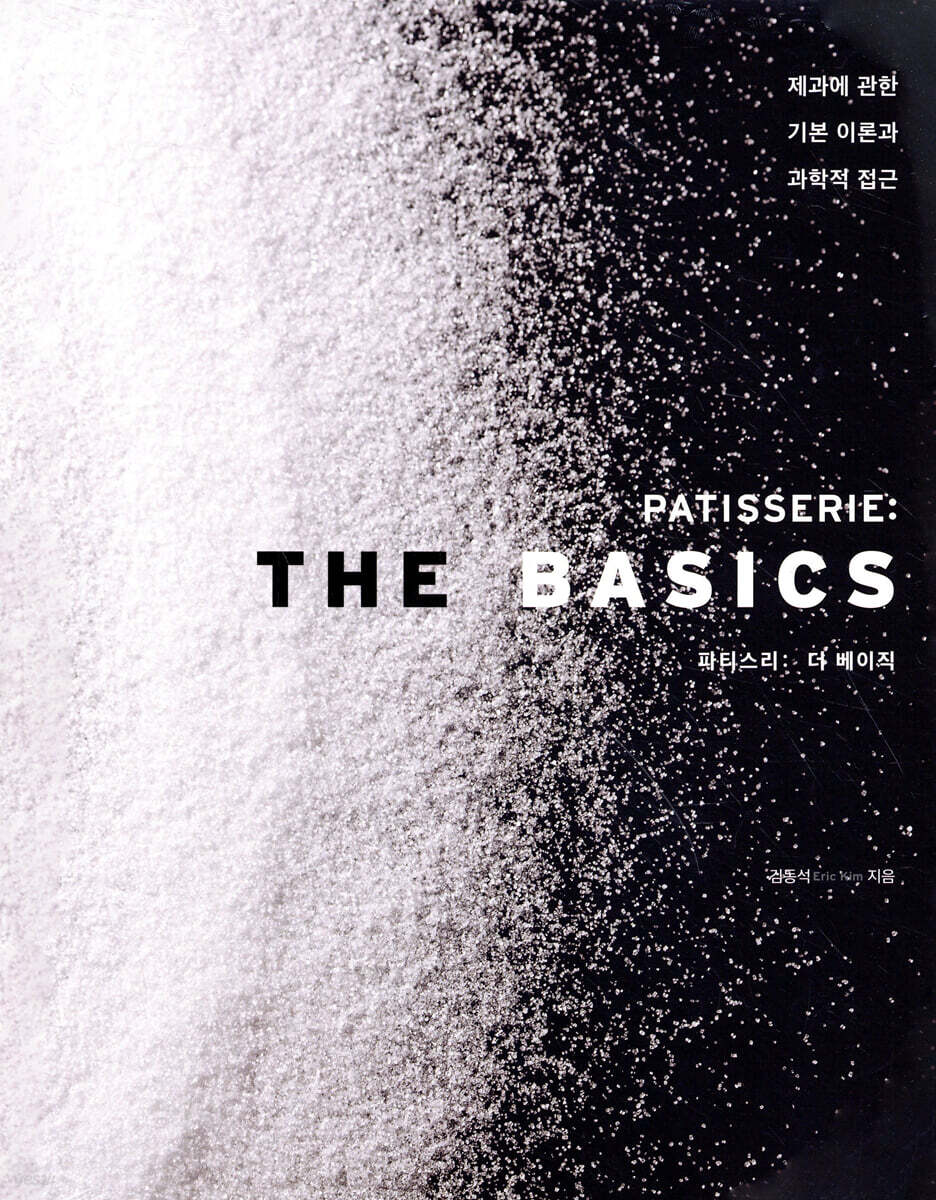
PATISSERIE: THE BASICS
 |
Description
Book Introduction
“The more you understand the principles of confectionery and build a solid foundation,
“We can make better products.” This book is a confectionery theory book that explains the basic and essential theories of confectionery in general, including basic recipes, applied recipes, various processes, mixing tables, and data. It will be a useful resource and guide for beginners and students just starting to study confectionery, as well as for technicians who are thirsty for basic theories and principles. Part 1. In sponge cake, cakes that utilize the bubble properties of eggs are divided into the common method, separate method, and luxury method, and the specific gravity of the dough is learned. Part 2. In Butter Cake, cakes that utilize the creaminess of butter are explained by dividing them into the public method, separate method, flower batter method, and all-in-one method, and the characteristics of each dough, dough separation and emulsification, and characteristics of chemical leavening agents are learned. Part 3. In this part, we will learn about the doughs mainly used for the shell of tarts, divided into part sable, part brie, and part sucré, and about the sable method and cream method. Part 4. In Cream, the types of cream used in confectionery are shown in a diagram at a glance, and then explained in basic recipes and recipes that apply texture/texture/ingredients. Part 5. In Ganache, we explain the ideal composition of dipping ganache and then learn how to adjust it to transform it into a ganache for molding. Part 6. In Meringue, we will explain the basic meringues of French meringue, Italian meringue, and Swiss meringue, and learn about albumen meringue, which can be completed with a richer flavor by adding ingredients such as puree or fruit, and potato whip meringue, which can be used as a vegan dessert. Part 7. In sugar, the types of sugar and substitute sugars, along with their sweetness, water absorption, and amorphousness, are explained in a table so that they can be used, applied, and substituted according to the purpose at the recipe planning stage. Part 8. In the thickener/stabilizer section, the characteristics, usage, and uses of gelatin, pectin, agar, and gellan gum are explained, and each product can be made into a jelly form to compare the textures. Part 9. In glaze, we describe mirror glaze, which has a mirror-like reflective gloss, pectin mirror glaze, which has a dazzling gloss like a glass film, and room tempered glaze, which can be used on all products stored at room temperature. |
- You can preview some of the book's contents.
Preview
index
PART 01. SPONGE CAKE
*Understanding Sponge Cake
01. GENOISE
Genoise - Basic
Genoise - Application
* CHEF'S NOTE.
Finding the specific gravity of the dough
02. SPONGE ROLL CAKE
Sponge Roll Cake - Public Law
Sponge Roll Cake - Separate Recipe
Sponge Roll Cake - Deluxe (Basic & Cocoa Powder)
Sponge Roll Cake - White Sheet
* CHEF'S NOTE.
Cleanly pan the dough/Cleanly remove the baked color from the outside of the sheet
03. JOCONDE
Joconde - Basic & Cocoa Powder
* CHEF'S NOTE.
Easy to use food processor
04. GLUTEN-FREE SPONGE CAKE
Gluten-Free Sponge Cake - Chocolate
05. DACQUOISE
Dacquoise - Basic & Cocoa Powder
PART 02. BUTTER CAKE
* Understanding Butter Cake
01. POUNDE CAKE
Pound Cake - Public Law 1
Pound Cake - Public Law 2
Pound Cake - Separate Method
Pound Cake - Flower Batter Method
Pound Cake - All-in-One Recipe
* CHEF'S NOTE.
Separation and Emulsification of Pound Cake Batter
Pound Cake - Chocolate
02.
Muffin MUFFIN
Muffins - Oil
Muffin - Butter
Muffins - Cocoa Powder
03.
BROWNIE
Brownies - Basic
Brownies - Application
* CHEF'S NOTE.
Pre-processing dried fruit / Why are brownie bottoms uneven?
04.
FINANCIER in Financier
In Financier - Basic
Financier - Cocoa Powder
In the financier - Jocheong
05.
Madeleine MADELEINE
* Characteristics and types of baking powder
Madeleine - Basic
Madeleine - Chocolate
06.
Gateau au chocolate
Gateau au Chocolat - Basic
PART 03.
Part PATE
* Understanding the parts (tart dough)
01.
PATE SABLE
Part Sablé - Sablé method
Part Sablé - Cream Method
Part Sablé - Thin thickness
Part Sablé - Thin (Cocoa Powder)
Sablé Breton - Cream Method 1
Sablé Breton - Cream Method 2
Sablé Breton - Cocoa Powder
02.
PATE BRISEE
Part Breeze - Sabla Method
Part Breeze - Cocoa Powder
03.
PATE SUCRE
Part Sucre - Cream Method
PART 04.
Cream CREME
* Understanding the types of cream at a glance
01.
Crème Patissiere
Crème Patissiere - Rich sweetness & mild sweetness & heavy texture
* CHEF'S NOTE.
Easy to work with a thermomixer
Crème Patissier - Ganache
Crème Patissier - Couverture
02.
CREME DIPLOMATE
Creme Diplomat - Basic
03.
CREME CHIBOUST
Crème Siboost - Basic
04.
CREME MOUSSELINE
Crème Mousseline - Basic
05.
CREME DAMANDE
Crème d'Amande - Basic
06.
Crème Anglaise
Crème Anglaise - Thin Type
Crème Anglaise - Thick Type
07.
GANACHE CREMEUSE
Ganache Crèmeux - Dark, Milk, and White Chocolate
* CHEF'S NOTE.
The minimum amount of water required for chocolate to emulsify/The principle of firming cream using chocolate/Application of crème anglaise
08.
CREME BAVAROIS
Crème Bavarois - Basic
Crème Bavarois - Chocolate
09.
PATE A BOMBE
Part a Bomb - Basic
Part a Bombe - Chocolate
10.
CREME CHANTILLY
Crème Chantilly - Basics & Applications
* Concentration of whipped cream depending on the degree of whipping
11.
GANACHE MOMTEE
Ganache Monté - Basic
Ganache Monte - White Chocolate
Ganache Monte - Caramel Chocolate
12.
CREME AU BEURRE
Crème au beurre a la part a bombe
Crème au beurre a la Italian meringue
Crème au beurre a la crème anglaise
* Conditions and characteristics of butter mainly used in confectionery
* Types and characteristics of butter
13.
Fruit Mousse FRUIT MOUSSE
Fruit Mousse - (Puree + Italian Meringue + Whipped Cream)
Fruit Mousse - (Puree + Whipped Cream)
14.
Chocolate Mousse CHOCOLATE MOUSSE
* Understanding Chocolate Mousse
Chocolate Mousse - Basic
Chocolate Mousse - Puree
15.
CREME AU CITRON
Crème au Citron - Basics & Applications
PART 05.
Ganache
* Understanding Ganache / The pH of chocolate / The basic process of ganache / How to solidify ganache stably / The ideal composition of dipping ganache / Confirming with examples / Converting dipping ganache into molding ganache / Understanding once more with examples
01.
DIPPING GANACHE
02.
MOLDING GANACHE
PART 06.
Meringue
* Understanding Meringue
01.
French Meringue MERINGUE FRANCAISE
French meringue - (flour:sugar = 1:1)
French meringue - (flour:sugar = 1:2)
02.
Italian Meringue MERINGUE ITALIENNE
Italian Meringue - Basic
03.
Swiss Meringue MERINGUE SUISSE
Swiss Meringue - Basic
04.
Albumin Meringue MERINGUE ALBUMIN
Albumen Meringue - Puree
05.
MERINGUE POTATO WHIP
Potato Whipped Meringue - Puree
PART 07.
Sugar SUGAR
* Understanding sugar/ Characteristics of sugar/ Sugar and substitute sugars
01.
Caramel CARAMEL
Caramel - Basic
02.
Who is NOUGAT
Who - Basic
Who - (chocolate + pistachio paste)
03.
Nougatine
Nougatine - Basic
PART 08.
Thickener/Stabilizer TEXTURIZER
01.
Gelatin GELATIN
* How to use gelatin/Types of gelatin
gelatin jelly
02.
Pectin PECTIN
pectin jelly
* Types and characteristics of pectin
03.
Agar AGAR-AGAR
agar jelly
04.
Gellan gum
Gellan gum jelly
PART 09.
Glaze GLAZE
01.
Mirror Glaze MIRROR GLAZE
Mirror Glaze - Pigment
Mirror Glaze - Ruby Chocolate
Mirror Glaze - Caramel Chocolate
* Mixture and use temperature of mirror glaze using chocolate
02.
PECTIN MIRROR GLAZE
Pectin Mirror Glaze - Pigment
Pectin Mirror Glaze - Cacao Nibs
Pectin Mirror Glaze - Green Tea
03.
Room Temperature Glaze
Room Temperatura Glaze - Dark, Milk, and White Chocolate
Room Temperatura Glaze - Ruby Chocolate
Room Temperatura Glaze - White Chocolate
*Understanding Sponge Cake
01. GENOISE
Genoise - Basic
Genoise - Application
* CHEF'S NOTE.
Finding the specific gravity of the dough
02. SPONGE ROLL CAKE
Sponge Roll Cake - Public Law
Sponge Roll Cake - Separate Recipe
Sponge Roll Cake - Deluxe (Basic & Cocoa Powder)
Sponge Roll Cake - White Sheet
* CHEF'S NOTE.
Cleanly pan the dough/Cleanly remove the baked color from the outside of the sheet
03. JOCONDE
Joconde - Basic & Cocoa Powder
* CHEF'S NOTE.
Easy to use food processor
04. GLUTEN-FREE SPONGE CAKE
Gluten-Free Sponge Cake - Chocolate
05. DACQUOISE
Dacquoise - Basic & Cocoa Powder
PART 02. BUTTER CAKE
* Understanding Butter Cake
01. POUNDE CAKE
Pound Cake - Public Law 1
Pound Cake - Public Law 2
Pound Cake - Separate Method
Pound Cake - Flower Batter Method
Pound Cake - All-in-One Recipe
* CHEF'S NOTE.
Separation and Emulsification of Pound Cake Batter
Pound Cake - Chocolate
02.
Muffin MUFFIN
Muffins - Oil
Muffin - Butter
Muffins - Cocoa Powder
03.
BROWNIE
Brownies - Basic
Brownies - Application
* CHEF'S NOTE.
Pre-processing dried fruit / Why are brownie bottoms uneven?
04.
FINANCIER in Financier
In Financier - Basic
Financier - Cocoa Powder
In the financier - Jocheong
05.
Madeleine MADELEINE
* Characteristics and types of baking powder
Madeleine - Basic
Madeleine - Chocolate
06.
Gateau au chocolate
Gateau au Chocolat - Basic
PART 03.
Part PATE
* Understanding the parts (tart dough)
01.
PATE SABLE
Part Sablé - Sablé method
Part Sablé - Cream Method
Part Sablé - Thin thickness
Part Sablé - Thin (Cocoa Powder)
Sablé Breton - Cream Method 1
Sablé Breton - Cream Method 2
Sablé Breton - Cocoa Powder
02.
PATE BRISEE
Part Breeze - Sabla Method
Part Breeze - Cocoa Powder
03.
PATE SUCRE
Part Sucre - Cream Method
PART 04.
Cream CREME
* Understanding the types of cream at a glance
01.
Crème Patissiere
Crème Patissiere - Rich sweetness & mild sweetness & heavy texture
* CHEF'S NOTE.
Easy to work with a thermomixer
Crème Patissier - Ganache
Crème Patissier - Couverture
02.
CREME DIPLOMATE
Creme Diplomat - Basic
03.
CREME CHIBOUST
Crème Siboost - Basic
04.
CREME MOUSSELINE
Crème Mousseline - Basic
05.
CREME DAMANDE
Crème d'Amande - Basic
06.
Crème Anglaise
Crème Anglaise - Thin Type
Crème Anglaise - Thick Type
07.
GANACHE CREMEUSE
Ganache Crèmeux - Dark, Milk, and White Chocolate
* CHEF'S NOTE.
The minimum amount of water required for chocolate to emulsify/The principle of firming cream using chocolate/Application of crème anglaise
08.
CREME BAVAROIS
Crème Bavarois - Basic
Crème Bavarois - Chocolate
09.
PATE A BOMBE
Part a Bomb - Basic
Part a Bombe - Chocolate
10.
CREME CHANTILLY
Crème Chantilly - Basics & Applications
* Concentration of whipped cream depending on the degree of whipping
11.
GANACHE MOMTEE
Ganache Monté - Basic
Ganache Monte - White Chocolate
Ganache Monte - Caramel Chocolate
12.
CREME AU BEURRE
Crème au beurre a la part a bombe
Crème au beurre a la Italian meringue
Crème au beurre a la crème anglaise
* Conditions and characteristics of butter mainly used in confectionery
* Types and characteristics of butter
13.
Fruit Mousse FRUIT MOUSSE
Fruit Mousse - (Puree + Italian Meringue + Whipped Cream)
Fruit Mousse - (Puree + Whipped Cream)
14.
Chocolate Mousse CHOCOLATE MOUSSE
* Understanding Chocolate Mousse
Chocolate Mousse - Basic
Chocolate Mousse - Puree
15.
CREME AU CITRON
Crème au Citron - Basics & Applications
PART 05.
Ganache
* Understanding Ganache / The pH of chocolate / The basic process of ganache / How to solidify ganache stably / The ideal composition of dipping ganache / Confirming with examples / Converting dipping ganache into molding ganache / Understanding once more with examples
01.
DIPPING GANACHE
02.
MOLDING GANACHE
PART 06.
Meringue
* Understanding Meringue
01.
French Meringue MERINGUE FRANCAISE
French meringue - (flour:sugar = 1:1)
French meringue - (flour:sugar = 1:2)
02.
Italian Meringue MERINGUE ITALIENNE
Italian Meringue - Basic
03.
Swiss Meringue MERINGUE SUISSE
Swiss Meringue - Basic
04.
Albumin Meringue MERINGUE ALBUMIN
Albumen Meringue - Puree
05.
MERINGUE POTATO WHIP
Potato Whipped Meringue - Puree
PART 07.
Sugar SUGAR
* Understanding sugar/ Characteristics of sugar/ Sugar and substitute sugars
01.
Caramel CARAMEL
Caramel - Basic
02.
Who is NOUGAT
Who - Basic
Who - (chocolate + pistachio paste)
03.
Nougatine
Nougatine - Basic
PART 08.
Thickener/Stabilizer TEXTURIZER
01.
Gelatin GELATIN
* How to use gelatin/Types of gelatin
gelatin jelly
02.
Pectin PECTIN
pectin jelly
* Types and characteristics of pectin
03.
Agar AGAR-AGAR
agar jelly
04.
Gellan gum
Gellan gum jelly
PART 09.
Glaze GLAZE
01.
Mirror Glaze MIRROR GLAZE
Mirror Glaze - Pigment
Mirror Glaze - Ruby Chocolate
Mirror Glaze - Caramel Chocolate
* Mixture and use temperature of mirror glaze using chocolate
02.
PECTIN MIRROR GLAZE
Pectin Mirror Glaze - Pigment
Pectin Mirror Glaze - Cacao Nibs
Pectin Mirror Glaze - Green Tea
03.
Room Temperature Glaze
Room Temperatura Glaze - Dark, Milk, and White Chocolate
Room Temperatura Glaze - Ruby Chocolate
Room Temperatura Glaze - White Chocolate
Detailed image

Into the book
Of course, making a lot of products is important, but I personally felt that the more I understood the principles of confectionery and built a solid foundation, the better products I could make.
There are many good books on baking and pastry in Korea, but there wasn't much on the "basics" that I was most curious about and thirsty for. So, I wanted to create my own book, which was desperately needed when I started studying.
In Korea, where style is learned before basics or taste, it took me 10 years to decide to prioritize basics and taste over style.
This book may not be the only answer, but I hope that readers who read it will first build a solid foundation in the fundamentals, then study taste, and then become chefs who follow style.
There are many good books on baking and pastry in Korea, but there wasn't much on the "basics" that I was most curious about and thirsty for. So, I wanted to create my own book, which was desperately needed when I started studying.
In Korea, where style is learned before basics or taste, it took me 10 years to decide to prioritize basics and taste over style.
This book may not be the only answer, but I hope that readers who read it will first build a solid foundation in the fundamentals, then study taste, and then become chefs who follow style.
--- From 「PROLOGUE」
GOODS SPECIFICS
- Publication date: February 25, 2022
- Format: Hardcover book binding method guide
- Page count, weight, size: 352 pages | 1,764g | 220*280*30mm
- ISBN13: 9791164261826
- ISBN10: 1164261827
You may also like
카테고리
korean


korean

![GQ KOREA Mark (Monthly): December [2025]](http://librairie.coreenne.fr/cdn/shop/files/8ef265dbbfbf186523ed75ba7319009d.jpg?v=1765340328&width=3840)


