

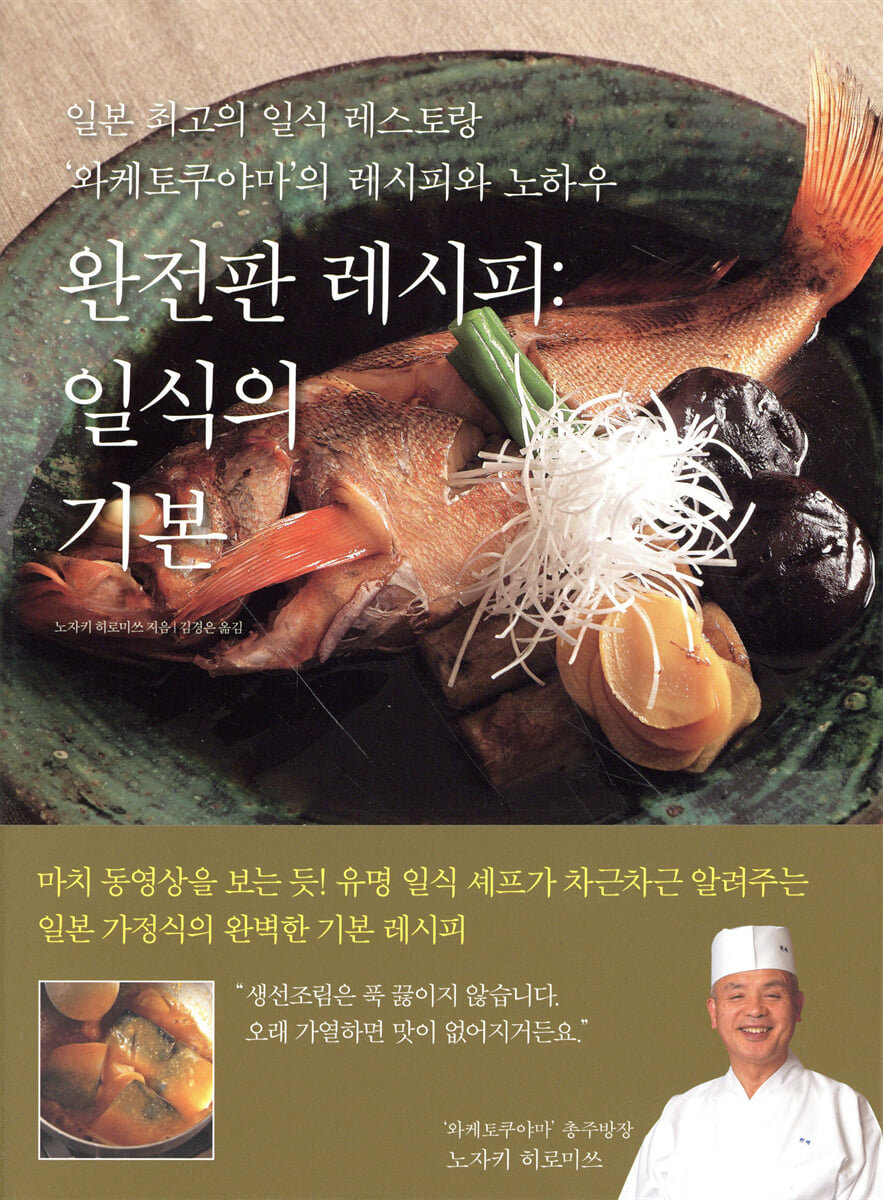
Complete Recipe: Japanese Cuisine Basics
 |
Description
Book Introduction
The best Japanese restaurant 'Waketokuyama'
Chef Hiromitsu Nozaki tells you
73 Must-Try Japanese Home Cooking Recipes
Hiromitsu Nozaki, owner chef of Wake Tokuyama, a leading Japanese restaurant, introduces 73 secrets and recipes for making delicious Japanese food at home.
First, the book introduces the secrets of cooking rice and making broth, the most basic elements of Japanese cuisine, step by step, and then explains how to season dishes without fail, and organizes the golden ratios of Japanese dishes and sauces featured in this book into a table that is easy to understand at a glance.
He also revealed how to cook delicious fish, the golden recipe for teriyaki grilled fish and fried shrimp, and the secrets to various Japanese stews and side dishes.
It is composed so that beginners to intermediate users can learn the know-how of Japanese cuisine masters in one book, including five types of Japanese takikomi rice and rice cooked in a rice pot, such as sea bream rice, anchovy rice, and omok rice, as well as useful Japanese vegetable slicing and fish preparation methods.
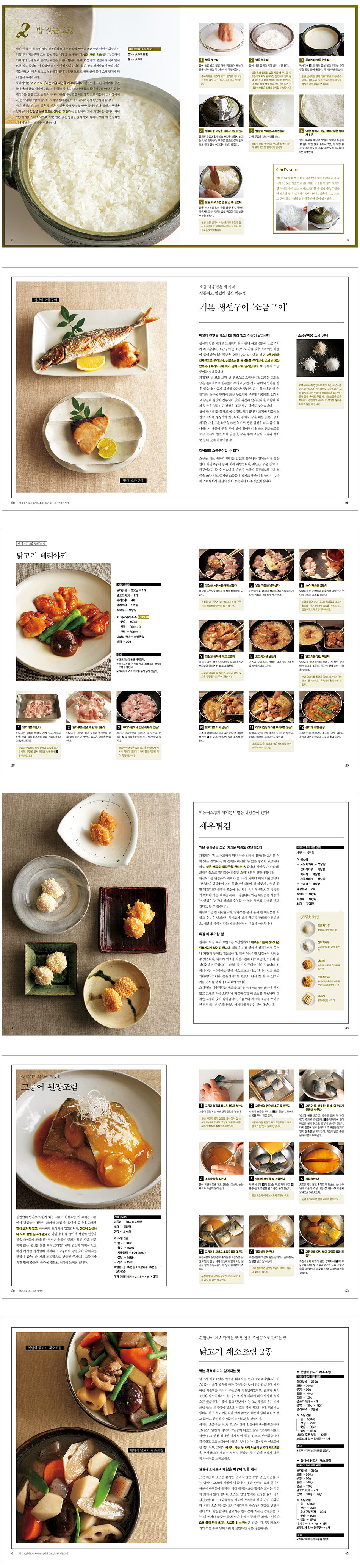
The greatest strength of this book is that it explains the cooking process step by step with photos, so even beginners can easily follow along.
Following the pastry and bread editions, the "Complete Recipe" series, which now includes a Japanese food edition, is based on the concept of artisans from each field explaining their know-how in an easy-to-understand manner. It provides detailed explanations of ingredients by chefs, as well as answers any questions that intermediate and advanced cooks may have.
Important parts of the content have been highlighted with a highlighter to help you read and understand the core of the recipe more carefully.
Chef Hiromitsu Nozaki tells you
73 Must-Try Japanese Home Cooking Recipes
Hiromitsu Nozaki, owner chef of Wake Tokuyama, a leading Japanese restaurant, introduces 73 secrets and recipes for making delicious Japanese food at home.
First, the book introduces the secrets of cooking rice and making broth, the most basic elements of Japanese cuisine, step by step, and then explains how to season dishes without fail, and organizes the golden ratios of Japanese dishes and sauces featured in this book into a table that is easy to understand at a glance.
He also revealed how to cook delicious fish, the golden recipe for teriyaki grilled fish and fried shrimp, and the secrets to various Japanese stews and side dishes.
It is composed so that beginners to intermediate users can learn the know-how of Japanese cuisine masters in one book, including five types of Japanese takikomi rice and rice cooked in a rice pot, such as sea bream rice, anchovy rice, and omok rice, as well as useful Japanese vegetable slicing and fish preparation methods.
The greatest strength of this book is that it explains the cooking process step by step with photos, so even beginners can easily follow along.
Following the pastry and bread editions, the "Complete Recipe" series, which now includes a Japanese food edition, is based on the concept of artisans from each field explaining their know-how in an easy-to-understand manner. It provides detailed explanations of ingredients by chefs, as well as answers any questions that intermediate and advanced cooks may have.
Important parts of the content have been highlighted with a highlighter to help you read and understand the core of the recipe more carefully.
- You can preview some of the book's contents.
Preview
index
Knowing the "why" of cooking makes the cooking process simpler and more enjoyable.
[Chef Nozaki's Basic Lesson] 6 Secrets to Cooking Delicious Dishes
1.
The basics of Japanese food are rice and soup.
2.
Tips for cooking rice
3.
Making broth
4.
Does soybean paste soup need broth?
5.
It doesn't taste good if you cook it for too long.
6.
How to get the hang of it without fail
The Golden Ratio of the Main Dishes Covered in This Book
Chapter 1 Grilled and Fried Food
Basic grilled fish 'salt grilled'
Grilled mackerel with salt / Grilled mackerel with salt / Dried mackerel
2 types of teriyaki
Defense Teriyaki / Chicken Teriyaki
4 kinds of grilled fish with seasoning
Grilled sea bream with prickly ash leaves / Grilled tuna with yuzu citrus flavor / Grilled yellowtail with soybean paste / Grilled golden eye bream with sesame seeds
Grilled Tuna with Soybean Paste
2 types of egg rolls
Egg rolls that are ready to eat / Egg rolls that are delicious even when cold
Fried shrimp
Chapter 2 Braised Food
Lightly braised tuna
[Application] Salted Fish Dish
Mackerel Somen / Golden Eye Bream Soup
Mackerel braised in soybean paste
braised rockfish
Flounder braised in radish juice
Simmered mackerel in vinegar
Japanese-style roast beef
2 kinds of chicken and vegetable stew
Old-fashioned chicken and vegetable stew / Modern-style chicken and vegetable stew
2 types of stewed pumpkin
Braised pumpkin with broth / Braised pumpkin with soybean paste
2 types of meat and potato stew
Beef and Potato Stew / Pork and Potato Stew
Braised taro in broth
Toran and Squid Stew
Yosenabe
[Application] Reception meeting
Pickled mackerel / pickled flounder in kelp
Four Seasons Squid Dishes
Spring-Swirl Squid and Vegetable Salad
Summer - Vine-Shaped Squid Salad
Autumn - Pine Cone-Shaped Squid with Yuzu Scent
Winter - Squid and Kelp Powder Salad
Chapter 3 Appetizers and Side Dishes
Lawsuit Ohitashi
Eggplant Spinach Nivitasi
The basics of 'chomuchim'
Boiled octopus and seaweed salad with double vinegar
Double vinegar application: large-scale seasoned seaweed/water radish
Shrimp and Ginger Pickles Made with Triple Vinegar
Triple Vinegar Applications: Crab Meat and Cucumber Rolls/Chicken Nanbanzuke
Kidney bean sesame salad
Yubu Shilkonyak Tofu Salad
2 types of sesame tofu
Sesame tofu with gelatin / Sesame tofu with arrowroot starch
Sweet Sesame Tofu
[Application] Tamamiso, the all-purpose seasoning for Japanese cuisine
Shrimp Wakame Nuta
Four Seasons Cuisine Made with Tamamiso
Spring - Squid, Bamboo Shoots, and Prickly Pear Leaves in Soybean Paste Stir-fry
Summer - Shrimp and Chajo Leaf Soybean Paste Stir-fry
Autumn - Toran Sesame Soybean Paste Salad
Winter-Furofuki Radish
Chapter 4 Rice and Soup
3 types of takikomi rice
Stir-fried bean rice / sea bream rice / anchovy rice
2 kinds of glutinous rice cakes
Omok sticky rice made in a steamer / Omok sticky rice made in a rice cooker
Chirashizushi
Clam Ushiojiru
Sawaniwan
[TIP]
Why Cook Beef Steaks at a Low Temperature
Side vegetables that add a seasonal touch to grilled dishes
Do I really need to cover the lid?
How can I make grilled mackerel taste good?
How to Make Decorative Cucumbers
Fish preparation
How to cut into three equal parts
How to remove squid guts
Sliced burdock
Why Udon, Soba, and Tsuyu Have Different Concentrations
[Chef Nozaki's Basic Lesson] 6 Secrets to Cooking Delicious Dishes
1.
The basics of Japanese food are rice and soup.
2.
Tips for cooking rice
3.
Making broth
4.
Does soybean paste soup need broth?
5.
It doesn't taste good if you cook it for too long.
6.
How to get the hang of it without fail
The Golden Ratio of the Main Dishes Covered in This Book
Chapter 1 Grilled and Fried Food
Basic grilled fish 'salt grilled'
Grilled mackerel with salt / Grilled mackerel with salt / Dried mackerel
2 types of teriyaki
Defense Teriyaki / Chicken Teriyaki
4 kinds of grilled fish with seasoning
Grilled sea bream with prickly ash leaves / Grilled tuna with yuzu citrus flavor / Grilled yellowtail with soybean paste / Grilled golden eye bream with sesame seeds
Grilled Tuna with Soybean Paste
2 types of egg rolls
Egg rolls that are ready to eat / Egg rolls that are delicious even when cold
Fried shrimp
Chapter 2 Braised Food
Lightly braised tuna
[Application] Salted Fish Dish
Mackerel Somen / Golden Eye Bream Soup
Mackerel braised in soybean paste
braised rockfish
Flounder braised in radish juice
Simmered mackerel in vinegar
Japanese-style roast beef
2 kinds of chicken and vegetable stew
Old-fashioned chicken and vegetable stew / Modern-style chicken and vegetable stew
2 types of stewed pumpkin
Braised pumpkin with broth / Braised pumpkin with soybean paste
2 types of meat and potato stew
Beef and Potato Stew / Pork and Potato Stew
Braised taro in broth
Toran and Squid Stew
Yosenabe
[Application] Reception meeting
Pickled mackerel / pickled flounder in kelp
Four Seasons Squid Dishes
Spring-Swirl Squid and Vegetable Salad
Summer - Vine-Shaped Squid Salad
Autumn - Pine Cone-Shaped Squid with Yuzu Scent
Winter - Squid and Kelp Powder Salad
Chapter 3 Appetizers and Side Dishes
Lawsuit Ohitashi
Eggplant Spinach Nivitasi
The basics of 'chomuchim'
Boiled octopus and seaweed salad with double vinegar
Double vinegar application: large-scale seasoned seaweed/water radish
Shrimp and Ginger Pickles Made with Triple Vinegar
Triple Vinegar Applications: Crab Meat and Cucumber Rolls/Chicken Nanbanzuke
Kidney bean sesame salad
Yubu Shilkonyak Tofu Salad
2 types of sesame tofu
Sesame tofu with gelatin / Sesame tofu with arrowroot starch
Sweet Sesame Tofu
[Application] Tamamiso, the all-purpose seasoning for Japanese cuisine
Shrimp Wakame Nuta
Four Seasons Cuisine Made with Tamamiso
Spring - Squid, Bamboo Shoots, and Prickly Pear Leaves in Soybean Paste Stir-fry
Summer - Shrimp and Chajo Leaf Soybean Paste Stir-fry
Autumn - Toran Sesame Soybean Paste Salad
Winter-Furofuki Radish
Chapter 4 Rice and Soup
3 types of takikomi rice
Stir-fried bean rice / sea bream rice / anchovy rice
2 kinds of glutinous rice cakes
Omok sticky rice made in a steamer / Omok sticky rice made in a rice cooker
Chirashizushi
Clam Ushiojiru
Sawaniwan
[TIP]
Why Cook Beef Steaks at a Low Temperature
Side vegetables that add a seasonal touch to grilled dishes
Do I really need to cover the lid?
How can I make grilled mackerel taste good?
How to Make Decorative Cucumbers
Fish preparation
How to cut into three equal parts
How to remove squid guts
Sliced burdock
Why Udon, Soba, and Tsuyu Have Different Concentrations
Detailed image
Publisher's Review
At a high-end Michelin Japanese restaurant
Let's make our cooking secrets into delicious home-cooked meals.
The author of this book, Hiromitsu Nozaki, is the owner and chef of Waketokuyama, a high-end Japanese restaurant and Michelin-starred kaiseki restaurant located in Tokyo.
The author, who has long researched how to make refined and delicious Japanese food using seasonal ingredients, has always strived to spread the importance of home cooking and the taste that can only be achieved at home to many people.
This book introduces in an easy-to-understand manner the basics of Japanese cuisine, from how to cook rice, how to make basic broth, how to create the "path to flavor" of fish and meat dishes, how to season without fail, and the "golden ratio of sauce" revealed by a Japanese chef with decades of experience.
Anyone can make it step by step from the basics
73 Japanese Home Cooking Recipes
If you've mastered the basics and know-how of Japanese home cooking in this book, try your hand at cooking a variety of dishes with the 73 practical recipes carefully selected by Japanese food experts.
In the 'Grilled and Fried' section, we introduce the basic grilled dish, salt-grilled fish, as well as the golden recipe for sweet and salty Japanese seasoning, teriyaki, two types of grilled dishes, and popular menu items that are delicious no matter when you eat them, such as rolled eggs and fried shrimp.
In the 'Braised Dishes' section, the recipes for light braised fish and soybean paste stew, as well as the most popular home-cooked side dishes such as braised chicken and vegetables, and braised meat and potatoes, are explained in an easy-to-understand way with the know-how of a master.
In addition, the 'Appetizers and Side Dishes' section revealed the golden ratio of the basic Japanese kimchi and the kimchi sauce that gives it a luxurious taste, as well as how to make tamamiso, the all-purpose seasoning for Japanese side dishes.
Lastly, in the 'Rice and Soup' section, we introduced various Japanese-style pot rice recipes that have recently become popular in Korea, as well as sushi and various soups that go well with rice.
A Japanese food expert explains each of the 73 popular Japanese home-cooked recipes that everyone would want to make at least once, with detailed step-by-step photos and explanations, as if watching a video, so anyone who reads the book can make the taste of luxurious Japanese food at home.
“I don’t use any special seasonings in my cooking.
There aren't even many types.
The heating time is short, so it can be completed in an instant.
Even beginners and elementary school students can make it deliciously.
But when you cook, think about why you are doing it this way.
Because it requires less work, each and every process is filled with meaning.
There are rules for adjusting the liver, so if you just remember the ratio, you can make it delicious anytime.
This book explains the "why" of cooking in an easy-to-understand way, and is written with the hope that anyone can create delicious dishes without fail.
“Make good use of this book to enrich your dining table.” --- From the author’s note
Let's make our cooking secrets into delicious home-cooked meals.
The author of this book, Hiromitsu Nozaki, is the owner and chef of Waketokuyama, a high-end Japanese restaurant and Michelin-starred kaiseki restaurant located in Tokyo.
The author, who has long researched how to make refined and delicious Japanese food using seasonal ingredients, has always strived to spread the importance of home cooking and the taste that can only be achieved at home to many people.
This book introduces in an easy-to-understand manner the basics of Japanese cuisine, from how to cook rice, how to make basic broth, how to create the "path to flavor" of fish and meat dishes, how to season without fail, and the "golden ratio of sauce" revealed by a Japanese chef with decades of experience.
Anyone can make it step by step from the basics
73 Japanese Home Cooking Recipes
If you've mastered the basics and know-how of Japanese home cooking in this book, try your hand at cooking a variety of dishes with the 73 practical recipes carefully selected by Japanese food experts.
In the 'Grilled and Fried' section, we introduce the basic grilled dish, salt-grilled fish, as well as the golden recipe for sweet and salty Japanese seasoning, teriyaki, two types of grilled dishes, and popular menu items that are delicious no matter when you eat them, such as rolled eggs and fried shrimp.
In the 'Braised Dishes' section, the recipes for light braised fish and soybean paste stew, as well as the most popular home-cooked side dishes such as braised chicken and vegetables, and braised meat and potatoes, are explained in an easy-to-understand way with the know-how of a master.
In addition, the 'Appetizers and Side Dishes' section revealed the golden ratio of the basic Japanese kimchi and the kimchi sauce that gives it a luxurious taste, as well as how to make tamamiso, the all-purpose seasoning for Japanese side dishes.
Lastly, in the 'Rice and Soup' section, we introduced various Japanese-style pot rice recipes that have recently become popular in Korea, as well as sushi and various soups that go well with rice.
A Japanese food expert explains each of the 73 popular Japanese home-cooked recipes that everyone would want to make at least once, with detailed step-by-step photos and explanations, as if watching a video, so anyone who reads the book can make the taste of luxurious Japanese food at home.
“I don’t use any special seasonings in my cooking.
There aren't even many types.
The heating time is short, so it can be completed in an instant.
Even beginners and elementary school students can make it deliciously.
But when you cook, think about why you are doing it this way.
Because it requires less work, each and every process is filled with meaning.
There are rules for adjusting the liver, so if you just remember the ratio, you can make it delicious anytime.
This book explains the "why" of cooking in an easy-to-understand way, and is written with the hope that anyone can create delicious dishes without fail.
“Make good use of this book to enrich your dining table.” --- From the author’s note
GOODS SPECIFICS
- Publication date: April 27, 2020
- Page count, weight, size: 128 pages | 540g | 188*257*13mm
- ISBN13: 9791160074826
- ISBN10: 1160074828
You may also like
카테고리
korean


korean

![GQ KOREA Mark (Monthly): December [2025]](http://librairie.coreenne.fr/cdn/shop/files/8ef265dbbfbf186523ed75ba7319009d.jpg?v=1765340328&width=3840)


