

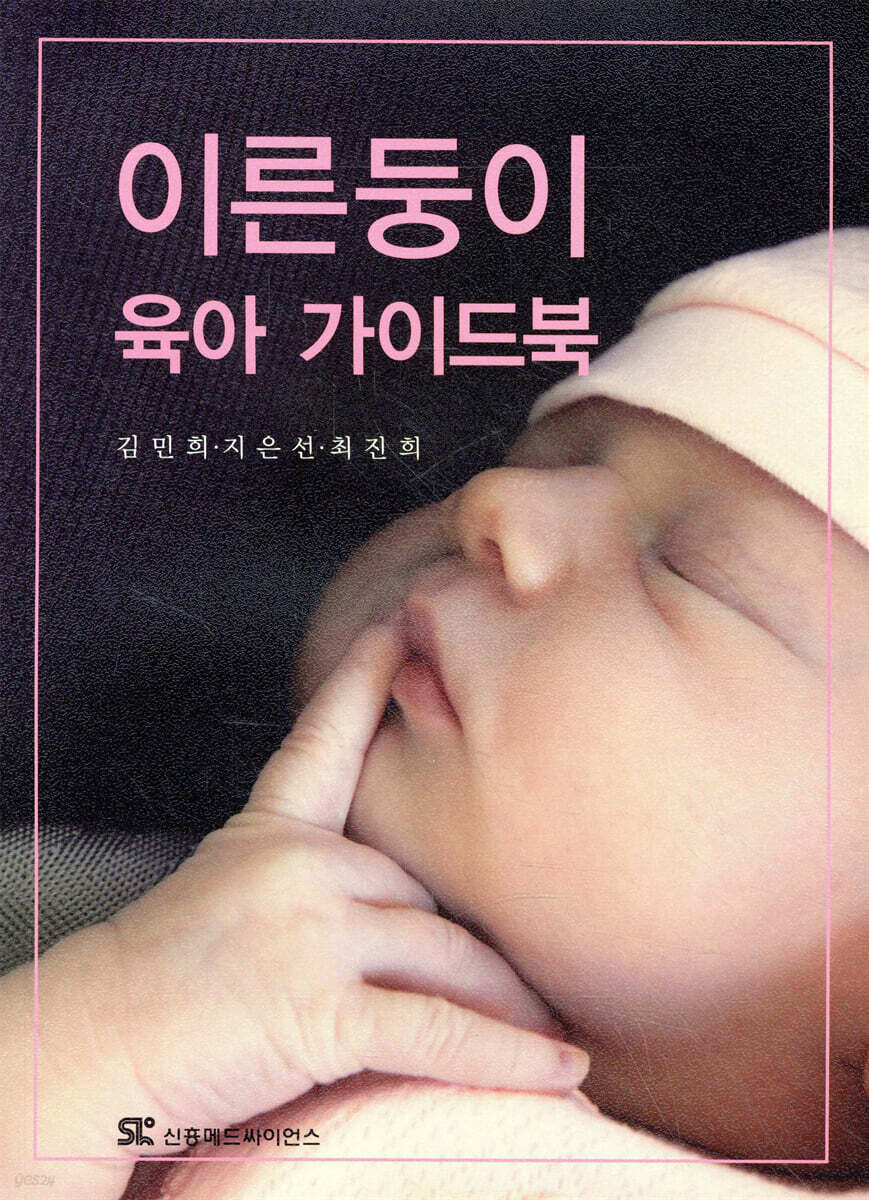
Premature Baby Parenting Guidebook
 |
Description
Book Introduction
It helps you understand the characteristics of premature babies' diseases and the overall care at home after discharge, as well as the development, behavior, and complications by period.
Additionally, it provides various information about premature babies and supports the formation of healthy attachments with parents and the development of a well-rounded personality.
It will help to relieve fears and instill hope and courage in parents and relatives who have given birth to a premature baby who may be in confusion.
Additionally, it provides various information about premature babies and supports the formation of healthy attachments with parents and the development of a well-rounded personality.
It will help to relieve fears and instill hope and courage in parents and relatives who have given birth to a premature baby who may be in confusion.
- You can preview some of the book's contents.
Preview
index
Author's Preface · V
Part I.
Caring for a Premature Baby in the Hospital 3
1.
Characteristics of Premature Babies and NICU Treatment·5
Early bird appearance · 5
Respiratory · 7
Nervous System · 11
Cardiovascular System · 11
Gastrointestinal tract · 13
Maintaining body temperature · 14
Infection Control · 15
Basic Nursing Care · 15
Commonly Used Drugs in the NICU · 18
Common Tests in the NICU · 18
2.
Major diseases of premature babies·21
Respiratory Distress Syndrome (RDS) in Newborns · 21
Air Leaks · 23
Bronchopulmonary Dysplasia (BPD), Chronic Lung Disease (CLD) · 24
RSV (Repiratory Syncytial Virus) · 26
Apnea in Premature Babies · 27
Patent Ductus Arteriosus (PDA) · 28
Anemia · 29
Jaundice, Hyperbilirubinemia · 31
Hearing loss · 32
Gastroesophageal Reflux Disease (GERD) · 33
Necrotizing Enterocolitis (NEC) · 35
Infections · 38
Intraventricular hemorrhage (IVH) · 38
Periventricular leukomalacia (PVL) · 40
Hydrocephalus · 41
Cerebral Palsy (CP) · 43
Seizures · 43
Retinopathy of Prematurity (ROP) · 44
Strabismus · 46
Hernia · 46
Sudden Infant Death Syndrome (SIDS) · 47
Part II.
Caring for a Premature Baby at Home After Discharge 51
1.
Breastfeeding Premature Babies·53
Why Premature Babies Need Breast Milk · 53
Why Premature Mothers Need to Breastfeed · 59
Expressing and Storing Breast Milk · 61
Starting Breastfeeding Your Premature Baby · 69
Checking if you have enough breast milk · 80
Breastfeeding Your Premature Baby After Discharge · 83
Questions About Breastfeeding Premature Babies · 85
2.
Bottle feeding for premature babies·91
Starting Bottle Feeding for Premature Babies · 91
Sterilizing Baby Bottles and Making Formula · 98
Choosing a Nipple and Bottle Feeding · 98
Checking if there is enough formula · 99
Choosing Formula for Premature Babies · 101
Questions About Bottle Feeding · 107
3.
General Parenting Tips for Premature Babies·109
Bath · 109
Sleep · 110
Play · 112
Vomiting · 113
Defecation · 114
Fever · 115
4.
The Emotions of Mothers of Premature Babies·117
Postpartum Depression in Premature Mothers · 117
Emotional Responses of Premature Mothers · 118
5.
What Moms Want to Know During the First Year·125
Nutrition Intake · 125
Desirable Parenting Attitudes · 128
Attachment-Promoting Parenting · 130
Going Out · 131
Caring for Family and Siblings · 134
Part III.
Promoting the Development of Premature Babies 139
1.
Premature Baby Brain Development·141
Changes in the Infant Brain · 141
Premature Baby Brain Development · 152
2.
Early development promotion·155
Understanding Development · 155
Creating a Developmental Environment · 158
Interact · 160
Wait for it to develop on its own · 164
Understanding Your Baby's Stress · 165
Skin and Body Contact · 166
Helping with Movement Development · 168
Promoting visual and auditory development · 173
3.
Premature Baby Development Checkup·177
Premature Babies and Normal Development · 177
Premature Baby Developmental Screening · 178
Red Flags for Development · 179
When you have concerns about your child's development · 181
Introduction to Family-Centered Early Intervention Services · 182
APPENDIX .
Appendix 187
Medical Expense Support for Infants and Toddlers, Including Premature Babies and Children with Congenital Abnormalities · 187
Developmental Rehabilitation and Education Services · 189
Part I.
Caring for a Premature Baby in the Hospital 3
1.
Characteristics of Premature Babies and NICU Treatment·5
Early bird appearance · 5
Respiratory · 7
Nervous System · 11
Cardiovascular System · 11
Gastrointestinal tract · 13
Maintaining body temperature · 14
Infection Control · 15
Basic Nursing Care · 15
Commonly Used Drugs in the NICU · 18
Common Tests in the NICU · 18
2.
Major diseases of premature babies·21
Respiratory Distress Syndrome (RDS) in Newborns · 21
Air Leaks · 23
Bronchopulmonary Dysplasia (BPD), Chronic Lung Disease (CLD) · 24
RSV (Repiratory Syncytial Virus) · 26
Apnea in Premature Babies · 27
Patent Ductus Arteriosus (PDA) · 28
Anemia · 29
Jaundice, Hyperbilirubinemia · 31
Hearing loss · 32
Gastroesophageal Reflux Disease (GERD) · 33
Necrotizing Enterocolitis (NEC) · 35
Infections · 38
Intraventricular hemorrhage (IVH) · 38
Periventricular leukomalacia (PVL) · 40
Hydrocephalus · 41
Cerebral Palsy (CP) · 43
Seizures · 43
Retinopathy of Prematurity (ROP) · 44
Strabismus · 46
Hernia · 46
Sudden Infant Death Syndrome (SIDS) · 47
Part II.
Caring for a Premature Baby at Home After Discharge 51
1.
Breastfeeding Premature Babies·53
Why Premature Babies Need Breast Milk · 53
Why Premature Mothers Need to Breastfeed · 59
Expressing and Storing Breast Milk · 61
Starting Breastfeeding Your Premature Baby · 69
Checking if you have enough breast milk · 80
Breastfeeding Your Premature Baby After Discharge · 83
Questions About Breastfeeding Premature Babies · 85
2.
Bottle feeding for premature babies·91
Starting Bottle Feeding for Premature Babies · 91
Sterilizing Baby Bottles and Making Formula · 98
Choosing a Nipple and Bottle Feeding · 98
Checking if there is enough formula · 99
Choosing Formula for Premature Babies · 101
Questions About Bottle Feeding · 107
3.
General Parenting Tips for Premature Babies·109
Bath · 109
Sleep · 110
Play · 112
Vomiting · 113
Defecation · 114
Fever · 115
4.
The Emotions of Mothers of Premature Babies·117
Postpartum Depression in Premature Mothers · 117
Emotional Responses of Premature Mothers · 118
5.
What Moms Want to Know During the First Year·125
Nutrition Intake · 125
Desirable Parenting Attitudes · 128
Attachment-Promoting Parenting · 130
Going Out · 131
Caring for Family and Siblings · 134
Part III.
Promoting the Development of Premature Babies 139
1.
Premature Baby Brain Development·141
Changes in the Infant Brain · 141
Premature Baby Brain Development · 152
2.
Early development promotion·155
Understanding Development · 155
Creating a Developmental Environment · 158
Interact · 160
Wait for it to develop on its own · 164
Understanding Your Baby's Stress · 165
Skin and Body Contact · 166
Helping with Movement Development · 168
Promoting visual and auditory development · 173
3.
Premature Baby Development Checkup·177
Premature Babies and Normal Development · 177
Premature Baby Developmental Screening · 178
Red Flags for Development · 179
When you have concerns about your child's development · 181
Introduction to Family-Centered Early Intervention Services · 182
APPENDIX .
Appendix 187
Medical Expense Support for Infants and Toddlers, Including Premature Babies and Children with Congenital Abnormalities · 187
Developmental Rehabilitation and Education Services · 189
Publisher's Review
“This book is for parents and relatives who have given birth to a premature baby who are in confusion.
It will be a great help in shaking off fear and instilling hope and courage.
Although the number of births is rapidly decreasing, the birth rate of premature babies is steadily increasing due to factors such as older mothers, an increase in twins, and changes in the social environment. Furthermore, their survival rate has improved due to advancements in medicine.
However, compared to normal children, the incidence of complications such as cerebral palsy, intellectual disability, visual and hearing abnormalities, and fine motor development disorders is higher.
Most parents of premature babies often search the internet for inaccurate medical information after admitting their babies to the neonatal intensive care unit (NICU), only to find their worries increase.
Furthermore, even after discharge from the hospital, parents become anxious about even the smallest things, become isolated from those around them, and are afraid that their child's growth and development will not be normal. Many parenting books written for normal children are not helpful for premature babies.
Additionally, there are often no people nearby who have experience raising premature babies, and it is often difficult to obtain satisfactory advice from nearby medical institutions.
The book is divided into three parts, the first part is about caring for premature babies in the hospital, and explains the characteristics of premature babies, NICU treatment, and major illnesses.
The second part covers breastfeeding, parenting, postpartum depression, and questions that mothers ask during the first year of pregnancy, as well as caring for premature babies at home after discharge.
Lastly, the third part is the development promotion section, which consists of the theory of brain development, promotion methods, creating a developmental environment, and development checks.
This book helps readers understand the characteristics of premature infants' illnesses and provides an easy-to-understand understanding of overall care at home after discharge, as well as development, behavior, and complications at each stage.
Additionally, you can receive various information about premature babies and receive support for forming healthy attachments with parents and developing a well-rounded personality.
It will be of great help to parents and relatives who have given birth to a premature baby, who may be in a state of confusion, in dispelling their fears and instilling hope and courage.
It will be a great help in shaking off fear and instilling hope and courage.
Although the number of births is rapidly decreasing, the birth rate of premature babies is steadily increasing due to factors such as older mothers, an increase in twins, and changes in the social environment. Furthermore, their survival rate has improved due to advancements in medicine.
However, compared to normal children, the incidence of complications such as cerebral palsy, intellectual disability, visual and hearing abnormalities, and fine motor development disorders is higher.
Most parents of premature babies often search the internet for inaccurate medical information after admitting their babies to the neonatal intensive care unit (NICU), only to find their worries increase.
Furthermore, even after discharge from the hospital, parents become anxious about even the smallest things, become isolated from those around them, and are afraid that their child's growth and development will not be normal. Many parenting books written for normal children are not helpful for premature babies.
Additionally, there are often no people nearby who have experience raising premature babies, and it is often difficult to obtain satisfactory advice from nearby medical institutions.
The book is divided into three parts, the first part is about caring for premature babies in the hospital, and explains the characteristics of premature babies, NICU treatment, and major illnesses.
The second part covers breastfeeding, parenting, postpartum depression, and questions that mothers ask during the first year of pregnancy, as well as caring for premature babies at home after discharge.
Lastly, the third part is the development promotion section, which consists of the theory of brain development, promotion methods, creating a developmental environment, and development checks.
This book helps readers understand the characteristics of premature infants' illnesses and provides an easy-to-understand understanding of overall care at home after discharge, as well as development, behavior, and complications at each stage.
Additionally, you can receive various information about premature babies and receive support for forming healthy attachments with parents and developing a well-rounded personality.
It will be of great help to parents and relatives who have given birth to a premature baby, who may be in a state of confusion, in dispelling their fears and instilling hope and courage.
GOODS SPECIFICS
- Date of publication: September 21, 2018
- Page count, weight, size: 206 pages | 188*254*20mm
- ISBN13: 9788964980644
- ISBN10: 8964980646
You may also like
카테고리
korean


korean

![GQ KOREA Mark (Monthly): December [2025]](http://librairie.coreenne.fr/cdn/shop/files/8ef265dbbfbf186523ed75ba7319009d.jpg?v=1765340328&width=3840)


