

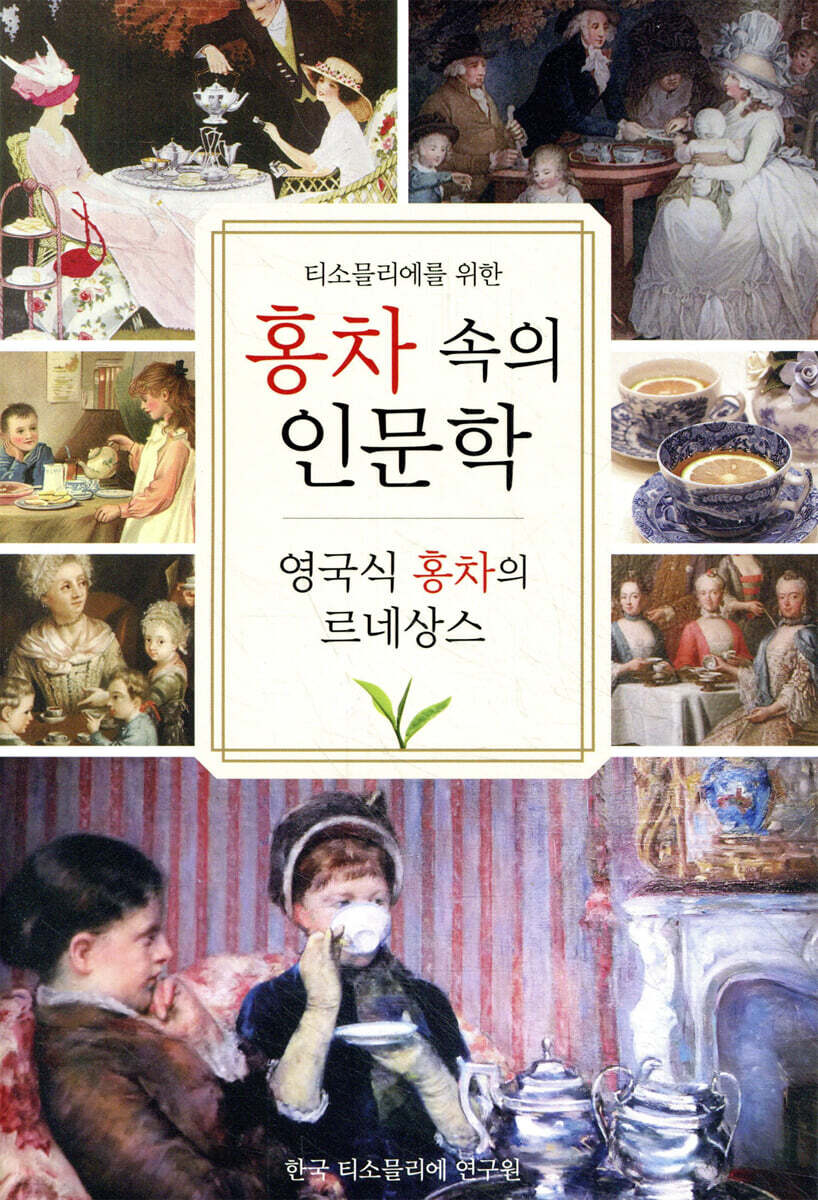
Humanities in Black Tea
 |
Description
Book Introduction
This book comprehensively covers various stories from history, culture, society, famous paintings, movies, and fairy tales, which emerged as black tea permeated our lives through tea time and brought about great changes, allowing us to glimpse the humanities of the world through black tea.
Additionally, 'Tea Time in Famous Paintings' and 'Tea Time Around the World', focusing on the West, clearly show the enormous paradigm shift that British tea brought to the world's lifestyle culture.
Through this, we can see that black tea was not simply a beverage, but a motif that left a great mark on world history.
Next, 'World's Most Famous Tea Destinations' provides a great deal of interest to countless readers who enjoy traveling the world.
This book is expected to further enhance the 'humanistic understanding of tea' by introducing background knowledge on the history, culture, society, and art of tea to those who are entering the 'world of British tea' for the first time as 'British black tea' is experiencing a 'second tea renaissance' around the world, or to those working in the food and beverage industry who are deeply interested in the 'food culture of British black tea' that is emerging as a new trend.
Additionally, 'Tea Time in Famous Paintings' and 'Tea Time Around the World', focusing on the West, clearly show the enormous paradigm shift that British tea brought to the world's lifestyle culture.
Through this, we can see that black tea was not simply a beverage, but a motif that left a great mark on world history.
Next, 'World's Most Famous Tea Destinations' provides a great deal of interest to countless readers who enjoy traveling the world.
This book is expected to further enhance the 'humanistic understanding of tea' by introducing background knowledge on the history, culture, society, and art of tea to those who are entering the 'world of British tea' for the first time as 'British black tea' is experiencing a 'second tea renaissance' around the world, or to those working in the food and beverage industry who are deeply interested in the 'food culture of British black tea' that is emerging as a new trend.
- You can preview some of the book's contents.
Preview
index
For tea sommeliers
Humanities in Tea
The Renaissance of British Tea
Prologue 1
Prologue 2
Contents
Chapter 1: The History of Black Tea
Age of Exploration and Tea
Royal and Tea
Coffee House and Tea Garden
Benefits of tea
Abstinence from alcohol and black tea consumption
Boston Tea Incident
Afternoon Tea in the Victorian Era
The development of tea ceremony
Opium Wars
Pioneering tea production areas
Changes in tea transportation
Tea Time and Fashion
The evolution of tea rooms
Popularization of tea bags
The History of Japanese Black Tea
Column Amsterdam
Drink column tea from a saucer
Chapter 2: Origins and Processing Methods of Black Tea
Varieties
altitude above sea level
Black tea processing method
Evaluation of Black Tea and Tea Blending
Characteristics of the world's black tea producing regions
Smiling people I met in the mountains
Column Muscatel Flavor
Column T Statistics
The Pride of Tea-Producing Countries: "Stamps"
The Pride of Tea-Producing Countries: Banknotes
Chapter 3: The Basic Method of Making Black Tea
Handy tools to have
Basic straight tee
Enjoy iced tea
Brew a delicious tea bag
Enjoy delicious milk tea
Flavored Tea
Black Tea Brand Story
Other black tea brands
Ingredients and Benefits of Black Tea
Pairing Black Tea with Food
black tea and sugar
The relationship between black tea and water
Black tea tastes different depending on the cup
Beautiful column design and a variety of teacups
Column: Iced Tea Born in America
Column Various Shapes of Tea Bags
Tea bags that don't take up column space
Column Teapots of various designs
Visiting Earl Grey's Birthplace
Column Single Origin Tea
Chapter 4: Tea Time in Masterpieces
Enjoying tea with literature and film
Tea time in a famous painting
Column: Tea Time Anytime, Anywhere
Chapter 5: Tea Time Around the World
British Tea Time 1, Afternoon Tea
British Tea Time 2, Cream Tea
French? Belgian tea time
Indian tea time
Tea time in Hungary
Tea time in Sri Lanka
Tea time in Russia
Tea time in East Friesland
Turkish tea time
Column: The origin of 'Black Tea Day' in Japan comes from Russia
The Pride of Tea-Consuming Countries: "Stamps"
Chapter 6: World's Most Famous Tea Places
Jeffrey Museum
Twinings Museum
Cutty Sark
Mariage Frères Marais Tea Museum
Bo Tea Garden
The Boston Tea Party Ship and Museum
Harriton's Tea Factory Hotel
Tea Castle? St. Clare Mlesna Tea Centre
East Frisian Tea Museum, etc.
Humanities in Tea
The Renaissance of British Tea
Prologue 1
Prologue 2
Contents
Chapter 1: The History of Black Tea
Age of Exploration and Tea
Royal and Tea
Coffee House and Tea Garden
Benefits of tea
Abstinence from alcohol and black tea consumption
Boston Tea Incident
Afternoon Tea in the Victorian Era
The development of tea ceremony
Opium Wars
Pioneering tea production areas
Changes in tea transportation
Tea Time and Fashion
The evolution of tea rooms
Popularization of tea bags
The History of Japanese Black Tea
Column Amsterdam
Drink column tea from a saucer
Chapter 2: Origins and Processing Methods of Black Tea
Varieties
altitude above sea level
Black tea processing method
Evaluation of Black Tea and Tea Blending
Characteristics of the world's black tea producing regions
Smiling people I met in the mountains
Column Muscatel Flavor
Column T Statistics
The Pride of Tea-Producing Countries: "Stamps"
The Pride of Tea-Producing Countries: Banknotes
Chapter 3: The Basic Method of Making Black Tea
Handy tools to have
Basic straight tee
Enjoy iced tea
Brew a delicious tea bag
Enjoy delicious milk tea
Flavored Tea
Black Tea Brand Story
Other black tea brands
Ingredients and Benefits of Black Tea
Pairing Black Tea with Food
black tea and sugar
The relationship between black tea and water
Black tea tastes different depending on the cup
Beautiful column design and a variety of teacups
Column: Iced Tea Born in America
Column Various Shapes of Tea Bags
Tea bags that don't take up column space
Column Teapots of various designs
Visiting Earl Grey's Birthplace
Column Single Origin Tea
Chapter 4: Tea Time in Masterpieces
Enjoying tea with literature and film
Tea time in a famous painting
Column: Tea Time Anytime, Anywhere
Chapter 5: Tea Time Around the World
British Tea Time 1, Afternoon Tea
British Tea Time 2, Cream Tea
French? Belgian tea time
Indian tea time
Tea time in Hungary
Tea time in Sri Lanka
Tea time in Russia
Tea time in East Friesland
Turkish tea time
Column: The origin of 'Black Tea Day' in Japan comes from Russia
The Pride of Tea-Consuming Countries: "Stamps"
Chapter 6: World's Most Famous Tea Places
Jeffrey Museum
Twinings Museum
Cutty Sark
Mariage Frères Marais Tea Museum
Bo Tea Garden
The Boston Tea Party Ship and Museum
Harriton's Tea Factory Hotel
Tea Castle? St. Clare Mlesna Tea Centre
East Frisian Tea Museum, etc.
Into the book
Age of Exploration and Tea
The tea tree, Camellia sinensis, an evergreen tree in the Camellia genus of the Camellia family, is known to be native to Yunnan Province, China.
And there are records of tea leaves being used for medicinal purposes around 2700 BC.
Afterwards, green tea was created by processing tea leaves and became widely distributed throughout China, mainly in Zen temples.
By the 8th century, it had spread to Japan.
As trade between the East and the West became more active during the Age of Exploration starting in the 15th century, tea gained attention from Westerners as a uniquely Eastern beverage culture.
The first Westerner to publish information about tea in a book is known to be Giovanni Battista Ramusio (1485-1557) of Venice.
He wrote Navigations and Travels in 1545 after interviewing many travelers.
Among them, there is the following description about tea, heard from a Persian merchant.
“Tea is a bitter drink.
In China, tea is drunk by pouring hot water over tea leaves in a bowl, leaving the tea leaves behind, but in Japan, tea leaves are ground into powder and then poured into hot water.
“Oriental people always enjoy drinking it and believe that it has medicinal properties.”
Afternoon Tea in the Victorian Era
Afternoon tea, which is said to have originated in the 1840s in England with the Duke of Bedford, has grown into a traditional British culture.
During this period, there were also major changes in the British diet.
Dinner time, which used to be around 5 p.m., has been moved to between 8 and 9 p.m.
So, Duchess Anna Maria (1783-1861) developed the habit of feeling hungry around 5 o'clock in the evening, ordering her servant to bring tea to her room, and then eating it with buttered bread...
The custom of afternoon tea, which was loved by the upper class, later took the form of a 'home party' among the middle class.
A home party is a casual, informal social gathering.
It is a kind of informal tea gathering where the host informs friends or acquaintances of the schedule in advance, and the guests visit according to the time.
There were many families who held invitation-only gatherings on a certain day of the week in the afternoon. On this day, visitors were allowed to visit without prior appointment, so it was also very useful as a meeting place.
The average stay was 15 to 20 minutes, and it is said that many women visited four or five homes a day.
We made the most of our short time together, especially by making plans for afternoon tea and dinner and introducing new friends to each other.
_From Chapter 1, History of Black Tea
Black tea tastes different depending on the cup
One of the greatest pleasures of drinking tea is choosing a teacup.
Although teacups are prized for their beauty, their shape actually has a significant impact on how you perceive the flavor of the tea.
Teacups sold for black tea today come in a variety of shapes.
Depending on the shape of the teacup, the angle at which the tea flows into the mouth or the concentration of the tea changes, which makes it feel like the taste has changed as the part of the tongue that is stimulated changes.
A teacup with a low height and wide rim means that when drinking black tea, you tilt the cup at a smaller angle, and the black tea slowly rolls over the tongue in a wider manner, stimulating the area that perceives the astringent taste more.
People who dislike bitter tastes are not suitable for drinking black tea, which is characterized by a bitter taste.
However, if the height is low, the color of the tea becomes transparent, and if the rim is wide, the fragrance spreads richly, so this type of teacup is recommended for those who value the flavor of black tea.
On the other hand, a tall teacup with a narrow rim means that the tea has to be tilted at a large angle when drinking black tea, and the black tea flows down the throat before it even enters the mouth and tastes bitter.
Black teas with a pleasant aftertaste and a bitter taste can be delicious to drink, but drinks with little character and a light body can leave a feeling of something being lacking.
Therefore, just because you have an expensive teacup, it doesn't mean you can enjoy black tea deliciously.
_Chapter 3 Black tea is one of the basic methods we use.
Enjoy delicious milk tea
Let's find out how people around the world enjoy milk tea.
uk
It is well known around the world that the British love milk tea.
Today, 95% of black tea consumed in Britain is milk tea.
"How to Brew the Perfect Cup of Tea", published by the Royal Society of Chemistry in 2003, also became a hot topic in the East.
According to this announcement, to make delicious black tea, we need the ingredients of 'Assam tea leaves', 'sweet water', 'cold, fresh milk', and 'white sugar', and among them, 'milk' is said to be the one that ultimately determines the taste of milk tea.
● Netherlands
In the Netherlands, there is a record that the ambassador of the East India Company was invited to a banquet for the emperor held in Guangdong Province, China in 1655, where he drank tea with warm milk and salt.
In the Netherlands, where black tea consumption is declining these days, milk tea is rarely found.
Most of the milk used in black tea-based milk teas at tea shops and other establishments is high-temperature pasteurized milk.
Romania
Milk tea, a popular drink in Romania, is characterized by containing not only milk but also brandy in addition to black tea.
Plum brandy 'Chukur (?uic?)' and pear brandy 'Williamine' are also well-received as they go well with milk tea.
High-temperature pasteurized milk is used.
● China
After the Opium Wars, many British people moved to China, and the habit of drinking milk tea naturally came with them.
However, the Chinese did not originally have the habit of drinking milk, and there were few dairy farms in China from which to obtain milk, so fresh milk could not be obtained.
For this reason, 'condensed milk' was stored and distributed in cans in 1856, and 'evaporated milk' in 1885, and from then on, milk tea using condensed milk rather than fresh milk became more common.
● Taiwan
Taiwan, like China, was a country unfamiliar with milk.
Therefore, the spread of milk tea culture is relatively recent.
Tapioca milk tea, made with condensed milk imported from Hong Kong, is very popular today.
High-temperature pasteurized milk accounts for the majority of the milk market.
● Yugoslavia
In Yugoslavia, 'nut milk tea' is very popular.
Milk tea is made by boiling walnuts and tea leaves, which are local specialties.
The finishing touch is a nutritious milk tea topped with whipped cream and lightly toasted walnuts, loved by locals.
● United States
Even the United States, famous for its iced tea, is a country with low milk tea consumption.
In the United States, high-temperature pasteurized milk accounts for the majority of the market.
In some rural areas along the east coast, where British influence was strong, they still enjoy British-style milk tea made with pasteurized milk.
● Pairing black tea with food
The process of matching a drink to food to create a refreshing sensation in the mouth while simultaneously enhancing the taste of the food is called 'pairing'.
In France, pairing is expressed as 'mariage'.
This is a term that refers to a fantastic harmony of food and drink.
Pairing a strong, aromatic black tea with delicate food may remove the oiliness of the food, but it can also take away the original flavor of the food.
However, in pairing, the most important thing is to harmonize the taste and aroma, and to create a new aesthetic by making both the food and drink go well together.
When eating delicate rice, serve clear soup rather than soup, and when eating meat dishes, serve clear soup seasoned with salt. These are common practices at the dinner table, and they also apply to tea time… … .
_Chapter 3 Black tea is one of the basic methods we use.
The tea tree, Camellia sinensis, an evergreen tree in the Camellia genus of the Camellia family, is known to be native to Yunnan Province, China.
And there are records of tea leaves being used for medicinal purposes around 2700 BC.
Afterwards, green tea was created by processing tea leaves and became widely distributed throughout China, mainly in Zen temples.
By the 8th century, it had spread to Japan.
As trade between the East and the West became more active during the Age of Exploration starting in the 15th century, tea gained attention from Westerners as a uniquely Eastern beverage culture.
The first Westerner to publish information about tea in a book is known to be Giovanni Battista Ramusio (1485-1557) of Venice.
He wrote Navigations and Travels in 1545 after interviewing many travelers.
Among them, there is the following description about tea, heard from a Persian merchant.
“Tea is a bitter drink.
In China, tea is drunk by pouring hot water over tea leaves in a bowl, leaving the tea leaves behind, but in Japan, tea leaves are ground into powder and then poured into hot water.
“Oriental people always enjoy drinking it and believe that it has medicinal properties.”
Afternoon Tea in the Victorian Era
Afternoon tea, which is said to have originated in the 1840s in England with the Duke of Bedford, has grown into a traditional British culture.
During this period, there were also major changes in the British diet.
Dinner time, which used to be around 5 p.m., has been moved to between 8 and 9 p.m.
So, Duchess Anna Maria (1783-1861) developed the habit of feeling hungry around 5 o'clock in the evening, ordering her servant to bring tea to her room, and then eating it with buttered bread...
The custom of afternoon tea, which was loved by the upper class, later took the form of a 'home party' among the middle class.
A home party is a casual, informal social gathering.
It is a kind of informal tea gathering where the host informs friends or acquaintances of the schedule in advance, and the guests visit according to the time.
There were many families who held invitation-only gatherings on a certain day of the week in the afternoon. On this day, visitors were allowed to visit without prior appointment, so it was also very useful as a meeting place.
The average stay was 15 to 20 minutes, and it is said that many women visited four or five homes a day.
We made the most of our short time together, especially by making plans for afternoon tea and dinner and introducing new friends to each other.
_From Chapter 1, History of Black Tea
Black tea tastes different depending on the cup
One of the greatest pleasures of drinking tea is choosing a teacup.
Although teacups are prized for their beauty, their shape actually has a significant impact on how you perceive the flavor of the tea.
Teacups sold for black tea today come in a variety of shapes.
Depending on the shape of the teacup, the angle at which the tea flows into the mouth or the concentration of the tea changes, which makes it feel like the taste has changed as the part of the tongue that is stimulated changes.
A teacup with a low height and wide rim means that when drinking black tea, you tilt the cup at a smaller angle, and the black tea slowly rolls over the tongue in a wider manner, stimulating the area that perceives the astringent taste more.
People who dislike bitter tastes are not suitable for drinking black tea, which is characterized by a bitter taste.
However, if the height is low, the color of the tea becomes transparent, and if the rim is wide, the fragrance spreads richly, so this type of teacup is recommended for those who value the flavor of black tea.
On the other hand, a tall teacup with a narrow rim means that the tea has to be tilted at a large angle when drinking black tea, and the black tea flows down the throat before it even enters the mouth and tastes bitter.
Black teas with a pleasant aftertaste and a bitter taste can be delicious to drink, but drinks with little character and a light body can leave a feeling of something being lacking.
Therefore, just because you have an expensive teacup, it doesn't mean you can enjoy black tea deliciously.
_Chapter 3 Black tea is one of the basic methods we use.
Enjoy delicious milk tea
Let's find out how people around the world enjoy milk tea.
uk
It is well known around the world that the British love milk tea.
Today, 95% of black tea consumed in Britain is milk tea.
"How to Brew the Perfect Cup of Tea", published by the Royal Society of Chemistry in 2003, also became a hot topic in the East.
According to this announcement, to make delicious black tea, we need the ingredients of 'Assam tea leaves', 'sweet water', 'cold, fresh milk', and 'white sugar', and among them, 'milk' is said to be the one that ultimately determines the taste of milk tea.
● Netherlands
In the Netherlands, there is a record that the ambassador of the East India Company was invited to a banquet for the emperor held in Guangdong Province, China in 1655, where he drank tea with warm milk and salt.
In the Netherlands, where black tea consumption is declining these days, milk tea is rarely found.
Most of the milk used in black tea-based milk teas at tea shops and other establishments is high-temperature pasteurized milk.
Romania
Milk tea, a popular drink in Romania, is characterized by containing not only milk but also brandy in addition to black tea.
Plum brandy 'Chukur (?uic?)' and pear brandy 'Williamine' are also well-received as they go well with milk tea.
High-temperature pasteurized milk is used.
● China
After the Opium Wars, many British people moved to China, and the habit of drinking milk tea naturally came with them.
However, the Chinese did not originally have the habit of drinking milk, and there were few dairy farms in China from which to obtain milk, so fresh milk could not be obtained.
For this reason, 'condensed milk' was stored and distributed in cans in 1856, and 'evaporated milk' in 1885, and from then on, milk tea using condensed milk rather than fresh milk became more common.
● Taiwan
Taiwan, like China, was a country unfamiliar with milk.
Therefore, the spread of milk tea culture is relatively recent.
Tapioca milk tea, made with condensed milk imported from Hong Kong, is very popular today.
High-temperature pasteurized milk accounts for the majority of the milk market.
● Yugoslavia
In Yugoslavia, 'nut milk tea' is very popular.
Milk tea is made by boiling walnuts and tea leaves, which are local specialties.
The finishing touch is a nutritious milk tea topped with whipped cream and lightly toasted walnuts, loved by locals.
● United States
Even the United States, famous for its iced tea, is a country with low milk tea consumption.
In the United States, high-temperature pasteurized milk accounts for the majority of the market.
In some rural areas along the east coast, where British influence was strong, they still enjoy British-style milk tea made with pasteurized milk.
● Pairing black tea with food
The process of matching a drink to food to create a refreshing sensation in the mouth while simultaneously enhancing the taste of the food is called 'pairing'.
In France, pairing is expressed as 'mariage'.
This is a term that refers to a fantastic harmony of food and drink.
Pairing a strong, aromatic black tea with delicate food may remove the oiliness of the food, but it can also take away the original flavor of the food.
However, in pairing, the most important thing is to harmonize the taste and aroma, and to create a new aesthetic by making both the food and drink go well together.
When eating delicate rice, serve clear soup rather than soup, and when eating meat dishes, serve clear soup seasoned with salt. These are common practices at the dinner table, and they also apply to tea time… … .
_Chapter 3 Black tea is one of the basic methods we use.
--- From the text
Publisher's Review
Tea time around the world
Afternoon tea
The culture of drinking afternoon tea can be enjoyed in hotels today and is recognized as a representative tourist industry in the UK.
For the British, afternoon tea is simply a way of life enjoyed at home.
So, afternoon tea enjoyed at a hotel or a special tea shop was considered a rather special event.
Whether it's a trip, a family event, or a special anniversary, the day is something to look forward to from the day you make the reservation, as it's a day that requires a lot of effort and preparation.
Because it is such an afternoon tea, the services provided by hotels and tea shops are also improving every year to meet customers' expectations.
The basic menu for afternoon tea is originally sandwiches, scones, and pastries, but recently, 'tea coordinate', where tea shops or hotels decide on it according to a theme, has also become common.
These days, many hotels delight tea lovers by changing their menus according to the season, such as 'Chocolate Afternoon Tea', 'Pret-a-Porter Afternoon Tea', and 'Christmas Afternoon Tea'.
And health-themed afternoon teas such as ‘detox afternoon tea’ and ‘vegan afternoon tea’ are also receiving a lot of attention… … .
Cream Tea
Cream tea, a regular menu item at British tea shops.
Cream tea refers to a style of tea that pairs scones with milk tea.
Cream tea, which has a slightly more casual feel than afternoon tea, is a very common thing for the British… … Scones are a food that is eaten all the time, but there is a history and some rules for eating them.
First, the scone is eaten by splitting it in half crosswise with your hand along the crack, also called the "wolf's mouth."
Also, cutting vertically is prohibited.
Tea shops often serve scones with a scone knife, but this knife is used to spread clotted cream and jam, not to cut the scone.
The tip of the scone knife is rounded.
It was forbidden to point a sharp sword at the Scone, the 'stone of the throne'.
If serving for several people, scoop the required amount of clotted cream and jam onto a plate and spread it with a scone knife while eating.
It may seem elegant to spread just enough to eat and then spread more on the scone, but most British people spread the cream and jam all at once and eat the scone by pulling it off with their hands.
Tea time in France and Belgium
France and Belgium are famous as countries of gourmets.
The pride in him is also well reflected in tea time.
Originally, in France, black tea was a drink of the aristocracy, and it became widely available to the general public quite late.
Against this backdrop, even today, black tea evokes a luxurious image and a sense of awe, and many people enjoy black tea at the 'Salon de The'.
Even in general tea shops, it is a rule that tea is served in a tea pot.
Even teabag black tea is served in a tea pot, and various types of sugar, such as granulated sugar, coarse sugar, cubed sugar, and brown sugar, are always provided on a plate.
Just looking at sugar alone reveals the national character of enjoying gourmet food.
These days, many tea shops only serve pasteurized milk.
As for the black tea section of the supermarket, as in other countries, tea bags are the main product, and loose leaf tea can only be purchased at specialty stores.
Indian tea time
Indians are very fond of black tea.
And the way you drink it also changes depending on the situation.
At tea gatherings where distinguished guests are entertained, British tea is enjoyed in the style of tea, while at small tea times with family in the city, milk tea is enjoyed by boiling it with plenty of spices and sugar.
Although the drinking methods are different, the atmosphere is such that black tea can be enjoyed anytime, anywhere.
India, a treasure trove of world heritage sites, is also a very popular country among foreign tourists.
European tourists in particular visit India in search of an exotic atmosphere they can never find in their own countries.
The tea producing regions are also very popular with such tourists.
Where is the black tea we drink in our daily lives made?
Tea time in Hungary
Although Hungary does not consume a lot of black tea, there are quite a few ways to enjoy it freely.
Hungarians are very fond of 'lemon tea'.
If you order black tea at any tea shop, it will come with lemon.
And honey, a specialty product, is also produced.
Lemon flavored teas make up half of the black tea section in supermarkets, and green teas are also invariably flavored with lemon.
The obsession with lemon tea is stronger than in any other country in the world, and there is even a lemon extract product sold exclusively for black tea.
If you don't have fresh lemons, you can make instant lemon tea by adding a lemon tablet to hot water. This is a Hungarian product.
Tea time in Sri Lanka
Sri Lanka had a long period of British colonial rule.
Milk also reflects British tastes.
In the town of Nuwara Eliya, which was popular as a summer resort at the time, pasteurized milk is also available in supermarkets, but about 90% of the milk on the market is pasteurized milk.
However, high-temperature pasteurized milk is still expensive, so other types of milk are mainly used during daily tea time.
It is 'powdered milk'.
This powdered milk is a must-have for enjoying Sri Lankan tea.
In Sri Lanka, powdered milk is called 'kiri' and black tea containing it is called 'kiri tee', and both are very popular.
Tea time in Russia
Russia is a tea powerhouse of unprecedented scale in the world.
Per capita tea consumption is comparable to that of the UK.
In Russia, where tea drinking culture has a long history, various tea sets and ways of enjoying black tea have developed to suit the local culture.
A characteristic tea utensil is the 'samovar', which is said to have been first made in 1778.
A samovar, simply put, is a vessel that automatically boils water.
'Samo' means 'as one pleases' and 'var' means 'boiling'.
Here we introduce how to enjoy black tea using a samovar.
Afternoon tea
The culture of drinking afternoon tea can be enjoyed in hotels today and is recognized as a representative tourist industry in the UK.
For the British, afternoon tea is simply a way of life enjoyed at home.
So, afternoon tea enjoyed at a hotel or a special tea shop was considered a rather special event.
Whether it's a trip, a family event, or a special anniversary, the day is something to look forward to from the day you make the reservation, as it's a day that requires a lot of effort and preparation.
Because it is such an afternoon tea, the services provided by hotels and tea shops are also improving every year to meet customers' expectations.
The basic menu for afternoon tea is originally sandwiches, scones, and pastries, but recently, 'tea coordinate', where tea shops or hotels decide on it according to a theme, has also become common.
These days, many hotels delight tea lovers by changing their menus according to the season, such as 'Chocolate Afternoon Tea', 'Pret-a-Porter Afternoon Tea', and 'Christmas Afternoon Tea'.
And health-themed afternoon teas such as ‘detox afternoon tea’ and ‘vegan afternoon tea’ are also receiving a lot of attention… … .
Cream Tea
Cream tea, a regular menu item at British tea shops.
Cream tea refers to a style of tea that pairs scones with milk tea.
Cream tea, which has a slightly more casual feel than afternoon tea, is a very common thing for the British… … Scones are a food that is eaten all the time, but there is a history and some rules for eating them.
First, the scone is eaten by splitting it in half crosswise with your hand along the crack, also called the "wolf's mouth."
Also, cutting vertically is prohibited.
Tea shops often serve scones with a scone knife, but this knife is used to spread clotted cream and jam, not to cut the scone.
The tip of the scone knife is rounded.
It was forbidden to point a sharp sword at the Scone, the 'stone of the throne'.
If serving for several people, scoop the required amount of clotted cream and jam onto a plate and spread it with a scone knife while eating.
It may seem elegant to spread just enough to eat and then spread more on the scone, but most British people spread the cream and jam all at once and eat the scone by pulling it off with their hands.
Tea time in France and Belgium
France and Belgium are famous as countries of gourmets.
The pride in him is also well reflected in tea time.
Originally, in France, black tea was a drink of the aristocracy, and it became widely available to the general public quite late.
Against this backdrop, even today, black tea evokes a luxurious image and a sense of awe, and many people enjoy black tea at the 'Salon de The'.
Even in general tea shops, it is a rule that tea is served in a tea pot.
Even teabag black tea is served in a tea pot, and various types of sugar, such as granulated sugar, coarse sugar, cubed sugar, and brown sugar, are always provided on a plate.
Just looking at sugar alone reveals the national character of enjoying gourmet food.
These days, many tea shops only serve pasteurized milk.
As for the black tea section of the supermarket, as in other countries, tea bags are the main product, and loose leaf tea can only be purchased at specialty stores.
Indian tea time
Indians are very fond of black tea.
And the way you drink it also changes depending on the situation.
At tea gatherings where distinguished guests are entertained, British tea is enjoyed in the style of tea, while at small tea times with family in the city, milk tea is enjoyed by boiling it with plenty of spices and sugar.
Although the drinking methods are different, the atmosphere is such that black tea can be enjoyed anytime, anywhere.
India, a treasure trove of world heritage sites, is also a very popular country among foreign tourists.
European tourists in particular visit India in search of an exotic atmosphere they can never find in their own countries.
The tea producing regions are also very popular with such tourists.
Where is the black tea we drink in our daily lives made?
Tea time in Hungary
Although Hungary does not consume a lot of black tea, there are quite a few ways to enjoy it freely.
Hungarians are very fond of 'lemon tea'.
If you order black tea at any tea shop, it will come with lemon.
And honey, a specialty product, is also produced.
Lemon flavored teas make up half of the black tea section in supermarkets, and green teas are also invariably flavored with lemon.
The obsession with lemon tea is stronger than in any other country in the world, and there is even a lemon extract product sold exclusively for black tea.
If you don't have fresh lemons, you can make instant lemon tea by adding a lemon tablet to hot water. This is a Hungarian product.
Tea time in Sri Lanka
Sri Lanka had a long period of British colonial rule.
Milk also reflects British tastes.
In the town of Nuwara Eliya, which was popular as a summer resort at the time, pasteurized milk is also available in supermarkets, but about 90% of the milk on the market is pasteurized milk.
However, high-temperature pasteurized milk is still expensive, so other types of milk are mainly used during daily tea time.
It is 'powdered milk'.
This powdered milk is a must-have for enjoying Sri Lankan tea.
In Sri Lanka, powdered milk is called 'kiri' and black tea containing it is called 'kiri tee', and both are very popular.
Tea time in Russia
Russia is a tea powerhouse of unprecedented scale in the world.
Per capita tea consumption is comparable to that of the UK.
In Russia, where tea drinking culture has a long history, various tea sets and ways of enjoying black tea have developed to suit the local culture.
A characteristic tea utensil is the 'samovar', which is said to have been first made in 1778.
A samovar, simply put, is a vessel that automatically boils water.
'Samo' means 'as one pleases' and 'var' means 'boiling'.
Here we introduce how to enjoy black tea using a samovar.
GOODS SPECIFICS
- Date of publication: August 13, 2018
- Page count, weight, size: 268 pages | 431g | 150*224*14mm
- ISBN13: 9791185926476
- ISBN10: 118592647X
You may also like
카테고리
korean


korean

![GQ KOREA Mark (Monthly): December [2025]](http://librairie.coreenne.fr/cdn/shop/files/8ef265dbbfbf186523ed75ba7319009d.jpg?v=1765340328&width=3840)


