

Grow with art
 |
Description
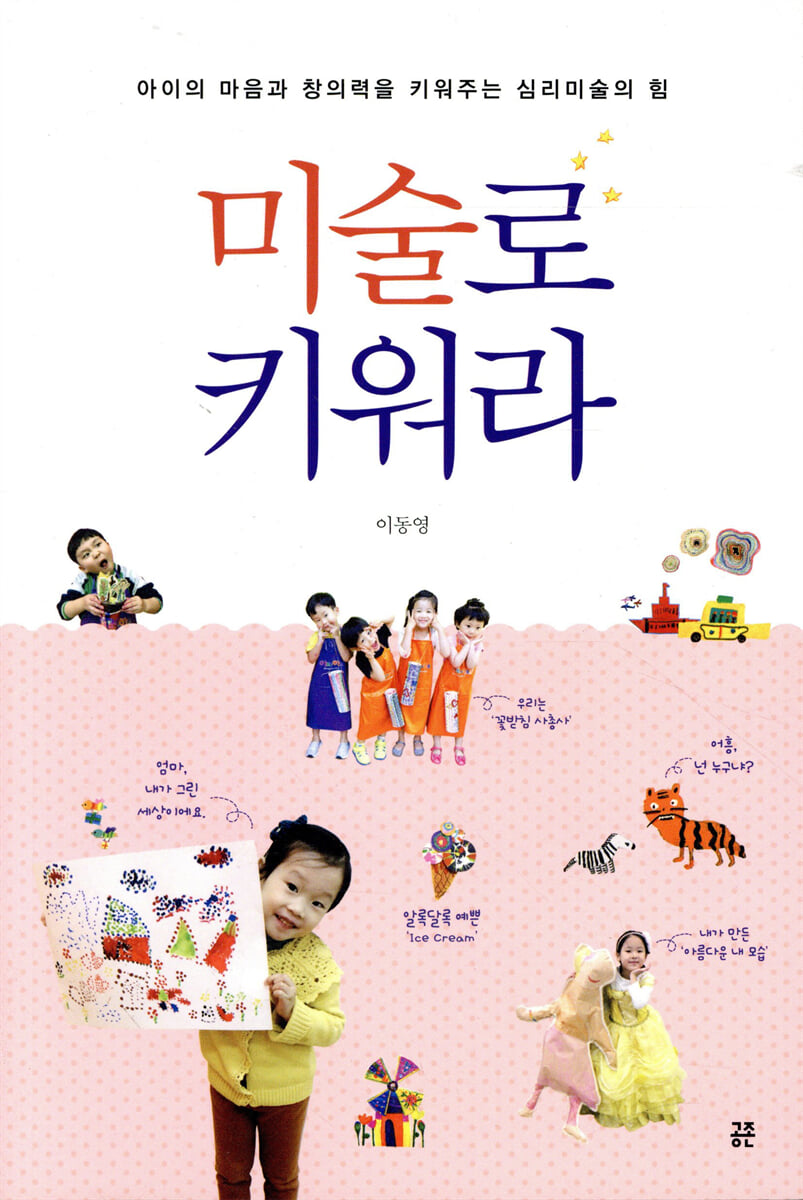
Book Introduction
Ranked 1st in the Korean Franchise Satisfaction Index Art Education Category
Art & Heart CEO Lee Dong-young tells us
The importance, problems, and solutions of children's art education!
A significant number of children in our country attend art schools during infancy or childhood.
However, most parents who send their children to art schools do not know what meaning and value art has for their children.
Usually, it is considered as a way to find out if a child has talent in art or as a form of play.
So, if a child shows even a little bit of talent in art, we try to provide them with art education focused on technique or art for entrance exams.
On the other hand, there are not many art school teachers who properly know how to teach art to children according to their developmental stages.
Teachers who have never studied or learned deeply about child development, child psychology, or early childhood art often teach based on the art they learned in the past.
The situation is similar in elementary school art education.
Although art textbooks have improved significantly, they remain stuck in a rigid art education system, failing to embody the diverse fundamental values that art can impart to children.
Dong-Young Lee, CEO of Art & Heart, an art education franchise that has studied, taught, and researched children's art for 25 years, has published a new book, "Raising Children with Art," which contains extensive analysis and solutions to these problems.
The author answers questions that all mothers wonder about, such as, "Why should children receive art education?", "When and how much is best?", "What should be taught at what educational institutions?", and "What should mothers be careful about?", ultimately discussing "How to raise happy children through art."
Art is the foundation of all education.
A child who has received art education from an early age knows how to think.
― Johann Heinrich Pestalozzi (Swiss educator)
Every child has creative potential.
Art is a medium for developing this.
― Victor Lowenfeld (American educational psychologist)
Art & Heart CEO Lee Dong-young tells us
The importance, problems, and solutions of children's art education!
A significant number of children in our country attend art schools during infancy or childhood.
However, most parents who send their children to art schools do not know what meaning and value art has for their children.
Usually, it is considered as a way to find out if a child has talent in art or as a form of play.
So, if a child shows even a little bit of talent in art, we try to provide them with art education focused on technique or art for entrance exams.
On the other hand, there are not many art school teachers who properly know how to teach art to children according to their developmental stages.
Teachers who have never studied or learned deeply about child development, child psychology, or early childhood art often teach based on the art they learned in the past.
The situation is similar in elementary school art education.
Although art textbooks have improved significantly, they remain stuck in a rigid art education system, failing to embody the diverse fundamental values that art can impart to children.
Dong-Young Lee, CEO of Art & Heart, an art education franchise that has studied, taught, and researched children's art for 25 years, has published a new book, "Raising Children with Art," which contains extensive analysis and solutions to these problems.
The author answers questions that all mothers wonder about, such as, "Why should children receive art education?", "When and how much is best?", "What should be taught at what educational institutions?", and "What should mothers be careful about?", ultimately discussing "How to raise happy children through art."
Art is the foundation of all education.
A child who has received art education from an early age knows how to think.
― Johann Heinrich Pestalozzi (Swiss educator)
Every child has creative potential.
Art is a medium for developing this.
― Victor Lowenfeld (American educational psychologist)
- You can preview some of the book's contents.
Preview
index
preface
prolog
Part 1: Why do children need art?
Chapter 1: Developing Future-Oriented Talents Who Can Flexibly Adapt to Change
Chapter 2: Do not force a uniform answer
Chapter 3: Developing Successful Habits Through Artistic Experiences
Chapter 4: Fostering Emotional Health
Chapter 5: Protecting against the adverse effects of science and technology
Chapter 6: Expressing yourself and connecting with the world
Part 2: Children's Art Education: What's the Problem?
Chapter 7: Children's Art Education Without "Children"
Chapter 8: Children's Art Education Without 'Art'
Chapter 9: Programs are overflowing, but there are no teaching methods.
Chapter 10: Children Addicted to Praise
Chapter 11: Every time you draw, you have to draw a masterpiece!
Chapter 12: You don't touch the children's drawings?
Chapter 13: Who is the art contest for?
Chapter 14: Should upperclassmen be required to take art classes for entrance exams?
Chapter 15: Myths About Creativity
Part 3: Art education tailored to children's emotional development
Chapter 16: Let's dry the laundry when the sun rises brightly.
Chapter 17: From Birth to Age 3
Chapter 18: Ages 3 to 5
Chapter 19: Ages 5 to 7
Chapter 20: Elementary School Childhood
Chapter 21: Adolescence in Middle and High School
Part 4: Why is psychology necessary for children's art?
Chapter 22: You grow as much as you eat? You grow as much as you digest!
Chapter 23: "Art" Only Comes From "Heart"
Chapter 24: Emotional Development Comes Before Cognitive Development
Chapter 25: Inner Motivation Essential to Art
Chapter 26: What is Psychological Art?
Chapter 27: Psychological Art Program
Part 5: Psychological Art that Grows the Mind
Chapter 28: Don't pull out weeds, plant flowers.
Chapter 29: Building a Strong Rapport with Your Child
Chapter 30 Warm and Firm
Chapter 31 Immersion
Chapter 32 Second Wind
Chapter 33: Illuminate, Explain, and Let People Choose
Epilogue
prolog
Part 1: Why do children need art?
Chapter 1: Developing Future-Oriented Talents Who Can Flexibly Adapt to Change
Chapter 2: Do not force a uniform answer
Chapter 3: Developing Successful Habits Through Artistic Experiences
Chapter 4: Fostering Emotional Health
Chapter 5: Protecting against the adverse effects of science and technology
Chapter 6: Expressing yourself and connecting with the world
Part 2: Children's Art Education: What's the Problem?
Chapter 7: Children's Art Education Without "Children"
Chapter 8: Children's Art Education Without 'Art'
Chapter 9: Programs are overflowing, but there are no teaching methods.
Chapter 10: Children Addicted to Praise
Chapter 11: Every time you draw, you have to draw a masterpiece!
Chapter 12: You don't touch the children's drawings?
Chapter 13: Who is the art contest for?
Chapter 14: Should upperclassmen be required to take art classes for entrance exams?
Chapter 15: Myths About Creativity
Part 3: Art education tailored to children's emotional development
Chapter 16: Let's dry the laundry when the sun rises brightly.
Chapter 17: From Birth to Age 3
Chapter 18: Ages 3 to 5
Chapter 19: Ages 5 to 7
Chapter 20: Elementary School Childhood
Chapter 21: Adolescence in Middle and High School
Part 4: Why is psychology necessary for children's art?
Chapter 22: You grow as much as you eat? You grow as much as you digest!
Chapter 23: "Art" Only Comes From "Heart"
Chapter 24: Emotional Development Comes Before Cognitive Development
Chapter 25: Inner Motivation Essential to Art
Chapter 26: What is Psychological Art?
Chapter 27: Psychological Art Program
Part 5: Psychological Art that Grows the Mind
Chapter 28: Don't pull out weeds, plant flowers.
Chapter 29: Building a Strong Rapport with Your Child
Chapter 30 Warm and Firm
Chapter 31 Immersion
Chapter 32 Second Wind
Chapter 33: Illuminate, Explain, and Let People Choose
Epilogue
Publisher's Review
Part 1 explains, “Why do children need art?”
The author states that “since art is essentially about creating something new and beautiful through flexible and creative thinking, it provides the most suitable experience and education for developing ‘high concept’ and ‘high touch’ abilities” (p. 21).
Also, proper art education does not force a uniform correct answer, so “art is almost the only activity that children do that is recognized not by doing the same as the teacher, but by doing something different from the teacher.
In art, there are likes and dislikes, but there is no 'right' or 'wrong'.
“Because of the unique characteristic of art that there is no right answer, if children receive proper art education, they can develop the habit of creating their own original content.” (p. 27) In addition, the necessity and advantages of art education are explained as follows.
● Develop successful habits through artistic experiences.
● It fosters emotional health.
● Protects against the side effects of science and technology.
● It allows you to express yourself and communicate with the world.
Part 2 identifies the problems with current children's art education one by one.
The author explains why teaching art to children by people who don't know anything about "children" or have no "artistic experience" is no different from driving without a license.
Also, although there are many art education programs, the problem of poor teaching methods of art teachers and children, children becoming addicted to praise due to parents' impatience, problems of excessive intervention or neglect in children's art work, a tendency to obsess over winning art competitions or preparing for college entrance exams, and problems of constantly pursuing new and fragmented things under the pretext of fostering creativity are pointed out.
Part 3 discusses “art education suited to a child’s emotional development” from birth to 3, 5, 7 years of age, elementary school childhood, and middle and high school adolescence.
The author says, “Timing is the most important thing in child development.” He explains, “From birth to age 3 is the time to develop attachment and self-worth through art play with mothers,” “From age 3 to 5 is the time to develop autonomy and confidence through self-directed art projects,” “From age 5 to 7 is the time to develop imagination and problem-solving skills through three-dimensional modeling with various materials,” “Elementary school childhood is the time to develop empathy and communication skills through collaborative work and art techniques,” and “Middle and high school adolescence is the time to develop tools for thinking through drawing.”
Part 4 explains why a psychological approach is necessary in children's art education.
The author emphasizes the need for an accurate understanding of children and appropriate teaching methods, saying, “Rather than worrying about whether the child is eating a lot right now, we should check whether the child is digesting well” (p. 162).
He also argues that children's art work should be guided to provide 'artistic experiences', and that this requires prioritizing emotional development over cognitive development and fostering internal motivation.
The author introduces psychological art in a way that is most suitable for children's art education.
Psychological art, which adds a psychological approach to general creative art, has art education programs and teaching methods for each stage of children's emotional development.
Part 5 discusses specific principles and methods for teaching psychological art.
The author emphasizes, “Don’t pull out weeds, plant flowers,” and says, “Build sufficient rapport with your child,” focusing on developing his or her strengths rather than finding his or her weaknesses.
It is said that psychological art can be started only after building mutual trust and intimacy with the child and forming an emotional bond with them.
Then, we must accept the child's feelings and correct his or her behavior (Chapter 30, "Warm and Firm"), let the child immerse himself or herself in art and feel true enjoyment (Chapter 31, "Immersion"), and let the child have artistic experiences that go beyond his or her limits (Chapter 32, "Second Wind").
To do this, we need to use methods that reflect the child's mind, actions, and art work (“Mirroring” on page 251), explain the reason or share the purpose (“Why” on page 255), and let the child make his or her own choices (“Choice” on page 258).
In the preface, the author writes, “Being good at drawing is not necessarily necessary to living a happy and worthwhile life.
Art is not something you have to learn simply to be good at drawing.
We do art because there are things that children cannot obtain without art, and because art is the best tool for children to develop happily and healthily.
“I hope this book will be the first step in helping children learn how to use art, a wonderful tool that is so important in their lives,” he says.
The author states that “since art is essentially about creating something new and beautiful through flexible and creative thinking, it provides the most suitable experience and education for developing ‘high concept’ and ‘high touch’ abilities” (p. 21).
Also, proper art education does not force a uniform correct answer, so “art is almost the only activity that children do that is recognized not by doing the same as the teacher, but by doing something different from the teacher.
In art, there are likes and dislikes, but there is no 'right' or 'wrong'.
“Because of the unique characteristic of art that there is no right answer, if children receive proper art education, they can develop the habit of creating their own original content.” (p. 27) In addition, the necessity and advantages of art education are explained as follows.
● Develop successful habits through artistic experiences.
● It fosters emotional health.
● Protects against the side effects of science and technology.
● It allows you to express yourself and communicate with the world.
Part 2 identifies the problems with current children's art education one by one.
The author explains why teaching art to children by people who don't know anything about "children" or have no "artistic experience" is no different from driving without a license.
Also, although there are many art education programs, the problem of poor teaching methods of art teachers and children, children becoming addicted to praise due to parents' impatience, problems of excessive intervention or neglect in children's art work, a tendency to obsess over winning art competitions or preparing for college entrance exams, and problems of constantly pursuing new and fragmented things under the pretext of fostering creativity are pointed out.
Part 3 discusses “art education suited to a child’s emotional development” from birth to 3, 5, 7 years of age, elementary school childhood, and middle and high school adolescence.
The author says, “Timing is the most important thing in child development.” He explains, “From birth to age 3 is the time to develop attachment and self-worth through art play with mothers,” “From age 3 to 5 is the time to develop autonomy and confidence through self-directed art projects,” “From age 5 to 7 is the time to develop imagination and problem-solving skills through three-dimensional modeling with various materials,” “Elementary school childhood is the time to develop empathy and communication skills through collaborative work and art techniques,” and “Middle and high school adolescence is the time to develop tools for thinking through drawing.”
Part 4 explains why a psychological approach is necessary in children's art education.
The author emphasizes the need for an accurate understanding of children and appropriate teaching methods, saying, “Rather than worrying about whether the child is eating a lot right now, we should check whether the child is digesting well” (p. 162).
He also argues that children's art work should be guided to provide 'artistic experiences', and that this requires prioritizing emotional development over cognitive development and fostering internal motivation.
The author introduces psychological art in a way that is most suitable for children's art education.
Psychological art, which adds a psychological approach to general creative art, has art education programs and teaching methods for each stage of children's emotional development.
Part 5 discusses specific principles and methods for teaching psychological art.
The author emphasizes, “Don’t pull out weeds, plant flowers,” and says, “Build sufficient rapport with your child,” focusing on developing his or her strengths rather than finding his or her weaknesses.
It is said that psychological art can be started only after building mutual trust and intimacy with the child and forming an emotional bond with them.
Then, we must accept the child's feelings and correct his or her behavior (Chapter 30, "Warm and Firm"), let the child immerse himself or herself in art and feel true enjoyment (Chapter 31, "Immersion"), and let the child have artistic experiences that go beyond his or her limits (Chapter 32, "Second Wind").
To do this, we need to use methods that reflect the child's mind, actions, and art work (“Mirroring” on page 251), explain the reason or share the purpose (“Why” on page 255), and let the child make his or her own choices (“Choice” on page 258).
In the preface, the author writes, “Being good at drawing is not necessarily necessary to living a happy and worthwhile life.
Art is not something you have to learn simply to be good at drawing.
We do art because there are things that children cannot obtain without art, and because art is the best tool for children to develop happily and healthily.
“I hope this book will be the first step in helping children learn how to use art, a wonderful tool that is so important in their lives,” he says.
GOODS SPECIFICS
- Date of issue: September 1, 2017
- Format: Paperback book binding method guide
- Page count, weight, size: 270 pages | 436g | 142*210*16mm
- ISBN13: 9791195526567
- ISBN10: 1195526563
You may also like
카테고리
korean


korean

![GQ KOREA Mark (Monthly): December [2025]](http://librairie.coreenne.fr/cdn/shop/files/8ef265dbbfbf186523ed75ba7319009d.jpg?v=1765340328&width=3840)


