

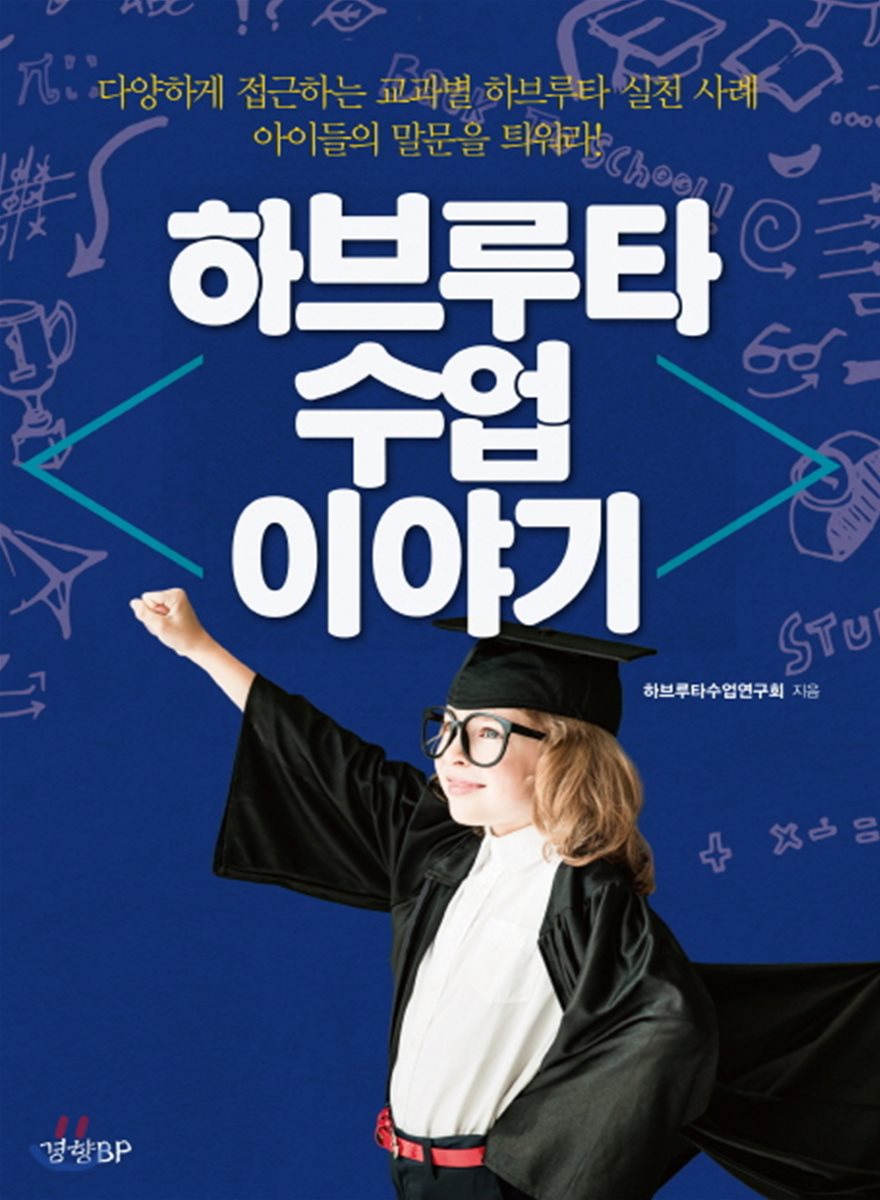
Havruta Class Story
 |
Description
Book Introduction
What should I do with Havruta?
Case studies of Havruta classes reflecting the characteristics of each subject
Why should we teach?
What does it have to do with children's lives?
What should I do with Havruta?
Havruta classes that connect textbooks with children's lives
Havruta classes help children better understand others and the world.
To understand means to be able to explain and interpret.
Through Havruta classes, children can effectively apply textbook knowledge, develop a critical perspective, and understand the world.
Textbooks tell a single story, but each child's understanding and interpretation can reveal it in a variety of ways.
Amazing changes occur when teachers spend less time teaching and more time giving children time to teach and ask questions of one another.
Children become actively curious and interested in their own learning.
When the content and process of learning become their own, children grow.
Havruta, which grows through questioning, provides wisdom to reflect on life through learning.
Case studies of Havruta classes reflecting the characteristics of each subject
Why should we teach?
What does it have to do with children's lives?
What should I do with Havruta?
Havruta classes that connect textbooks with children's lives
Havruta classes help children better understand others and the world.
To understand means to be able to explain and interpret.
Through Havruta classes, children can effectively apply textbook knowledge, develop a critical perspective, and understand the world.
Textbooks tell a single story, but each child's understanding and interpretation can reveal it in a variety of ways.
Amazing changes occur when teachers spend less time teaching and more time giving children time to teach and ask questions of one another.
Children become actively curious and interested in their own learning.
When the content and process of learning become their own, children grow.
Havruta, which grows through questioning, provides wisdom to reflect on life through learning.
- You can preview some of the book's contents.
Preview
index
prolog
Chapter 1: Classroom Management through Havruta
1.
Life and character guidance through Havruta
01 Listen to children
02 Paying attention to boost self-esteem
03 Asking and listening together again
04 Give a small sense of accomplishment
2.
Building Relationships in Class with Havruta
01 Building Relationships That Bring Class to Life
02 Building relationships in class through questions
03 Take a Havruta class on character and learning
04 Relationship with parents who help each other
Chapter 2: A Havruta Moral Lesson That Deepens Thought
01 Philosophy Class, Moral Havruta
02 Moral Lesson on Conflict
03 Moral Lesson on Fairness
04 Human Rights Class Using Comics
05 Human Rights Class Using Video
Chapter 3: Havruta Korean Language Classes Centered on Children's Learning
01 Teachers are the bridge that connects life and classes.
02 Children's Questions That Open the Door to Learning
03 Teach a friend to understand by explaining
04 Appreciating Literature that Faces One's Own Life
05 Library Project Filled with the Scent of Books
Chapter 4: Havruta Social Studies Classes: Opening the Textbook
01 Havruta Social Studies Class for Students
02 Preparing for Havruta Social Studies Class with Questions
03 Havruta technique that opens textbooks
04 Havruta Social Studies Course
05 Social Studies Classes Using the Basic Havruta Model
06 Social Studies Assessment through Havruta
Chapter 5: Skills Grow! Havruta Math Class
01 Too many dropouts in our class
02 Start with a math workbook
03 Math Havruta with Friends
04 Math Havruta: Studying with Questions
05 Amazingly developed math skills
06 Amazing Change, Havruta
Chapter 6: Havruta Science Classes: Fostering Collective Intelligence
01 Limitations of science classes that lack communication and challenge
02 Teacher's question transition to promote inquiry
03 Havruta Science Class: Exploring Collective Intelligence
Chapter 7: Havruta Career Class: Cultivating a Happy Life
01 A Prerequisite for Career Education: Havruta
02 Career Education to Prepare for Your 'Life Journey'
03 Career Education to Find and Enjoy Happiness
04 Career Education to Find the Meaning of Studying
05 Habit Education to Complete Life
06 Journey to a Happy Life, Havruta
Appendix Question Card
Epilogue
References
Chapter 1: Classroom Management through Havruta
1.
Life and character guidance through Havruta
01 Listen to children
02 Paying attention to boost self-esteem
03 Asking and listening together again
04 Give a small sense of accomplishment
2.
Building Relationships in Class with Havruta
01 Building Relationships That Bring Class to Life
02 Building relationships in class through questions
03 Take a Havruta class on character and learning
04 Relationship with parents who help each other
Chapter 2: A Havruta Moral Lesson That Deepens Thought
01 Philosophy Class, Moral Havruta
02 Moral Lesson on Conflict
03 Moral Lesson on Fairness
04 Human Rights Class Using Comics
05 Human Rights Class Using Video
Chapter 3: Havruta Korean Language Classes Centered on Children's Learning
01 Teachers are the bridge that connects life and classes.
02 Children's Questions That Open the Door to Learning
03 Teach a friend to understand by explaining
04 Appreciating Literature that Faces One's Own Life
05 Library Project Filled with the Scent of Books
Chapter 4: Havruta Social Studies Classes: Opening the Textbook
01 Havruta Social Studies Class for Students
02 Preparing for Havruta Social Studies Class with Questions
03 Havruta technique that opens textbooks
04 Havruta Social Studies Course
05 Social Studies Classes Using the Basic Havruta Model
06 Social Studies Assessment through Havruta
Chapter 5: Skills Grow! Havruta Math Class
01 Too many dropouts in our class
02 Start with a math workbook
03 Math Havruta with Friends
04 Math Havruta: Studying with Questions
05 Amazingly developed math skills
06 Amazing Change, Havruta
Chapter 6: Havruta Science Classes: Fostering Collective Intelligence
01 Limitations of science classes that lack communication and challenge
02 Teacher's question transition to promote inquiry
03 Havruta Science Class: Exploring Collective Intelligence
Chapter 7: Havruta Career Class: Cultivating a Happy Life
01 A Prerequisite for Career Education: Havruta
02 Career Education to Prepare for Your 'Life Journey'
03 Career Education to Find and Enjoy Happiness
04 Career Education to Find the Meaning of Studying
05 Habit Education to Complete Life
06 Journey to a Happy Life, Havruta
Appendix Question Card
Epilogue
References
Detailed image

Publisher's Review
Case studies of Havruta classes in various subjects
Each subject children learn in school is designed to convey the core ideas and ways of thinking of a particular discipline.
Therefore, in Havruta classes, each subject must be approached differently according to its characteristics.
If you use similar patterns of Havruta for all subjects without considering the characteristics of each subject, it can be difficult to extract the core content, and teachers and children can become tired of creating formulaic questions, making it impossible to expect the spontaneity and dynamic effects that can be obtained from Havruta classes.
This book contains practical examples of Havruta classes implemented in actual elementary schools, including classroom management and character development Havruta, as well as Havruta for each subject in ethics, Korean, social studies, math, and science, and Havruta for career education.
Questions that capture the unique characteristics of each subject, conversations between teachers and students, and teachers' experiences while conducting classes can serve as valuable reference materials for gathering diverse lesson ideas.
Includes subject-specific question cards
Teachers who want to incorporate Havruta into their classes but have never tried it before often find it difficult and burdensome to figure out what questions to ask, how to guide children's conversations to key topics, and how to evaluate them.
This book presents question cards that were actually used in classes for each subject, so even teachers who are not confident in Havruta can apply them right away.
It will be helpful to teachers who are new to Havruta as it provides detailed explanations on how and what content should be included in a 40-minute class based on the characteristics of each subject.
Each subject children learn in school is designed to convey the core ideas and ways of thinking of a particular discipline.
Therefore, in Havruta classes, each subject must be approached differently according to its characteristics.
If you use similar patterns of Havruta for all subjects without considering the characteristics of each subject, it can be difficult to extract the core content, and teachers and children can become tired of creating formulaic questions, making it impossible to expect the spontaneity and dynamic effects that can be obtained from Havruta classes.
This book contains practical examples of Havruta classes implemented in actual elementary schools, including classroom management and character development Havruta, as well as Havruta for each subject in ethics, Korean, social studies, math, and science, and Havruta for career education.
Questions that capture the unique characteristics of each subject, conversations between teachers and students, and teachers' experiences while conducting classes can serve as valuable reference materials for gathering diverse lesson ideas.
Includes subject-specific question cards
Teachers who want to incorporate Havruta into their classes but have never tried it before often find it difficult and burdensome to figure out what questions to ask, how to guide children's conversations to key topics, and how to evaluate them.
This book presents question cards that were actually used in classes for each subject, so even teachers who are not confident in Havruta can apply them right away.
It will be helpful to teachers who are new to Havruta as it provides detailed explanations on how and what content should be included in a 40-minute class based on the characteristics of each subject.
GOODS SPECIFICS
- Date of issue: March 31, 2017
- Page count, weight, size: 365 pages | 680g | 165*225*21mm
- ISBN13: 9788969521620
- ISBN10: 8969521623
You may also like
카테고리
korean


korean

![GQ KOREA Mark (Monthly): December [2025]](http://librairie.coreenne.fr/cdn/shop/files/8ef265dbbfbf186523ed75ba7319009d.jpg?v=1765340328&width=3840)


