

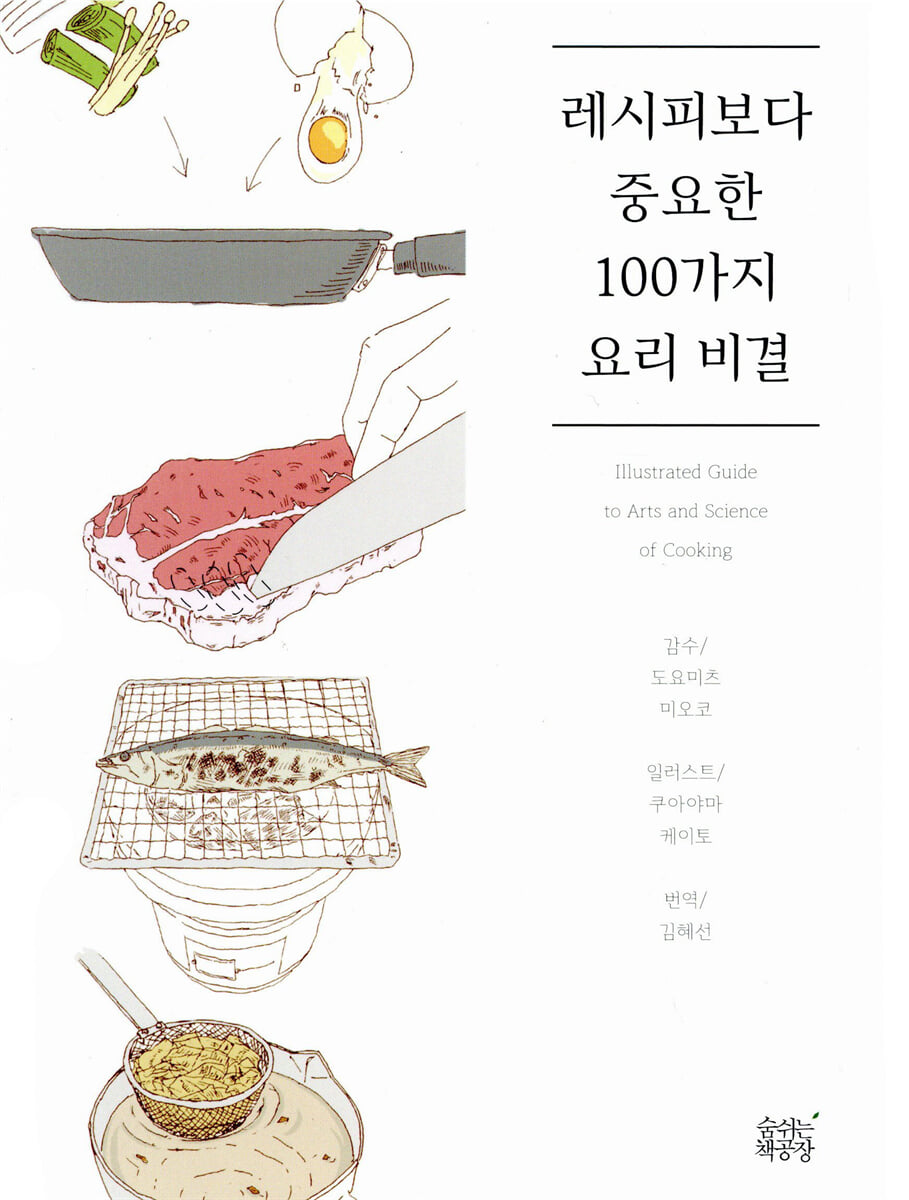
100 Cooking Secrets That Are More Important Than Recipes
 |
Description
Book Introduction
Scientific principles explained in pictures
Discover 100 cooking secrets!
As the title suggests, “100 Cooking Secrets More Important Than Recipes” is a book that contains 100 cooking secrets.
And the secrets are largely divided into 13 parts.
The 13 parts are 'Secrets about vegetables and fruits', 'Secrets about meat', 'Secrets about seafood', 'Secrets about eggs', 'Secrets about rice, bread, and noodles', 'Secrets about base preparation', 'Basic secrets for cooking in general', 'Secrets about seasoning', 'Secrets about cooking utensils', 'Secrets about side dishes', 'Secrets about drinks', 'Secrets about storing and preserving ingredients', and 'Secrets about selecting ingredients'.
It would be a good idea to read the book carefully from the beginning, but it would also be a good idea to first look at the secrets of the cooking section related to the ingredients you are least confident in.
With "100 Cooking Secrets More Important Than Recipes," you'll gain confidence in any dish, whether it's a special dish or a common dish. This book offers 100 essential yet fundamental tips for mastering recipes.
Discover 100 cooking secrets!
As the title suggests, “100 Cooking Secrets More Important Than Recipes” is a book that contains 100 cooking secrets.
And the secrets are largely divided into 13 parts.
The 13 parts are 'Secrets about vegetables and fruits', 'Secrets about meat', 'Secrets about seafood', 'Secrets about eggs', 'Secrets about rice, bread, and noodles', 'Secrets about base preparation', 'Basic secrets for cooking in general', 'Secrets about seasoning', 'Secrets about cooking utensils', 'Secrets about side dishes', 'Secrets about drinks', 'Secrets about storing and preserving ingredients', and 'Secrets about selecting ingredients'.
It would be a good idea to read the book carefully from the beginning, but it would also be a good idea to first look at the secrets of the cooking section related to the ingredients you are least confident in.
With "100 Cooking Secrets More Important Than Recipes," you'll gain confidence in any dish, whether it's a special dish or a common dish. This book offers 100 essential yet fundamental tips for mastering recipes.
- You can preview some of the book's contents.
Preview
index
Entering
Secrets about vegetables and fruits
1.
Vegetables that need to be shaken and washed, vegetables that need to be rubbed
2.
Soak the sliced vegetables in water before using.
3.
Should I cut the vegetables lengthwise or crosswise?
4.
Lettuce is torn by hand, not with a knife.
5.
When cooking whole potatoes, boil them in cold water first.
6.
Do not cover when blanching green vegetables.
7.
Add vinegar to the water used to cook lotus root, burdock, and celery.
8.
Add salt when blanching spinach.
9.
A type of potato that doesn't crumble easily
10.
Strain the potatoes and sweet potatoes before they cool.
11.
The combination of dressing and vegetables
12.
To enjoy fruit, should I leave it at room temperature or refrigerate it?
13.
Fruits that are good to eat right away, fruits that are even better when ripened
14.
Apple discoloration can be prevented with salt water.
Secrets about meat
15.
Remove the meat from the refrigerator 30 minutes before cooking and let it come to room temperature.
16.
Pound the meat before cooking.
17.
When cutting meat, cut perpendicular to the fibers.
18.
Insert the knife into the meat before cooking or heating it.
19.
Beef cooked to your liking, pork cooked properly
20.
Before cooking a dish that requires deep-cooking meat, soak it in wine in advance.
21.
Beef, where and how to eat it?
22.
Pork, where and how to eat it?
23.
Chicken, where and how to eat it?
24.
When making hamburger steak, mix pork and beef.
25.
Add salt to the minced meat and knead it, then shape it.
26.
When kneading the minced meat, quickly
27.
Hamburger steak dough is made into a hollow shape in the center.
28.
Hamburger steaks are cooked over high heat and then over low heat.
Secrets about seafood
29.
Fish baked from the skin on, fish baked from the meat on
30.
When grilling fish, turn it over only once.
31.
Fish tastes better when cooked at a distance over high heat.
32.
When cooking fish, use a cooking lid.
33.
When eating raw fish, slice it thickly, slice it thinly
34.
White fish is cooked quickly, while red fish takes longer.
35.
Clams and clams are soaked in salt water, and clams are soaked in fresh water.
36.
Shellfish should not be cooked for long.
37.
When cleaning shrimp, should I put the knife in the back or the belly?
38.
When boiling shrimp, add lemon.
Secrets about Eggs
39.
Crack the eggs just before use.
40.
Make sure the egg mixture doesn't foam.
41.
When frying the sesame seeds, pour in the oil and wipe the pan once.
42.
When cooking eggs that are not fully cooked, remove them from the heat quickly.
43.
How to make delicious and pretty boiled eggs?
Secrets about rice, bread, and noodles
44.
Wash the rice as quickly as possible.
45.
Mix the rice with a spatula immediately after it has been steamed.
46.
When to add vinegar when making sushi rice
47.
How to cut bread or cake neatly
48.
When making a sandwich, spread butter on one side of the bread.
49.
Add salt when boiling pasta.
50.
Boil the pasta slightly shorter than standard.
51.
What goes well with pasta and sauce?
Secrets to groundwork
52.
When cutting the material, cut it into uniform sizes.
53.
Ingredients suitable for irregular use
54.
How to Cut Onions Without Crying
55.
Do not wash cut meat or fish in water.
56.
Don't boil kelp broth for too long.
57.
When making bonito broth, be careful not to overheat it.
58.
How to keep fried rice and noodles from being soggy
59.
When cooking radish by slicing it thickly, make a cross-shaped cut on the bottom.
60.
Cut the burdock and lotus root and put them in water with vinegar.
61.
Remove moisture from vegetables to be used in sandwiches with a paper towel.
Basic secrets of cooking in general
62.
Stir-fry the meat and vegetables quickly over high heat.
63.
What is the order in which you should stir-fry meat, vegetables, and eggs?
64.
How to cook eggplant that preserves its color and flavor?
65.
Fish or meat is coated in flour and fried.
66.
When frying dumplings in a pan, add water before adding oil.
67.
How to make white sauce
68.
How to Make Savory and Fragrant Roast Beef
Secrets about the liver
69.
When stir-frying vegetables, season them at the very end.
70.
Braised dishes take time to cool after they are made.
71.
Timing for seasoning rice cooked with seasoning
72.
What is the importance of the order in which you add the various seasonings?
73.
Add salt to the red bean paste.
74.
The Hidden Role of Sugar
75.
The role of tasting alcohol
76.
Herbs and spices, which ones you add first and which ones you add last
Tips on Cookware
77.
The knife is placed at an angle to the food and then moved back and forth to cut.
78.
The ingredients for stir-frying should be less than half the size of the pan.
79.
Use a microwave when cooking vegetables.
Secrets of Side Dishes
80.
Finely chopped cabbage for tonkatsu
81.
Radish for grilled fish
82.
Olive oil for tomatoes
83.
Pickled onions in curry
84.
Soybean paste soup with rice
85.
Spinach and lettuce are added to the soup
86.
Noodles for stir-fried vegetables
Secrets about drinking
87.
How to Make Crisp Iced Tea
88.
The difference between cafe au lait and cafe latte
89.
The benefits of green tea after a meal
90.
How to pour beer deliciously
91.
What is the optimal temperature for each type of alcohol?
Secrets to Preserving and Storing Food
92.
Place the contents of the lunchbox in a cooled container.
93.
When freezing rice, divide it into small portions if possible.
94.
How to properly store vegetables
95.
How to properly store meat
96.
How to properly store seafood
Tips for Choosing Ingredients
97.
How to choose ingredients according to the season
98.
How to Choose Delicious Vegetables
99.
How to Choose Delicious Meat
100.
How to Choose Delicious Seafood
index
References
Secrets about vegetables and fruits
1.
Vegetables that need to be shaken and washed, vegetables that need to be rubbed
2.
Soak the sliced vegetables in water before using.
3.
Should I cut the vegetables lengthwise or crosswise?
4.
Lettuce is torn by hand, not with a knife.
5.
When cooking whole potatoes, boil them in cold water first.
6.
Do not cover when blanching green vegetables.
7.
Add vinegar to the water used to cook lotus root, burdock, and celery.
8.
Add salt when blanching spinach.
9.
A type of potato that doesn't crumble easily
10.
Strain the potatoes and sweet potatoes before they cool.
11.
The combination of dressing and vegetables
12.
To enjoy fruit, should I leave it at room temperature or refrigerate it?
13.
Fruits that are good to eat right away, fruits that are even better when ripened
14.
Apple discoloration can be prevented with salt water.
Secrets about meat
15.
Remove the meat from the refrigerator 30 minutes before cooking and let it come to room temperature.
16.
Pound the meat before cooking.
17.
When cutting meat, cut perpendicular to the fibers.
18.
Insert the knife into the meat before cooking or heating it.
19.
Beef cooked to your liking, pork cooked properly
20.
Before cooking a dish that requires deep-cooking meat, soak it in wine in advance.
21.
Beef, where and how to eat it?
22.
Pork, where and how to eat it?
23.
Chicken, where and how to eat it?
24.
When making hamburger steak, mix pork and beef.
25.
Add salt to the minced meat and knead it, then shape it.
26.
When kneading the minced meat, quickly
27.
Hamburger steak dough is made into a hollow shape in the center.
28.
Hamburger steaks are cooked over high heat and then over low heat.
Secrets about seafood
29.
Fish baked from the skin on, fish baked from the meat on
30.
When grilling fish, turn it over only once.
31.
Fish tastes better when cooked at a distance over high heat.
32.
When cooking fish, use a cooking lid.
33.
When eating raw fish, slice it thickly, slice it thinly
34.
White fish is cooked quickly, while red fish takes longer.
35.
Clams and clams are soaked in salt water, and clams are soaked in fresh water.
36.
Shellfish should not be cooked for long.
37.
When cleaning shrimp, should I put the knife in the back or the belly?
38.
When boiling shrimp, add lemon.
Secrets about Eggs
39.
Crack the eggs just before use.
40.
Make sure the egg mixture doesn't foam.
41.
When frying the sesame seeds, pour in the oil and wipe the pan once.
42.
When cooking eggs that are not fully cooked, remove them from the heat quickly.
43.
How to make delicious and pretty boiled eggs?
Secrets about rice, bread, and noodles
44.
Wash the rice as quickly as possible.
45.
Mix the rice with a spatula immediately after it has been steamed.
46.
When to add vinegar when making sushi rice
47.
How to cut bread or cake neatly
48.
When making a sandwich, spread butter on one side of the bread.
49.
Add salt when boiling pasta.
50.
Boil the pasta slightly shorter than standard.
51.
What goes well with pasta and sauce?
Secrets to groundwork
52.
When cutting the material, cut it into uniform sizes.
53.
Ingredients suitable for irregular use
54.
How to Cut Onions Without Crying
55.
Do not wash cut meat or fish in water.
56.
Don't boil kelp broth for too long.
57.
When making bonito broth, be careful not to overheat it.
58.
How to keep fried rice and noodles from being soggy
59.
When cooking radish by slicing it thickly, make a cross-shaped cut on the bottom.
60.
Cut the burdock and lotus root and put them in water with vinegar.
61.
Remove moisture from vegetables to be used in sandwiches with a paper towel.
Basic secrets of cooking in general
62.
Stir-fry the meat and vegetables quickly over high heat.
63.
What is the order in which you should stir-fry meat, vegetables, and eggs?
64.
How to cook eggplant that preserves its color and flavor?
65.
Fish or meat is coated in flour and fried.
66.
When frying dumplings in a pan, add water before adding oil.
67.
How to make white sauce
68.
How to Make Savory and Fragrant Roast Beef
Secrets about the liver
69.
When stir-frying vegetables, season them at the very end.
70.
Braised dishes take time to cool after they are made.
71.
Timing for seasoning rice cooked with seasoning
72.
What is the importance of the order in which you add the various seasonings?
73.
Add salt to the red bean paste.
74.
The Hidden Role of Sugar
75.
The role of tasting alcohol
76.
Herbs and spices, which ones you add first and which ones you add last
Tips on Cookware
77.
The knife is placed at an angle to the food and then moved back and forth to cut.
78.
The ingredients for stir-frying should be less than half the size of the pan.
79.
Use a microwave when cooking vegetables.
Secrets of Side Dishes
80.
Finely chopped cabbage for tonkatsu
81.
Radish for grilled fish
82.
Olive oil for tomatoes
83.
Pickled onions in curry
84.
Soybean paste soup with rice
85.
Spinach and lettuce are added to the soup
86.
Noodles for stir-fried vegetables
Secrets about drinking
87.
How to Make Crisp Iced Tea
88.
The difference between cafe au lait and cafe latte
89.
The benefits of green tea after a meal
90.
How to pour beer deliciously
91.
What is the optimal temperature for each type of alcohol?
Secrets to Preserving and Storing Food
92.
Place the contents of the lunchbox in a cooled container.
93.
When freezing rice, divide it into small portions if possible.
94.
How to properly store vegetables
95.
How to properly store meat
96.
How to properly store seafood
Tips for Choosing Ingredients
97.
How to choose ingredients according to the season
98.
How to Choose Delicious Vegetables
99.
How to Choose Delicious Meat
100.
How to Choose Delicious Seafood
index
References
Into the book
Fructose and glucose, the substances that give fruits their sweetness, are composed of two chemical structures: the less sweet α-form and the more sweet β-form.
These ingredients allow the level of sweetness to change depending on the temperature.
At low temperatures, the α type decreases and the β type increases, so the sweetness becomes stronger, but as the temperature rises, the α type increases and the β type decreases, so the acidity becomes stronger.
However, in the case of tropical fruits, if they are chilled, the color will change and the flesh will become soft, causing a type of hypothermia, so you should put them in the refrigerator an hour before eating.
--- p.35
Collagen, the membrane-like substance that surrounds muscle bundles and is the main component of meat, is a fairly strong protein.
Therefore, if heated for a short time without separate treatment, the collagen will shrink and become hard like rubber.
However, this collagen has the property of becoming soft when soaked in acidic liquid.
Not only that, if heated for a long time, the gelatin breaks down and becomes more likely to crumble.
So the texture feels smoother.
--- p.53
For ingredients that are difficult to lose flavor easily, such as eggplant, carrots, and lotus root, it is better to cut them into irregular shapes while rotating them.
This is because cutting it this way increases the cross-section and thus the surface area.
This allows the ingredients to cook quickly and the flavors of the seasoning to permeate well.
--- p.127
When cooking meat or fish, there are times when the umami and fat that are melted by heating are simply left behind.
At this time, if you coat the surface with flour, the starch in the flour will coagulate when heated, preventing the savory flavor and fat of the meat or fish from melting away.
So, the flavor of the ingredients can be preserved.
Moreover, the nutty flavor of the roasted flour enhances the flavor of the meat.
However, if you cover it with too much flour, it will be messy when you finish cooking, so try to cover it as thinly and evenly as possible.
--- p.153
The reason cold rice tastes bad is because the starch in the rice has aged.
Starch aging progresses faster at lower temperatures, and is further accelerated at 3-5°C.
This phenomenon cannot be stopped unless it is frozen.
The best way to stop starch aging is to rapidly freeze it to below -20°C, but it is difficult to achieve this temperature in a home refrigerator.
Therefore, the best way to slow down the aging process is to freeze it quickly in the freezer.
For this, it would be better to divide it into small and thin pieces.
Additionally, if you freeze freshly cooked rice immediately, you can preserve the shape and texture of freshly cooked rice when you thaw it.
These ingredients allow the level of sweetness to change depending on the temperature.
At low temperatures, the α type decreases and the β type increases, so the sweetness becomes stronger, but as the temperature rises, the α type increases and the β type decreases, so the acidity becomes stronger.
However, in the case of tropical fruits, if they are chilled, the color will change and the flesh will become soft, causing a type of hypothermia, so you should put them in the refrigerator an hour before eating.
--- p.35
Collagen, the membrane-like substance that surrounds muscle bundles and is the main component of meat, is a fairly strong protein.
Therefore, if heated for a short time without separate treatment, the collagen will shrink and become hard like rubber.
However, this collagen has the property of becoming soft when soaked in acidic liquid.
Not only that, if heated for a long time, the gelatin breaks down and becomes more likely to crumble.
So the texture feels smoother.
--- p.53
For ingredients that are difficult to lose flavor easily, such as eggplant, carrots, and lotus root, it is better to cut them into irregular shapes while rotating them.
This is because cutting it this way increases the cross-section and thus the surface area.
This allows the ingredients to cook quickly and the flavors of the seasoning to permeate well.
--- p.127
When cooking meat or fish, there are times when the umami and fat that are melted by heating are simply left behind.
At this time, if you coat the surface with flour, the starch in the flour will coagulate when heated, preventing the savory flavor and fat of the meat or fish from melting away.
So, the flavor of the ingredients can be preserved.
Moreover, the nutty flavor of the roasted flour enhances the flavor of the meat.
However, if you cover it with too much flour, it will be messy when you finish cooking, so try to cover it as thinly and evenly as possible.
--- p.153
The reason cold rice tastes bad is because the starch in the rice has aged.
Starch aging progresses faster at lower temperatures, and is further accelerated at 3-5°C.
This phenomenon cannot be stopped unless it is frozen.
The best way to stop starch aging is to rapidly freeze it to below -20°C, but it is difficult to achieve this temperature in a home refrigerator.
Therefore, the best way to slow down the aging process is to freeze it quickly in the freezer.
For this, it would be better to divide it into small and thin pieces.
Additionally, if you freeze freshly cooked rice immediately, you can preserve the shape and texture of freshly cooked rice when you thaw it.
--- p.219
Publisher's Review
I want to cook delicious food.
What's the first thing you do? Most people start by looking up a recipe for the dish they want to make in a book or online.
Then, prepare the ingredients according to the recipe and cook the dish according to the recipe.
However, there are many cases where you cook according to the recipe, but the dish does not turn out as delicious as you expected.
Where did it all go wrong? It's likely because you're missing the fundamental "secret" of cooking before even learning the recipe.
This cookbook explains the basic 'secret' in an easy-to-understand way with scientific principles and illustrations.
Just because it's called a 'secret' doesn't mean it's some great secret or special magic trick.
For example, tips like 'score meat before grilling' or 'stir-fry vegetables over high heat' are easy to overlook, but are crucial in determining the perfection of a dish, yet are not written in recipes.
This is the very 'secret' that is conveyed in '100 Cooking Secrets More Important Than Recipes'.
What's the first thing you do? Most people start by looking up a recipe for the dish they want to make in a book or online.
Then, prepare the ingredients according to the recipe and cook the dish according to the recipe.
However, there are many cases where you cook according to the recipe, but the dish does not turn out as delicious as you expected.
Where did it all go wrong? It's likely because you're missing the fundamental "secret" of cooking before even learning the recipe.
This cookbook explains the basic 'secret' in an easy-to-understand way with scientific principles and illustrations.
Just because it's called a 'secret' doesn't mean it's some great secret or special magic trick.
For example, tips like 'score meat before grilling' or 'stir-fry vegetables over high heat' are easy to overlook, but are crucial in determining the perfection of a dish, yet are not written in recipes.
This is the very 'secret' that is conveyed in '100 Cooking Secrets More Important Than Recipes'.
GOODS SPECIFICS
- Date of issue: May 2, 2016
- Page count, weight, size: 240 pages | 457g | 148*200*20mm
- ISBN13: 9791186452127
- ISBN10: 1186452129
You may also like
카테고리
korean


korean

![GQ KOREA Mark (Monthly): December [2025]](http://librairie.coreenne.fr/cdn/shop/files/8ef265dbbfbf186523ed75ba7319009d.jpg?v=1765340328&width=3840)


