

tree pruning
 |
Description
Book Introduction
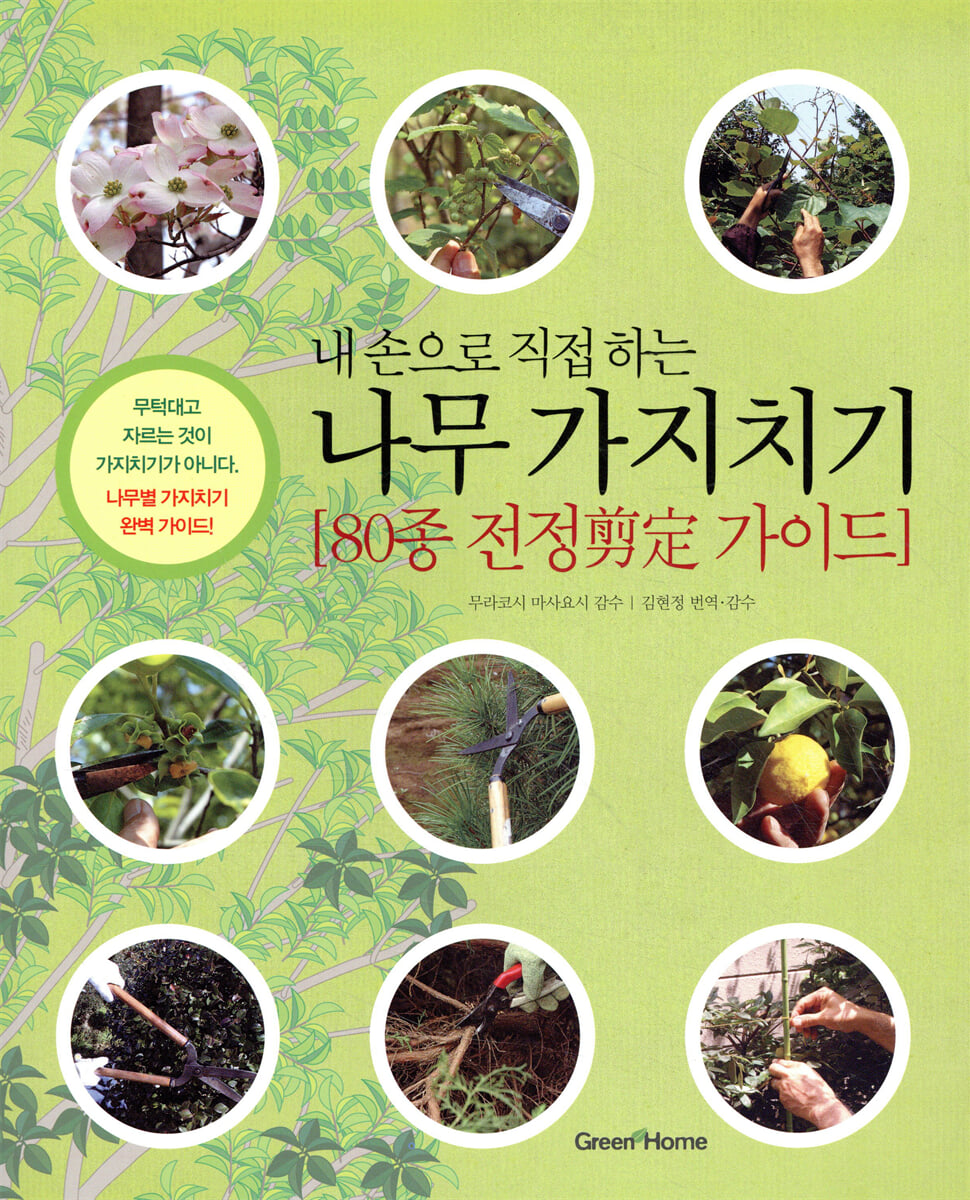
Pruning is not just cutting down a tree.
You should think about why you planted this tree and then prune it.
If you planted a tree to enjoy flowers, you should prune it to produce more beautiful flowers. If you planted a tree to harvest fruit, you should prune it to produce more fruit.
If you planted it to serve as a fence, to provide shade from strong sunlight, or to deter animals, you should prune it accordingly.
Also, the method of pruning a tree varies depending on the type of tree, type of leaf, nature of the leaf, and shape of the tree.
This book first provides basic knowledge that you need to know before pruning, such as the purpose of pruning, the shape of pruning, the types of trees you need to know before pruning, and the names of each part in Chapter 1, Pruning Basics. Then, depending on the tree type, it is divided into Chapter 2 Pruning Deciduous Trees, Chapter 3 Pruning Evergreen Trees, Chapter 4 Pruning Conifers, and Chapter 5 Pruning Fruit Trees. It explains the pruning period and specific pruning methods that vary depending on the type, showing actual tree photos and detailed pruning drawings in an easy-to-understand manner.
You should think about why you planted this tree and then prune it.
If you planted a tree to enjoy flowers, you should prune it to produce more beautiful flowers. If you planted a tree to harvest fruit, you should prune it to produce more fruit.
If you planted it to serve as a fence, to provide shade from strong sunlight, or to deter animals, you should prune it accordingly.
Also, the method of pruning a tree varies depending on the type of tree, type of leaf, nature of the leaf, and shape of the tree.
This book first provides basic knowledge that you need to know before pruning, such as the purpose of pruning, the shape of pruning, the types of trees you need to know before pruning, and the names of each part in Chapter 1, Pruning Basics. Then, depending on the tree type, it is divided into Chapter 2 Pruning Deciduous Trees, Chapter 3 Pruning Evergreen Trees, Chapter 4 Pruning Conifers, and Chapter 5 Pruning Fruit Trees. It explains the pruning period and specific pruning methods that vary depending on the type, showing actual tree photos and detailed pruning drawings in an easy-to-understand manner.
index
- How to use this book
- Pruning Glossary
- INDEX
1.
Pruning Basics
Purpose of pruning / Shape of pruning / Types of trees and names of each part / Basic pruning methods / Basic pruning_ Types of unnecessary branches / Basic pruning_ How to cut branches / Basic pruning_ Required tools / Basic pruning_ How to use tools / Clipping pruning / Types of flower buds and pruning of flowering trees / Case Study_ Q&A on what I want to know / 12-month cycle of trees
2.
Pruning maple trees
Pruning of maple trees / slender-leafed spirea / Japanese maple / Japanese maple / maple azalea / maple tree / wisteria / Japanese maple / star magnolia / plum tree / rose of Sharon / American dogwood
Cornelian cherry / Crape myrtle / White magnolia / Cherry tree / Sugar maple / Western syringa / Hydrangea / Weeping maple / Baby's breath / Japanese maple / Birch / Forsythia / Japanese apricot
3.
Pruning evergreen trees
Pruning of evergreen trees / hollyhock / Japanese maple / osmanthus / Japanese dogwood / Chinese quince / Nandina / Japanese maple / Japanese quince / Camellia / Chinese quince / Rhododendron / Japanese maple / Ash tree (evergreen tree) / American holly / Michelia / Bottlebrush / Horned Nandina / Sassrepi / Evergreen hawthorn / Acacia / Olive tree / Baby camellia / Rhododendron / Laurel / Japanese deciduous tree / Japanese oak / Japanese quince / Gardenia / Pyracantha / Red maple / Golden acacia / Paphiopedilum / Palson
4.
Pruning conifers
Pruning of conifers / spruce / conifers / kaizuka cedar / golden pine / bamboo / pine / cypress / snow yew / bamboo / pine / cypress / golden cypress / column / various pruning methods
5.
Fruit tree pruning
Fruit tree pruning / citrus / persimmon / blueberry / loquat / Canadian serviceberry / pomegranate / kiwi / feijoa / grape
- Pruning Glossary
- INDEX
1.
Pruning Basics
Purpose of pruning / Shape of pruning / Types of trees and names of each part / Basic pruning methods / Basic pruning_ Types of unnecessary branches / Basic pruning_ How to cut branches / Basic pruning_ Required tools / Basic pruning_ How to use tools / Clipping pruning / Types of flower buds and pruning of flowering trees / Case Study_ Q&A on what I want to know / 12-month cycle of trees
2.
Pruning maple trees
Pruning of maple trees / slender-leafed spirea / Japanese maple / Japanese maple / maple azalea / maple tree / wisteria / Japanese maple / star magnolia / plum tree / rose of Sharon / American dogwood
Cornelian cherry / Crape myrtle / White magnolia / Cherry tree / Sugar maple / Western syringa / Hydrangea / Weeping maple / Baby's breath / Japanese maple / Birch / Forsythia / Japanese apricot
3.
Pruning evergreen trees
Pruning of evergreen trees / hollyhock / Japanese maple / osmanthus / Japanese dogwood / Chinese quince / Nandina / Japanese maple / Japanese quince / Camellia / Chinese quince / Rhododendron / Japanese maple / Ash tree (evergreen tree) / American holly / Michelia / Bottlebrush / Horned Nandina / Sassrepi / Evergreen hawthorn / Acacia / Olive tree / Baby camellia / Rhododendron / Laurel / Japanese deciduous tree / Japanese oak / Japanese quince / Gardenia / Pyracantha / Red maple / Golden acacia / Paphiopedilum / Palson
4.
Pruning conifers
Pruning of conifers / spruce / conifers / kaizuka cedar / golden pine / bamboo / pine / cypress / snow yew / bamboo / pine / cypress / golden cypress / column / various pruning methods
5.
Fruit tree pruning
Fruit tree pruning / citrus / persimmon / blueberry / loquat / Canadian serviceberry / pomegranate / kiwi / feijoa / grape
Detailed image
Publisher's Review
Pruning is done to achieve the purpose for which the tree was planted and to limit its size.
Why should you prune? When should you prune?
Most people usually prune branches to make them look pretty.
However, pruning is not just cutting down a tree.
You should think about why you planted this tree and then prune it.
If you planted a tree to enjoy flowers, you should prune it to produce more beautiful flowers. If you planted a tree to harvest fruit, you should prune it to produce more fruit.
If you planted it to serve as a fence, to provide shade from strong sunlight, or to deter animals, you should prune it accordingly.
Also, when pruning, it is important to remember that the tree's size should be limited to the area and circumstances of the planting area.
You should trim it to a size that suits your garden so that it does not cause damage to the surrounding area.
The method of pruning a tree varies depending on the type of tree, type of leaf, nature of the leaf, and shape of the tree.
As pruning is the process of cutting down a tree, you need to know about the tree to prune it correctly.
Once a branch is cut, it cannot be restored to its original state.
Trees are living organisms, so you should first study what kind of tree you are going to prune, and then plan in advance when, what shape, and how you will prune it to avoid mistakes.
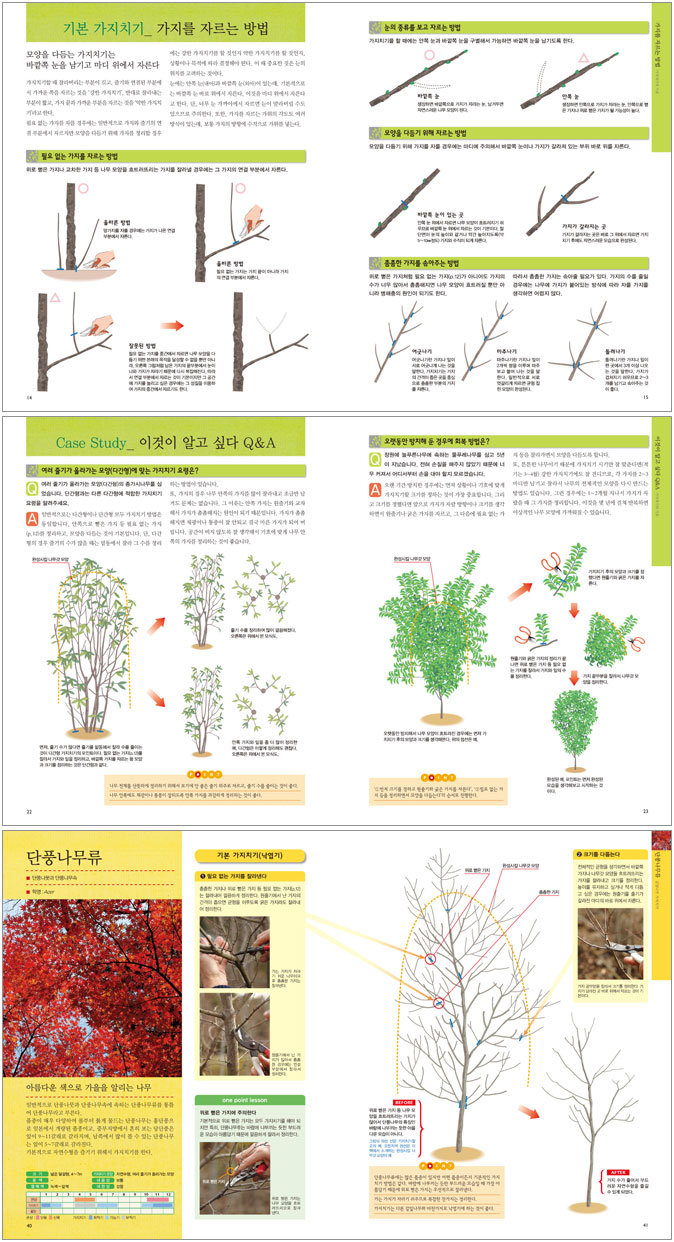
We've provided real tree photos and detailed pruning diagrams to help you understand which branches to prune.
This book consists of five chapters.
Chapter 1, Pruning Basics, first provides the basic knowledge you need to know before pruning, such as the purpose of pruning, the shape of the pruning, the types of trees you need to know before pruning, the names of each part, etc., and explains in detail the basic pruning methods, the types of branches that do not need to be cut when pruning, the cutting method, the necessary tools, and how to use them, so that even beginners can easily understand.
And depending on the tree type, it is categorized into Chapter 2 Pruning Deciduous Trees, Chapter 3 Pruning Evergreen Trees, Chapter 4 Pruning Coniferous Trees, and Chapter 5 Pruning Fruit Trees, and the pruning period and specific pruning methods that vary depending on the type are explained in an easy-to-understand manner using actual tree photos and detailed pruning drawings.
Another unique feature of this book is that it organizes the viewing period for flowers and fruits, the appropriate and unsuitable times for pruning, and the time of flower buds that should be considered when pruning, all in a calendar format so that you can see them at a glance.
If you read this book and follow along step by step, you will be able to cherish your own tree.
Why should you prune? When should you prune?
Most people usually prune branches to make them look pretty.
However, pruning is not just cutting down a tree.
You should think about why you planted this tree and then prune it.
If you planted a tree to enjoy flowers, you should prune it to produce more beautiful flowers. If you planted a tree to harvest fruit, you should prune it to produce more fruit.
If you planted it to serve as a fence, to provide shade from strong sunlight, or to deter animals, you should prune it accordingly.
Also, when pruning, it is important to remember that the tree's size should be limited to the area and circumstances of the planting area.
You should trim it to a size that suits your garden so that it does not cause damage to the surrounding area.
The method of pruning a tree varies depending on the type of tree, type of leaf, nature of the leaf, and shape of the tree.
As pruning is the process of cutting down a tree, you need to know about the tree to prune it correctly.
Once a branch is cut, it cannot be restored to its original state.
Trees are living organisms, so you should first study what kind of tree you are going to prune, and then plan in advance when, what shape, and how you will prune it to avoid mistakes.
We've provided real tree photos and detailed pruning diagrams to help you understand which branches to prune.
This book consists of five chapters.
Chapter 1, Pruning Basics, first provides the basic knowledge you need to know before pruning, such as the purpose of pruning, the shape of the pruning, the types of trees you need to know before pruning, the names of each part, etc., and explains in detail the basic pruning methods, the types of branches that do not need to be cut when pruning, the cutting method, the necessary tools, and how to use them, so that even beginners can easily understand.
And depending on the tree type, it is categorized into Chapter 2 Pruning Deciduous Trees, Chapter 3 Pruning Evergreen Trees, Chapter 4 Pruning Coniferous Trees, and Chapter 5 Pruning Fruit Trees, and the pruning period and specific pruning methods that vary depending on the type are explained in an easy-to-understand manner using actual tree photos and detailed pruning drawings.
Another unique feature of this book is that it organizes the viewing period for flowers and fruits, the appropriate and unsuitable times for pruning, and the time of flower buds that should be considered when pruning, all in a calendar format so that you can see them at a glance.
If you read this book and follow along step by step, you will be able to cherish your own tree.
GOODS SPECIFICS
- Date of publication: March 15, 2012
- Page count, weight, size: 192 pages | 696g | 210*257*20mm
- ISBN13: 9788971903674
- ISBN10: 8971903678
You may also like
카테고리
korean


korean

![GQ KOREA Mark (Monthly): December [2025]](http://librairie.coreenne.fr/cdn/shop/files/8ef265dbbfbf186523ed75ba7319009d.jpg?v=1765340328&width=3840)


