

Tea food and tea ceremony
 |
Description
Book Introduction
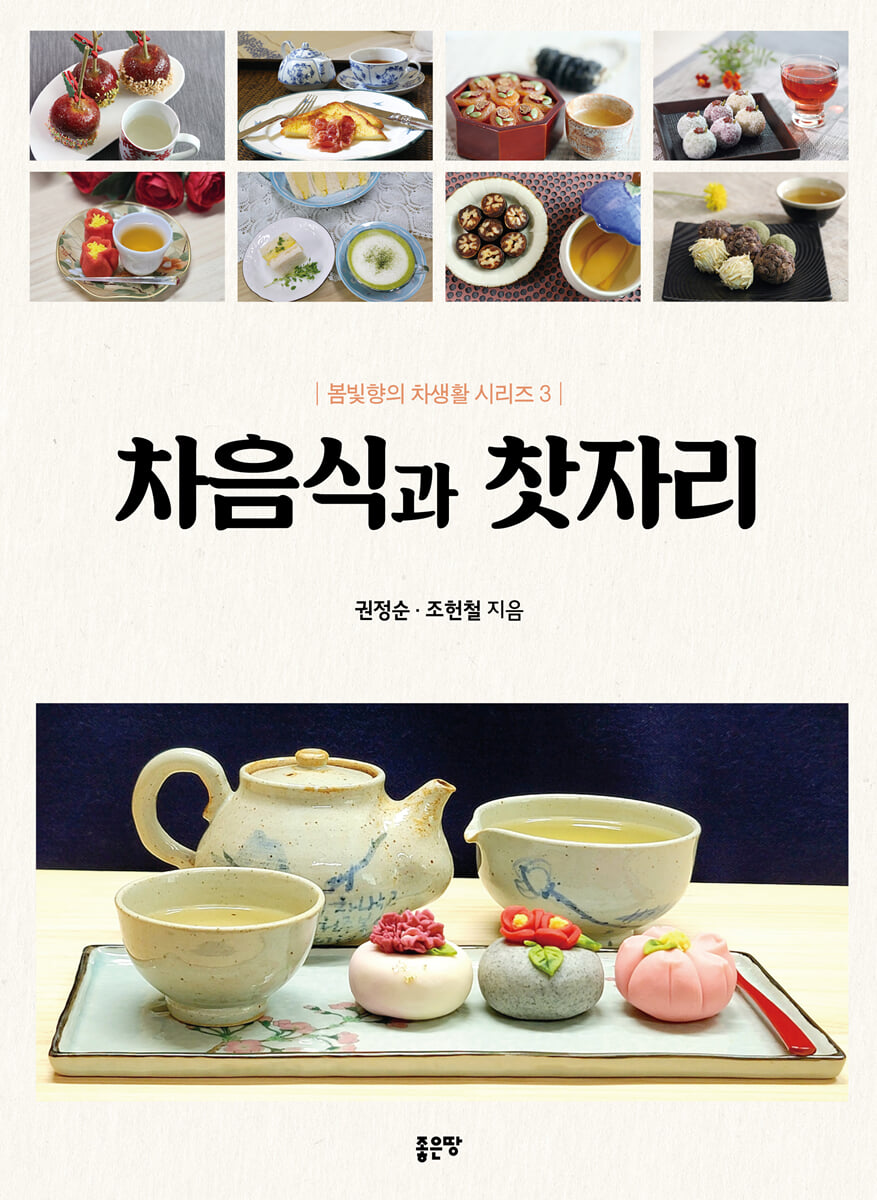
『Tea Food and Tea Seating』 is the third volume in the 'Spring Light Tea Life Series' and contains more specific and practical content based on past research and practice.
Although the concept of 'tea food' has not yet been clearly established, this book includes not only foods containing tea water, tea leaves, and tea powder, but also various foods that utilize the fragrance and flavor of tea using these ingredients, as well as foods that are suitable for various tea settings, all under the category of 'tea food.'
This book contains methods for preparing various tea ceremonies using tea food, and by finding evidence from various seasonal records, ancient cookbooks, and other literature such as the Imwon Gyeongjeji, it sheds new light on the meaning and structure of tea ceremonies within a traditional context.
Specifically, a total of 16 tea sets were proposed, including 12 tea sets suited to the four seasons and 4 tea sets of celebration and gratitude.
Each tea ceremony is accompanied by its origin and meaning, and the tea and food that go well with it are introduced, and sometimes even alcohol is included.
We thank God for granting us love, and pray that more people will be happier through tea, tea food, and tea parties.
I sincerely hope that this book will provide a warm and cozy time in our uncertain and difficult daily lives, and will be a source of comfort and healing.
Although the concept of 'tea food' has not yet been clearly established, this book includes not only foods containing tea water, tea leaves, and tea powder, but also various foods that utilize the fragrance and flavor of tea using these ingredients, as well as foods that are suitable for various tea settings, all under the category of 'tea food.'
This book contains methods for preparing various tea ceremonies using tea food, and by finding evidence from various seasonal records, ancient cookbooks, and other literature such as the Imwon Gyeongjeji, it sheds new light on the meaning and structure of tea ceremonies within a traditional context.
Specifically, a total of 16 tea sets were proposed, including 12 tea sets suited to the four seasons and 4 tea sets of celebration and gratitude.
Each tea ceremony is accompanied by its origin and meaning, and the tea and food that go well with it are introduced, and sometimes even alcohol is included.
We thank God for granting us love, and pray that more people will be happier through tea, tea food, and tea parties.
I sincerely hope that this book will provide a warm and cozy time in our uncertain and difficult daily lives, and will be a source of comfort and healing.
- You can preview some of the book's contents.
Preview
index
10 while publishing a book
PART 01 Rice Cake
1.
The Concept and Origin of Rice Cakes 14
1) The concept of rice cake 14
2) The Origin of Rice Cakes 14
2.
The History of Rice Cakes 14
1) Ancient times 14
2) Four Kingdoms Period 15
3) Goryeo Dynasty 15
4) Joseon Dynasty 16
5) Modern 16
3.
Rice Cakes in Old Literature 18
4.
Rice cakes of seasonal food 21
5.
Rice Cake and Proverbs 22
6.
Rite of Passage Rice Cake 24
7.
Classification of rice cakes 24
1) Steamed rice cake 25
2) 40 pieces of rice cake
3) Support rice cake 48
4) Boiled rice cake 56
PART 02 Course
1.
Concept of process flow 64
2.
History of the Process 64
1) Four Kingdoms Period 64
2) Goryeo Dynasty 65
3) Joseon Dynasty 65
4) Hyundai 66
3.
Type 66 of courses
1) Yumil and 67
2) Yugwa 69
3) Tea ceremony 71
4) Jeonggwa 78
5) Accommodation and 84
6) Fruit 85
7) Yeotgangjeong 86
8) Tteotdang 88
9) Other 90
PART 03 Bread and Pastry
1.
100 Features and Differences
1) 100 Characteristics of Bread and Pastry
2) 100 Differences Between Bread and Pastry
2.
Bread 100
1) The concept of bread 100
2) The Origin of Bread 101
3) The World's Bread Development History 101
4) The History of Bread Development in Korea 102
5) Classification of Bread 102
3.
Cookie 104
1) The concept of sweets 104
2) The Origin of Sweets 105
3) The History of Korean Confectionery Development 105
4) Classification of sweets 105
4.
Sandwich 107
1) The concept of sandwich 107
2) The Origin of the Sandwich 107
3) Classification of Sandwiches 108
5.
Afternoon Tea 109
1) Tea culture in 18th-century Britain 109
2) The Origin of Afternoon Tea 110
3) Types of British Tea Time 112
4) The Development of Afternoon Tea 112
5) Table setting for tea time 113
6.
Cream Tea 114
1) The Origin of Cream Tea 114
2) Types of cream tea 114
PART 04 Japanese Confectionery, Red Bean Paste, and Agar
1.
Japanese confectionery 118
1) Concept of confectionery 118
2) The History of Japanese Confectionery 118
3) History of Korean Confectionery 120
4) Classification of Japanese confectionery 121
5) 128 Representative Japanese Confections
2.
Anggeum 132
1) Types and names of bean paste 132
2) Selection of filling materials 133
3.
Agar 134
1) Japanese agar 134
2) Korean agar 135
3) Tea food using agar 137
PART 05 Milk Tea
1.
The History of European Milk Tea 144
1) The Origin of European Milk Tea 144
2) The relationship between 'black tea, sugar, and milk' 146
2.
Milk Teas of the World 148
1) UK: Authentic Milk Tea 148
2) India: Masala Chai 149
3) Sri Lanka: Difference 150
4) Japan: Royal Milk Tea 150
5) Tibet: Suyu Tea 151
6) Mongolia: Sutecha 152
7) Hong Kong: Milk Tea 153
8) Taiwan: Milk Tea 156
PART 06 Porridge and Steamed Rice Cakes
1.
160g of porridge
1) The concept of death 160
2) 160 deaths in ancient literature
3) Classification of bamboo 160
4) Types of porridge according to ingredients 161
5) Uses and Applications of Bamboo 161
2.
Volume 163
1) Expansion of ancient documents 163
2) Modern expansion 165
PART 07 Seasonal Food
1.
Korea's four major holidays 170
1) Lunar New Year 170
2) Korean food 171
3) Dano 172
4) Chuseok 173
2.
24 Solar Terms of Korea 174
3.
Seasonal Customs and Food 175
4.
The Three Great Periods of the Joseon Dynasty 179
1) Longitude Magazine 179
2) Year of the Dog 179
3) Dongguk Sesigi 180
5.
181 documents containing seasonal food
1) Joseon Dynasty Korean Cookbook 181
2) Jeongjoji and Leeunji of the Imwon Economic Journal 182
3) Modern and Contemporary Cookbooks 185
PART 08 Spring Tea Party
1.
Plum Blossom Appreciation Tea Party 191
2.
Spring Flower Appreciation Tea Party 196
3.
Sun Tea Tasting Tea Party 200
PART 09 Summer Tea Party
1.
Dano Festival Tea Ceremony 207
2.
Gwanyeonjeol Tea Party 210
3.
Chilseok Starlight Tea Party 224
PART 10 Autumn Tea Party
1.
Chuseok Tea Party 233
2.
Chrysanthemum Appreciation Tea Party 238
3.
Autumn Foliage Appreciation Tea Party 244
PART 11 Winter Tea Party
1.
Dongji Red Bean Porridge Tea Party 251
2.
New Year's Sunrise Tea Party 256
3.
First Full Moon Tea Ceremony 262
PART 12 A Tea Party of Congratulations and Thanks
1.
Children's Day Tea Party 268
2.
Parents' Day Tea Party 276
3.
Buddha's Birthday Tea Ceremony 288
4.
Christmas Eve Tea 298
PART 01 Rice Cake
1.
The Concept and Origin of Rice Cakes 14
1) The concept of rice cake 14
2) The Origin of Rice Cakes 14
2.
The History of Rice Cakes 14
1) Ancient times 14
2) Four Kingdoms Period 15
3) Goryeo Dynasty 15
4) Joseon Dynasty 16
5) Modern 16
3.
Rice Cakes in Old Literature 18
4.
Rice cakes of seasonal food 21
5.
Rice Cake and Proverbs 22
6.
Rite of Passage Rice Cake 24
7.
Classification of rice cakes 24
1) Steamed rice cake 25
2) 40 pieces of rice cake
3) Support rice cake 48
4) Boiled rice cake 56
PART 02 Course
1.
Concept of process flow 64
2.
History of the Process 64
1) Four Kingdoms Period 64
2) Goryeo Dynasty 65
3) Joseon Dynasty 65
4) Hyundai 66
3.
Type 66 of courses
1) Yumil and 67
2) Yugwa 69
3) Tea ceremony 71
4) Jeonggwa 78
5) Accommodation and 84
6) Fruit 85
7) Yeotgangjeong 86
8) Tteotdang 88
9) Other 90
PART 03 Bread and Pastry
1.
100 Features and Differences
1) 100 Characteristics of Bread and Pastry
2) 100 Differences Between Bread and Pastry
2.
Bread 100
1) The concept of bread 100
2) The Origin of Bread 101
3) The World's Bread Development History 101
4) The History of Bread Development in Korea 102
5) Classification of Bread 102
3.
Cookie 104
1) The concept of sweets 104
2) The Origin of Sweets 105
3) The History of Korean Confectionery Development 105
4) Classification of sweets 105
4.
Sandwich 107
1) The concept of sandwich 107
2) The Origin of the Sandwich 107
3) Classification of Sandwiches 108
5.
Afternoon Tea 109
1) Tea culture in 18th-century Britain 109
2) The Origin of Afternoon Tea 110
3) Types of British Tea Time 112
4) The Development of Afternoon Tea 112
5) Table setting for tea time 113
6.
Cream Tea 114
1) The Origin of Cream Tea 114
2) Types of cream tea 114
PART 04 Japanese Confectionery, Red Bean Paste, and Agar
1.
Japanese confectionery 118
1) Concept of confectionery 118
2) The History of Japanese Confectionery 118
3) History of Korean Confectionery 120
4) Classification of Japanese confectionery 121
5) 128 Representative Japanese Confections
2.
Anggeum 132
1) Types and names of bean paste 132
2) Selection of filling materials 133
3.
Agar 134
1) Japanese agar 134
2) Korean agar 135
3) Tea food using agar 137
PART 05 Milk Tea
1.
The History of European Milk Tea 144
1) The Origin of European Milk Tea 144
2) The relationship between 'black tea, sugar, and milk' 146
2.
Milk Teas of the World 148
1) UK: Authentic Milk Tea 148
2) India: Masala Chai 149
3) Sri Lanka: Difference 150
4) Japan: Royal Milk Tea 150
5) Tibet: Suyu Tea 151
6) Mongolia: Sutecha 152
7) Hong Kong: Milk Tea 153
8) Taiwan: Milk Tea 156
PART 06 Porridge and Steamed Rice Cakes
1.
160g of porridge
1) The concept of death 160
2) 160 deaths in ancient literature
3) Classification of bamboo 160
4) Types of porridge according to ingredients 161
5) Uses and Applications of Bamboo 161
2.
Volume 163
1) Expansion of ancient documents 163
2) Modern expansion 165
PART 07 Seasonal Food
1.
Korea's four major holidays 170
1) Lunar New Year 170
2) Korean food 171
3) Dano 172
4) Chuseok 173
2.
24 Solar Terms of Korea 174
3.
Seasonal Customs and Food 175
4.
The Three Great Periods of the Joseon Dynasty 179
1) Longitude Magazine 179
2) Year of the Dog 179
3) Dongguk Sesigi 180
5.
181 documents containing seasonal food
1) Joseon Dynasty Korean Cookbook 181
2) Jeongjoji and Leeunji of the Imwon Economic Journal 182
3) Modern and Contemporary Cookbooks 185
PART 08 Spring Tea Party
1.
Plum Blossom Appreciation Tea Party 191
2.
Spring Flower Appreciation Tea Party 196
3.
Sun Tea Tasting Tea Party 200
PART 09 Summer Tea Party
1.
Dano Festival Tea Ceremony 207
2.
Gwanyeonjeol Tea Party 210
3.
Chilseok Starlight Tea Party 224
PART 10 Autumn Tea Party
1.
Chuseok Tea Party 233
2.
Chrysanthemum Appreciation Tea Party 238
3.
Autumn Foliage Appreciation Tea Party 244
PART 11 Winter Tea Party
1.
Dongji Red Bean Porridge Tea Party 251
2.
New Year's Sunrise Tea Party 256
3.
First Full Moon Tea Ceremony 262
PART 12 A Tea Party of Congratulations and Thanks
1.
Children's Day Tea Party 268
2.
Parents' Day Tea Party 276
3.
Buddha's Birthday Tea Ceremony 288
4.
Christmas Eve Tea 298
Publisher's Review
"Tea Food and Tea Ceremony" is the third volume in the "Spring Light Tea Life Series," a book that captures the essence of tea life that authors Kwon Jeong-sun and Jo Heon-cheol have researched and practiced for many years.
This book goes beyond simply how to drink tea, but also richly explores the food that accompanies tea and the traditions and meaning of the tea ceremony that centers around that food.
In a situation where the concept of 'tea food' has not yet been fully established academically, the authors propose a specific category of 'tea food' by comprehensively presenting dishes using tea water, tea leaves, and tea powder, various dishes that bring out the aroma of tea, and traditional and modern dishes suitable for tea settings.
The book is largely divided into two parts.
The first part is a section that organizes the history and classification of foods that have been eaten with tea, such as rice cakes, processed foods, bread and pastries, Japanese confectionery and bean paste, porridge and steamed rice cakes.
Based on ancient literature, seasonal foods, and Joseon Dynasty cookbooks, it covers a wide range of topics, including the evolution of rice cakes, the meaning of seasonal foods, and the global spread of milk tea, to explore the historical and symbolic significance of food within tea culture.
The second part is a section that guides the specific practice of tea ceremonies, presenting a total of 16 examples, including 12 tea ceremonies suitable for the four seasons of spring, summer, fall, and winter, and 4 tea ceremonies of celebration and gratitude.
Each tea ceremony, including the Plum Blossom Appreciation Tea Ceremony, Chuseok Tea Ceremony, First Full Moon Tea Ceremony, and Christmas Eve Tea Ceremony, showcases practical wisdom that encompasses both tradition and modernity, with its origins and meaning, as well as the food and tea that go well with it, and sometimes even alcohol.
Based on their experience accumulated over 40 years of research and teaching about tea, the authors reinterpret the meaning of tea food within the context of tradition and translate it into modern lifestyle culture.
In particular, the two authors' interdisciplinary backgrounds, encompassing tea culture, ancient cookbook research, food health science, and even cooking skills, make this book not just a simple cooking guide, but a unique work that encompasses both academic depth and practicality for everyday life.
Additionally, the photos and descriptions included throughout provide practical guidance for readers to reference when actually preparing a tea ceremony.
"Tea, Food, and Teatime" will serve as a guide for tea lovers to enjoy tea and food in harmony, and will provide a wealth of information and interpretation for those interested in traditional food and culture.
Above all, it will help modern people, who are busy and tense, to take a moment to catch their breath and find warm comfort through tea, food, and tea ceremony.
As the authors hope, this book will offer readers wisdom on tea culture that enriches and warms lives beyond simple recipes.
This book goes beyond simply how to drink tea, but also richly explores the food that accompanies tea and the traditions and meaning of the tea ceremony that centers around that food.
In a situation where the concept of 'tea food' has not yet been fully established academically, the authors propose a specific category of 'tea food' by comprehensively presenting dishes using tea water, tea leaves, and tea powder, various dishes that bring out the aroma of tea, and traditional and modern dishes suitable for tea settings.
The book is largely divided into two parts.
The first part is a section that organizes the history and classification of foods that have been eaten with tea, such as rice cakes, processed foods, bread and pastries, Japanese confectionery and bean paste, porridge and steamed rice cakes.
Based on ancient literature, seasonal foods, and Joseon Dynasty cookbooks, it covers a wide range of topics, including the evolution of rice cakes, the meaning of seasonal foods, and the global spread of milk tea, to explore the historical and symbolic significance of food within tea culture.
The second part is a section that guides the specific practice of tea ceremonies, presenting a total of 16 examples, including 12 tea ceremonies suitable for the four seasons of spring, summer, fall, and winter, and 4 tea ceremonies of celebration and gratitude.
Each tea ceremony, including the Plum Blossom Appreciation Tea Ceremony, Chuseok Tea Ceremony, First Full Moon Tea Ceremony, and Christmas Eve Tea Ceremony, showcases practical wisdom that encompasses both tradition and modernity, with its origins and meaning, as well as the food and tea that go well with it, and sometimes even alcohol.
Based on their experience accumulated over 40 years of research and teaching about tea, the authors reinterpret the meaning of tea food within the context of tradition and translate it into modern lifestyle culture.
In particular, the two authors' interdisciplinary backgrounds, encompassing tea culture, ancient cookbook research, food health science, and even cooking skills, make this book not just a simple cooking guide, but a unique work that encompasses both academic depth and practicality for everyday life.
Additionally, the photos and descriptions included throughout provide practical guidance for readers to reference when actually preparing a tea ceremony.
"Tea, Food, and Teatime" will serve as a guide for tea lovers to enjoy tea and food in harmony, and will provide a wealth of information and interpretation for those interested in traditional food and culture.
Above all, it will help modern people, who are busy and tense, to take a moment to catch their breath and find warm comfort through tea, food, and tea ceremony.
As the authors hope, this book will offer readers wisdom on tea culture that enriches and warms lives beyond simple recipes.
GOODS SPECIFICS
- Date of issue: August 30, 2025
- Page count, weight, size: 312 pages | 188*257*30mm
- ISBN13: 9791138846417
- ISBN10: 1138846414
You may also like
카테고리
korean


korean

![GQ KOREA Mark (Monthly): December [2025]](http://librairie.coreenne.fr/cdn/shop/files/8ef265dbbfbf186523ed75ba7319009d.jpg?v=1765340328&width=3840)


