

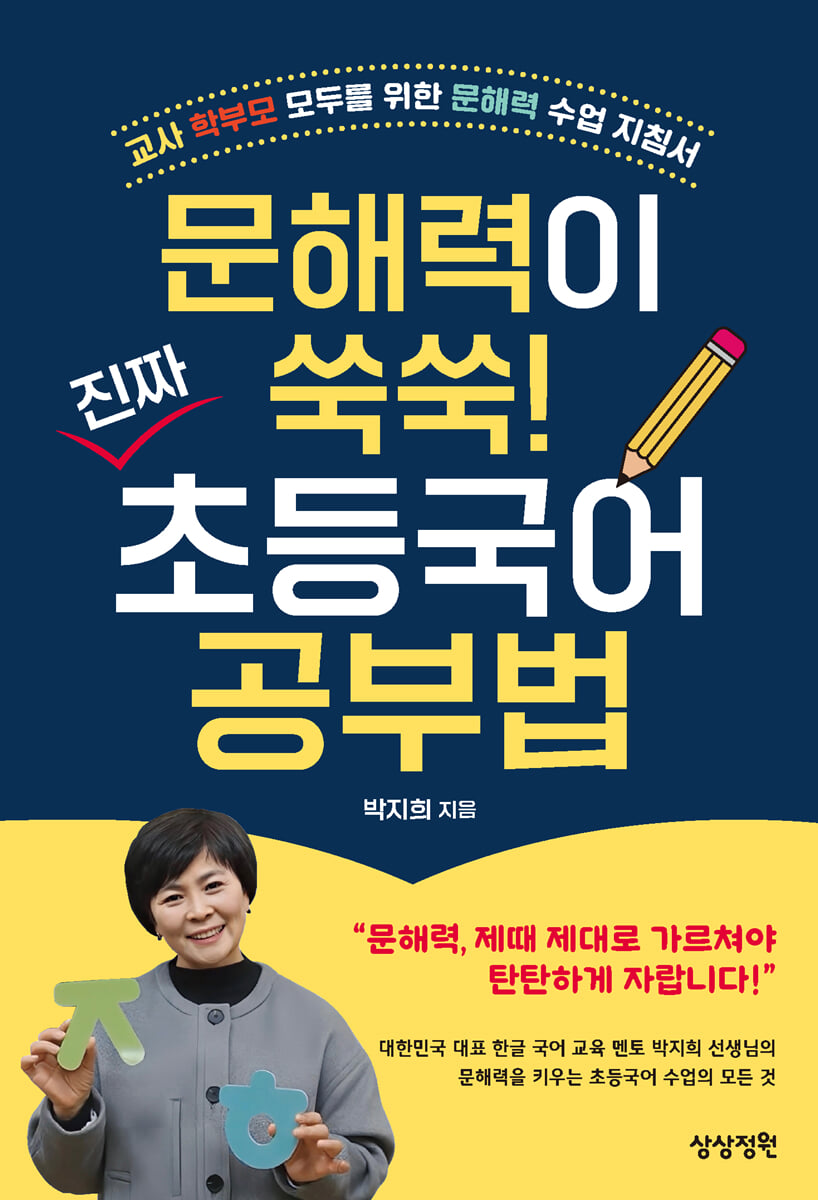
Literacy Boosts! The Real Elementary Korean Study Method
 |
Description
Book Introduction
“Literacy must be taught properly and at the right time to ensure strong growth!”
A representative Korean language education mentor in Korea, a current teacher with 30 years of experience
Everything you need to know about elementary Korean language studies that foster literacy!
"Literacy Grows! The Real Elementary Korean Language Study Method" is a literacy instruction guide that shares the expertise of a practicing teacher who has spent over 30 years deliberating, reflecting, and practicing elementary Korean language and literacy education.
In a reality where our literacy education emphasizes only reading education, this book clearly provides specific solutions for truly proper elementary Korean language education and literacy education.
Author Jihee Park is a mentor in Korean language education and literacy education who has met with numerous teachers and parents through training and lectures at education offices and related organizations across the country.
This book is filled with literacy and elementary school Korean language study methods that the author discovered through actual classroom examples.
Emphasizing that literacy education begins with proper Korean language education for accurate Korean language acquisition, he found a solution that can strengthen children's literacy muscles through systematic Korean language education, reading books, and elementary Korean language classes by branch.
"Literacy Grows! The Real Elementary Korean Language Study Method" provides detailed yet helpful guidance on what literacy is, the process through which it develops, and how to foster literacy at home and at school, depending on the child's developmental stage.
Through vivid classroom examples, you can discover elementary Korean language study methods that develop literacy skills in various fields, including Korean, picture books, fairy tales, poetry, explanatory texts, and argumentative texts.
This book provides clear answers to why literacy should be placed at the center of education and how to teach it well.
A representative Korean language education mentor in Korea, a current teacher with 30 years of experience
Everything you need to know about elementary Korean language studies that foster literacy!
"Literacy Grows! The Real Elementary Korean Language Study Method" is a literacy instruction guide that shares the expertise of a practicing teacher who has spent over 30 years deliberating, reflecting, and practicing elementary Korean language and literacy education.
In a reality where our literacy education emphasizes only reading education, this book clearly provides specific solutions for truly proper elementary Korean language education and literacy education.
Author Jihee Park is a mentor in Korean language education and literacy education who has met with numerous teachers and parents through training and lectures at education offices and related organizations across the country.
This book is filled with literacy and elementary school Korean language study methods that the author discovered through actual classroom examples.
Emphasizing that literacy education begins with proper Korean language education for accurate Korean language acquisition, he found a solution that can strengthen children's literacy muscles through systematic Korean language education, reading books, and elementary Korean language classes by branch.
"Literacy Grows! The Real Elementary Korean Language Study Method" provides detailed yet helpful guidance on what literacy is, the process through which it develops, and how to foster literacy at home and at school, depending on the child's developmental stage.
Through vivid classroom examples, you can discover elementary Korean language study methods that develop literacy skills in various fields, including Korean, picture books, fairy tales, poetry, explanatory texts, and argumentative texts.
This book provides clear answers to why literacy should be placed at the center of education and how to teach it well.
- You can preview some of the book's contents.
Preview
index
Introduction: Elementary Korean Language Classes for Growing Literacy
Part 1: Literacy: You have to teach to learn.
Chapter 1: Literacy: Developing it Strongly Through Proper Understanding
Do you truly understand literacy? | Literacy is essential even for reading a single picture book | Literacy is a tool for learning and learning | Lack of literacy can even lower self-esteem | Literacy is a way to see the world | Literacy allows us to reflect on our lives and grow | Literacy is a right as a citizen.
Teacher Jihee's Literacy Talk
I can read and write Korean, so do I really need to work on my literacy?
Chapter 2: Literacy: Teaching is Learning
A Big Mistake in Literacy Education: "They'll Learn It When They Get Older" | Literacy Must Be Taught According to Developmental Stage | Lower Grades: Don't Miss the Golden Time for Literacy | Middle Grades: Expand Vocabulary and Encourage Summarization | Upper Grades: Develop Fluency and Sophistication | Contextual Vocabulary is Powerful | Reading Comprehension Must Be Taught to Develop | Expanding Vocabulary at School and Home
Teacher Jihee's Literacy Talk
If Korean is my native language, should I also teach literacy?
Chapter 3: How to foster literacy at home?
Literacy grows with appropriate support at each stage | Early literacy: Develop it through reading aloud | Root literacy: Beginning with reading to the fetus | Reading: Start with picture books | How long should you continue reading? | Reading: A comprehensive gift set just for one child
Teacher Jihee's Literacy Talk
Can working moms help their children develop literacy skills?
Chapter 4: How to Develop Literacy in Schools
Literacy: Developing Learning, Emotional, Cognitive, and Thinking Skills | Literacy Must Be Taught Thoroughly Throughout the Curriculum | Vocabulary, Sentence, and Writing Education for Lower Grades | Vocabulary, Sentence, and Writing Education for Middle Grades | Vocabulary, Sentence, and Writing Education for Upper Grades | The Ultimate Literacy Environment: Reading Aloud | Korean Language Classes that Develop Literacy and Reading Whole Works
Teacher Jihee's Literacy Talk
Should mothers also know about the literacy curriculum at school?
Part 2: Developing Literacy through Elementary Korean Language Studies
Chapter 5: Studying Korean to Build a Foundation for Literacy
Korean language education determines first impressions of the written language | Accurate Korean language acquisition is the starting point for literacy | A look at the first-grade Korean language curriculum
Teacher Jihee's Literacy Talk
How should I teach my child who is slow in reading and writing Korean?
Chapter 6: Picture Book Classes that Cultivate the Mind
Building Literacy Through Picture Book Reading | Picture Book Classes That Build Literacy | Case Studies of Picture Book Classes That Build Literacy
Teacher Jihee's Literacy Talk
What activities should I do after reading a picture book?
Chapter 7: A Fairy Tale Lesson to Refine the Heart
Why should we read fairy tales? | Fairy tale classes that help children grow into fairy tale readers | Will fairy tale classes foster a love for fairy tales? | What you need to prepare in advance for fairy tale classes | Fairy tale classes, grade-level guides | Teaching strategies for delving deeper into fairy tales
Teacher Jihee's Literacy Talk
A child who used to read picture books often doesn't read fairy tales.
Chapter 8: Poetry Classes that Develop Empathy and Communication Skills
Poetry classes that foster empathy and communication skills | Becoming familiar with poetry comes first | Studying poetry: Starting right from the beginning | Poetry classes by grade level | Appreciating poetry requires strategy | Writing poetry: We need specific instructions
Teacher Jihee's Literacy Talk
Even mothers find poetry difficult, so how do you teach poetry to your children?
Chapter 9: Descriptive Writing Classes Reproducing Information
Thinking skills emerge from a wealth of information | Focus of expository writing classes | Use background knowledge to read expository texts | Understand the structure of expository texts and read them | Speaking and writing expository texts
Teacher Jihee's Literacy Talk
Children who are good at reading storybooks often don't want to read knowledge books.
Chapter 10: Argumentative Writing Class: Where Different Ideas and Values Intersect
Why You Should Learn How to Write an Argumentative Essay | How to Read an Argumentative Essay | How to Write an Argumentative Essay
Teacher Jihee's Literacy Talk
What is the most important thing in a speech or discussion?
Children's books and references introduced in the text
Part 1: Literacy: You have to teach to learn.
Chapter 1: Literacy: Developing it Strongly Through Proper Understanding
Do you truly understand literacy? | Literacy is essential even for reading a single picture book | Literacy is a tool for learning and learning | Lack of literacy can even lower self-esteem | Literacy is a way to see the world | Literacy allows us to reflect on our lives and grow | Literacy is a right as a citizen.
Teacher Jihee's Literacy Talk
I can read and write Korean, so do I really need to work on my literacy?
Chapter 2: Literacy: Teaching is Learning
A Big Mistake in Literacy Education: "They'll Learn It When They Get Older" | Literacy Must Be Taught According to Developmental Stage | Lower Grades: Don't Miss the Golden Time for Literacy | Middle Grades: Expand Vocabulary and Encourage Summarization | Upper Grades: Develop Fluency and Sophistication | Contextual Vocabulary is Powerful | Reading Comprehension Must Be Taught to Develop | Expanding Vocabulary at School and Home
Teacher Jihee's Literacy Talk
If Korean is my native language, should I also teach literacy?
Chapter 3: How to foster literacy at home?
Literacy grows with appropriate support at each stage | Early literacy: Develop it through reading aloud | Root literacy: Beginning with reading to the fetus | Reading: Start with picture books | How long should you continue reading? | Reading: A comprehensive gift set just for one child
Teacher Jihee's Literacy Talk
Can working moms help their children develop literacy skills?
Chapter 4: How to Develop Literacy in Schools
Literacy: Developing Learning, Emotional, Cognitive, and Thinking Skills | Literacy Must Be Taught Thoroughly Throughout the Curriculum | Vocabulary, Sentence, and Writing Education for Lower Grades | Vocabulary, Sentence, and Writing Education for Middle Grades | Vocabulary, Sentence, and Writing Education for Upper Grades | The Ultimate Literacy Environment: Reading Aloud | Korean Language Classes that Develop Literacy and Reading Whole Works
Teacher Jihee's Literacy Talk
Should mothers also know about the literacy curriculum at school?
Part 2: Developing Literacy through Elementary Korean Language Studies
Chapter 5: Studying Korean to Build a Foundation for Literacy
Korean language education determines first impressions of the written language | Accurate Korean language acquisition is the starting point for literacy | A look at the first-grade Korean language curriculum
Teacher Jihee's Literacy Talk
How should I teach my child who is slow in reading and writing Korean?
Chapter 6: Picture Book Classes that Cultivate the Mind
Building Literacy Through Picture Book Reading | Picture Book Classes That Build Literacy | Case Studies of Picture Book Classes That Build Literacy
Teacher Jihee's Literacy Talk
What activities should I do after reading a picture book?
Chapter 7: A Fairy Tale Lesson to Refine the Heart
Why should we read fairy tales? | Fairy tale classes that help children grow into fairy tale readers | Will fairy tale classes foster a love for fairy tales? | What you need to prepare in advance for fairy tale classes | Fairy tale classes, grade-level guides | Teaching strategies for delving deeper into fairy tales
Teacher Jihee's Literacy Talk
A child who used to read picture books often doesn't read fairy tales.
Chapter 8: Poetry Classes that Develop Empathy and Communication Skills
Poetry classes that foster empathy and communication skills | Becoming familiar with poetry comes first | Studying poetry: Starting right from the beginning | Poetry classes by grade level | Appreciating poetry requires strategy | Writing poetry: We need specific instructions
Teacher Jihee's Literacy Talk
Even mothers find poetry difficult, so how do you teach poetry to your children?
Chapter 9: Descriptive Writing Classes Reproducing Information
Thinking skills emerge from a wealth of information | Focus of expository writing classes | Use background knowledge to read expository texts | Understand the structure of expository texts and read them | Speaking and writing expository texts
Teacher Jihee's Literacy Talk
Children who are good at reading storybooks often don't want to read knowledge books.
Chapter 10: Argumentative Writing Class: Where Different Ideas and Values Intersect
Why You Should Learn How to Write an Argumentative Essay | How to Read an Argumentative Essay | How to Write an Argumentative Essay
Teacher Jihee's Literacy Talk
What is the most important thing in a speech or discussion?
Children's books and references introduced in the text
Detailed image

Into the book
Children's literacy and language skills do not develop on their own.
What needs to be taught will only grow as it is taught.
To properly teach literacy, we must understand how literacy develops, what is important in the process, and specifically how children learn and develop literacy skills.
---From the "Preface"
The sense of alienation felt by a child in class who does not understand what is being read due to a lack of vocabulary is indescribable.
Children who feel left out in class have lower self-efficacy and thus lower self-esteem.
--- p.26
Literacy is the ability to read the world you belong to as the master of the world.
Expressing one's thoughts through various means of expression, such as speaking and writing, is also literacy.
That's why literacy is said to be a life skill and a civic right.
--- p.32
One of the reasons why Korean language education and literacy education in our country are not being done properly is that reading and literacy education are finished once a child can read Korean.
--- p.79
There is a time for learning Korean.
The same goes for literacy.
The literacy achievement standards that must be met at each stage are different, and the literacy skills that must be achieved at each grade level are different.
--- p.91
Korean language education in first graders should foster anticipation and excitement about the world of letters.
At this time when we are fully exposed to letters, we must allow us to experience the wonder of learning letters.
When children are introduced to the world of stories where meaning and narrative arise from the combination of letters, they will willingly step into the world of letters.
--- p.113
From the perspective of literacy development, acquiring Hangul is the starting point of literacy.
If you don't acquire accurate Korean and can't read and write fluently, you won't even be able to advance to the next level.
That's why the period of Korean language acquisition in the first and second grades is called the 'golden time of literacy.'
--- p.114
For first and second graders, reading aloud on their own is very important for developing reading fluency.
Reading fluency is the ability to read text accurately, quickly, and with emotion.
This refers to reading units larger than phrases or sentences, including words you are proficient in.
--- p.140
Even children who dislike books will enjoy reading the entire work if the teacher reads it out loud.
If you read together, even children with poor reading comprehension skills will have no trouble taking classes or reading books.
In order to raise a child who reads fairy tales, reading fairy tales to them must come first.
--- p.168
We have far more poetry books in the classroom than there are children.
We use poetry books for morning activities and also use them a lot during class time.
Also, by passing around poetry books to read, we make sure that children are exposed to a lot of poetry on a daily basis.
Carry one book of poetry with you for a week or two and let them read it thoroughly, then have them switch books.
--- p.220
It would be good to provide specific methods for elementary school students to write poetry.
Rather than just telling them to write vaguely, you should have them try rewriting existing poems, observe them closely, or even talk to them.
You can also try to make a comparison or ask them to guess the mind of the object and write it down.
--- p.249
In order to easily read and understand the explanatory text and acquire the information as your own, it is helpful to understand the structure of the text before reading it.
It is very important to know the structure of the description.
Knowing the structure allows you to organize the main points explained while reading, which becomes the basis for reading comprehension.
--- p.266
Children find argumentative writing difficult.
Why is that? Because I encounter essays that deal with topics a bit heavier and more difficult than those we encounter in everyday life.
However, in our daily lives, we often hear and say claims or suggestions.
What needs to be taught will only grow as it is taught.
To properly teach literacy, we must understand how literacy develops, what is important in the process, and specifically how children learn and develop literacy skills.
---From the "Preface"
The sense of alienation felt by a child in class who does not understand what is being read due to a lack of vocabulary is indescribable.
Children who feel left out in class have lower self-efficacy and thus lower self-esteem.
--- p.26
Literacy is the ability to read the world you belong to as the master of the world.
Expressing one's thoughts through various means of expression, such as speaking and writing, is also literacy.
That's why literacy is said to be a life skill and a civic right.
--- p.32
One of the reasons why Korean language education and literacy education in our country are not being done properly is that reading and literacy education are finished once a child can read Korean.
--- p.79
There is a time for learning Korean.
The same goes for literacy.
The literacy achievement standards that must be met at each stage are different, and the literacy skills that must be achieved at each grade level are different.
--- p.91
Korean language education in first graders should foster anticipation and excitement about the world of letters.
At this time when we are fully exposed to letters, we must allow us to experience the wonder of learning letters.
When children are introduced to the world of stories where meaning and narrative arise from the combination of letters, they will willingly step into the world of letters.
--- p.113
From the perspective of literacy development, acquiring Hangul is the starting point of literacy.
If you don't acquire accurate Korean and can't read and write fluently, you won't even be able to advance to the next level.
That's why the period of Korean language acquisition in the first and second grades is called the 'golden time of literacy.'
--- p.114
For first and second graders, reading aloud on their own is very important for developing reading fluency.
Reading fluency is the ability to read text accurately, quickly, and with emotion.
This refers to reading units larger than phrases or sentences, including words you are proficient in.
--- p.140
Even children who dislike books will enjoy reading the entire work if the teacher reads it out loud.
If you read together, even children with poor reading comprehension skills will have no trouble taking classes or reading books.
In order to raise a child who reads fairy tales, reading fairy tales to them must come first.
--- p.168
We have far more poetry books in the classroom than there are children.
We use poetry books for morning activities and also use them a lot during class time.
Also, by passing around poetry books to read, we make sure that children are exposed to a lot of poetry on a daily basis.
Carry one book of poetry with you for a week or two and let them read it thoroughly, then have them switch books.
--- p.220
It would be good to provide specific methods for elementary school students to write poetry.
Rather than just telling them to write vaguely, you should have them try rewriting existing poems, observe them closely, or even talk to them.
You can also try to make a comparison or ask them to guess the mind of the object and write it down.
--- p.249
In order to easily read and understand the explanatory text and acquire the information as your own, it is helpful to understand the structure of the text before reading it.
It is very important to know the structure of the description.
Knowing the structure allows you to organize the main points explained while reading, which becomes the basis for reading comprehension.
--- p.266
Children find argumentative writing difficult.
Why is that? Because I encounter essays that deal with topics a bit heavier and more difficult than those we encounter in everyday life.
However, in our daily lives, we often hear and say claims or suggestions.
--- p.298
Publisher's Review
Literacy, you have to teach to learn.
Studying elementary Korean is the answer.
● A true elementary Korean language study method that fosters literacy, taught by the country's best Korean language education mentor.
As statements like “Literacy is the problem,” “It’s hard to raise your Korean language score on the CSAT even if you sell your house,” and “In the end, the child who is good at Korean wins,” become popular, parents’ anxiety about whether their children’s literacy skills are okay is growing by the day.
Why is literacy so important? Lack of literacy leads to academic underachievement, exclusion from class, and ultimately, low self-esteem. The suffering a child endures as they must attend school every day is indescribable.
This is also the reason why author Jihee Park, who has met countless children as a homeroom teacher and principal during her 30-year teaching career, has devoted herself to researching and practicing Korean language classes and literacy education.
We believe that literacy is an essential foundation for children to grow and develop as independent individuals. We are researching and implementing classes with teachers to solidify the literacy foundation for each stage of children's growth and development, starting with learning Hangul, the first step toward literacy.
The book that contains this know-how is "Literacy Grows! The Real Elementary Korean Language Study Method."
● Practical solutions to solidify the foundation of literacy at each stage
Children's literacy doesn't develop on its own.
Literacy, which begins in the fetal period, develops into early literacy through learning Hangul, and continues into basic literacy, which allows one to read and understand various texts, and functional literacy, which allows one to think critically.
To properly teach literacy, we must provide the necessary education and learning environment at each developmental stage.
Because literacy development varies by age group, it must be nurtured appropriately to the child's growth and development stage.
This book provides accurate literacy concepts and development processes, and provides friendly guidance on how to develop literacy muscles step by step.
It helps develop literacy skills by providing customized learning directions and learning content for lower, middle, and upper elementary school students.
● A literacy development project created jointly by home and school
The literacy gap stems not from differences in individual ability, but from the quantity and quality of opportunities children experience.
It is the responsibility of adults to create an environment where children can become familiar with letters and provide appropriate educational opportunities.
Schools systematically operate the curriculum necessary for children's literacy development and provide a basic framework.
But it is the role of the family to breathe life into this framework, add depth, and make it grow solidly.
It provides tips and guides for improving children's literacy skills that can be fully implemented at home.
Schools emphasize that systematic Korean language education can help children improve their literacy skills and, in cooperation with their families, can lead to even more remarkable growth.
● A must-read book that covers the core of literacy and elementary Korean language education!
This book, through Part 1: Literacy: Learning through Teaching, explains what literacy is and how literacy can be fostered step by step at home and school.
We provide guidance on activities necessary for learning accurate Korean, vocabulary games, writing basic sentences, and improving reading comprehension.
'Part 2: Developing Literacy through Elementary Korean Language Study by Branch' contains elementary Korean language teaching methods by branch to develop literacy.
We provide specific guidance on how to develop literacy skills in each field, including Korean, picture books, fairy tales, poetry, explanatory texts, and argumentative texts, centered on vivid class examples.
At the end of each chapter, we've compiled a Q&A format with information that parents and teachers are really curious about and want to know about in literacy and elementary Korean language classes.
"Literacy Grows! The Real Elementary Korean Language Study Method" is a guide to literacy education that warmly supports children's growth.
This book, filled with the rich field experience, practical strategies, and vivid examples of a teacher with 30 years of experience, is the optimal guide to developing children's literacy skills and a must-read for both teachers and parents.
Studying elementary Korean is the answer.
● A true elementary Korean language study method that fosters literacy, taught by the country's best Korean language education mentor.
As statements like “Literacy is the problem,” “It’s hard to raise your Korean language score on the CSAT even if you sell your house,” and “In the end, the child who is good at Korean wins,” become popular, parents’ anxiety about whether their children’s literacy skills are okay is growing by the day.
Why is literacy so important? Lack of literacy leads to academic underachievement, exclusion from class, and ultimately, low self-esteem. The suffering a child endures as they must attend school every day is indescribable.
This is also the reason why author Jihee Park, who has met countless children as a homeroom teacher and principal during her 30-year teaching career, has devoted herself to researching and practicing Korean language classes and literacy education.
We believe that literacy is an essential foundation for children to grow and develop as independent individuals. We are researching and implementing classes with teachers to solidify the literacy foundation for each stage of children's growth and development, starting with learning Hangul, the first step toward literacy.
The book that contains this know-how is "Literacy Grows! The Real Elementary Korean Language Study Method."
● Practical solutions to solidify the foundation of literacy at each stage
Children's literacy doesn't develop on its own.
Literacy, which begins in the fetal period, develops into early literacy through learning Hangul, and continues into basic literacy, which allows one to read and understand various texts, and functional literacy, which allows one to think critically.
To properly teach literacy, we must provide the necessary education and learning environment at each developmental stage.
Because literacy development varies by age group, it must be nurtured appropriately to the child's growth and development stage.
This book provides accurate literacy concepts and development processes, and provides friendly guidance on how to develop literacy muscles step by step.
It helps develop literacy skills by providing customized learning directions and learning content for lower, middle, and upper elementary school students.
● A literacy development project created jointly by home and school
The literacy gap stems not from differences in individual ability, but from the quantity and quality of opportunities children experience.
It is the responsibility of adults to create an environment where children can become familiar with letters and provide appropriate educational opportunities.
Schools systematically operate the curriculum necessary for children's literacy development and provide a basic framework.
But it is the role of the family to breathe life into this framework, add depth, and make it grow solidly.
It provides tips and guides for improving children's literacy skills that can be fully implemented at home.
Schools emphasize that systematic Korean language education can help children improve their literacy skills and, in cooperation with their families, can lead to even more remarkable growth.
● A must-read book that covers the core of literacy and elementary Korean language education!
This book, through Part 1: Literacy: Learning through Teaching, explains what literacy is and how literacy can be fostered step by step at home and school.
We provide guidance on activities necessary for learning accurate Korean, vocabulary games, writing basic sentences, and improving reading comprehension.
'Part 2: Developing Literacy through Elementary Korean Language Study by Branch' contains elementary Korean language teaching methods by branch to develop literacy.
We provide specific guidance on how to develop literacy skills in each field, including Korean, picture books, fairy tales, poetry, explanatory texts, and argumentative texts, centered on vivid class examples.
At the end of each chapter, we've compiled a Q&A format with information that parents and teachers are really curious about and want to know about in literacy and elementary Korean language classes.
"Literacy Grows! The Real Elementary Korean Language Study Method" is a guide to literacy education that warmly supports children's growth.
This book, filled with the rich field experience, practical strategies, and vivid examples of a teacher with 30 years of experience, is the optimal guide to developing children's literacy skills and a must-read for both teachers and parents.
GOODS SPECIFICS
- Date of issue: January 20, 2025
- Page count, weight, size: 308 pages | 436g | 150*220*17mm
- ISBN13: 9791192554075
- ISBN10: 1192554078
You may also like
카테고리
korean


korean

![GQ KOREA Mark (Monthly): December [2025]](http://librairie.coreenne.fr/cdn/shop/files/8ef265dbbfbf186523ed75ba7319009d.jpg?v=1765340328&width=3840)


