

Korean language
 |
Description
Book Introduction
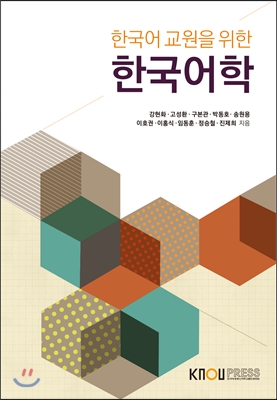
This textbook, designed for students who wish to become Korean language teachers, consists of two volumes.
The first volume, Korean Language for Korean Language Teachers, focuses on Korean linguistics, which is the foundation of Korean language education, but also includes general linguistics, such as 'Introduction to Linguistics, Contrastive Linguistics, and Foreign Language Acquisition Theory.'
Volume 2, Korean Language Education for Korean Language Teachers, consists of content directly related to Korean language education.
The first volume, Korean Language for Korean Language Teachers, focuses on Korean linguistics, which is the foundation of Korean language education, but also includes general linguistics, such as 'Introduction to Linguistics, Contrastive Linguistics, and Foreign Language Acquisition Theory.'
Volume 2, Korean Language Education for Korean Language Teachers, consists of content directly related to Korean language education.
index
Chapter 1: Introduction to Linguistics [Song Won-yong]
1.
Definition of language
2.
Characteristics of language
1) Arbitrariness
2) Sociality
3) Creativity
4) Lawfulness
5) Historicity
6) Universal acquisition potential
3.
Functions of language
1) Function of knowledge accumulation
2) Roman Jakobson's theory of language functions
4.
History of language studies
1) Traditional grammar
2) History? Comparative linguistics
3) Saussure and European structural linguistics
4) American structural engineering grammar
5) Transformational grammar
5.
subfield of linguistics
1) Phonology
2) Morphology
3) Grammar
4) Semantics
5) Pragmatics
Chapter 2: Contrastive Linguistics [Kang Hyun-hwa]
1.
definition
2.
Historical background
3.
Contrastive analysis hypothesis
1) Definition
2) Contrast procedure
3) Problems
4) The reality of contrast
4.
interlanguage theory
1) Language transfer
2) Training transfer
3) Second language learning strategies
4) Second language communication strategies
5) Overgeneralization of target language elements
5.
Error analysis
1) Definition
2) Examples of common errors in learning Korean
Chapter 3: Foreign Language Acquisition [Jin Je-hee]
1.
Several issues regarding second language acquisition
1) Subjects of language education: Learner and teacher characteristics
2) Medium of language education: language
3) Language acquisition process
4) Learner age
5) Language acquisition environment
6) Language acquisition purpose
2.
First Language Acquisition Theory
1) Behavioral approach
2) Innate approach
3) Functionalist approach
3.
Second Language Acquisition Theory
1) Contrastive analysis hypothesis
2) Error analysis hypothesis
3) Interlanguage hypothesis
4) Input hypothesis
5) Output hypothesis
6) Interaction hypothesis: social constructivist model
4.
Conclusion
Chapter 4: Typological Characteristics of the Korean Language [Koh Seong-hwan]
1.
preface
2.
Morphological characteristics
1) Korean is an agglutinative language (or additive language).
2) Characteristics by vocabulary category
3.
Syntactic characteristics
1) Korean is an SOV language with a word order of 'subject? object? verb'.
2) Korean belongs to the nuclear-terminal language.
3) Korean is a language with a free word order or partially free word order, which allows the order of sentence elements other than verbs to be changed relatively freely.
4.
Discourse linguistic characteristics
1) Korean is a language in which basic elements, especially subjects and objects, can be easily omitted.
2) Korean has strong characteristics of a subject-emphasizing language.
3) Korean is a language with a well-developed honorific system.
Chapter 5 Korean Phonology [Jeong Seung-cheol]
1.
Understanding speech sounds
1) Words and sounds
2) Phonetics and phonology
2.
Shape and articulation of the vocal organs
1) Shape of the vocal organs
2) Pronunciation organs and articulation
Chapter 6: Morphology and Lexicon of the Korean Language [Koo Bon-gwan]
1.
Morphology
1) Morphological characteristics of the Korean language
2) Basic concepts for morphology
3) Classification of parts of speech and characteristics of each part of speech
4) Principles of word formation
2.
Lexicon
1) Lexical characteristics of the Korean language
2) Basic concepts of vocabulary
3) Vocabulary system
4) Lexical relationships
5) Synchronic and diachronic changes in vocabulary
6) Korean vocabulary and Korean language education
Chapter 7: Sentence Components of Korean [Lee Hong-sik]
1.
Introduction
2.
chief ingredient
1) Subject
2) Object
3) Bor
4) Predicate
3.
accessory ingredients
1) Adjective
2) Adverb
4.
independent components
5.
The problem of component theory
Chapter 8: Types of Korean Sentences [Koh Seong-hwan]
1.
preface
2.
Plain text
3.
exclamation
4.
question
5.
Command statement
6.
Cheongyumun
Chapter 9: Particles in Korean [Lim Dong-hoon]
1.
Classification of investigations
1) Particles of case
2) Auxiliary verb
3) Connection investigation
4) The relationship between the investigations
2.
The meaning and function of particle positions
1) Nominative particle
2) Objective particle
3) Attributive particle
4) Location-based investigation
5) Instrumental particle
6) Joint particle
7) Vocal particle
8) Non-realization of particle of case
3.
Meaning and function of auxiliary verbs
1) even, until, even, even
2) only, only, outside
3) Eun/neun, iya/ya
4) Ina/I, Inama/Nama, Even/Era
Chapter 10: Korean Suffixes [Im Dong-hoon]
1.
Classification of mothers
1) Classification according to phonological properties
2) Classification by distribution
3) Classification system of final endings
2.
Prepositional endings
1) Combination order of suffixes
2) Subjective honorifics and {poetry}
3) Past tense and {was}
4) Cognitive state and {will}
5) Evidence and {?more?}
6) Present tense and {?느? }
3.
Final suffix
1) Function of the final suffix
2) Final endings
3) Connective endings
Chapter 11: Basic Structure and Expansion of Korean Sentences [Dongho Park]
1.
Sentence structure
1) Word order
2) Basic sentence patterns
2.
Enlarge the sentence
1) Connection
2) Inclusion
Chapter 12: History of the Korean Language [Lee Ho-kwon]
1.
The necessity of knowledge of Korean history
2.
Korean language lineage
1) Phylogenetic classification of languages and Korean
2) Altaic languages and Korean
3.
Formation and Periodization of the Korean Language
1) Formation of the Korean language
2) Periodization of Korean history
4.
Old Korean
1) Linguistic data of ancient Korean
2) Characteristics of the Silla language
5.
Middle Korean
1) Creation of Hangul
2) Phonological characteristics
3) Grammar features
4) Vocabulary features
6.
Changes in Modern Korean
1) Changes in sound
2) Changes in grammar
3) Changes in vocabulary
Chapter 13 Korean Spelling [Koh Seong-hwan]
1.
Principles of Korean spelling
2.
The reality of Korean spelling
3.
Spacing
1) Particles and dependent nouns
2) Suffixes and dependent nouns
3) Suffixes and dependent nouns, prefixes and determiners
4) Others
4.
Standard language
1) Korean spelling and standard language
2) Actual standard language regulations
5.
Foreign word notation
1) Notation of plosive sounds
2) Notation of fricatives and affricates
3) Notation of nasal and liquid sounds
4) Vowel notation
1.
Definition of language
2.
Characteristics of language
1) Arbitrariness
2) Sociality
3) Creativity
4) Lawfulness
5) Historicity
6) Universal acquisition potential
3.
Functions of language
1) Function of knowledge accumulation
2) Roman Jakobson's theory of language functions
4.
History of language studies
1) Traditional grammar
2) History? Comparative linguistics
3) Saussure and European structural linguistics
4) American structural engineering grammar
5) Transformational grammar
5.
subfield of linguistics
1) Phonology
2) Morphology
3) Grammar
4) Semantics
5) Pragmatics
Chapter 2: Contrastive Linguistics [Kang Hyun-hwa]
1.
definition
2.
Historical background
3.
Contrastive analysis hypothesis
1) Definition
2) Contrast procedure
3) Problems
4) The reality of contrast
4.
interlanguage theory
1) Language transfer
2) Training transfer
3) Second language learning strategies
4) Second language communication strategies
5) Overgeneralization of target language elements
5.
Error analysis
1) Definition
2) Examples of common errors in learning Korean
Chapter 3: Foreign Language Acquisition [Jin Je-hee]
1.
Several issues regarding second language acquisition
1) Subjects of language education: Learner and teacher characteristics
2) Medium of language education: language
3) Language acquisition process
4) Learner age
5) Language acquisition environment
6) Language acquisition purpose
2.
First Language Acquisition Theory
1) Behavioral approach
2) Innate approach
3) Functionalist approach
3.
Second Language Acquisition Theory
1) Contrastive analysis hypothesis
2) Error analysis hypothesis
3) Interlanguage hypothesis
4) Input hypothesis
5) Output hypothesis
6) Interaction hypothesis: social constructivist model
4.
Conclusion
Chapter 4: Typological Characteristics of the Korean Language [Koh Seong-hwan]
1.
preface
2.
Morphological characteristics
1) Korean is an agglutinative language (or additive language).
2) Characteristics by vocabulary category
3.
Syntactic characteristics
1) Korean is an SOV language with a word order of 'subject? object? verb'.
2) Korean belongs to the nuclear-terminal language.
3) Korean is a language with a free word order or partially free word order, which allows the order of sentence elements other than verbs to be changed relatively freely.
4.
Discourse linguistic characteristics
1) Korean is a language in which basic elements, especially subjects and objects, can be easily omitted.
2) Korean has strong characteristics of a subject-emphasizing language.
3) Korean is a language with a well-developed honorific system.
Chapter 5 Korean Phonology [Jeong Seung-cheol]
1.
Understanding speech sounds
1) Words and sounds
2) Phonetics and phonology
2.
Shape and articulation of the vocal organs
1) Shape of the vocal organs
2) Pronunciation organs and articulation
Chapter 6: Morphology and Lexicon of the Korean Language [Koo Bon-gwan]
1.
Morphology
1) Morphological characteristics of the Korean language
2) Basic concepts for morphology
3) Classification of parts of speech and characteristics of each part of speech
4) Principles of word formation
2.
Lexicon
1) Lexical characteristics of the Korean language
2) Basic concepts of vocabulary
3) Vocabulary system
4) Lexical relationships
5) Synchronic and diachronic changes in vocabulary
6) Korean vocabulary and Korean language education
Chapter 7: Sentence Components of Korean [Lee Hong-sik]
1.
Introduction
2.
chief ingredient
1) Subject
2) Object
3) Bor
4) Predicate
3.
accessory ingredients
1) Adjective
2) Adverb
4.
independent components
5.
The problem of component theory
Chapter 8: Types of Korean Sentences [Koh Seong-hwan]
1.
preface
2.
Plain text
3.
exclamation
4.
question
5.
Command statement
6.
Cheongyumun
Chapter 9: Particles in Korean [Lim Dong-hoon]
1.
Classification of investigations
1) Particles of case
2) Auxiliary verb
3) Connection investigation
4) The relationship between the investigations
2.
The meaning and function of particle positions
1) Nominative particle
2) Objective particle
3) Attributive particle
4) Location-based investigation
5) Instrumental particle
6) Joint particle
7) Vocal particle
8) Non-realization of particle of case
3.
Meaning and function of auxiliary verbs
1) even, until, even, even
2) only, only, outside
3) Eun/neun, iya/ya
4) Ina/I, Inama/Nama, Even/Era
Chapter 10: Korean Suffixes [Im Dong-hoon]
1.
Classification of mothers
1) Classification according to phonological properties
2) Classification by distribution
3) Classification system of final endings
2.
Prepositional endings
1) Combination order of suffixes
2) Subjective honorifics and {poetry}
3) Past tense and {was}
4) Cognitive state and {will}
5) Evidence and {?more?}
6) Present tense and {?느? }
3.
Final suffix
1) Function of the final suffix
2) Final endings
3) Connective endings
Chapter 11: Basic Structure and Expansion of Korean Sentences [Dongho Park]
1.
Sentence structure
1) Word order
2) Basic sentence patterns
2.
Enlarge the sentence
1) Connection
2) Inclusion
Chapter 12: History of the Korean Language [Lee Ho-kwon]
1.
The necessity of knowledge of Korean history
2.
Korean language lineage
1) Phylogenetic classification of languages and Korean
2) Altaic languages and Korean
3.
Formation and Periodization of the Korean Language
1) Formation of the Korean language
2) Periodization of Korean history
4.
Old Korean
1) Linguistic data of ancient Korean
2) Characteristics of the Silla language
5.
Middle Korean
1) Creation of Hangul
2) Phonological characteristics
3) Grammar features
4) Vocabulary features
6.
Changes in Modern Korean
1) Changes in sound
2) Changes in grammar
3) Changes in vocabulary
Chapter 13 Korean Spelling [Koh Seong-hwan]
1.
Principles of Korean spelling
2.
The reality of Korean spelling
3.
Spacing
1) Particles and dependent nouns
2) Suffixes and dependent nouns
3) Suffixes and dependent nouns, prefixes and determiners
4) Others
4.
Standard language
1) Korean spelling and standard language
2) Actual standard language regulations
5.
Foreign word notation
1) Notation of plosive sounds
2) Notation of fricatives and affricates
3) Notation of nasal and liquid sounds
4) Vowel notation
Publisher's Review
For the globalization of the Korean language
Written by professors from leading domestic universities
Korean as a Foreign Language Teacher Qualification Exam Preparation Book
Korea National Open University Prime College 'Korean Language Teacher Training Course' textbook
This textbook, designed for students who wish to become Korean language teachers, consists of two volumes.
The first volume, Korean Language for Korean Language Teachers, focuses on Korean linguistics, which is the foundation of Korean language education, but also includes general linguistics, such as 'Introduction to Linguistics, Contrastive Linguistics, and Foreign Language Acquisition Theory.'
Volume 2, Korean Language Education for Korean Language Teachers, consists of content directly related to Korean language education.
Written by professors from leading domestic universities
Korean as a Foreign Language Teacher Qualification Exam Preparation Book
Korea National Open University Prime College 'Korean Language Teacher Training Course' textbook
This textbook, designed for students who wish to become Korean language teachers, consists of two volumes.
The first volume, Korean Language for Korean Language Teachers, focuses on Korean linguistics, which is the foundation of Korean language education, but also includes general linguistics, such as 'Introduction to Linguistics, Contrastive Linguistics, and Foreign Language Acquisition Theory.'
Volume 2, Korean Language Education for Korean Language Teachers, consists of content directly related to Korean language education.
GOODS SPECIFICS
- Date of issue: March 2, 2016
- Page count, weight, size: 400 pages | 723g | 176*248*14mm
- ISBN13: 9788920018251
- ISBN10: 8920018251
You may also like
카테고리
korean


korean

![ELLE 엘르 스페셜 에디션 A형 : 12월 [2025]](http://librairie.coreenne.fr/cdn/shop/files/b8e27a3de6c9538896439686c6b0e8fb.jpg?v=1766436872&width=3840)


