

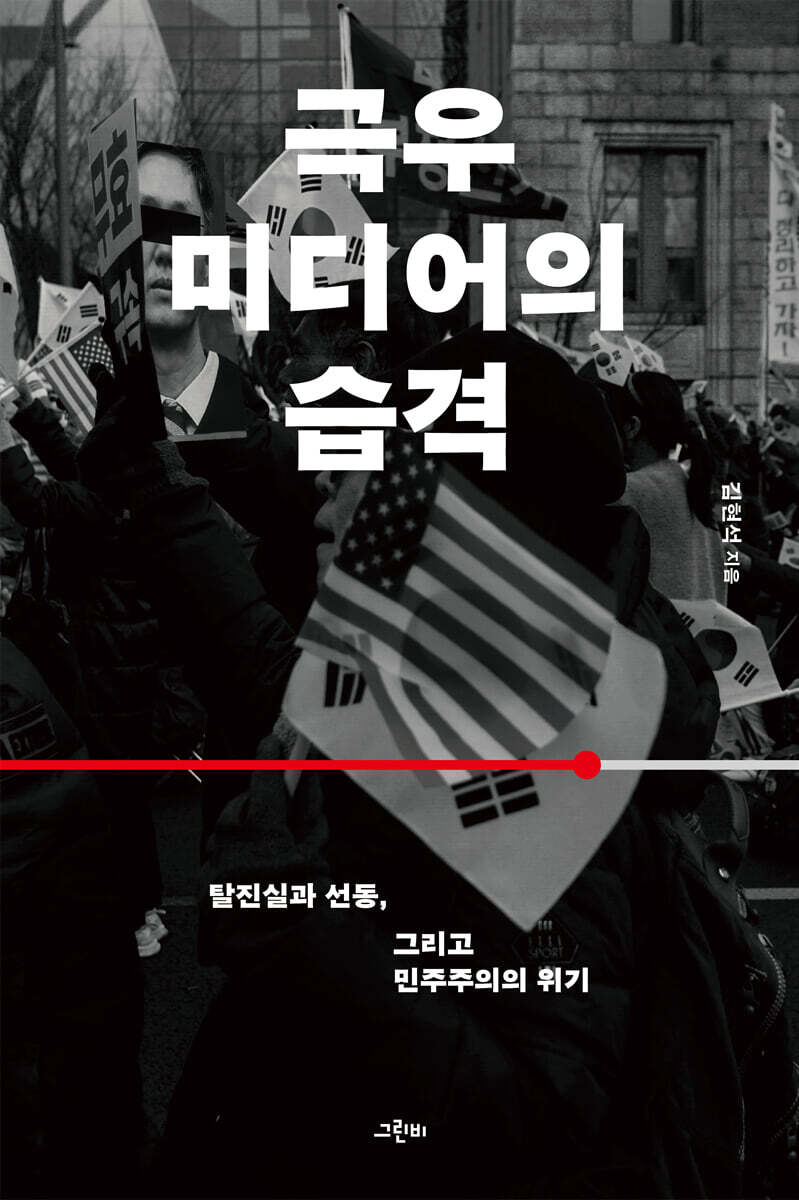
The far-right media's onslaught
 |
Description
Book Introduction
"A truly valuable and vivid media literacy textbook" (Jeong Yeon-ju, former KBS president)
"Amazing results that only a veteran journalist can produce" (Park Sung-jae, former MBC president)
"A book that asks whether we can trust the world again through the media" (Choi Kyung-young, host of "Choi Kyung-young TV")
In an age where lies overwhelm truth, the news is no longer a mirror reflecting reality, but a weapon for organizing anger.
"The Attack of the Far-Right Media" is a record of the crisis in journalism and its structural causes witnessed by reporter Kim Hyeon-seok, who has been covering the media scene for 30 years.
From the "K-value conspiracy theory" to the "63 vs. 36 argument" to the "arrest of Chinese hackers," the author traces how emotional manipulation and disinformation can spark civil war.
What is more dangerous than a lie is the confidence of those who believe it.
In the post-truth era, far-right media transforms anger into public opinion and emotions into truth through a "propaganda amplification circuit" where conviction feeds back.
The author diagnoses this structural crisis not as a simple problem of fake news, but as a psychological civil war that shakes the very conditions of journalism.
Can the media, which has become a weapon rather than a source of news, restore truth to the language of society? This is the last chance for journalism to regain trust.
"Amazing results that only a veteran journalist can produce" (Park Sung-jae, former MBC president)
"A book that asks whether we can trust the world again through the media" (Choi Kyung-young, host of "Choi Kyung-young TV")
In an age where lies overwhelm truth, the news is no longer a mirror reflecting reality, but a weapon for organizing anger.
"The Attack of the Far-Right Media" is a record of the crisis in journalism and its structural causes witnessed by reporter Kim Hyeon-seok, who has been covering the media scene for 30 years.
From the "K-value conspiracy theory" to the "63 vs. 36 argument" to the "arrest of Chinese hackers," the author traces how emotional manipulation and disinformation can spark civil war.
What is more dangerous than a lie is the confidence of those who believe it.
In the post-truth era, far-right media transforms anger into public opinion and emotions into truth through a "propaganda amplification circuit" where conviction feeds back.
The author diagnoses this structural crisis not as a simple problem of fake news, but as a psychological civil war that shakes the very conditions of journalism.
Can the media, which has become a weapon rather than a source of news, restore truth to the language of society? This is the last chance for journalism to regain trust.
- You can preview some of the book's contents.
Preview
index
Introductory remarks 5
Part 1: Far-Right Media and Civil War
Chapter 1: Catalysts of Civil War: Far-Right Media 19
1.
Chinese hacker captured in Okinawa? 19
2.
Sky Daily and Captain America 31
3.
The Red Mirage and the Big Lie 42
4.
US Capitol Riot 50
5.
Fox News and Dominion Voting Systems 56
Chapter 2: The Far Right and Post-Truth 71
1.
Digital Media and Post-Truth 71
2.
The Asymmetric Radicalization of the Far Right 81
3.
Martial Law and the Far-Right Media Ecosystem 95
Part 2: How Election Fraud Conspiracy Theories Became Far-Right Discourse
Chapter 3: The 2002 Presidential Election: The Beginning of the Election Fraud Conspiracy Theory 115
1.
2002 Presidential Election Exit Poll 115
2.
The Power of the Networked Masses and OhmyNews 120
3.
Electronic vote counting? A confession from a former NIS agent? 126
Chapter 4: The 2012 Presidential Election: The Completion of the Election Fraud Conspiracy Theory 135
1.
Comment manipulation and self-imprisonment 135
2.
Kim Eo-jun and the K-Value Conspiracy Theory 141
3.
The Law of Large Numbers and the Election Fraud Conspiracy Theory 153
Chapter 5: The Far-Right Discourse of Election Fraud Conspiracy Theories
1.
2020 general election and 63 to 36 163
2.
Is Election Fraud God's Work? The Evolution of "The Plan" 170
3.
Shouldn't there be a difference in voting percentages? 181
4.
Korea-US far-right solidarity 190
Part 3: Journalism in This Era
Chapter 6: Partisanship in the Media 203
1.
The more ideologically imbalanced a party is, the higher its popularity? 203
2. Is bias the factor behind the rise in MBC News popularity? 213
3.
Bias and Prejudice 219
4.
How Trustworthy Are Traditional Media and YouTube? 230
Chapter 7: Breaking the View-Based Revenue Model 237
1.
Will slamming the desk solve the problem? 237
2.
Digital Services Act 245
3.
Are there any alternatives to view counts? 252
4.
Transparent and Responsible Journalism 260
Outgoing Words 267
Americas 277
Table and Figure Source 293
Part 1: Far-Right Media and Civil War
Chapter 1: Catalysts of Civil War: Far-Right Media 19
1.
Chinese hacker captured in Okinawa? 19
2.
Sky Daily and Captain America 31
3.
The Red Mirage and the Big Lie 42
4.
US Capitol Riot 50
5.
Fox News and Dominion Voting Systems 56
Chapter 2: The Far Right and Post-Truth 71
1.
Digital Media and Post-Truth 71
2.
The Asymmetric Radicalization of the Far Right 81
3.
Martial Law and the Far-Right Media Ecosystem 95
Part 2: How Election Fraud Conspiracy Theories Became Far-Right Discourse
Chapter 3: The 2002 Presidential Election: The Beginning of the Election Fraud Conspiracy Theory 115
1.
2002 Presidential Election Exit Poll 115
2.
The Power of the Networked Masses and OhmyNews 120
3.
Electronic vote counting? A confession from a former NIS agent? 126
Chapter 4: The 2012 Presidential Election: The Completion of the Election Fraud Conspiracy Theory 135
1.
Comment manipulation and self-imprisonment 135
2.
Kim Eo-jun and the K-Value Conspiracy Theory 141
3.
The Law of Large Numbers and the Election Fraud Conspiracy Theory 153
Chapter 5: The Far-Right Discourse of Election Fraud Conspiracy Theories
1.
2020 general election and 63 to 36 163
2.
Is Election Fraud God's Work? The Evolution of "The Plan" 170
3.
Shouldn't there be a difference in voting percentages? 181
4.
Korea-US far-right solidarity 190
Part 3: Journalism in This Era
Chapter 6: Partisanship in the Media 203
1.
The more ideologically imbalanced a party is, the higher its popularity? 203
2. Is bias the factor behind the rise in MBC News popularity? 213
3.
Bias and Prejudice 219
4.
How Trustworthy Are Traditional Media and YouTube? 230
Chapter 7: Breaking the View-Based Revenue Model 237
1.
Will slamming the desk solve the problem? 237
2.
Digital Services Act 245
3.
Are there any alternatives to view counts? 252
4.
Transparent and Responsible Journalism 260
Outgoing Words 267
Americas 277
Table and Figure Source 293
Detailed image

Into the book
The conspiracy theories about election fraud that spread through the 2020 US presidential election were immediately imported to Korea.
Far-right YouTubers translated or adapted this and combined it with domestic conspiracy theories about election fraud, such as “pre-election manipulation” and “vote switching.”
(…) The story that was proven to be false in the United States was consumed in Korea under the name of ‘concealment of power’ and ‘pursuit of truth.’
YouTube, in particular, has become a breeding ground for amplifying conspiracy theories about election fraud.
Yoon Seok-yeol, who was deeply immersed in the world of far-right YouTube, committed suicide by declaring martial law on December 3rd.
--- 「Part 1 Chapter 1.
From "Civil War Catalysts, Far-Right Media"
People in the propaganda amplification circuit have a high level of trust in media that confirms their faction's identity.
I distrust the media outside.
The media becomes a 'partisan media' that only provides information that confirms the audience's existing beliefs.
Politicians also only make statements that align with their camp's identity, not the truth.
Media outlets and politicians who speak out against the logic of their party are branded as traitors.
A divided media ecosystem is formed, where a typical post-truth phenomenon occurs in which “statements that differ from the logic of the camp are false, and only claims that align with one’s own beliefs are accepted as truth.”
--- 「Part 1, Chapter 2.
From “The Far Right and Post-Truth”
12.3 After martial law, it can be said that the Korean media ecosystem has been quite clearly divided into a "traditional media ecosystem" where the dynamics of fact-checking still operate, and a "far-right media ecosystem."
(…) One of the characteristics of Korea’s far-right media ecosystem is that it is centered around YouTube.
Accordingly, the phenomenon of far-right content spreading through YouTube is becoming more prominent.
(…) Another characteristic of the Korean far-right media ecosystem is that the ‘election fraud conspiracy theory’ forms a core discourse.
(…) Among them, the conspiracy theory that election fraud is being carried out to help the pro-China Democratic Party is representative.
--- 「Part 1, Chapter 2.
From “The Far Right and Post-Truth”
After the News Tapa report, the K-value conspiracy theory, which was the core claim of vote rigging, no longer has any basis.
(…) Kim Eo-Jun’s raising of the issue did not only have negative effects.
As concerns were raised that ballot sorting machines could be manipulated, the process of verifying votes by hand was strengthened.
In subsequent elections, the process of having people count the votes one by one to ensure there were no mixed votes was strengthened.
Although the counting of votes has slowed, doubts surrounding the ballot sorting machines have been greatly reduced.
However, the conspiracy theory of election fraud that Kim Eo-jun perfected was adopted by the far right.
--- 「Part 2, Chapter 4.
From "2012 Presidential Election, the Completion of the Election Fraud Conspiracy Theory"
The K=1.5 and 63 vs. 36 conspiracy theories are classic examples of the 'Texas Sharpshooter Fallacy'.
The fallacy originated from a story about a Texan who shot a barn wall indiscriminately, drew a circle around the point where the bullet holes were most concentrated, and declared himself a "marksman."
He didn't actually hit the target, he just shot first and then drew the target.
The 'K value' and '63 to 36' claims also assume the conclusion of 'election fraud' from the beginning, and only select some data that fits that conclusion to use as evidence.
This is a classic Texas marksman error.
--- 「Part 2, Chapter 5.
From "The Conspiracy Theory of Election Fraud That Has Become Far-Right Discourse"
In fact, various factors interact in a complex way to influence news preferences.
There are factors such as ‘news quality’ and ‘preference of the anchor’ who delivers the news.
However, the factor that most significantly influences preference for broadcast news is "attitude toward the government." During the Fifth Republic, when KBS News was known for its "tangjeon news," the KBS 9 O'Clock News' viewership ratings were significantly lower than those of MBC.
It wasn't just that the ratings were dropping, but the very reason for the existence of public broadcasting was being denied.
The main reason for the movement to boycott subscription fees was also the so-called "cheap news."
The people do not trust news that appears to represent the government.
--- 「Part 3, Chapter 6.
From “The Partisanship of the Media”
A fundamental crisis can only be resolved through fundamental measures.
And that path must begin with more firmly establishing the journalistic principle of 'pursuit of truth.'
Journalism is not just a matter for media outlets and their employees; it should be a principle that everyone, including individual media outlets that speak out about society, must adhere to.
Apart from journalism, no other alternative to providing reliable information has yet emerged.
This is why we still have no choice but to insist on the restoration of journalism.
Far-right YouTubers translated or adapted this and combined it with domestic conspiracy theories about election fraud, such as “pre-election manipulation” and “vote switching.”
(…) The story that was proven to be false in the United States was consumed in Korea under the name of ‘concealment of power’ and ‘pursuit of truth.’
YouTube, in particular, has become a breeding ground for amplifying conspiracy theories about election fraud.
Yoon Seok-yeol, who was deeply immersed in the world of far-right YouTube, committed suicide by declaring martial law on December 3rd.
--- 「Part 1 Chapter 1.
From "Civil War Catalysts, Far-Right Media"
People in the propaganda amplification circuit have a high level of trust in media that confirms their faction's identity.
I distrust the media outside.
The media becomes a 'partisan media' that only provides information that confirms the audience's existing beliefs.
Politicians also only make statements that align with their camp's identity, not the truth.
Media outlets and politicians who speak out against the logic of their party are branded as traitors.
A divided media ecosystem is formed, where a typical post-truth phenomenon occurs in which “statements that differ from the logic of the camp are false, and only claims that align with one’s own beliefs are accepted as truth.”
--- 「Part 1, Chapter 2.
From “The Far Right and Post-Truth”
12.3 After martial law, it can be said that the Korean media ecosystem has been quite clearly divided into a "traditional media ecosystem" where the dynamics of fact-checking still operate, and a "far-right media ecosystem."
(…) One of the characteristics of Korea’s far-right media ecosystem is that it is centered around YouTube.
Accordingly, the phenomenon of far-right content spreading through YouTube is becoming more prominent.
(…) Another characteristic of the Korean far-right media ecosystem is that the ‘election fraud conspiracy theory’ forms a core discourse.
(…) Among them, the conspiracy theory that election fraud is being carried out to help the pro-China Democratic Party is representative.
--- 「Part 1, Chapter 2.
From “The Far Right and Post-Truth”
After the News Tapa report, the K-value conspiracy theory, which was the core claim of vote rigging, no longer has any basis.
(…) Kim Eo-Jun’s raising of the issue did not only have negative effects.
As concerns were raised that ballot sorting machines could be manipulated, the process of verifying votes by hand was strengthened.
In subsequent elections, the process of having people count the votes one by one to ensure there were no mixed votes was strengthened.
Although the counting of votes has slowed, doubts surrounding the ballot sorting machines have been greatly reduced.
However, the conspiracy theory of election fraud that Kim Eo-jun perfected was adopted by the far right.
--- 「Part 2, Chapter 4.
From "2012 Presidential Election, the Completion of the Election Fraud Conspiracy Theory"
The K=1.5 and 63 vs. 36 conspiracy theories are classic examples of the 'Texas Sharpshooter Fallacy'.
The fallacy originated from a story about a Texan who shot a barn wall indiscriminately, drew a circle around the point where the bullet holes were most concentrated, and declared himself a "marksman."
He didn't actually hit the target, he just shot first and then drew the target.
The 'K value' and '63 to 36' claims also assume the conclusion of 'election fraud' from the beginning, and only select some data that fits that conclusion to use as evidence.
This is a classic Texas marksman error.
--- 「Part 2, Chapter 5.
From "The Conspiracy Theory of Election Fraud That Has Become Far-Right Discourse"
In fact, various factors interact in a complex way to influence news preferences.
There are factors such as ‘news quality’ and ‘preference of the anchor’ who delivers the news.
However, the factor that most significantly influences preference for broadcast news is "attitude toward the government." During the Fifth Republic, when KBS News was known for its "tangjeon news," the KBS 9 O'Clock News' viewership ratings were significantly lower than those of MBC.
It wasn't just that the ratings were dropping, but the very reason for the existence of public broadcasting was being denied.
The main reason for the movement to boycott subscription fees was also the so-called "cheap news."
The people do not trust news that appears to represent the government.
--- 「Part 3, Chapter 6.
From “The Partisanship of the Media”
A fundamental crisis can only be resolved through fundamental measures.
And that path must begin with more firmly establishing the journalistic principle of 'pursuit of truth.'
Journalism is not just a matter for media outlets and their employees; it should be a principle that everyone, including individual media outlets that speak out about society, must adhere to.
Apart from journalism, no other alternative to providing reliable information has yet emerged.
This is why we still have no choice but to insist on the restoration of journalism.
--- 「Part 3, Chapter 7.
From "Breaking the View-Centric Revenue Model"
From "Breaking the View-Centric Revenue Model"
Publisher's Review
Report on Civil War in the Post-Truth Era
The Attack of the Far-Right Media
The news disappeared, leaving only anger.
In an age where lies overwhelm truth, the news is no longer a mirror reflecting reality, but a weapon for organizing anger.
"The Attack of the Far-Right Media" is a record of the crisis in journalism witnessed by reporter Kim Hyun-seok, who has been covering the media scene for 30 years.
From the 19th century, when Joseph Pulitzer and Randolph Hearst's yellow journalism sparked wars, to today's Korea, with its "Chinese hacker arrest rumors" and the "Seoul Western District Court riots," he breathlessly traces how emotional manipulation and misinformation can spark civil wars.
What stands out is the analysis that is based on objective indicators and theoretical basis, rather than blind assertions.
Professional journalist Kim Hyun-seok's insight is cold and desperate.
He dissects how far-right discourse consumes society through the media, analyzing the grammar of news production and how platforms operate.
This book warns that we have already entered a state of psychological civil war due to the media, which has become a weapon rather than a source of news. It is a journalist's poignant indictment and an urgent and desperate appeal to rebuild journalism from the ashes.
What is more dangerous than a lie?
It is the conviction of those who believe it.
Truth is no longer built on facts.
This is truly a post-truth era where people only believe what they want to believe.
Interestingly, however, the post-truth circuit operates most fully in far-right groups.
Harvard University professor Yochai Benkler analyzes that today's networked public sphere is splitting in two directions.
One is the 'dynamism of fact-checking' where criticism and verification are constantly taking place, and the other is the 'propaganda amplification circuit' where emotions and convictions are fed back.
The author vividly illustrates how Korea's far-right media, connected to YouTube and online communities, sits at the center of this amplification cycle, transforming anger into public opinion and conviction into truth.
The power of far-right media lies not in mere propaganda, but in the structure of circulating conviction.
Media users are trapped in a filter bubble, repeating only the same beliefs and emotions, unable to reach voices different from their own.
The propaganda amplification circuit that Professor Benkler spoke of overlaps directly with this mechanism of self-confidence.
South Korea's far-right media maximizes this structure through the recommendation systems of YouTube and online communities, and the information silos thus created divide society into distinct realities.
It is becoming increasingly clear that post-truth is not simply a matter of perception, but rather a structural crisis that shakes the very foundations of Korean democracy.
Suspicion of progress has become the logic of the far right.
Suspicion always grows in the soil of distrust.
At first, it was a voice denouncing the flaws of democracy, but when the verification process was omitted, it soon became a narrative of conspiracy.
The author reveals how the rigged election conspiracy theories that surfaced in the 2002 and 2012 presidential elections evolved into conspiracy theories about rigged elections, such as the "K-value conspiracy theory" and the "63 to 36" vote in the 2020 general election.
This narrative, cloaked in data and algorithms, amplified emotions through the guise of science, and the suspicions of the progressive camp were transplanted into the propaganda of the far right.
The conspiracy theory of election fraud is not a matter of evidence, but rather a matter of grammar of conviction.
In fact, the narrative of this conspiracy has crossed borders.
The author traces how Trump's "Stop the Steal" movement and conspiracy theories about the 2020 US presidential election fraud were absorbed into the strategic language of the Korean far-right.
YouTube, Telegram, and online communities have translated and mimicked American far-right discourse in near real time, transforming "suspicion" into "movement" and "movement" into "belief system."
This is the birth of the Korean version of Trumpism.
What is noteworthy is that this scene of subversion, where progressive suspicion is transformed into far-right logic, becomes the stage for a conspiracy to destroy democracy.
This isn't just a problem of fake news.
The author identifies this point as the deepest rift between Korean media and democracy.
The last chance for journalism to survive!
The partisanship of the media is often criticized as 'bias', but it is ultimately a matter of distance from power.
The author points out that the moment the media pretends to be neutral and repeats the language of power, the news changes from the language of surveillance to the language of rule.
Concealing the real power relations in the name of fairness and objectivity is precisely where journalism loses itself.
One-person media is no exception.
Individual channels, dependent on the algorithms and advertising revenue structures of large platforms, prioritize promoting their broadcasts and increasing clicks.
The author's diagnosis is that although voices have become more diverse, the distance from power has actually narrowed.
So, is there an alternative? The author's solution is clear.
We need to strengthen platform accountability, change our revenue structure, and restore verifiable journalism.
He emphasizes that large platforms, including YouTube, should not be mere distributors but should take responsibility for fact-checking and algorithmic transparency.
This is also in line with the direction shown by the European Union's 'Digital Services Act'.
Furthermore, the media must move beyond a structure that relies on views and advertising to one that converts public interest into profit.
Such efforts are already underway in some fields, and they are seen as a sign that journalism is trying to regain the language of trust.
Can the media, which has become a weapon rather than a source of news, restore truth to the language of society? This is the last chance for journalism to regain trust.
The Attack of the Far-Right Media
The news disappeared, leaving only anger.
In an age where lies overwhelm truth, the news is no longer a mirror reflecting reality, but a weapon for organizing anger.
"The Attack of the Far-Right Media" is a record of the crisis in journalism witnessed by reporter Kim Hyun-seok, who has been covering the media scene for 30 years.
From the 19th century, when Joseph Pulitzer and Randolph Hearst's yellow journalism sparked wars, to today's Korea, with its "Chinese hacker arrest rumors" and the "Seoul Western District Court riots," he breathlessly traces how emotional manipulation and misinformation can spark civil wars.
What stands out is the analysis that is based on objective indicators and theoretical basis, rather than blind assertions.
Professional journalist Kim Hyun-seok's insight is cold and desperate.
He dissects how far-right discourse consumes society through the media, analyzing the grammar of news production and how platforms operate.
This book warns that we have already entered a state of psychological civil war due to the media, which has become a weapon rather than a source of news. It is a journalist's poignant indictment and an urgent and desperate appeal to rebuild journalism from the ashes.
What is more dangerous than a lie?
It is the conviction of those who believe it.
Truth is no longer built on facts.
This is truly a post-truth era where people only believe what they want to believe.
Interestingly, however, the post-truth circuit operates most fully in far-right groups.
Harvard University professor Yochai Benkler analyzes that today's networked public sphere is splitting in two directions.
One is the 'dynamism of fact-checking' where criticism and verification are constantly taking place, and the other is the 'propaganda amplification circuit' where emotions and convictions are fed back.
The author vividly illustrates how Korea's far-right media, connected to YouTube and online communities, sits at the center of this amplification cycle, transforming anger into public opinion and conviction into truth.
The power of far-right media lies not in mere propaganda, but in the structure of circulating conviction.
Media users are trapped in a filter bubble, repeating only the same beliefs and emotions, unable to reach voices different from their own.
The propaganda amplification circuit that Professor Benkler spoke of overlaps directly with this mechanism of self-confidence.
South Korea's far-right media maximizes this structure through the recommendation systems of YouTube and online communities, and the information silos thus created divide society into distinct realities.
It is becoming increasingly clear that post-truth is not simply a matter of perception, but rather a structural crisis that shakes the very foundations of Korean democracy.
Suspicion of progress has become the logic of the far right.
Suspicion always grows in the soil of distrust.
At first, it was a voice denouncing the flaws of democracy, but when the verification process was omitted, it soon became a narrative of conspiracy.
The author reveals how the rigged election conspiracy theories that surfaced in the 2002 and 2012 presidential elections evolved into conspiracy theories about rigged elections, such as the "K-value conspiracy theory" and the "63 to 36" vote in the 2020 general election.
This narrative, cloaked in data and algorithms, amplified emotions through the guise of science, and the suspicions of the progressive camp were transplanted into the propaganda of the far right.
The conspiracy theory of election fraud is not a matter of evidence, but rather a matter of grammar of conviction.
In fact, the narrative of this conspiracy has crossed borders.
The author traces how Trump's "Stop the Steal" movement and conspiracy theories about the 2020 US presidential election fraud were absorbed into the strategic language of the Korean far-right.
YouTube, Telegram, and online communities have translated and mimicked American far-right discourse in near real time, transforming "suspicion" into "movement" and "movement" into "belief system."
This is the birth of the Korean version of Trumpism.
What is noteworthy is that this scene of subversion, where progressive suspicion is transformed into far-right logic, becomes the stage for a conspiracy to destroy democracy.
This isn't just a problem of fake news.
The author identifies this point as the deepest rift between Korean media and democracy.
The last chance for journalism to survive!
The partisanship of the media is often criticized as 'bias', but it is ultimately a matter of distance from power.
The author points out that the moment the media pretends to be neutral and repeats the language of power, the news changes from the language of surveillance to the language of rule.
Concealing the real power relations in the name of fairness and objectivity is precisely where journalism loses itself.
One-person media is no exception.
Individual channels, dependent on the algorithms and advertising revenue structures of large platforms, prioritize promoting their broadcasts and increasing clicks.
The author's diagnosis is that although voices have become more diverse, the distance from power has actually narrowed.
So, is there an alternative? The author's solution is clear.
We need to strengthen platform accountability, change our revenue structure, and restore verifiable journalism.
He emphasizes that large platforms, including YouTube, should not be mere distributors but should take responsibility for fact-checking and algorithmic transparency.
This is also in line with the direction shown by the European Union's 'Digital Services Act'.
Furthermore, the media must move beyond a structure that relies on views and advertising to one that converts public interest into profit.
Such efforts are already underway in some fields, and they are seen as a sign that journalism is trying to regain the language of trust.
Can the media, which has become a weapon rather than a source of news, restore truth to the language of society? This is the last chance for journalism to regain trust.
GOODS SPECIFICS
- Date of issue: October 31, 2025
- Page count, weight, size: 296 pages | 140*210*14mm
- ISBN13: 9791194513414
You may also like
카테고리
korean


korean

![GQ KOREA Mark (Monthly): December [2025]](http://librairie.coreenne.fr/cdn/shop/files/8ef265dbbfbf186523ed75ba7319009d.jpg?v=1765340328&width=3840)


