

humanoid
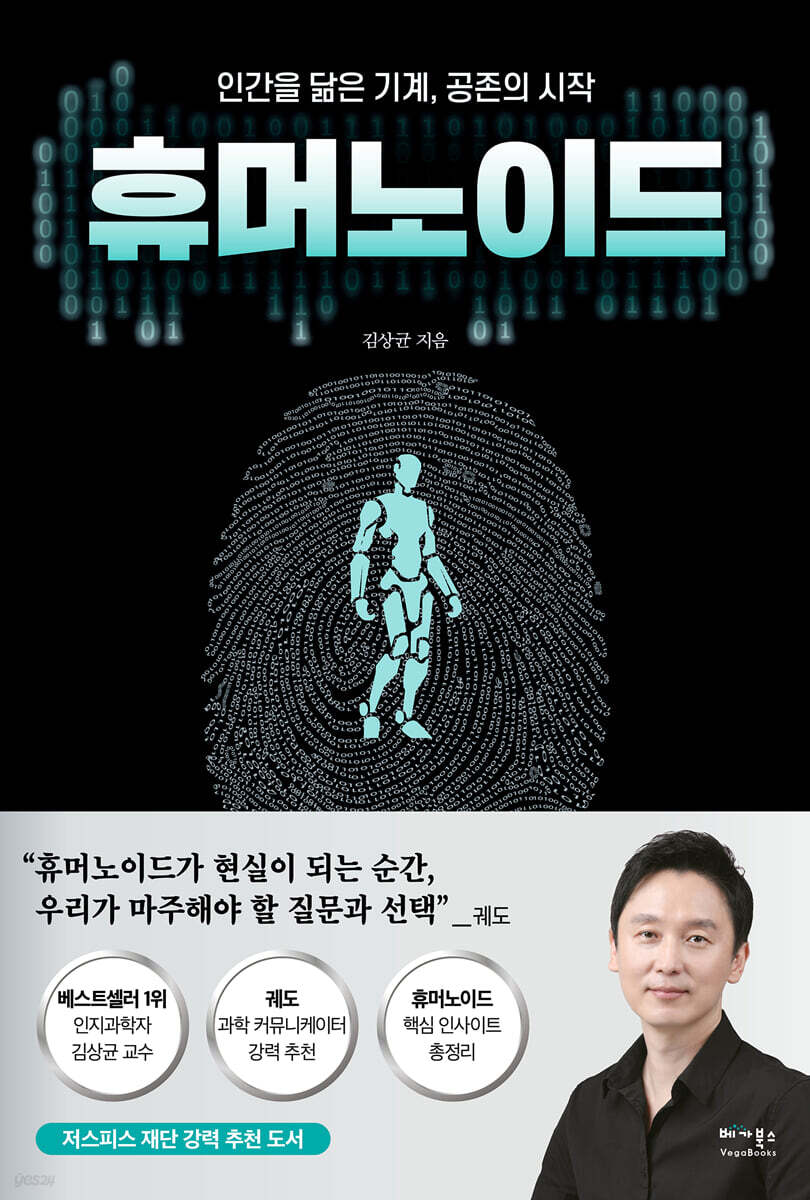 |
Description
Book Introduction
◆ #1 in recruitment by broadcasting companies, large corporations, universities, and YouTube
◆ A new masterpiece by Korea's leading cognitive scientist, Sang-gyun Kim, titled "Humanoid"
“I recommend this book to those preparing for the era of humanoids.” - Justice Foundation (Founder G-Dragon)
“The questions and choices we must face when humanoids become a reality” – Science Communicator Orbit
The ultimate AI is a robot, and the ultimate robot is a humanoid!
Today, humans are embedding AI in robots that resemble themselves.
Technology is rapidly advancing towards humanoids.
What impact will it have on human daily life, human communication, human emotions, and human imagination? Professor Kim Sang-gyun, who has captivated hundreds of thousands of readers with his astonishing insights into new "temporal topics" like the metaverse and AI, now reveals the ripple effects that humanoids will bring.
This book brilliantly showcases the current state of humanoids around the world, along with the keen insights of cognitive scientist Professor Kim Sang-gyun into the human concerns and excitement surrounding humanoids.
“Why did humans create humanoids that resemble themselves?”, “Can humanoids become idols or Michelin chefs?”, “Will humanoids eventually pay taxes like humans?”, “If we transplant a humanoid’s memory into another machine, can we say that it will become immortal?” As technology advances, stories about culture, psychology, ethics, social systems, and economics that require more thought are depicted through the unique perspective of a cognitive scientist that no one can imitate.
Are you ready to live with humanoids? If you haven't yet envisioned a future where we coexist with humanoids, discover the "brave new world" of human-like robots through "Humanoid" right now.
◆ A new masterpiece by Korea's leading cognitive scientist, Sang-gyun Kim, titled "Humanoid"
“I recommend this book to those preparing for the era of humanoids.” - Justice Foundation (Founder G-Dragon)
“The questions and choices we must face when humanoids become a reality” – Science Communicator Orbit
The ultimate AI is a robot, and the ultimate robot is a humanoid!
Today, humans are embedding AI in robots that resemble themselves.
Technology is rapidly advancing towards humanoids.
What impact will it have on human daily life, human communication, human emotions, and human imagination? Professor Kim Sang-gyun, who has captivated hundreds of thousands of readers with his astonishing insights into new "temporal topics" like the metaverse and AI, now reveals the ripple effects that humanoids will bring.
This book brilliantly showcases the current state of humanoids around the world, along with the keen insights of cognitive scientist Professor Kim Sang-gyun into the human concerns and excitement surrounding humanoids.
“Why did humans create humanoids that resemble themselves?”, “Can humanoids become idols or Michelin chefs?”, “Will humanoids eventually pay taxes like humans?”, “If we transplant a humanoid’s memory into another machine, can we say that it will become immortal?” As technology advances, stories about culture, psychology, ethics, social systems, and economics that require more thought are depicted through the unique perspective of a cognitive scientist that no one can imitate.
Are you ready to live with humanoids? If you haven't yet envisioned a future where we coexist with humanoids, discover the "brave new world" of human-like robots through "Humanoid" right now.
- You can preview some of the book's contents.
Preview
index
Recommendation
Prologue: Why Humanoid Now?
Chapter 1.
What humanity has created is not a machine, but a new being.
Resembling a human being is the essence of a humanoid.
Humanoids eventually get their own names.
Could a humanoid have four arms?
Can humanoids get depressed?
Chapter 2.
The largest humanoid market in human history, worth $60 trillion, is unfolding.
How are humanoids made?
They learn faster than humans and replicate what they learn.
An industrial restructuring of the scale of the Industrial Revolution is coming.
The US, China, and Big Tech are risking their lives.
Chapter 3.
A being comes who works faster, more sophisticatedly, and more tirelessly than humanity.
You're saying humanoids can't enter rural areas?
The profession the public most wanted to replace was judges.
Could humanoids become idols and Michelin-starred chefs?
Humanoid priests are already appearing.
Chapter 4.
Becomes a competitor/partner/slave/ruler and substitute for humanity
Humanoids eventually pay taxes just like humans.
Jensen Huang looks at the robot's ChatGPT moment.
Elon Musk predicts 10 billion humanoids
Humanoids are even changing human birth rates.
Chapter 5.
The course of humanity, love, and even death change.
Our children will coexist with humanoids; there is no future for them in today's education system.
Humans may love humanoids more
Humanoids that kill humans aren't just science fiction.
The end of humanoids: death or destruction? Existence or property?
Chapter 6.
Humanity dreams of humanoids
1,000 humanoids per human: Westworld is coming.
Could we entrust terraforming to humanoids?
Evolve into a being that explores infinite space and time.
What is your question?
Epilogue: Why do cognitive scientists talk about humanoids?
Prologue: Why Humanoid Now?
Chapter 1.
What humanity has created is not a machine, but a new being.
Resembling a human being is the essence of a humanoid.
Humanoids eventually get their own names.
Could a humanoid have four arms?
Can humanoids get depressed?
Chapter 2.
The largest humanoid market in human history, worth $60 trillion, is unfolding.
How are humanoids made?
They learn faster than humans and replicate what they learn.
An industrial restructuring of the scale of the Industrial Revolution is coming.
The US, China, and Big Tech are risking their lives.
Chapter 3.
A being comes who works faster, more sophisticatedly, and more tirelessly than humanity.
You're saying humanoids can't enter rural areas?
The profession the public most wanted to replace was judges.
Could humanoids become idols and Michelin-starred chefs?
Humanoid priests are already appearing.
Chapter 4.
Becomes a competitor/partner/slave/ruler and substitute for humanity
Humanoids eventually pay taxes just like humans.
Jensen Huang looks at the robot's ChatGPT moment.
Elon Musk predicts 10 billion humanoids
Humanoids are even changing human birth rates.
Chapter 5.
The course of humanity, love, and even death change.
Our children will coexist with humanoids; there is no future for them in today's education system.
Humans may love humanoids more
Humanoids that kill humans aren't just science fiction.
The end of humanoids: death or destruction? Existence or property?
Chapter 6.
Humanity dreams of humanoids
1,000 humanoids per human: Westworld is coming.
Could we entrust terraforming to humanoids?
Evolve into a being that explores infinite space and time.
What is your question?
Epilogue: Why do cognitive scientists talk about humanoids?
Detailed image

Into the book
Humanoid means more than just a 'robot that looks like a human'.
They may enter cities built to fit the human form, breathing and interacting with us in our homes, workplaces, hospitals, schools, public spaces, and cultural spaces.
How should we view them then? What rights and obligations should we grant them as they labor alongside us, create art, and even mimic human emotions and judgment? Humanoids are symbolic beings that demonstrate the essence and future of humanity.
Machines that are becoming more human-like are asking us the fundamental question, “What is a human?”
--- From "Prologue: Why Humanoid Now?"
The world we live in is designed to be thoroughly human-friendly.
Road widths, traffic signals, and even how to play musical instruments are all designed with the average human body size in mind.
In this way, artificial environments designed and created for humans, driven by humans, are advantageous to beings with humanoid bodies.
If a robot can open a door by grabbing a doorknob like a human, sit in a chair that is the right size for the person, and use tools and machines designed for human hands, then that robot can move around our living spaces without any special modifications or parts.
--- From "Chapter 1 What Mankind Created Was Not a Machine, but a New Being"
The Asia Pacific region is positioned as a hub for the global humanoid market.
As of 2023, it held the highest market share, accounting for 42% of the global market.
Major countries such as Korea, China, and Japan are playing a leading role in the development and commercialization of robotics technology.
The North American region, centered around the United States, is leading technological innovation in the humanoid industry.
The United States is leading the advancement of AI and humanoid technology through a strong academic research base and large-scale private sector investment.
Europe is interested in introducing humanoids due to labor shortages and high labor costs.
--- From "Chapter 2: The Largest $60 Trillion Humanoid Market in Human History Unfolds"
Throughout human history, religion has played a significant role in shaping society's ethical values and collective identity, going beyond mere belief.
Beyond simply offering suggestions and explaining doctrines, they have established themselves as a central figure in the community, comforting people's hearts and helping them find meaning in life.
So could humanoids, with their human-like forms and even increasingly advanced AI that appear to be "all-knowing and self-thinking," take on the role of these priests?
--- From "Chapter 3: A Being More Swift/Sophisticated and Restless Than Humanity Comes"
In the early days of humanoids, the question arises as to how much people will actually use them.
However, historically, when new civilizations emerged, they were initially introduced in a very limited manner, and then, depending on market conditions and the pace of technological advancement, they were rapidly expanded.
The most commonly cited example is the automobile.
In the early 1900s, society was skeptical about the spread of automobiles because they were much more expensive and more difficult to maintain than horse-drawn carriages. However, in just 20 to 30 years, the public's consumption patterns were completely changed.
Humanoids may also become popular sooner than expected if AI, battery technology, and materials engineering create synergy.
--- From "Chapter 4: Becoming Humanity's Competitor/Companion/Slave/Dominant and Substitute"
If love between humans and humanoids becomes a reality, what impact will it have on our society, culture, and humanity? Marriage institutions and family structures are already diversifying, the number of single-person households and single-person households is rapidly increasing, and lifestyles are rapidly changing.
If a new opponent called a humanoid appears here, the traditional concepts of family and community are likely to change more radically.
--- From "Chapter 5: The Path of Humanity/Love and Death Change"
Humanoids have several advantages for space exploration compared to general-purpose robots.
As a humanoid, you can use the existing equipment of spaceships and space stations.
When utilizing existing space infrastructure, deploying humanoids eliminates the need for separate environmental modifications or new equipment development costs.
Collaboration is easy because astronauts can intuitively understand and control the humanoid's movements.
There have been instances where Robonaut 2 on the International Space Station (ISS) has performed repetitive or dangerous tasks in place of humans.
They may enter cities built to fit the human form, breathing and interacting with us in our homes, workplaces, hospitals, schools, public spaces, and cultural spaces.
How should we view them then? What rights and obligations should we grant them as they labor alongside us, create art, and even mimic human emotions and judgment? Humanoids are symbolic beings that demonstrate the essence and future of humanity.
Machines that are becoming more human-like are asking us the fundamental question, “What is a human?”
--- From "Prologue: Why Humanoid Now?"
The world we live in is designed to be thoroughly human-friendly.
Road widths, traffic signals, and even how to play musical instruments are all designed with the average human body size in mind.
In this way, artificial environments designed and created for humans, driven by humans, are advantageous to beings with humanoid bodies.
If a robot can open a door by grabbing a doorknob like a human, sit in a chair that is the right size for the person, and use tools and machines designed for human hands, then that robot can move around our living spaces without any special modifications or parts.
--- From "Chapter 1 What Mankind Created Was Not a Machine, but a New Being"
The Asia Pacific region is positioned as a hub for the global humanoid market.
As of 2023, it held the highest market share, accounting for 42% of the global market.
Major countries such as Korea, China, and Japan are playing a leading role in the development and commercialization of robotics technology.
The North American region, centered around the United States, is leading technological innovation in the humanoid industry.
The United States is leading the advancement of AI and humanoid technology through a strong academic research base and large-scale private sector investment.
Europe is interested in introducing humanoids due to labor shortages and high labor costs.
--- From "Chapter 2: The Largest $60 Trillion Humanoid Market in Human History Unfolds"
Throughout human history, religion has played a significant role in shaping society's ethical values and collective identity, going beyond mere belief.
Beyond simply offering suggestions and explaining doctrines, they have established themselves as a central figure in the community, comforting people's hearts and helping them find meaning in life.
So could humanoids, with their human-like forms and even increasingly advanced AI that appear to be "all-knowing and self-thinking," take on the role of these priests?
--- From "Chapter 3: A Being More Swift/Sophisticated and Restless Than Humanity Comes"
In the early days of humanoids, the question arises as to how much people will actually use them.
However, historically, when new civilizations emerged, they were initially introduced in a very limited manner, and then, depending on market conditions and the pace of technological advancement, they were rapidly expanded.
The most commonly cited example is the automobile.
In the early 1900s, society was skeptical about the spread of automobiles because they were much more expensive and more difficult to maintain than horse-drawn carriages. However, in just 20 to 30 years, the public's consumption patterns were completely changed.
Humanoids may also become popular sooner than expected if AI, battery technology, and materials engineering create synergy.
--- From "Chapter 4: Becoming Humanity's Competitor/Companion/Slave/Dominant and Substitute"
If love between humans and humanoids becomes a reality, what impact will it have on our society, culture, and humanity? Marriage institutions and family structures are already diversifying, the number of single-person households and single-person households is rapidly increasing, and lifestyles are rapidly changing.
If a new opponent called a humanoid appears here, the traditional concepts of family and community are likely to change more radically.
--- From "Chapter 5: The Path of Humanity/Love and Death Change"
Humanoids have several advantages for space exploration compared to general-purpose robots.
As a humanoid, you can use the existing equipment of spaceships and space stations.
When utilizing existing space infrastructure, deploying humanoids eliminates the need for separate environmental modifications or new equipment development costs.
Collaboration is easy because astronauts can intuitively understand and control the humanoid's movements.
There have been instances where Robonaut 2 on the International Space Station (ISS) has performed repetitive or dangerous tasks in place of humans.
--- From "Chapter 6: Humanity Dreams as a Humanoid"
Publisher's Review
The Age of Physical AI: Unprecedented Shocks Await
What kind of world will human-made humanoids create?
Morgan Stanley says the humanoid market will reach $60 trillion in the next 10 years.
The US, China, Korea, Japan, Europe, and other countries around the world, as well as leading tech companies, are jumping into the "humanoid" market. Jensen Huang, the keynote speaker at CES 2025, stated:
“The age of humanoids is upon us.” But the author poses a fundamental question that is absolutely necessary for us at this point in time.
Is humanity truly preparing for the age of humanoids?
"What humanity has created is not a machine, but a new being."
Why do we dream of humanoids?
How did humanoid robots, resembling humans, come into existence? From an efficiency standpoint, it's because the communities humanity has cultivated over the centuries were built for humans.
The social environment is favorable to beings with humanoid bodies.
If a robot can open a door by grabbing a doorknob like a human and use the same tools and machines that humans use, then that robot can naturally integrate into human life without any separate design or parts.
But is that really the only reason? Medieval alchemists dreamed of a "homunculus," a "small human-like being."
Even in 21st century science fiction films, countless human-like machines are depicted.
In this way, humanoids are not simply a product of efficiency, but also a reflection of the cultural context related to humans' desire to create beings similar to themselves.
“Working faster, more accurately, and more tirelessly than humans.”
Are there any jobs that humanoids can't replace?
Carbon Robotics' autonomous weeding robot removes approximately 2,500 square meters of weeds per hour.
Furthermore, if pesticide spraying is done by humanoids, environmental pollution and safety accidents can be drastically reduced, even in small rice paddies.
Japanese temples have adopted humanoids as monks.
Even religion, which was once considered a sanctuary for humans, is being replaced by humanoids.
In this reality, is there truly a unique human quality that humanoids cannot replace? What exactly is "human"?
Redefining humanity's path, love, and even death.
How far will humanoids change human life?
In a world where humanoids have become part of our daily lives, how much will human life change?
What will we learn in the future and what will we teach the next generation?
And what kind of jobs will the children who coexist with humanoids have and what kind of work will they do?
If humanoids that are more attractive than humans are mass-produced and people fall in love with them, how will the world view love between humans and humanoids?
If such humanoids live immortal lives, leaving behind their experiences as data and moving to another body, how will the concept of death be redefined?
“Humanity dreams as a humanoid.”
Are you ready to join the humanoids?
The reason why the groundbreaking invention called the automobile was able to permeate humanity was because the humanistic system called the traffic light developed alongside it.
Humanoid technology is advancing rapidly every day.
But does humanity truly have a humanities system adequately suited to humanoids? In this book, author Kim Sang-gyun clearly presents the current state and future of humanoids, their possibilities and limitations, and presents a concrete picture of the society humanity will create with them in an accessible and engaging way.
Now that the era of humanoids is upon us, what kind of coexistence will we envision in the future?
What kind of world will human-made humanoids create?
Morgan Stanley says the humanoid market will reach $60 trillion in the next 10 years.
The US, China, Korea, Japan, Europe, and other countries around the world, as well as leading tech companies, are jumping into the "humanoid" market. Jensen Huang, the keynote speaker at CES 2025, stated:
“The age of humanoids is upon us.” But the author poses a fundamental question that is absolutely necessary for us at this point in time.
Is humanity truly preparing for the age of humanoids?
"What humanity has created is not a machine, but a new being."
Why do we dream of humanoids?
How did humanoid robots, resembling humans, come into existence? From an efficiency standpoint, it's because the communities humanity has cultivated over the centuries were built for humans.
The social environment is favorable to beings with humanoid bodies.
If a robot can open a door by grabbing a doorknob like a human and use the same tools and machines that humans use, then that robot can naturally integrate into human life without any separate design or parts.
But is that really the only reason? Medieval alchemists dreamed of a "homunculus," a "small human-like being."
Even in 21st century science fiction films, countless human-like machines are depicted.
In this way, humanoids are not simply a product of efficiency, but also a reflection of the cultural context related to humans' desire to create beings similar to themselves.
“Working faster, more accurately, and more tirelessly than humans.”
Are there any jobs that humanoids can't replace?
Carbon Robotics' autonomous weeding robot removes approximately 2,500 square meters of weeds per hour.
Furthermore, if pesticide spraying is done by humanoids, environmental pollution and safety accidents can be drastically reduced, even in small rice paddies.
Japanese temples have adopted humanoids as monks.
Even religion, which was once considered a sanctuary for humans, is being replaced by humanoids.
In this reality, is there truly a unique human quality that humanoids cannot replace? What exactly is "human"?
Redefining humanity's path, love, and even death.
How far will humanoids change human life?
In a world where humanoids have become part of our daily lives, how much will human life change?
What will we learn in the future and what will we teach the next generation?
And what kind of jobs will the children who coexist with humanoids have and what kind of work will they do?
If humanoids that are more attractive than humans are mass-produced and people fall in love with them, how will the world view love between humans and humanoids?
If such humanoids live immortal lives, leaving behind their experiences as data and moving to another body, how will the concept of death be redefined?
“Humanity dreams as a humanoid.”
Are you ready to join the humanoids?
The reason why the groundbreaking invention called the automobile was able to permeate humanity was because the humanistic system called the traffic light developed alongside it.
Humanoid technology is advancing rapidly every day.
But does humanity truly have a humanities system adequately suited to humanoids? In this book, author Kim Sang-gyun clearly presents the current state and future of humanoids, their possibilities and limitations, and presents a concrete picture of the society humanity will create with them in an accessible and engaging way.
Now that the era of humanoids is upon us, what kind of coexistence will we envision in the future?
GOODS SPECIFICS
- Date of issue: March 7, 2025
- Page count, weight, size: 284 pages | 522g | 152*225*20mm
- ISBN13: 9791192488776
- ISBN10: 1192488776
You may also like
카테고리
korean


korean

![GQ KOREA Mark (Monthly): December [2025]](http://librairie.coreenne.fr/cdn/shop/files/8ef265dbbfbf186523ed75ba7319009d.jpg?v=1765340328&width=3840)


