

Vocabulary study for adults
 |
Description
Book Introduction
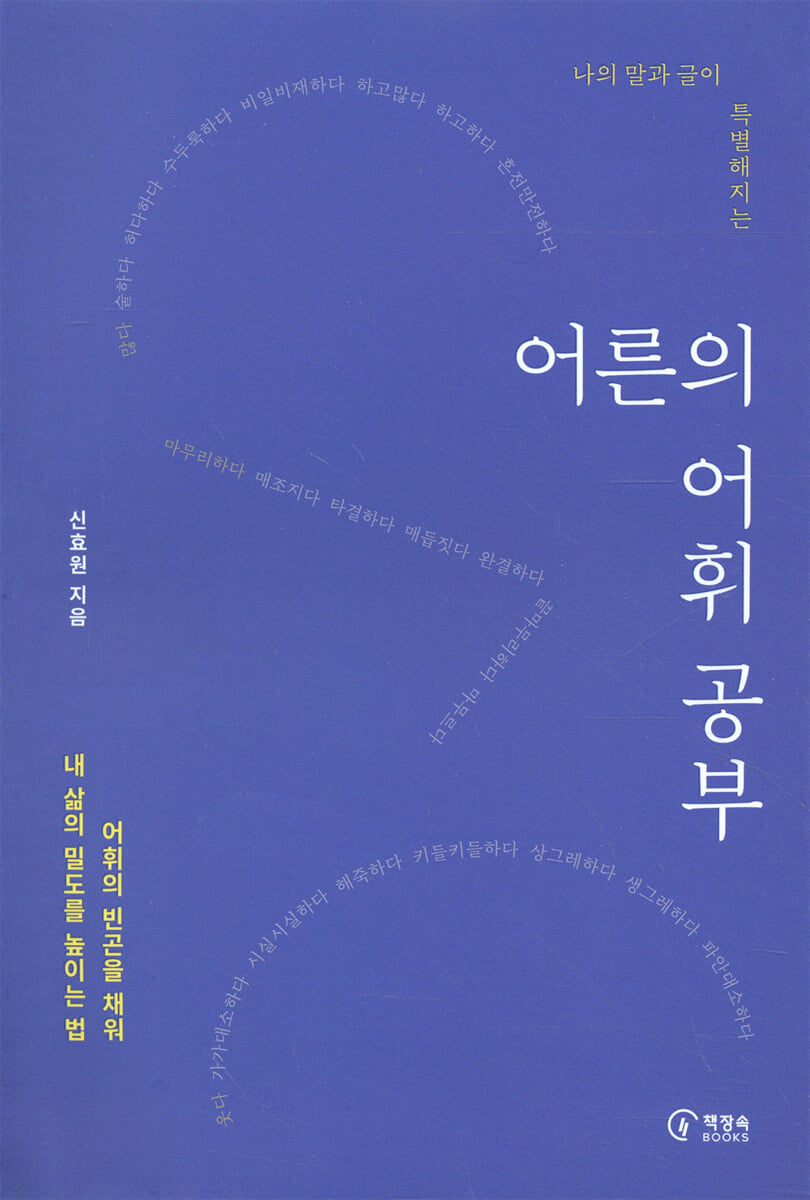
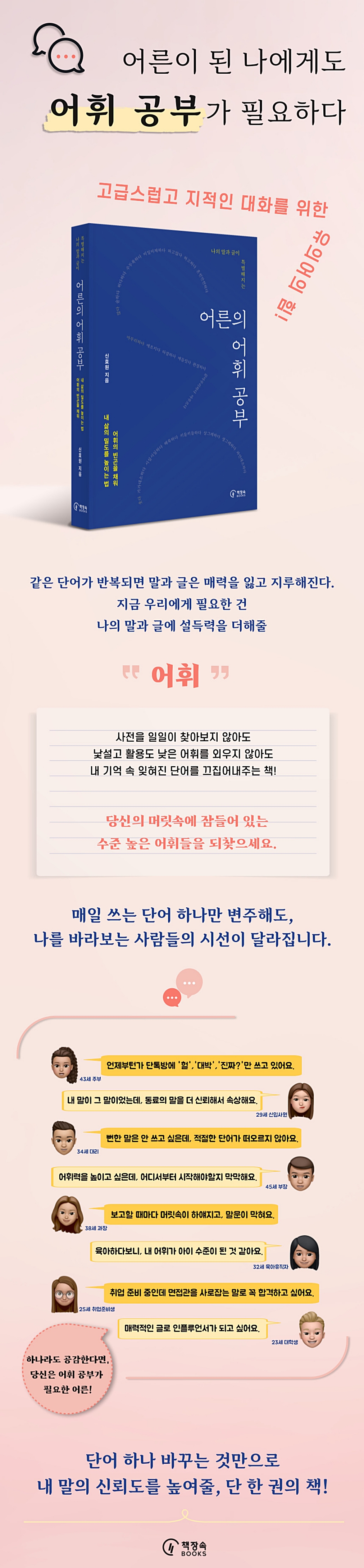
Even if you change just one word you use every day, The way people look at me changes. Just by changing one word The one book that will increase the credibility of my words! This book began with the question, "How can we transform the vocabulary Koreans use repeatedly into something more diverse and vibrant?" How many words do we use in our daily lives? The author argues that our linguistic world is monopolized by a handful of words. Situations and objects that can be described as 'numerous, numerous, numerous, plentiful, commonplace, numerous, and commonplace' are lumped together as 'really many, too many, really many, quite a lot', and our vocabulary has become narrow, and because of this, speech and writing have lost their charm and become boring. How can I breathe life into my worn-out words and writing? The power of synonyms for sophisticated and intelligent conversations! Although it is recommended to keep books and dictionaries close to build vocabulary, it is not easy to select words from books and dictionaries to replace words that are used repeatedly. The author offers practical solutions to fill the void in vocabulary, rather than vague alternatives. To this end, we selected about 50 words that are actually commonly used by Koreans and included their synonyms. As it is composed of 'vocabulary commonly used by Koreans', the 50 included vocabulary words are words that any Korean uses repeatedly. The author explains the meaning of each word through everyday stories rather than simply using dictionary definitions, thereby accurately informing readers of the nuances implied by each word, allowing them to use a variety of words appropriately. As you follow this book, you will soon find yourself unfolding the story of your life in a dense manner. |
- You can preview some of the book's contents.
Preview
index
Entering / May I fill the void in my vocabulary and enrich my life
PART 1 Vocabulary commonly used by Koreans: ㄱ, ㄴ, ㄷ
go
1.
To cover up: to defend/to defend/to protect
2.
Fix: correct/set right/make amends/amend/correct
you
3.
Come out: come out/interfere/meddle/be meddlesome/intervene/be involved
4.
Old: shabby/dirty/worn out/stale
5.
Slow: sluggish/sluggish/sluggish/sluggish/stagnant
do
6.
Help: support/rescue/assist/contribute/support/cooperate
7.
To bring up: to bring out/to pinch/to tease/to dig up/to make a fuss/to straighten/to tell
8.
Most: majority/usually/most likely/almost all
9.
To argue: to cover up/to be concerned/to dig up/to catch/to attack/to lay down the abacus
10.
Warm: warm/warm/warm/warm/warm/soft/soft/sunny
PART 2 Vocabulary commonly used by Koreans: ㅁ,ㅂ
grave
11.
Finish: conclude/conclude/tie a knot/complete/finish/finish off
12.
Satisfied: satisfied/pleasant/happy/unsatisfied/unpleasant/unpleasant
13.
many: numerous/many/numerous/plentiful/ubiquitous/common/many and numerous/common and common
14.
All: without exception/everything/everything/entirely/completely
15.
Postpone: put off day after day/put off month after month/put off little by little/put off for a while/put off late
hundred
16.
See: look out/glance/stare/see/observe/witness/observe/glance/glance
17.
Embarrassed: embarrassed/shameful/shy/disgusting/vulgar
18.
Anxious: nervous/uneasy/uneasy/unsettled
19.
uncomfortable: uncomfortable/uncomfortable/awkward/irritating
20.
Similar: Similar/Just so-so/Just so-so/Equal/Similar/Just right/Just about the same/Just about the same/Approximate/Sharp
21.
To laugh at: to mock/to taunt/to ridicule/to be sarcastic/to be sarcastic/to mock
22.
meticulously: meticulously/thoroughly/precisely/thoroughly/carefully
23.
Fast: quick/quick/nimble/nimble/quick/nimble/quick
24.
Shameless: shameless/impudent/unscrupulous/brazen/thick-skinned/bold-faced
PART 3 Vocabulary commonly used by Koreans ㅅ, o
cow
25.
Look into: examine/dissect/penetrate/look into
26.
Cool: cool/chilly/chilly/chilly/chilly/chilly/chilly/chilly/chilly/chilly/chilly/chilly/chilly/chilly/chilly/chilly/chilly/chilly
27.
Clumsy: clumsy/immature/stupid/awkward
28.
Severe: severe/extreme/intense/serious/evil/excessive
29.
Think: ponder/consider/keep in mind/meditate/think over/consider/reconsider
30.
Fight: squabble/fight/wrestle/grab/hit/fight
31.
Chilly: cold/indifferent/cold/merciless/bitter/cold-hearted/cold-hearted/savage
32.
Useless: pointless/useless/useless/embarrassing
33.
Lonely: desolate/desolate/gloomy/gloomy/chilling
blanket
34.
Know: be aware of/be aware of/be familiar with/be aware of/be aware of
35.
Ridiculous: absurd/absurd/stupid/amazing
36.
Dark: dark/gloomy/gloomy/dark/darkly/gloomy/gloomy/darkly/darkly
/twilight/dim
37.
To strive: to put in effort/to be anxious/to be worried/to be single-minded
38.
Cry: cry and whine/cry loudly/weep loudly/sob/sob/feel moved
39.
Laugh: laugh out loud/laugh out loud/laugh out loud/laugh out loud/laugh out loud/laugh out loud
40.
Threaten: to threaten/to browbeat/to browbeat/to threaten/to intimidate/to intimidate
PART 4 Vocabulary commonly used by Koreans: ㅈ, ㅊ, ㅎ
trillion
41.
boast: brag/show off/act proud/show off/show off/show off
42.
Organize: trim/summarize/organize/tidi up
43.
Quiet: quiet/eerie/quiet/peaceful
44.
important: vital/valuable/important/important/weighty
45.
Guess: to guess/to guess/to guess/to guess/to guess/to figure out/to guess/to guess/
popular/outward appearance/eye impression/hand impression/outward appearance
congrat
46.
Haggard: gaunt/haggard/pallid/pallid/pallid
he
47.
Empty: empty/dense/shabby/shabby
48.
scold: scold/reprimand/reprimand/rebuke/yell/reprimand/rebuke/reprimand/reprimand
49.
It's hard: it's tiring/hard/confused/difficult
50.
Powerless: helpless/ listless/sluggish/weak/dead
PART 1 Vocabulary commonly used by Koreans: ㄱ, ㄴ, ㄷ
go
1.
To cover up: to defend/to defend/to protect
2.
Fix: correct/set right/make amends/amend/correct
you
3.
Come out: come out/interfere/meddle/be meddlesome/intervene/be involved
4.
Old: shabby/dirty/worn out/stale
5.
Slow: sluggish/sluggish/sluggish/sluggish/stagnant
do
6.
Help: support/rescue/assist/contribute/support/cooperate
7.
To bring up: to bring out/to pinch/to tease/to dig up/to make a fuss/to straighten/to tell
8.
Most: majority/usually/most likely/almost all
9.
To argue: to cover up/to be concerned/to dig up/to catch/to attack/to lay down the abacus
10.
Warm: warm/warm/warm/warm/warm/soft/soft/sunny
PART 2 Vocabulary commonly used by Koreans: ㅁ,ㅂ
grave
11.
Finish: conclude/conclude/tie a knot/complete/finish/finish off
12.
Satisfied: satisfied/pleasant/happy/unsatisfied/unpleasant/unpleasant
13.
many: numerous/many/numerous/plentiful/ubiquitous/common/many and numerous/common and common
14.
All: without exception/everything/everything/entirely/completely
15.
Postpone: put off day after day/put off month after month/put off little by little/put off for a while/put off late
hundred
16.
See: look out/glance/stare/see/observe/witness/observe/glance/glance
17.
Embarrassed: embarrassed/shameful/shy/disgusting/vulgar
18.
Anxious: nervous/uneasy/uneasy/unsettled
19.
uncomfortable: uncomfortable/uncomfortable/awkward/irritating
20.
Similar: Similar/Just so-so/Just so-so/Equal/Similar/Just right/Just about the same/Just about the same/Approximate/Sharp
21.
To laugh at: to mock/to taunt/to ridicule/to be sarcastic/to be sarcastic/to mock
22.
meticulously: meticulously/thoroughly/precisely/thoroughly/carefully
23.
Fast: quick/quick/nimble/nimble/quick/nimble/quick
24.
Shameless: shameless/impudent/unscrupulous/brazen/thick-skinned/bold-faced
PART 3 Vocabulary commonly used by Koreans ㅅ, o
cow
25.
Look into: examine/dissect/penetrate/look into
26.
Cool: cool/chilly/chilly/chilly/chilly/chilly/chilly/chilly/chilly/chilly/chilly/chilly/chilly/chilly/chilly/chilly/chilly/chilly
27.
Clumsy: clumsy/immature/stupid/awkward
28.
Severe: severe/extreme/intense/serious/evil/excessive
29.
Think: ponder/consider/keep in mind/meditate/think over/consider/reconsider
30.
Fight: squabble/fight/wrestle/grab/hit/fight
31.
Chilly: cold/indifferent/cold/merciless/bitter/cold-hearted/cold-hearted/savage
32.
Useless: pointless/useless/useless/embarrassing
33.
Lonely: desolate/desolate/gloomy/gloomy/chilling
blanket
34.
Know: be aware of/be aware of/be familiar with/be aware of/be aware of
35.
Ridiculous: absurd/absurd/stupid/amazing
36.
Dark: dark/gloomy/gloomy/dark/darkly/gloomy/gloomy/darkly/darkly
/twilight/dim
37.
To strive: to put in effort/to be anxious/to be worried/to be single-minded
38.
Cry: cry and whine/cry loudly/weep loudly/sob/sob/feel moved
39.
Laugh: laugh out loud/laugh out loud/laugh out loud/laugh out loud/laugh out loud/laugh out loud
40.
Threaten: to threaten/to browbeat/to browbeat/to threaten/to intimidate/to intimidate
PART 4 Vocabulary commonly used by Koreans: ㅈ, ㅊ, ㅎ
trillion
41.
boast: brag/show off/act proud/show off/show off/show off
42.
Organize: trim/summarize/organize/tidi up
43.
Quiet: quiet/eerie/quiet/peaceful
44.
important: vital/valuable/important/important/weighty
45.
Guess: to guess/to guess/to guess/to guess/to guess/to figure out/to guess/to guess/
popular/outward appearance/eye impression/hand impression/outward appearance
congrat
46.
Haggard: gaunt/haggard/pallid/pallid/pallid
he
47.
Empty: empty/dense/shabby/shabby
48.
scold: scold/reprimand/reprimand/rebuke/yell/reprimand/rebuke/reprimand/reprimand
49.
It's hard: it's tiring/hard/confused/difficult
50.
Powerless: helpless/ listless/sluggish/weak/dead
Detailed image
Into the book
After lunch, I always stop by a cafe and buy a cup of coffee to start my afternoon.
It's a painful scene of an office worker having to suppress the afternoon fatigue with caffeine.
At that moment, when I see cats peacefully napping under the warm spring sun, I often have a silly thought that I want to be born as you in my next life and have a good nap.
Here, it can be replaced with 'dasarope' which means 'there is a little bit of warmth', 'tasarope' which gives a stronger feeling, or 'tasahada' or 'tasahada' which means 'slightly warm'.
Cats are napping under the warm, gentle spring sun! How envious!
--- p.62
It's always satisfying to meet people who can relate to each other's stories and enjoy sharing them.
The road back from parting with them is not empty or lonely.
There is a word that can be used when you feel happy and satisfied.
It is 'happy'.
Just reading these words will make you feel generous and bring a smile to your face.
It could be rewritten as 'The journey back from spending time with like-minded people is always pleasant.'
--- p.76
You can use '유예하다' when you are somewhat hesitant about doing something or when you postpone a set date or time.
It is used in phrases such as, 'It is not a matter that can be judged hastily, so it would be better to postpone the decision for a while' or 'The company was in bad shape, so it had to postpone debt repayment.'
'Suspension' is also used when setting aside a certain period of time to file a lawsuit or to make a lawsuit effective, and can be used in the same way as 'suspend prosecution, sentencing, or execution.'
--- p.92
Shame, unfortunately, does not seem to enjoy the blessing of human oblivion.
Memories I wanted to forget invade me without warning, vividly restoring the shameful shame I felt back then.
The shame that has not been washed away yet passes over me again, and only after making me feel embarrassed, does it make me turn away.
'Shameful', meaning 'embarrassing or shy' or 'shameful or embarrassed'.
What could replace this?
--- p.101
The more complex and difficult something is, the more it needs to be examined thoroughly.
At this time, the word 'sukchalhada', which means to look at something in detail, would be appropriate.
The feeling of 'to examine' is much more intense than that of 'to examine'.
You could write something like, 'This movie gives us a chance to seriously contemplate the meaning of life.'
--- p.145
Rejection is always difficult.
If I refuse gently, I feel like I'll be giving the other person some room to maneuver, but if I reject them outright, I feel bad.
In the above sentence, the rejection was made outright in a cold tone.
Let's use 'cold' at this time.
'Cold' means 'indifferent and cold in attitude or character', so it can be written as 'He rejected my request outright with a cold tone of voice'.
--- p.177
As the cheerful conversation that had continued all evening vanished into thin air like soap bubbles, we turned away, saying goodbye and promising to see each other again soon.
The feelings I wanted to pour out lingered in my mouth and eventually withdrew, and when the time of lingering between the outside and the inside ended, loneliness washed over me as if it were a curse.
'Ssollonhada' expresses a lonely and desolate feeling.
What words can replace this word?
--- p.186
This sentence was probably intended for the company's executives to address their employees.
Here, 'as you know' can be understood as 'as if all members of this company know'.
That is, many people know it well.
Here, it can be used instead of 'know', which means 'to be known by many people'.
You can write something like, 'As you know, the company is having a hard time due to the ongoing economic downturn.'
--- p.192
People often say, 'The weather is gloomy.'
I would have chosen the word 'gloomy' to describe a very gloomy day.
However, since '꾸무꾸물하다' is a verb that expresses moving very slowly, '날이 꾸무물하다' is incorrect.
When you want to say that the weather is cloudy and dark, you should use 'keumkeumulhada'.
'Kkeumulkeumulhada' is used to mean 'the sky is not clear and it is very cloudy' or 'the lights are not bright and it is very gloomy'.
--- p.203
I love the laughter of children.
I like that face, with its face squinted and its eyes shaped like crescent moons.
I can't believe how beautiful someone can be with such a crumpled face.
There is a word that expresses children's laughter well.
It's 'deadly'.
When I see 'haejukhada', which means to smile cutely as if satisfied, I think of a child running towards his mother with crescent moon eyes from afar.
--- p.218
Silence allows marginalized supporting voices to shine.
The moment they become the main characters, only then can we fully capture the moments that we could not capture with our eyes.
'Quiet' means 'quiet and without any sound'.
What words can be used interchangeably with 'quiet'?
--- p.241
What word would it be if we added a deeper sense of emptiness to "허전하다" (emptiness)? It would probably be "휘영하다" (whiyeonghada).
'Hwiyeonghada' means that the mind is empty and feels uncontrollably empty.
The emptiness of facing the dusky dawn alone seems to be completely captured in these words.
This sentence can be rewritten as 'The dawn I greet alone in an empty house is truly splendid.'
--- p.263
How many times do we say that we are having a hard time throughout the day?
'It's hard' may be the word that is displayed at the very front of my subconscious.
Is there a shorter word that allows thoughts to come out as words?
'Hard' means 'there is an aspect of effort', 'there is an aspect of effort or hardship'.
What are some words that can be used interchangeably with the word 'hard', which I blurt out without realizing it?
It's a painful scene of an office worker having to suppress the afternoon fatigue with caffeine.
At that moment, when I see cats peacefully napping under the warm spring sun, I often have a silly thought that I want to be born as you in my next life and have a good nap.
Here, it can be replaced with 'dasarope' which means 'there is a little bit of warmth', 'tasarope' which gives a stronger feeling, or 'tasahada' or 'tasahada' which means 'slightly warm'.
Cats are napping under the warm, gentle spring sun! How envious!
--- p.62
It's always satisfying to meet people who can relate to each other's stories and enjoy sharing them.
The road back from parting with them is not empty or lonely.
There is a word that can be used when you feel happy and satisfied.
It is 'happy'.
Just reading these words will make you feel generous and bring a smile to your face.
It could be rewritten as 'The journey back from spending time with like-minded people is always pleasant.'
--- p.76
You can use '유예하다' when you are somewhat hesitant about doing something or when you postpone a set date or time.
It is used in phrases such as, 'It is not a matter that can be judged hastily, so it would be better to postpone the decision for a while' or 'The company was in bad shape, so it had to postpone debt repayment.'
'Suspension' is also used when setting aside a certain period of time to file a lawsuit or to make a lawsuit effective, and can be used in the same way as 'suspend prosecution, sentencing, or execution.'
--- p.92
Shame, unfortunately, does not seem to enjoy the blessing of human oblivion.
Memories I wanted to forget invade me without warning, vividly restoring the shameful shame I felt back then.
The shame that has not been washed away yet passes over me again, and only after making me feel embarrassed, does it make me turn away.
'Shameful', meaning 'embarrassing or shy' or 'shameful or embarrassed'.
What could replace this?
--- p.101
The more complex and difficult something is, the more it needs to be examined thoroughly.
At this time, the word 'sukchalhada', which means to look at something in detail, would be appropriate.
The feeling of 'to examine' is much more intense than that of 'to examine'.
You could write something like, 'This movie gives us a chance to seriously contemplate the meaning of life.'
--- p.145
Rejection is always difficult.
If I refuse gently, I feel like I'll be giving the other person some room to maneuver, but if I reject them outright, I feel bad.
In the above sentence, the rejection was made outright in a cold tone.
Let's use 'cold' at this time.
'Cold' means 'indifferent and cold in attitude or character', so it can be written as 'He rejected my request outright with a cold tone of voice'.
--- p.177
As the cheerful conversation that had continued all evening vanished into thin air like soap bubbles, we turned away, saying goodbye and promising to see each other again soon.
The feelings I wanted to pour out lingered in my mouth and eventually withdrew, and when the time of lingering between the outside and the inside ended, loneliness washed over me as if it were a curse.
'Ssollonhada' expresses a lonely and desolate feeling.
What words can replace this word?
--- p.186
This sentence was probably intended for the company's executives to address their employees.
Here, 'as you know' can be understood as 'as if all members of this company know'.
That is, many people know it well.
Here, it can be used instead of 'know', which means 'to be known by many people'.
You can write something like, 'As you know, the company is having a hard time due to the ongoing economic downturn.'
--- p.192
People often say, 'The weather is gloomy.'
I would have chosen the word 'gloomy' to describe a very gloomy day.
However, since '꾸무꾸물하다' is a verb that expresses moving very slowly, '날이 꾸무물하다' is incorrect.
When you want to say that the weather is cloudy and dark, you should use 'keumkeumulhada'.
'Kkeumulkeumulhada' is used to mean 'the sky is not clear and it is very cloudy' or 'the lights are not bright and it is very gloomy'.
--- p.203
I love the laughter of children.
I like that face, with its face squinted and its eyes shaped like crescent moons.
I can't believe how beautiful someone can be with such a crumpled face.
There is a word that expresses children's laughter well.
It's 'deadly'.
When I see 'haejukhada', which means to smile cutely as if satisfied, I think of a child running towards his mother with crescent moon eyes from afar.
--- p.218
Silence allows marginalized supporting voices to shine.
The moment they become the main characters, only then can we fully capture the moments that we could not capture with our eyes.
'Quiet' means 'quiet and without any sound'.
What words can be used interchangeably with 'quiet'?
--- p.241
What word would it be if we added a deeper sense of emptiness to "허전하다" (emptiness)? It would probably be "휘영하다" (whiyeonghada).
'Hwiyeonghada' means that the mind is empty and feels uncontrollably empty.
The emptiness of facing the dusky dawn alone seems to be completely captured in these words.
This sentence can be rewritten as 'The dawn I greet alone in an empty house is truly splendid.'
--- p.263
How many times do we say that we are having a hard time throughout the day?
'It's hard' may be the word that is displayed at the very front of my subconscious.
Is there a shorter word that allows thoughts to come out as words?
'Hard' means 'there is an aspect of effort', 'there is an aspect of effort or hardship'.
What are some words that can be used interchangeably with the word 'hard', which I blurt out without realizing it?
--- p.272
Publisher's Review
Why do we need to ‘study vocabulary’?
The author says that we all have intangible thoughts and feelings in our heads, and a desire to express the world we see in words.
It's a desire to tell one's own story in a dense manner.
But what is the reality?
Aren't we simply "thinking" in each situation where we contemplate, consider, consider, ponder, ponder, reason, consider, and reconsider, without thinking? We might think it's enough if both we and the other person understand, but the reality is not so simple.
Because a limited vocabulary limits our linguistic world.
Wittgenstein said, 'The limits of language are the limits of the world.'
The limits of the vocabulary I use determine the limits of the world I can understand.
We can express our feelings and thoughts within the scope of our vocabulary, and only within that scope can we understand the world of others.
So, we need to study vocabulary.
In our linguistic world, where each situation that can be expressed as 'completely/everything/everything/entirely/completely' is monopolized by 'everyone', we cannot carefully express or understand the thoughts and emotions that fluctuate throughout the day.
The author demonstrates the subtle nuances of vocabulary well through examples.
[Please allow 'everyone' to attend this meeting.]
This is a message asking everyone to attend without leaving anyone out.
At this time, the word that can replace 'all' can be thought of as 'without exception'.
'Ppajeom-heobye', which means 'everything without leaving anything out', has a similar meaning to 'all', but gives a stronger feeling than 'all'.
Let's write something like, 'Please attend this meeting without fail.'
[He ate 'all' the cake by himself before his family arrived.]
What word could replace "all" in this sentence? We could try "ssak," which means "everything, without leaving a single bit behind."
When everything is lost or disappeared, 'ssuk' is mainly used, as in 'I threw away all the letters we had exchanged before' and 'He ate all the cake by himself before his family came.'
- Quote from the text -
This book provides a variety of synonyms that can replace familiar words and helps you use them more effectively.
When you are walking and suddenly encounter a quiet and peaceful atmosphere with few people, instead of saying 'quiet', you can think of 'just alone'.
If you can fully utilize just the 50 or so synonyms for the commonly used Korean vocabulary presented in this book, your life will be transformed.
Now is the time to reveal the vocabulary that has been locked away behind the curtain and expand your vocabulary.
As your vocabulary expands, the world you encounter will become deeper and more dazzling.
The author says that we all have intangible thoughts and feelings in our heads, and a desire to express the world we see in words.
It's a desire to tell one's own story in a dense manner.
But what is the reality?
Aren't we simply "thinking" in each situation where we contemplate, consider, consider, ponder, ponder, reason, consider, and reconsider, without thinking? We might think it's enough if both we and the other person understand, but the reality is not so simple.
Because a limited vocabulary limits our linguistic world.
Wittgenstein said, 'The limits of language are the limits of the world.'
The limits of the vocabulary I use determine the limits of the world I can understand.
We can express our feelings and thoughts within the scope of our vocabulary, and only within that scope can we understand the world of others.
So, we need to study vocabulary.
In our linguistic world, where each situation that can be expressed as 'completely/everything/everything/entirely/completely' is monopolized by 'everyone', we cannot carefully express or understand the thoughts and emotions that fluctuate throughout the day.
The author demonstrates the subtle nuances of vocabulary well through examples.
[Please allow 'everyone' to attend this meeting.]
This is a message asking everyone to attend without leaving anyone out.
At this time, the word that can replace 'all' can be thought of as 'without exception'.
'Ppajeom-heobye', which means 'everything without leaving anything out', has a similar meaning to 'all', but gives a stronger feeling than 'all'.
Let's write something like, 'Please attend this meeting without fail.'
[He ate 'all' the cake by himself before his family arrived.]
What word could replace "all" in this sentence? We could try "ssak," which means "everything, without leaving a single bit behind."
When everything is lost or disappeared, 'ssuk' is mainly used, as in 'I threw away all the letters we had exchanged before' and 'He ate all the cake by himself before his family came.'
- Quote from the text -
This book provides a variety of synonyms that can replace familiar words and helps you use them more effectively.
When you are walking and suddenly encounter a quiet and peaceful atmosphere with few people, instead of saying 'quiet', you can think of 'just alone'.
If you can fully utilize just the 50 or so synonyms for the commonly used Korean vocabulary presented in this book, your life will be transformed.
Now is the time to reveal the vocabulary that has been locked away behind the curtain and expand your vocabulary.
As your vocabulary expands, the world you encounter will become deeper and more dazzling.
GOODS SPECIFICS
- Date of issue: June 30, 2022
- Page count, weight, size: 282 pages | 312g | 128*188*17mm
- ISBN13: 9791191836080
- ISBN10: 1191836088
You may also like
카테고리
korean


korean

![GQ KOREA Mark (Monthly): December [2025]](http://librairie.coreenne.fr/cdn/shop/files/8ef265dbbfbf186523ed75ba7319009d.jpg?v=1765340328&width=3840)


