

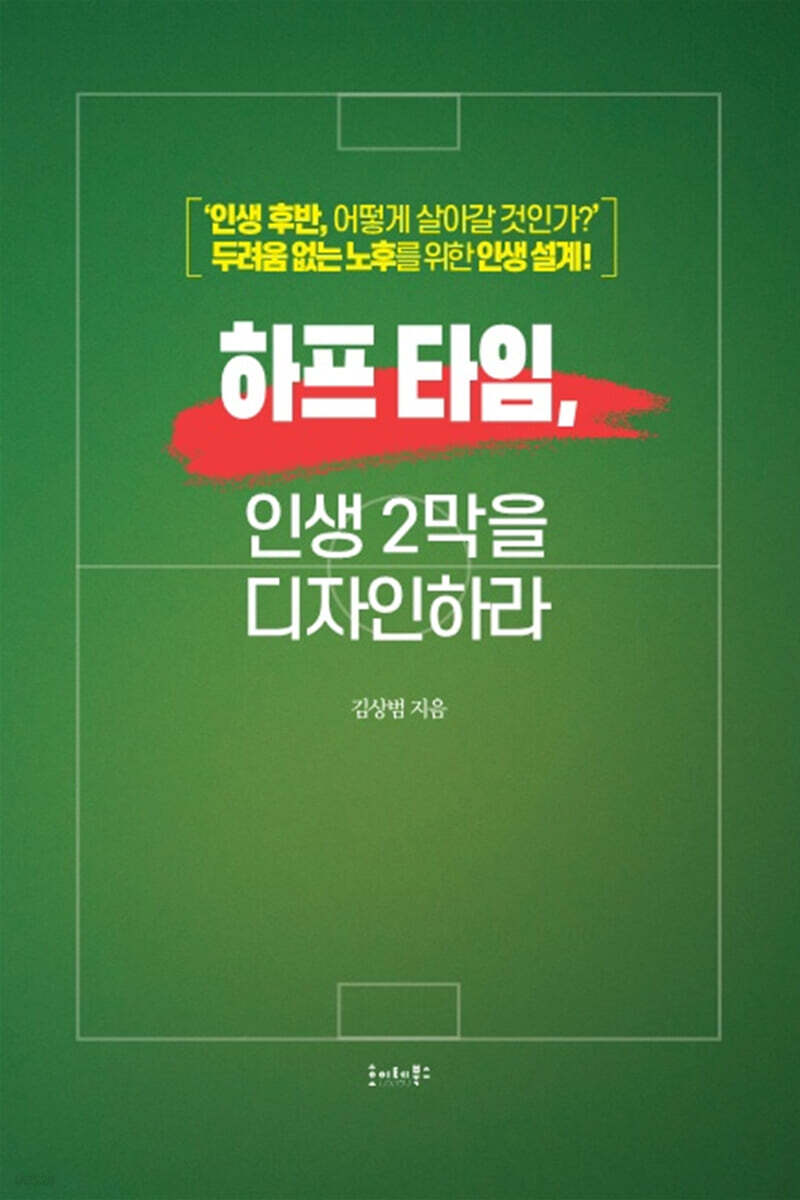
Halftime: Design the Second Act of Your Life
 |
Description
Book Introduction
Job insecurity and declining quality of work that will plague the second half of life
With economic growth rates remaining in the 1-2% range due to low growth, demands from companies to reduce labor costs are growing.
As a result, these days, people in their 40s and 50s are the norm, and even those in their 30s are constantly being targeted for restructuring.
And that's not all.
The number of people losing their jobs is expected to increase significantly in the future due to the introduction of cutting-edge technologies such as AI and robots.
It's not just jobs that are the problem, but also the quality of jobs.
According to a report titled “The Current State of the Middle-Aged and Older Adult Labor Market and Improvement Measures Through Job Analysis” published by KDI in 2024, employed people mainly perform specialized tasks such as data analysis and organizational management in their youth, but engage in simple physical labor after middle age.
Regarding this phenomenon, KDI analyzed that “it is highly likely that it is due to the job discontinuity experienced by middle-aged and older workers as they leave their main job and seek new employment.”
Moreover, the fields where jobs are increasing are mainly simple labor positions such as delivery workers and daily workers at logistics centers.
Likewise, the length of service for Korean men declines sharply as they enter their 50s, and their propensity for analytical work also plummets during the same period.
The experience and expertise accumulated over nearly 30 years become useless the moment you turn 50.
With economic growth rates remaining in the 1-2% range due to low growth, demands from companies to reduce labor costs are growing.
As a result, these days, people in their 40s and 50s are the norm, and even those in their 30s are constantly being targeted for restructuring.
And that's not all.
The number of people losing their jobs is expected to increase significantly in the future due to the introduction of cutting-edge technologies such as AI and robots.
It's not just jobs that are the problem, but also the quality of jobs.
According to a report titled “The Current State of the Middle-Aged and Older Adult Labor Market and Improvement Measures Through Job Analysis” published by KDI in 2024, employed people mainly perform specialized tasks such as data analysis and organizational management in their youth, but engage in simple physical labor after middle age.
Regarding this phenomenon, KDI analyzed that “it is highly likely that it is due to the job discontinuity experienced by middle-aged and older workers as they leave their main job and seek new employment.”
Moreover, the fields where jobs are increasing are mainly simple labor positions such as delivery workers and daily workers at logistics centers.
Likewise, the length of service for Korean men declines sharply as they enter their 50s, and their propensity for analytical work also plummets during the same period.
The experience and expertise accumulated over nearly 30 years become useless the moment you turn 50.
- You can preview some of the book's contents.
Preview
index
·Preface: Life isn't over until it's over.
PART 1: End of the First Half - Facing Reality and Awakening
“The first half of the game is over!”
1.
All jobs are dangerous
2.
Taking a career break in your 50s is no longer an option.
3.
The reality that 70% of baby boomers are earning minimum wage
4.
6.8 years of service, no lifetime employment
5.
In the age of 100, you can't survive on the national pension alone.
6.
Specs are useless; survival is competitiveness.
PART 2: HALFTIME - REORGANIZING THE OPERATION AND RESPONDING TO A MINDSET REVOLUTION
“Design your second half!”
1.
Am I hot now?
2.
Change your life in just 2 hours a day
3.
How to form a family?
4.
Become a producer of standards
5.
5 Things to Reorganize in Midlife
6.
If you don't learn now, there will be no second half.
PART 3: Preparing for the Second Half - The Skills of Living Alone
“Prepare your ultimate move for victory!”
1.
Your 20 years are worth 500,000 won per hour
2.
Now earn money outside the company too
3.
In the second half, it's okay to dream of being rich.
4.
Investment, a strong support in the second half
5.
Expertise alone is not enough to survive.
6.
How to Build a Profitable Portfolio Without Paychecks
PART 4: Transitioning to Reality - Reducing Reliance on the Company and Preparing for Independence
“Go alone like a rhinoceros horn!”
1.
Hire yourself
2.
Your family is your strong support
3.
When the body breaks down, everything is over.
4.
A middle-aged person with a dream, that's strength.
5.
It's okay to fail if you have a plan B.
6.
Completing a Side Job Portfolio Before Retirement
PART 5: Economic Independence - Building Your Own Economic Ecosystem
“Complete economic independence!”
1.
Get through the first six months like this
2.
When will you quit your job?
3. AI is the ultimate weapon for a one-man CEO.
4.
People in their 50s should play a different game.
5.
Ask for your own choice and permission
6.
Create your own masterpiece
PART 6: The Perfection of Existence - Creating My Own Life Through Freedom and Independence
“Live as your true self and leave a legacy!”
1. What AI can't do, people in their 50s can.
2.
Opportunities for Seniors Created by the Population Cliff
3.
At 50, be free from childcare.
4.
Make your family your greatest asset
5.
I'm good enough on my own now
6.
Do you have the courage to jump off a burning deck?
PART 7: How to Survive as a Solo Entrepreneur
“True Standing Alone!”
1.
A Day in the Life of a Solo Entrepreneur: My Life as a Company
2.
Develop your own product, your own market.
3.
Zero Fixed Cost Management: Leveraging the Strengths of Small Businesses
4.
Creating a structure that attracts customers
5.
Let's build a system that makes money without me.
6.
Sustainable Growth as a Solo Entrepreneur
·References
PART 1: End of the First Half - Facing Reality and Awakening
“The first half of the game is over!”
1.
All jobs are dangerous
2.
Taking a career break in your 50s is no longer an option.
3.
The reality that 70% of baby boomers are earning minimum wage
4.
6.8 years of service, no lifetime employment
5.
In the age of 100, you can't survive on the national pension alone.
6.
Specs are useless; survival is competitiveness.
PART 2: HALFTIME - REORGANIZING THE OPERATION AND RESPONDING TO A MINDSET REVOLUTION
“Design your second half!”
1.
Am I hot now?
2.
Change your life in just 2 hours a day
3.
How to form a family?
4.
Become a producer of standards
5.
5 Things to Reorganize in Midlife
6.
If you don't learn now, there will be no second half.
PART 3: Preparing for the Second Half - The Skills of Living Alone
“Prepare your ultimate move for victory!”
1.
Your 20 years are worth 500,000 won per hour
2.
Now earn money outside the company too
3.
In the second half, it's okay to dream of being rich.
4.
Investment, a strong support in the second half
5.
Expertise alone is not enough to survive.
6.
How to Build a Profitable Portfolio Without Paychecks
PART 4: Transitioning to Reality - Reducing Reliance on the Company and Preparing for Independence
“Go alone like a rhinoceros horn!”
1.
Hire yourself
2.
Your family is your strong support
3.
When the body breaks down, everything is over.
4.
A middle-aged person with a dream, that's strength.
5.
It's okay to fail if you have a plan B.
6.
Completing a Side Job Portfolio Before Retirement
PART 5: Economic Independence - Building Your Own Economic Ecosystem
“Complete economic independence!”
1.
Get through the first six months like this
2.
When will you quit your job?
3. AI is the ultimate weapon for a one-man CEO.
4.
People in their 50s should play a different game.
5.
Ask for your own choice and permission
6.
Create your own masterpiece
PART 6: The Perfection of Existence - Creating My Own Life Through Freedom and Independence
“Live as your true self and leave a legacy!”
1. What AI can't do, people in their 50s can.
2.
Opportunities for Seniors Created by the Population Cliff
3.
At 50, be free from childcare.
4.
Make your family your greatest asset
5.
I'm good enough on my own now
6.
Do you have the courage to jump off a burning deck?
PART 7: How to Survive as a Solo Entrepreneur
“True Standing Alone!”
1.
A Day in the Life of a Solo Entrepreneur: My Life as a Company
2.
Develop your own product, your own market.
3.
Zero Fixed Cost Management: Leveraging the Strengths of Small Businesses
4.
Creating a structure that attracts customers
5.
Let's build a system that makes money without me.
6.
Sustainable Growth as a Solo Entrepreneur
·References
Into the book
The average length of service of 6.8 years is not just a simple statistic.
This means that the very concept of a 'lifelong job' has disappeared.
It also means that we no longer have to rely on one company for our lives, but rather develop the ability to continuously develop and employ ourselves.
The collapse of this myth of lifetime employment is both a crisis and an opportunity.
In the past, you had to stay at one company for 40 years, but now you can develop yourself by gaining diverse experiences.
The important thing is to respond actively to these changes.
This requires the following strategies:
First, it is about developing transferable skills.
You need to develop capabilities that are needed everywhere, not just skills that are useful only at certain companies.
This includes not only simple technical skills, but also problem-solving skills, communication skills, and learning skills.
Second, continuous networking.
You shouldn't just network within one company; you should build relationships across the industry.
In an era where job-hopping is the norm, networks are the most important asset.
Third, prepare a career portfolio.
You should develop multiple sources of income rather than relying on just one thing.
This is because it directly leads to the ‘ability to hire me’.
An average tenure of 6.8 years is the new reality.
Rather than denying this reality and longing for the lifelong jobs of the past, we should use this as an opportunity to design a more free and diverse career.
The important thing is not to be afraid of change, but to develop the ability to utilize change.
Changing jobs 6-7 times is no longer a choice but a necessity.
So, you need to prepare yourself to get better conditions and greater growth through each job change.
Also, in the past era of lifetime employment, the company guaranteed the individual's future.
But now, individuals must take responsibility for their own future.
The key is to develop the ability to hire yourself.
--- From "PART 1: End of the First Half - Facing Reality and Awakening"
Being first is lonely and scary.
You have to go alone on a road no one has gone on.
You have to do something alone that no one has ever done before.
Sometimes people don't even understand.
Sometimes I get criticized.
You have to endure that loneliness and fear.
It's the price of being first.
It's a process that all pioneers go through.
It was the same when I was pursuing my PhD in sales management coaching.
My classmates were skeptical, asking, “Can you get a PhD like that?”
Even my family advised me not to, saying, “Just manage your business steadily.”
But I was sure.
This is an area that will definitely be needed in the future.
I studied alone for five years.
There were no papers to reference.
There were no seniors.
I had to build everything from scratch.
I was lonely.
Sometimes I wanted to give up.
But I endured.
And finally, I did it.
He was selected as Coach of the Year after winning the 'Republic of Korea Coach Award' in 2015.
It was a moment when the field of sales management coaching was recognized.
So don't avoid loneliness and fear.
The first person is always lonely and afraid.
Only those who endure it can become true firsts.
So why be first? For survival.
A solopreneur cannot compete head-on with a large corporation.
Because there is no capital, no manpower, and no brand.
But you can win with something different.
When you're first, you have less competition.
Fewer competitors means less price competition.
Less price competition means higher profitability.
If it is profitable, it becomes sustainable.
Being the first has a good chance of becoming a brand.
You can be the first person that comes to mind when people think of that field.
This is the power of a brand.
So don't delay being the first.
As time goes by, it becomes harder to be first.
Someone can do it first.
The window of opportunity is not always open.
Start small.
It doesn't have to be a grand first.
You can start small and expand to big firsts, like being the first in your neighborhood, the first in your industry, or the first in your age group.
--- From "Part 2: Halftime - Operational Reorganization and Mindset Revolution"
The era has come when even professional professions are failing.
National Tax Service statistics clearly show a shocking reality.
As of 2022, the average income for professionals was 400 million won for doctors, 220 million won for accountants, 120 million won for tax accountants, and 70 million won for lawyers.
What's even more shocking is that the median income of lawyers is only 30 million won.
This means that half of lawyers earn less than 30 million won per year.
Why is there such a difference, even though they have the same professional qualifications? It's the difference in marketing and sales skills.
The number of lawyers is increasing by 1,700 each year, but the demand for legal services remains stagnant.
The same goes for tax accountants, architects, and accountants.
Supply is abundant, but demand is limited, so competition is bound to be fierce.
The idea that "skill alone is enough" is now a relic of the 20th century. AI is threatening even professionalism.
As of 2025, the threat of AI has surpassed imagination.
ChatGPT passed the bar exam, AI achieved over 90% accuracy in medical diagnoses, and tax filings have already been largely automated.
Simple professional tasks have been completely taken over by AI.
So what do professionals who survive in the AI era have in common? They possess the ability to make themselves known and attract customers.
No matter how great your skills are, if your customers don't know you, it's useless. What AI can't do is marketing. It can't build genuine relationships with customers. It can't build trust.
Ultimately, in the AI era, marketing capabilities become even more important.
--- From "Part 3: Preparing for the Second Half - Skills for Living Alone"
50 is half time in life.
For those who are prepared, it is a valuable time to develop a second half strategy.
But for those who are not prepared, it becomes a time of wandering, anxiety, and sleeplessness.
Let me tell you about my experience.
I started preparing in my 40s.
I have a PhD, have written 32 books, and am certified as a coach.
I retired six months before my retirement age of 60.
It was because I had the confidence that ‘now I can earn a living on my own.’
I took six months to recharge with my wife, and then began my coaching and consulting business in earnest in 2025.
I'm doing well now.
On the other hand, what about those who weren't prepared? They tried to hold out until 60, but most were pushed out before 55.
Less than 10% of people reach retirement age at 60.
In the end, I came out without any preparation and am now working part-time jobs to make a living.
Just three things to check when you retire.
No need for complicated checklists.
There are only three things you need to check.
First, do you have enough funds to survive for three years? Finding a new job in your 50s is virtually impossible.
You need enough funds to last at least three years.
Second, is your side hustle earning at least 3 million won per month? You need to have a foundation that allows you to be independent, without relying on re-employment.
You need to earn about 3 million won a month to support your family.
Third, do you have expertise that will last until you're 70? You need true expertise, not just experience. It's about having the skills to keep you relevant even as you age.
When these three things are perfectly in place, you can make a move while you are still attractive in the market.
--- From "Part 5: Economic Independence - Building Your Own Economic Ecosystem"
So why should we end parenting at 50?
First, for the survival of parents.
From your 50s, you should start preparing for retirement in earnest.
If you retire at 60, you only have 10 years left.
During these ten years, we must focus all our efforts on preparing for retirement.
There is no time to waste looking after your children.
Second, for the growth of children.
At the age of 25, you are a full-fledged adult socially.
If you are still dependent on your parents at age 30, it is a growth disorder.
It is natural for 50-year-old parents to make their 25-year-old children independent.
It can't be any later.
Third, for the health of the entire family.
Children who depend on their parents until their 30s also marry later.
Even if you get married, your financial foundation is weak.
Even if you have grandchildren, you still depend on your parents to raise them.
The vicious cycle continues.
So what should we do? We need to draw a clear line.
Rather than vaguely saying, “I have to become independent someday,” you need to set a specific date and conditions.
For example, say this:
“I will support you for up to two years after graduating from college.
During that time, prepare for employment and build an economic foundation.
After two years, you must become independent.
“Whether it’s monthly rent or a deposit, you have to live separately.”
It may seem cold.
But this is true love.
It is also a good idea to gradually reduce support.
100% support in the first year, 70% support in the second year, 40% support in the third year, and complete independence from the fourth year onwards.
If you gradually reduce it like this, your child will be able to adapt.
The important thing is consistency.
Once a principle is established, it must be maintained.
Even if your child cries, screams, and clings to you, you must not waver.
You have to say firmly, “What can’t be done can’t be done.”
This means that the very concept of a 'lifelong job' has disappeared.
It also means that we no longer have to rely on one company for our lives, but rather develop the ability to continuously develop and employ ourselves.
The collapse of this myth of lifetime employment is both a crisis and an opportunity.
In the past, you had to stay at one company for 40 years, but now you can develop yourself by gaining diverse experiences.
The important thing is to respond actively to these changes.
This requires the following strategies:
First, it is about developing transferable skills.
You need to develop capabilities that are needed everywhere, not just skills that are useful only at certain companies.
This includes not only simple technical skills, but also problem-solving skills, communication skills, and learning skills.
Second, continuous networking.
You shouldn't just network within one company; you should build relationships across the industry.
In an era where job-hopping is the norm, networks are the most important asset.
Third, prepare a career portfolio.
You should develop multiple sources of income rather than relying on just one thing.
This is because it directly leads to the ‘ability to hire me’.
An average tenure of 6.8 years is the new reality.
Rather than denying this reality and longing for the lifelong jobs of the past, we should use this as an opportunity to design a more free and diverse career.
The important thing is not to be afraid of change, but to develop the ability to utilize change.
Changing jobs 6-7 times is no longer a choice but a necessity.
So, you need to prepare yourself to get better conditions and greater growth through each job change.
Also, in the past era of lifetime employment, the company guaranteed the individual's future.
But now, individuals must take responsibility for their own future.
The key is to develop the ability to hire yourself.
--- From "PART 1: End of the First Half - Facing Reality and Awakening"
Being first is lonely and scary.
You have to go alone on a road no one has gone on.
You have to do something alone that no one has ever done before.
Sometimes people don't even understand.
Sometimes I get criticized.
You have to endure that loneliness and fear.
It's the price of being first.
It's a process that all pioneers go through.
It was the same when I was pursuing my PhD in sales management coaching.
My classmates were skeptical, asking, “Can you get a PhD like that?”
Even my family advised me not to, saying, “Just manage your business steadily.”
But I was sure.
This is an area that will definitely be needed in the future.
I studied alone for five years.
There were no papers to reference.
There were no seniors.
I had to build everything from scratch.
I was lonely.
Sometimes I wanted to give up.
But I endured.
And finally, I did it.
He was selected as Coach of the Year after winning the 'Republic of Korea Coach Award' in 2015.
It was a moment when the field of sales management coaching was recognized.
So don't avoid loneliness and fear.
The first person is always lonely and afraid.
Only those who endure it can become true firsts.
So why be first? For survival.
A solopreneur cannot compete head-on with a large corporation.
Because there is no capital, no manpower, and no brand.
But you can win with something different.
When you're first, you have less competition.
Fewer competitors means less price competition.
Less price competition means higher profitability.
If it is profitable, it becomes sustainable.
Being the first has a good chance of becoming a brand.
You can be the first person that comes to mind when people think of that field.
This is the power of a brand.
So don't delay being the first.
As time goes by, it becomes harder to be first.
Someone can do it first.
The window of opportunity is not always open.
Start small.
It doesn't have to be a grand first.
You can start small and expand to big firsts, like being the first in your neighborhood, the first in your industry, or the first in your age group.
--- From "Part 2: Halftime - Operational Reorganization and Mindset Revolution"
The era has come when even professional professions are failing.
National Tax Service statistics clearly show a shocking reality.
As of 2022, the average income for professionals was 400 million won for doctors, 220 million won for accountants, 120 million won for tax accountants, and 70 million won for lawyers.
What's even more shocking is that the median income of lawyers is only 30 million won.
This means that half of lawyers earn less than 30 million won per year.
Why is there such a difference, even though they have the same professional qualifications? It's the difference in marketing and sales skills.
The number of lawyers is increasing by 1,700 each year, but the demand for legal services remains stagnant.
The same goes for tax accountants, architects, and accountants.
Supply is abundant, but demand is limited, so competition is bound to be fierce.
The idea that "skill alone is enough" is now a relic of the 20th century. AI is threatening even professionalism.
As of 2025, the threat of AI has surpassed imagination.
ChatGPT passed the bar exam, AI achieved over 90% accuracy in medical diagnoses, and tax filings have already been largely automated.
Simple professional tasks have been completely taken over by AI.
So what do professionals who survive in the AI era have in common? They possess the ability to make themselves known and attract customers.
No matter how great your skills are, if your customers don't know you, it's useless. What AI can't do is marketing. It can't build genuine relationships with customers. It can't build trust.
Ultimately, in the AI era, marketing capabilities become even more important.
--- From "Part 3: Preparing for the Second Half - Skills for Living Alone"
50 is half time in life.
For those who are prepared, it is a valuable time to develop a second half strategy.
But for those who are not prepared, it becomes a time of wandering, anxiety, and sleeplessness.
Let me tell you about my experience.
I started preparing in my 40s.
I have a PhD, have written 32 books, and am certified as a coach.
I retired six months before my retirement age of 60.
It was because I had the confidence that ‘now I can earn a living on my own.’
I took six months to recharge with my wife, and then began my coaching and consulting business in earnest in 2025.
I'm doing well now.
On the other hand, what about those who weren't prepared? They tried to hold out until 60, but most were pushed out before 55.
Less than 10% of people reach retirement age at 60.
In the end, I came out without any preparation and am now working part-time jobs to make a living.
Just three things to check when you retire.
No need for complicated checklists.
There are only three things you need to check.
First, do you have enough funds to survive for three years? Finding a new job in your 50s is virtually impossible.
You need enough funds to last at least three years.
Second, is your side hustle earning at least 3 million won per month? You need to have a foundation that allows you to be independent, without relying on re-employment.
You need to earn about 3 million won a month to support your family.
Third, do you have expertise that will last until you're 70? You need true expertise, not just experience. It's about having the skills to keep you relevant even as you age.
When these three things are perfectly in place, you can make a move while you are still attractive in the market.
--- From "Part 5: Economic Independence - Building Your Own Economic Ecosystem"
So why should we end parenting at 50?
First, for the survival of parents.
From your 50s, you should start preparing for retirement in earnest.
If you retire at 60, you only have 10 years left.
During these ten years, we must focus all our efforts on preparing for retirement.
There is no time to waste looking after your children.
Second, for the growth of children.
At the age of 25, you are a full-fledged adult socially.
If you are still dependent on your parents at age 30, it is a growth disorder.
It is natural for 50-year-old parents to make their 25-year-old children independent.
It can't be any later.
Third, for the health of the entire family.
Children who depend on their parents until their 30s also marry later.
Even if you get married, your financial foundation is weak.
Even if you have grandchildren, you still depend on your parents to raise them.
The vicious cycle continues.
So what should we do? We need to draw a clear line.
Rather than vaguely saying, “I have to become independent someday,” you need to set a specific date and conditions.
For example, say this:
“I will support you for up to two years after graduating from college.
During that time, prepare for employment and build an economic foundation.
After two years, you must become independent.
“Whether it’s monthly rent or a deposit, you have to live separately.”
It may seem cold.
But this is true love.
It is also a good idea to gradually reduce support.
100% support in the first year, 70% support in the second year, 40% support in the third year, and complete independence from the fourth year onwards.
If you gradually reduce it like this, your child will be able to adapt.
The important thing is consistency.
Once a principle is established, it must be maintained.
Even if your child cries, screams, and clings to you, you must not waver.
You have to say firmly, “What can’t be done can’t be done.”
--- From "Part 6: The Perfection of Existence? My Own Life, Completed Through Freedom and Independence"
Publisher's Review
Poverty among baby boomers brought on by unprepared old age
Let's look at the reality of recently retired baby boomers.
South Korea's elderly poverty rate, calculated based on disposable income, remained the highest among OECD member countries at 37.7% in 2021.
This means that 4 out of 10 people live below the poverty line.
In South Korea, where most of the assets are held in homes, the percentage is bound to increase further if we take into account the 'house poor', that is, people who own homes but do not have financial means.
So why does this happen?
First, the pension system is immature.
The majority of the current elderly have a short pension subscription period and receive small benefits.
As of 2020, public transfer income accounted for 30% of the elderly's income, only half the OECD average of 57.3%.
While elderly people in other countries cover more than half of their living expenses with their pensions, this figure is less than 30% for elderly people in our country.
You have to earn the rest yourself.
Second, early retirement due to rapid industrial change.
The late 1990s and 2000s, when the baby boomer generation was in their forties and fifties, were a period of large-scale restructuring due to the IMF foreign exchange crisis and financial crisis.
Many baby boomers experienced early retirement or business failure during this process.
As the concept of lifetime employment collapses, it has become difficult to prepare for a stable retirement.
Third, there are limitations to personal retirement preparation.
Baby boomers, burdened by the double burden of educating their children and supporting their parents, have put their own retirement preparations on the back burner.
They went all-in on buying a house or poured everything into their children's education.
As a result, I have almost nothing prepared for my old age.
What should I prepare for in the second half of my life?
The reality of this baby boomer generation clearly shows the importance of preparing for old age to future generations.
It's not too late.
If you start preparing now, you can have a different old age from them.
Unlike the baby boomer generation, today's 30-50 year olds have a more mature national pension system and various means of preparing for retirement.
Above all, an environment has been created where one can develop the ability to ‘employ myself.’
There are three things they need to prepare:
First, economic preparation.
National pension alone is not enough.
Additional retirement funds are needed.
But it's not just about saving; you need to build assets that can generate consistent returns.
Don't rely solely on real estate; you should build a diverse portfolio.
Second, health management.
In an age where people have to work until they are 70, health is not an option, but a necessity.
In particular, to avoid outdoor work, you must maintain a healthy state that allows for intellectual work.
Regular exercise and health management are directly linked to future income.
Third, we must prepare for sustainable work.
You need to prepare in advance for things you can do even when you get older, things where your experience and wisdom become assets.
This is the ability to hire me.
You need to develop areas where you can utilize your expertise, such as consulting, training, coaching, and mentoring.
We should not be afraid of the reality of the baby boomer generation, but rather use it as a lesson to prepare for a different path.
This way, we can create a retirement where we can work in a warm place when it's cold and in a cool place when it's hot.
That choice is ours now.
Design the second half of your life in detail without fear!
We have lived the first half of our lives by other people's rules.
The curriculum set by school, the tasks set by the company, the standards of success set by society—everything was a game created by others.
But the second half is different.
Just like changing tactics at halftime, now I have to play the game my own way.
Here, being myself means doing what I love without worrying about what others think, going at my own pace even if it's not perfect, and communicating with the world with my own experiences and perspectives that I've accumulated over the past 20 years.
In the field of life, young players have stamina.
But veterans have more powerful qualities than physical strength: experience, connections, focus, urgency, and clarity.
This book provides specific methods for middle-aged people to utilize the experience, connections, and desperation they have accumulated over the past 20 years to develop their own second-half strategies.
This book is not simply a theoretical book.
This is a practical manual that can be used in real life.
The most important thing here is your determination.
Reading books alone won't change anything.
Your life will change only when you understand and put into practice what is said in this book.
The whistle blows.
The second half is about to begin! Now it's time to start your own second half.
It doesn't matter how difficult the first half was.
In the second half, you can play in any position you want, in your own way.
This book presents the method in a practical way using real-world examples.
How will you play the second half? Will you just watch from the bench? Or will you start your own spectacular game? The veteran's time begins now.
In the second half, let's live truly like myself!
Let's look at the reality of recently retired baby boomers.
South Korea's elderly poverty rate, calculated based on disposable income, remained the highest among OECD member countries at 37.7% in 2021.
This means that 4 out of 10 people live below the poverty line.
In South Korea, where most of the assets are held in homes, the percentage is bound to increase further if we take into account the 'house poor', that is, people who own homes but do not have financial means.
So why does this happen?
First, the pension system is immature.
The majority of the current elderly have a short pension subscription period and receive small benefits.
As of 2020, public transfer income accounted for 30% of the elderly's income, only half the OECD average of 57.3%.
While elderly people in other countries cover more than half of their living expenses with their pensions, this figure is less than 30% for elderly people in our country.
You have to earn the rest yourself.
Second, early retirement due to rapid industrial change.
The late 1990s and 2000s, when the baby boomer generation was in their forties and fifties, were a period of large-scale restructuring due to the IMF foreign exchange crisis and financial crisis.
Many baby boomers experienced early retirement or business failure during this process.
As the concept of lifetime employment collapses, it has become difficult to prepare for a stable retirement.
Third, there are limitations to personal retirement preparation.
Baby boomers, burdened by the double burden of educating their children and supporting their parents, have put their own retirement preparations on the back burner.
They went all-in on buying a house or poured everything into their children's education.
As a result, I have almost nothing prepared for my old age.
What should I prepare for in the second half of my life?
The reality of this baby boomer generation clearly shows the importance of preparing for old age to future generations.
It's not too late.
If you start preparing now, you can have a different old age from them.
Unlike the baby boomer generation, today's 30-50 year olds have a more mature national pension system and various means of preparing for retirement.
Above all, an environment has been created where one can develop the ability to ‘employ myself.’
There are three things they need to prepare:
First, economic preparation.
National pension alone is not enough.
Additional retirement funds are needed.
But it's not just about saving; you need to build assets that can generate consistent returns.
Don't rely solely on real estate; you should build a diverse portfolio.
Second, health management.
In an age where people have to work until they are 70, health is not an option, but a necessity.
In particular, to avoid outdoor work, you must maintain a healthy state that allows for intellectual work.
Regular exercise and health management are directly linked to future income.
Third, we must prepare for sustainable work.
You need to prepare in advance for things you can do even when you get older, things where your experience and wisdom become assets.
This is the ability to hire me.
You need to develop areas where you can utilize your expertise, such as consulting, training, coaching, and mentoring.
We should not be afraid of the reality of the baby boomer generation, but rather use it as a lesson to prepare for a different path.
This way, we can create a retirement where we can work in a warm place when it's cold and in a cool place when it's hot.
That choice is ours now.
Design the second half of your life in detail without fear!
We have lived the first half of our lives by other people's rules.
The curriculum set by school, the tasks set by the company, the standards of success set by society—everything was a game created by others.
But the second half is different.
Just like changing tactics at halftime, now I have to play the game my own way.
Here, being myself means doing what I love without worrying about what others think, going at my own pace even if it's not perfect, and communicating with the world with my own experiences and perspectives that I've accumulated over the past 20 years.
In the field of life, young players have stamina.
But veterans have more powerful qualities than physical strength: experience, connections, focus, urgency, and clarity.
This book provides specific methods for middle-aged people to utilize the experience, connections, and desperation they have accumulated over the past 20 years to develop their own second-half strategies.
This book is not simply a theoretical book.
This is a practical manual that can be used in real life.
The most important thing here is your determination.
Reading books alone won't change anything.
Your life will change only when you understand and put into practice what is said in this book.
The whistle blows.
The second half is about to begin! Now it's time to start your own second half.
It doesn't matter how difficult the first half was.
In the second half, you can play in any position you want, in your own way.
This book presents the method in a practical way using real-world examples.
How will you play the second half? Will you just watch from the bench? Or will you start your own spectacular game? The veteran's time begins now.
In the second half, let's live truly like myself!
GOODS SPECIFICS
- Date of issue: November 15, 2025
- Page count, weight, size: 280 pages | 152*225*20mm
- ISBN13: 9791199364813
- ISBN10: 1199364819
You may also like
카테고리
korean


korean

![GQ KOREA Mark (Monthly): December [2025]](http://librairie.coreenne.fr/cdn/shop/files/8ef265dbbfbf186523ed75ba7319009d.jpg?v=1765340328&width=3840)


