

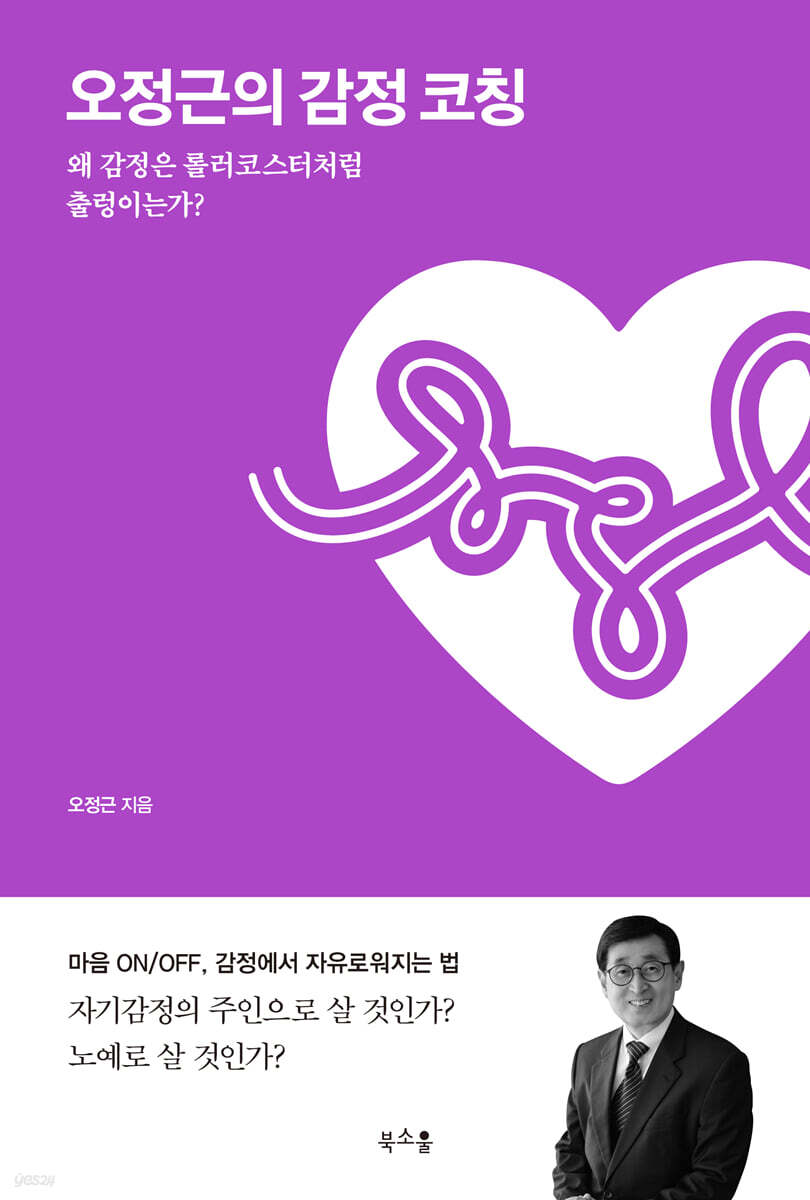
Oh Jeong-geun's emotional coaching
 |
Description
Book Introduction
Turning Your Mind On/Off, How to Be Free from Emotions
Will you live as the master of your emotions or as their slave?
This book is a manual for using emotions and a practical guide to emotional coaching, delivered by Dr. Jeong-geun Oh, the “coach of coaches.”
The author, who helped people increase their self-esteem and regain control of their lives through "Oh Jeong-geun's Career Coaching: Excellent Design and Perfect Execution of Career Coaching," has now returned to the topic of emotions.
Why do emotions fluctuate like a roller coaster? What if we could find our center in life, free from the sway of emotions? What if we could freely turn our emotions on and off? The moment we reset our emotions, our lives change, and the more we understand them, the more our relationships change.
This book, "Oh Jeong-geun's Emotional Coaching: Why Do Emotions Sway Like a Roller Coaster?", is based on insights into the origins and principles of emotions and human nature, and reminds us that emotions are the compass that determines the direction of life.
Are you now the master of your emotions, or are you a slave to them? Understanding and managing your emotions accurately can reduce conflict in relationships and bring peace and healing to your life journey.
This book guides readers on how to maintain wise peace over wavering minds, helping them redraw the map of their lives.
Will you live as the master of your emotions or as their slave?
This book is a manual for using emotions and a practical guide to emotional coaching, delivered by Dr. Jeong-geun Oh, the “coach of coaches.”
The author, who helped people increase their self-esteem and regain control of their lives through "Oh Jeong-geun's Career Coaching: Excellent Design and Perfect Execution of Career Coaching," has now returned to the topic of emotions.
Why do emotions fluctuate like a roller coaster? What if we could find our center in life, free from the sway of emotions? What if we could freely turn our emotions on and off? The moment we reset our emotions, our lives change, and the more we understand them, the more our relationships change.
This book, "Oh Jeong-geun's Emotional Coaching: Why Do Emotions Sway Like a Roller Coaster?", is based on insights into the origins and principles of emotions and human nature, and reminds us that emotions are the compass that determines the direction of life.
Are you now the master of your emotions, or are you a slave to them? Understanding and managing your emotions accurately can reduce conflict in relationships and bring peace and healing to your life journey.
This book guides readers on how to maintain wise peace over wavering minds, helping them redraw the map of their lives.
- You can preview some of the book's contents.
Preview
index
PART 1
Philosophy and Coaching: How to Bring Knowledge to Life
· Why did philosophy and coaching meet?
- Questions change lives
Philosophy and coaching are a perfect match.
· Philosophy meets coaching, embracing practicality.
- Rationalism and Empiricism
The power of questions grows stronger the more you ask them.
- The principle of the beginning and the end
· How does the mind work?
- Where is my mind connected?
- How do we know what?
- Are my thoughts really correct?
- Why are we deceived?
- How to perceive more clearly
- One word can change your mindset.
- False notions that create illusions
· Perception and cognition
It's dangerous to rely solely on your senses.
The difference between seeing, hearing, and knowing
· Differences in ideas and perceptions
- What kind of person am I living as? (Self-concept)
- Frame of view on life (outlook on life)
- The way you view people determines your relationships (human relationships)
- The world is only as I see it (worldview)
- Is my job my identity? (View of my job)
· What values do real coaches follow?
- Desirable coaching direction
· A single word awakens thought
- Keywords that shake perception
· Growing Human vs.
unchanging human being
- People don't need to change.
PART 2
Philosophy of Emotions: How to Understand Emotions?
· What are emotions?
- The truth about emotions that philosophy speaks of
· Why do emotions fluctuate like a roller coaster?
- Emotions as seen from Confucius's perspective
· Emotions also have intelligence
- How to read emotions as taught by philosophy
· How are emotions created?
- The emotional process is stimulus-perception-response.
- There is logic to emotions too.
- Nothing is as easily misunderstood as emotions.
· Emotions start inside me, not outside.
- What kind of desires do we live with?
· How do emotions expand?
- Emotions begin with desire.
· Slave to emotions vs.
Master of emotions
- Subjection of emotions and freedom of mind
· Misconceptions and truths about emotions
- No bad feelings
- Emotions are not meant to be suppressed, but understood.
PART 3
Emotion Coaching: How to Manage Your Emotions
· Should I let my emotions out or deal with them?
- Emotion-centered coaching competency
· How to regulate your emotions
- Change requires energy.
- Life is a series of awakenings.
· Break the pattern of recurring problems
- Breaking out of emotional patterns
- Practical coaching conversation
· Conversation skills to manage emotions
- Basic Coaching Conversation Model
- Emotional Coaching Conversation Model
· Self-management techniques to free yourself from emotions
- When you move your body, your emotions change.
- When you shift your attention, your emotions become lighter.
- If you change your mindset, your emotions will change too.
· Listening techniques that boost energy
- Listen with your heart
- Social distancing vs.
Empathy
· Questioning techniques that help change perception
- The power to change your mind
- Change your perception and emotional flow.
- Questions are more powerful than answers
PART 4
Emotional Coaching Case Study: Philosophy in Action: Emotional Conversations
· Changing the extreme idea of 'the end'
· Get out of the emotional swamp
· When the desire to avoid death torments us more
· The moment when the remaining time turns into a gift
· A new path discovered in a collapsed place
· Finding the strength to live again in what has been lost
Philosophy and Coaching: How to Bring Knowledge to Life
· Why did philosophy and coaching meet?
- Questions change lives
Philosophy and coaching are a perfect match.
· Philosophy meets coaching, embracing practicality.
- Rationalism and Empiricism
The power of questions grows stronger the more you ask them.
- The principle of the beginning and the end
· How does the mind work?
- Where is my mind connected?
- How do we know what?
- Are my thoughts really correct?
- Why are we deceived?
- How to perceive more clearly
- One word can change your mindset.
- False notions that create illusions
· Perception and cognition
It's dangerous to rely solely on your senses.
The difference between seeing, hearing, and knowing
· Differences in ideas and perceptions
- What kind of person am I living as? (Self-concept)
- Frame of view on life (outlook on life)
- The way you view people determines your relationships (human relationships)
- The world is only as I see it (worldview)
- Is my job my identity? (View of my job)
· What values do real coaches follow?
- Desirable coaching direction
· A single word awakens thought
- Keywords that shake perception
· Growing Human vs.
unchanging human being
- People don't need to change.
PART 2
Philosophy of Emotions: How to Understand Emotions?
· What are emotions?
- The truth about emotions that philosophy speaks of
· Why do emotions fluctuate like a roller coaster?
- Emotions as seen from Confucius's perspective
· Emotions also have intelligence
- How to read emotions as taught by philosophy
· How are emotions created?
- The emotional process is stimulus-perception-response.
- There is logic to emotions too.
- Nothing is as easily misunderstood as emotions.
· Emotions start inside me, not outside.
- What kind of desires do we live with?
· How do emotions expand?
- Emotions begin with desire.
· Slave to emotions vs.
Master of emotions
- Subjection of emotions and freedom of mind
· Misconceptions and truths about emotions
- No bad feelings
- Emotions are not meant to be suppressed, but understood.
PART 3
Emotion Coaching: How to Manage Your Emotions
· Should I let my emotions out or deal with them?
- Emotion-centered coaching competency
· How to regulate your emotions
- Change requires energy.
- Life is a series of awakenings.
· Break the pattern of recurring problems
- Breaking out of emotional patterns
- Practical coaching conversation
· Conversation skills to manage emotions
- Basic Coaching Conversation Model
- Emotional Coaching Conversation Model
· Self-management techniques to free yourself from emotions
- When you move your body, your emotions change.
- When you shift your attention, your emotions become lighter.
- If you change your mindset, your emotions will change too.
· Listening techniques that boost energy
- Listen with your heart
- Social distancing vs.
Empathy
· Questioning techniques that help change perception
- The power to change your mind
- Change your perception and emotional flow.
- Questions are more powerful than answers
PART 4
Emotional Coaching Case Study: Philosophy in Action: Emotional Conversations
· Changing the extreme idea of 'the end'
· Get out of the emotional swamp
· When the desire to avoid death torments us more
· The moment when the remaining time turns into a gift
· A new path discovered in a collapsed place
· Finding the strength to live again in what has been lost
Detailed image

Into the book
There are two ways to live life.
A life where you just go with the flow and a life where you reflect on your life, learn about it, and refine it.
Philosophy and coaching are like maps that guide you along that second path.
But these two realms rarely meet around the topic of 'emotions'.
So why emotions? Because emotions are how we navigate the world, they're the inner forces that guide our thinking and determine the direction of our choices.
Understanding emotions is the path to deeply understanding myself.
Coaching provides concrete ways and practices to deal with those emotions.
---From "Starting"
Philosophy has the power of deep thought and questioning, but unlike coaching, it doesn't offer specific conversational skills or practical strategies.
In this respect, philosophy and coaching are complementary.
When philosophy is added to coaching, it becomes easier to achieve the core effects of coaching, such as a shift in perception, enlightenment, and expanded consciousness.
When these two areas are combined, coaching participants gain a deeper understanding of their lives and can use that understanding to make practical changes.
At the intersection of philosophical insight and coaching practice, people discover their inner strength and find a new direction in life.
---From "PART 1"
When you ask someone, “Why do you wear glasses?” you usually get two types of answers.
“Because my eyesight is bad.” or “I want to see better.” The former corresponds to an avoidance motivation to avoid discomfort, while the latter corresponds to an approach motivation to obtain what one wants.
Interestingly, people who speak with an approach motivation feel much more energetic.
If you answer the question, “Why do you work so hard?” with “I’m afraid I’ll get in trouble,” or “I’m afraid my test scores will drop,” then you have an avoidance motivation. If you answer, “I want to feel a sense of accomplishment,” then you have an approach motivation.
The latter expression elicits much more positive emotions and is less burdensome for both the speaker and the listener.
Ultimately, behind actions there is a motive, and behind motives there is a desire.
---From "PART 2"
The more you hold on to emotions, the heavier they become.
It's not that difficult to briefly hold a glass of water with your arms outstretched in front of you.
But if you try to hold it like that all day, your arms will start to hurt and it will eventually become unmanageable.
The same goes for emotions.
It's perfectly natural to feel uncomfortable emotions momentarily, but holding on to them can lead to psychological and physical problems.
If you hold on to the anger of the past for a long time, it can lead to anger disease---from “Anger management disorder, chronic stress.”
If the current 'sadness' continues for a long time, it can lead to depression, and if 'anxiety' about the future continues, it can lead to anxiety disorder or panic disorder.
To get out of your emotions, you must first understand them.
---From "PART 3"
Topics such as bankruptcy, wrongful dishonor, illness, and death have given me deep insight and enlightenment.
Thanks to that, my consciousness has become much clearer, and I now have the confidence that I can handle such a situation if it comes again.
Mencius said this:
“You cannot talk to someone who harms themselves, and you cannot work with someone who abandons themselves.” Harming yourself is called self-abandonment, and abandoning yourself is called self-abandonment.
Thanks to this realization, I will not give up in the future.
And I hope so.
May others also find a little more freedom from dead-end thoughts and uncomfortable feelings.
I know that I am able to make this confession thanks to the good influence I received from someone.
---From "PART 4"
I truly believe that philosophical thinking and a coaching approach are effective tools for awakening and reviving human emotions.
I am grateful that this book connects me with my readers.
I am grateful for the learning and growth that connections have created.
When our emotions, and those of others, are on a roller coaster ride, we can harness the power of a coaching approach to shift our perceptions.
I hope that my philosophy and coaching will serve as a small light for you, the readers, on your life's journey.
A life where you just go with the flow and a life where you reflect on your life, learn about it, and refine it.
Philosophy and coaching are like maps that guide you along that second path.
But these two realms rarely meet around the topic of 'emotions'.
So why emotions? Because emotions are how we navigate the world, they're the inner forces that guide our thinking and determine the direction of our choices.
Understanding emotions is the path to deeply understanding myself.
Coaching provides concrete ways and practices to deal with those emotions.
---From "Starting"
Philosophy has the power of deep thought and questioning, but unlike coaching, it doesn't offer specific conversational skills or practical strategies.
In this respect, philosophy and coaching are complementary.
When philosophy is added to coaching, it becomes easier to achieve the core effects of coaching, such as a shift in perception, enlightenment, and expanded consciousness.
When these two areas are combined, coaching participants gain a deeper understanding of their lives and can use that understanding to make practical changes.
At the intersection of philosophical insight and coaching practice, people discover their inner strength and find a new direction in life.
---From "PART 1"
When you ask someone, “Why do you wear glasses?” you usually get two types of answers.
“Because my eyesight is bad.” or “I want to see better.” The former corresponds to an avoidance motivation to avoid discomfort, while the latter corresponds to an approach motivation to obtain what one wants.
Interestingly, people who speak with an approach motivation feel much more energetic.
If you answer the question, “Why do you work so hard?” with “I’m afraid I’ll get in trouble,” or “I’m afraid my test scores will drop,” then you have an avoidance motivation. If you answer, “I want to feel a sense of accomplishment,” then you have an approach motivation.
The latter expression elicits much more positive emotions and is less burdensome for both the speaker and the listener.
Ultimately, behind actions there is a motive, and behind motives there is a desire.
---From "PART 2"
The more you hold on to emotions, the heavier they become.
It's not that difficult to briefly hold a glass of water with your arms outstretched in front of you.
But if you try to hold it like that all day, your arms will start to hurt and it will eventually become unmanageable.
The same goes for emotions.
It's perfectly natural to feel uncomfortable emotions momentarily, but holding on to them can lead to psychological and physical problems.
If you hold on to the anger of the past for a long time, it can lead to anger disease---from “Anger management disorder, chronic stress.”
If the current 'sadness' continues for a long time, it can lead to depression, and if 'anxiety' about the future continues, it can lead to anxiety disorder or panic disorder.
To get out of your emotions, you must first understand them.
---From "PART 3"
Topics such as bankruptcy, wrongful dishonor, illness, and death have given me deep insight and enlightenment.
Thanks to that, my consciousness has become much clearer, and I now have the confidence that I can handle such a situation if it comes again.
Mencius said this:
“You cannot talk to someone who harms themselves, and you cannot work with someone who abandons themselves.” Harming yourself is called self-abandonment, and abandoning yourself is called self-abandonment.
Thanks to this realization, I will not give up in the future.
And I hope so.
May others also find a little more freedom from dead-end thoughts and uncomfortable feelings.
I know that I am able to make this confession thanks to the good influence I received from someone.
---From "PART 4"
I truly believe that philosophical thinking and a coaching approach are effective tools for awakening and reviving human emotions.
I am grateful that this book connects me with my readers.
I am grateful for the learning and growth that connections have created.
When our emotions, and those of others, are on a roller coaster ride, we can harness the power of a coaching approach to shift our perceptions.
I hope that my philosophy and coaching will serve as a small light for you, the readers, on your life's journey.
---From "In Conclusion"
Publisher's Review
Emotions that explode at work, emotions that build up at home!
What choices do I make at each emotional juncture?
It is often said that life is a series of choices.
The idea that there is a 'space' between stimulus and response tells me that I have the power to choose.
My thoughts, feelings, and the direction of my life are all the result of choices.
Author Dr. Oh Jeong-geun emphasizes that to make this choice wisely, 'wisdom' is needed more than knowledge.
Who is a wise person? Someone who listens sincerely, asks insightful questions, and even reads the flow of emotions.
In other words, he is a 'mature person' who knows how to take care of his own emotions and those of others.
Emotions are not simply reactions.
We are not beings who follow our emotions, but beings who can understand the causes of our emotions and coordinate our choices.
This book presents a philosophy-based emotional coaching conversation that enables such choices.
Emotional Coaching: Turning Life's Crisis into a Stepping Stone for Growth
Change begins where emotions, philosophy, and coaching meet!
《Oh Jeong-geun's Emotional Coaching: Why Do Emotions Rise Like a Roller Coaster?》 explores the nature of emotions and the structure of the human mind based on the emotional philosophies of Toegye Yi Hwang and Spinoza.
If philosophy asks about the essence of existence, coaching helps put that question into practice.
The intersection of classical philosophy and modern coaching transforms emotions from obstacles to "gateways to maturity."
This book offers practical questions and insights to help you understand and regulate your emotions, heal your relationships, and grow.
We present conversational techniques taught by the philosophy of emotions through empirical, everyday examples that lead to a shift in perception.
It helps me develop inner strength to sustain myself even in times of anxiety and confusion.
Through philosophical thinking and coaching conversations, we guide you through the amazing transformation of choosing recovery and growth at every emotional juncture.
Emotional insights from Toegye, Spinoza, and other masters of philosophy!
The skills of thinking and communication taught by the philosophy of emotions!
'Who am I?', 'How should I live?'
We cannot avoid these existential questions as we live.
Am I my thoughts, my emotions, my memories, my body, or my relationships? These questions prompt us to explore our own identity and awareness.
No matter how much AI develops, it cannot replace the direction and emotions of my life.
Emotions are still a unique domain that only humans can fully handle.
True connection, empathy, and the ability to feel and share emotions are powers unique to humans.
Author Dr. Oh Jeong-geun emphasizes that the real competitiveness of this era is the 'power to delicately handle emotions', and planned this book, 'Oh Jeong-geun's Emotional Coaching: Why Do Emotions Sway Like a Roller Coaster?'
The author, who won the grand prize in the '2022 Korea Coaching Association Coaching Book of the Year' for 'Oh Jeong-geun's Career Coaching: Excellent Design and Perfect Execution of Career Coaching', begins his voyage of growth on the inner waves of 'emotion'.
This book, delivered by 'The Coach of Coaches,' is a user manual for emotions and an introduction to emotional coaching that guides you through understanding and practicing emotions based on philosophy and coaching.
When we understand our emotions, life becomes deeper and more generous.
When the wisdom of classical philosophers is translated into practical questioning, emotional recovery and life transformation become possible.
This book helps you realize that possibility.
It is not great theories that fix life.
It's a small, warm question in one line.
"Why do emotions sway like a roller coaster?" What if we could find our center, free from the sway of our emotions? What if we could freely turn our emotions on and off? The moment we reset our emotions, our lives change, and the more we understand them, the more our relationships change.
"Oh Jeong-geun's Emotional Coaching: Why Do Emotions Rumble Like a Roller Coaster?" awakens us to the fact that emotions are the compass that guides our lives, based on philosophical insights into the origins and principles of emotions and human nature.
Emotions are not simply reactions; they are inner forces that guide our choices.
Are you a master of your emotions, or a slave to them? When life becomes tangled, the clue lies in your emotions.
The path opens up when you let go of your emotions.
Philosophical thinking and coaching questions provide the clue.
Wise questions create a wise life.
Readers of this book will explore their emotions, shift their thinking, and redesign the direction of their lives through questions.
· What will happen if this feeling continues?
· What do your emotions really want?
· What are some good things about this happening?
· What small actions can you take to free yourself from those feelings?
· Is there no wise choice that will satisfy everyone?
Philosophical questions give you answers to life!
A book that redesigns your life, from emotional management to growth.
Based on Eastern and Western philosophy, it explores the nature of emotions and the structure of the human mind.
In Western philosophy, the truth of emotions is examined through the perspective of Spinoza, and in Eastern philosophy, through the perspective of Confucianism and Toegye's thoughts.
Combining classical philosophy and modern coaching, it offers practical questions and insights to help you understand and regulate your emotions, restore relationships, and grow yourself.
We present conversational techniques taught by the philosophy of emotions through empirical, everyday examples that lead to a shift in perception.
It helps me develop inner strength to sustain myself even in times of anxiety and confusion.
When emotions are turbulent, holding onto existence is a wise question.
This book is full of reflections that cultivate the power of questions that save ourselves and others.
Emotions are not simply reactions.
We are not beings who follow our emotions, but beings who can understand the causes of our emotions and coordinate our choices.
I recommend this book to anyone who dreams of change, growth, and a better life.
Recommended Readers
· People who have difficulty in interpersonal relationships and emotional communication
· People who want to learn how to understand and control their emotions
· People who want to help their family and those around them with emotional issues
· People interested in philosophy-based reflection and emotional dialogue
Coaches, educators, and counselors who need the theory and practice of emotional coaching
The wisdom of emotional coaching to recognize the desires within your emotions!
Philosophy asks about the nature of existence, and coaching helps put that question into practice.
This book, "Oh Jeong-geun's Emotional Coaching: Why Do Emotions Rise Like a Roller Coaster?" presents a variety of philosophy-based emotional coaching conversations that lead to good choices and also corrects cognitive errors.
Examples of reflective dialogue help change stereotypes and proactively resolve issues.
The author's messages and emotional theories are systematized through figures and tables, allowing readers to intuitively understand them.
How can a single book contain so much life wisdom? A heart-wrenching feeling lingers throughout the reading.
It gives you the power to put that emotion into practice in your daily life.
This book is divided into four parts.
PART 1.
Philosophy and Coaching: How to Bring Knowledge to Life
Explores the intersection of conceptual and theoretical philosophy and experiential and practical coaching.
Philosophy helps us understand the nature of our emotions through deep thought, and coaching helps us manage those emotions in our lives through dialogue.
At the intersection of philosophy and coaching, questions become the beacons that illuminate the direction of life.
Take the first step to organizing your inner turmoil and redesigning your life.
PART 2.
Philosophy of Emotions: How to Understand Emotions?
It presents a philosophical perspective that dispels misunderstandings about emotions and approaches the truth.
Based on Confucius's Confucianism, the structure of emotions is explained as a flow of 'stimulus-recognition-response', and emotions are not just temporary reactions, but are central to influencing one's entire life.
It reminds us that an emotional crisis can soon become a turning point in our lives.
PART 3.
Emotion Coaching: How to Manage Your Emotions
We cover the practical methods and conversational skills of emotional coaching in depth.
Practical coaching tools, including self-management techniques to free yourself from emotions, listening skills to boost energy, and the language of questioning to shift your perception, are presented with abundant examples.
The power to stay centered in the face of turbulent emotions is the core of philosophy-based coaching.
PART 4.
Emotional Coaching Case Study: Philosophy in Action: Emotional Conversations
Reconstructs dramatic situations faced by characters in philosophy and literature through coaching conversations.
Even in the midst of despair where one cannot see the future, a process of changing one's thoughts through intuition and insight unfolds.
By looking at familiar classics in a new light, you learn how to overcome your emotions and find your center of mind.
A journey of reflection begins, overcoming confusion and moving toward growth.
What choices do I make at each emotional juncture?
It is often said that life is a series of choices.
The idea that there is a 'space' between stimulus and response tells me that I have the power to choose.
My thoughts, feelings, and the direction of my life are all the result of choices.
Author Dr. Oh Jeong-geun emphasizes that to make this choice wisely, 'wisdom' is needed more than knowledge.
Who is a wise person? Someone who listens sincerely, asks insightful questions, and even reads the flow of emotions.
In other words, he is a 'mature person' who knows how to take care of his own emotions and those of others.
Emotions are not simply reactions.
We are not beings who follow our emotions, but beings who can understand the causes of our emotions and coordinate our choices.
This book presents a philosophy-based emotional coaching conversation that enables such choices.
Emotional Coaching: Turning Life's Crisis into a Stepping Stone for Growth
Change begins where emotions, philosophy, and coaching meet!
《Oh Jeong-geun's Emotional Coaching: Why Do Emotions Rise Like a Roller Coaster?》 explores the nature of emotions and the structure of the human mind based on the emotional philosophies of Toegye Yi Hwang and Spinoza.
If philosophy asks about the essence of existence, coaching helps put that question into practice.
The intersection of classical philosophy and modern coaching transforms emotions from obstacles to "gateways to maturity."
This book offers practical questions and insights to help you understand and regulate your emotions, heal your relationships, and grow.
We present conversational techniques taught by the philosophy of emotions through empirical, everyday examples that lead to a shift in perception.
It helps me develop inner strength to sustain myself even in times of anxiety and confusion.
Through philosophical thinking and coaching conversations, we guide you through the amazing transformation of choosing recovery and growth at every emotional juncture.
Emotional insights from Toegye, Spinoza, and other masters of philosophy!
The skills of thinking and communication taught by the philosophy of emotions!
'Who am I?', 'How should I live?'
We cannot avoid these existential questions as we live.
Am I my thoughts, my emotions, my memories, my body, or my relationships? These questions prompt us to explore our own identity and awareness.
No matter how much AI develops, it cannot replace the direction and emotions of my life.
Emotions are still a unique domain that only humans can fully handle.
True connection, empathy, and the ability to feel and share emotions are powers unique to humans.
Author Dr. Oh Jeong-geun emphasizes that the real competitiveness of this era is the 'power to delicately handle emotions', and planned this book, 'Oh Jeong-geun's Emotional Coaching: Why Do Emotions Sway Like a Roller Coaster?'
The author, who won the grand prize in the '2022 Korea Coaching Association Coaching Book of the Year' for 'Oh Jeong-geun's Career Coaching: Excellent Design and Perfect Execution of Career Coaching', begins his voyage of growth on the inner waves of 'emotion'.
This book, delivered by 'The Coach of Coaches,' is a user manual for emotions and an introduction to emotional coaching that guides you through understanding and practicing emotions based on philosophy and coaching.
When we understand our emotions, life becomes deeper and more generous.
When the wisdom of classical philosophers is translated into practical questioning, emotional recovery and life transformation become possible.
This book helps you realize that possibility.
It is not great theories that fix life.
It's a small, warm question in one line.
"Why do emotions sway like a roller coaster?" What if we could find our center, free from the sway of our emotions? What if we could freely turn our emotions on and off? The moment we reset our emotions, our lives change, and the more we understand them, the more our relationships change.
"Oh Jeong-geun's Emotional Coaching: Why Do Emotions Rumble Like a Roller Coaster?" awakens us to the fact that emotions are the compass that guides our lives, based on philosophical insights into the origins and principles of emotions and human nature.
Emotions are not simply reactions; they are inner forces that guide our choices.
Are you a master of your emotions, or a slave to them? When life becomes tangled, the clue lies in your emotions.
The path opens up when you let go of your emotions.
Philosophical thinking and coaching questions provide the clue.
Wise questions create a wise life.
Readers of this book will explore their emotions, shift their thinking, and redesign the direction of their lives through questions.
· What will happen if this feeling continues?
· What do your emotions really want?
· What are some good things about this happening?
· What small actions can you take to free yourself from those feelings?
· Is there no wise choice that will satisfy everyone?
Philosophical questions give you answers to life!
A book that redesigns your life, from emotional management to growth.
Based on Eastern and Western philosophy, it explores the nature of emotions and the structure of the human mind.
In Western philosophy, the truth of emotions is examined through the perspective of Spinoza, and in Eastern philosophy, through the perspective of Confucianism and Toegye's thoughts.
Combining classical philosophy and modern coaching, it offers practical questions and insights to help you understand and regulate your emotions, restore relationships, and grow yourself.
We present conversational techniques taught by the philosophy of emotions through empirical, everyday examples that lead to a shift in perception.
It helps me develop inner strength to sustain myself even in times of anxiety and confusion.
When emotions are turbulent, holding onto existence is a wise question.
This book is full of reflections that cultivate the power of questions that save ourselves and others.
Emotions are not simply reactions.
We are not beings who follow our emotions, but beings who can understand the causes of our emotions and coordinate our choices.
I recommend this book to anyone who dreams of change, growth, and a better life.
Recommended Readers
· People who have difficulty in interpersonal relationships and emotional communication
· People who want to learn how to understand and control their emotions
· People who want to help their family and those around them with emotional issues
· People interested in philosophy-based reflection and emotional dialogue
Coaches, educators, and counselors who need the theory and practice of emotional coaching
The wisdom of emotional coaching to recognize the desires within your emotions!
Philosophy asks about the nature of existence, and coaching helps put that question into practice.
This book, "Oh Jeong-geun's Emotional Coaching: Why Do Emotions Rise Like a Roller Coaster?" presents a variety of philosophy-based emotional coaching conversations that lead to good choices and also corrects cognitive errors.
Examples of reflective dialogue help change stereotypes and proactively resolve issues.
The author's messages and emotional theories are systematized through figures and tables, allowing readers to intuitively understand them.
How can a single book contain so much life wisdom? A heart-wrenching feeling lingers throughout the reading.
It gives you the power to put that emotion into practice in your daily life.
This book is divided into four parts.
PART 1.
Philosophy and Coaching: How to Bring Knowledge to Life
Explores the intersection of conceptual and theoretical philosophy and experiential and practical coaching.
Philosophy helps us understand the nature of our emotions through deep thought, and coaching helps us manage those emotions in our lives through dialogue.
At the intersection of philosophy and coaching, questions become the beacons that illuminate the direction of life.
Take the first step to organizing your inner turmoil and redesigning your life.
PART 2.
Philosophy of Emotions: How to Understand Emotions?
It presents a philosophical perspective that dispels misunderstandings about emotions and approaches the truth.
Based on Confucius's Confucianism, the structure of emotions is explained as a flow of 'stimulus-recognition-response', and emotions are not just temporary reactions, but are central to influencing one's entire life.
It reminds us that an emotional crisis can soon become a turning point in our lives.
PART 3.
Emotion Coaching: How to Manage Your Emotions
We cover the practical methods and conversational skills of emotional coaching in depth.
Practical coaching tools, including self-management techniques to free yourself from emotions, listening skills to boost energy, and the language of questioning to shift your perception, are presented with abundant examples.
The power to stay centered in the face of turbulent emotions is the core of philosophy-based coaching.
PART 4.
Emotional Coaching Case Study: Philosophy in Action: Emotional Conversations
Reconstructs dramatic situations faced by characters in philosophy and literature through coaching conversations.
Even in the midst of despair where one cannot see the future, a process of changing one's thoughts through intuition and insight unfolds.
By looking at familiar classics in a new light, you learn how to overcome your emotions and find your center of mind.
A journey of reflection begins, overcoming confusion and moving toward growth.
GOODS SPECIFICS
- Date of issue: July 31, 2025
- Page count, weight, size: 384 pages | 598g | 152*225*25mm
- ISBN13: 9791194888703
- ISBN10: 1194888704
You may also like
카테고리
korean


korean

![GQ KOREA Mark (Monthly): December [2025]](http://librairie.coreenne.fr/cdn/shop/files/8ef265dbbfbf186523ed75ba7319009d.jpg?v=1765340328&width=3840)


