

The Art of War
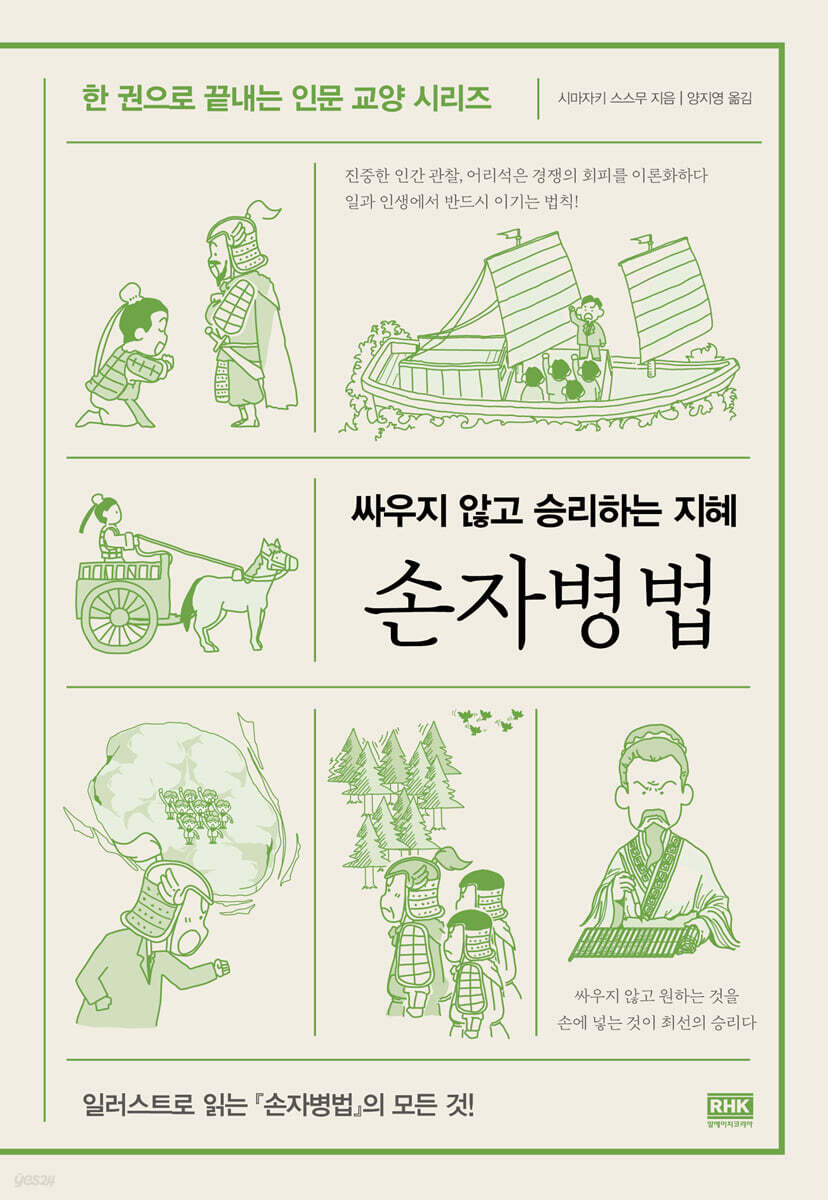 |
Description
Book Introduction
Leadership, worldly wisdom, information analysis & judgment, timing of action…
The Art of War, a surefire winning strategy for work and life!
The Art of War, a military strategy book compiled 2,500 years ago, has been read consistently throughout the ages.
In particular, countless leaders throughout the East and the West, past and present, have read The Art of War, including Cao Cao, Yi Sun-sin, Napoleon, Mao Zedong, and even modern business executives such as Steve Jobs, Bill Gates, Masayoshi Son, and Mark Zuckerberg.
This is because it contains content that can be applied not only to the bloody battlefield but also to the friction, conflict, and competition that occur in any era, and thus has a nature that transcends time and space.
To give a closer example, it contains secrets for overcoming the hardships and crises that come with life, such as college entrance exam competition, leadership in the workplace, sports competitions, and overcoming natural disasters.
This book presents 53 strategies covering themes such as careful thought, the mindset of a leader, how to cultivate insight, strategies to implement on the front lines, and the secrets to choosing a winning strategy.
“If you know your enemy and know yourself, you will win a hundred battles (know your enemy and know yourself)” is a well-known strategy.
In addition, it discusses leadership theories and worldly skills, the ability to analyze and judge information, and the timing of action, such as “Even in dangerous situations, create a desire to share life and death with your subordinates (Gogayeojigusa)”, which talks about the mindset of a leader who treats his subordinates with a benevolent heart, and “The best way is to win with the enemy intact (Jeon-Guk-Wisang)”, which is a strategy to subdue the opponent without fighting.
That's why, by reading The Art of War, you can discover strategies to win people's hearts, tactics to overcome problematic situations, and strategies that are sure to win, and apply them to your life.
Modern people also find themselves in situations where they cannot avoid numerous victories and defeats.
Overcoming difficulties requires not only a constant desire to improve and a determined effort to avoid complacency, but also the support of colleagues and a firm resolve to enforce justice.
Through 『The Art of War』, let's clearly identify what we lack and find specific guidelines to achieve it.
The Art of War, a surefire winning strategy for work and life!
The Art of War, a military strategy book compiled 2,500 years ago, has been read consistently throughout the ages.
In particular, countless leaders throughout the East and the West, past and present, have read The Art of War, including Cao Cao, Yi Sun-sin, Napoleon, Mao Zedong, and even modern business executives such as Steve Jobs, Bill Gates, Masayoshi Son, and Mark Zuckerberg.
This is because it contains content that can be applied not only to the bloody battlefield but also to the friction, conflict, and competition that occur in any era, and thus has a nature that transcends time and space.
To give a closer example, it contains secrets for overcoming the hardships and crises that come with life, such as college entrance exam competition, leadership in the workplace, sports competitions, and overcoming natural disasters.
This book presents 53 strategies covering themes such as careful thought, the mindset of a leader, how to cultivate insight, strategies to implement on the front lines, and the secrets to choosing a winning strategy.
“If you know your enemy and know yourself, you will win a hundred battles (know your enemy and know yourself)” is a well-known strategy.
In addition, it discusses leadership theories and worldly skills, the ability to analyze and judge information, and the timing of action, such as “Even in dangerous situations, create a desire to share life and death with your subordinates (Gogayeojigusa)”, which talks about the mindset of a leader who treats his subordinates with a benevolent heart, and “The best way is to win with the enemy intact (Jeon-Guk-Wisang)”, which is a strategy to subdue the opponent without fighting.
That's why, by reading The Art of War, you can discover strategies to win people's hearts, tactics to overcome problematic situations, and strategies that are sure to win, and apply them to your life.
Modern people also find themselves in situations where they cannot avoid numerous victories and defeats.
Overcoming difficulties requires not only a constant desire to improve and a determined effort to avoid complacency, but also the support of colleagues and a firm resolve to enforce justice.
Through 『The Art of War』, let's clearly identify what we lack and find specific guidelines to achieve it.
- You can preview some of the book's contents.
Preview
index
To begin with
Chapter 1.
Be very careful
Consider both the pros and cons
Observe the enemy
Know your enemy
Find a gap in the enemy's forces
Reconnaissance is done carefully
Geography is closely examined
Build an undefeated posture
If you prepare in advance, there's no need to worry.
Stop the offensive at an appropriate point
Don't let soldiers die worthlessly.
War is about deception and deception
[Footsteps of 『The Art of War』] Were there two Sun Tzu?
Chapter 2.
A leader's mindset
War is a national ambassador
When the operation is not used, step down from the position.
The commander is the nation's assistant.
What is great conducting?
I don't care about reputation
Use both the right method and the right strategy
Have a chain of command
Don't treat soldiers like disposable horses.
Clarify the punishment for personal injury
Unite the hearts of soldiers
Command your troops in unison
Safety management is the commander's duty
[The Footsteps of the Art of War] Sun Tzu and His Era
Chapter 3.
How to Develop Insight
Don't lose any allies and surrender the enemy without a wound.
The only answer is a quick decision.
Swirl with the weather forecast
Aim for a winning opportunity
At first like a sheep, then like a tiger
Use your brain when you're at a disadvantage
Tactics to win even when outnumbered
There is no such thing as a rule of always winning.
Use the tactics of wind, forest, and fire
Principles to know to win
The cause of the defeat lies in the commander's negligence.
[The Footsteps of the Art of War] Sun Bin and His Era
Chapter 4.
Strategies implemented on the front lines
Putting the interests of the country above the orders of the monarch
Calm your mind
Source locally if possible.
The rewards are kind and quick
Move the enemy as you see fit
Turn your worries into strengths
The most powerful formation is the one without form.
Remember the nine changes in the field
Detect the trick
Take care of the soldiers' health
[The Footsteps of 『The Art of War』] Was Cao Cao the editor of 『The Art of War』?
Chapter 5.
Choose a surefire strategy
Analyze the terrain
Move like this in the Nine Lands
A cornered rat bites a cat
See through the enemy's lies
Even a strong camp will crumble if you attack the rear.
Not using spies is the height of foolishness.
There are five types of spies.
Information warfare that leads to betrayal
Collapse the enemy from within
[Footprints of the Art of War] The Tomb of Han Gan of Eunjaksan
supplement.
Seven Books on Military Strategy
Footsteps of the Seven Books of the Book of Changes
References
Chapter 1.
Be very careful
Consider both the pros and cons
Observe the enemy
Know your enemy
Find a gap in the enemy's forces
Reconnaissance is done carefully
Geography is closely examined
Build an undefeated posture
If you prepare in advance, there's no need to worry.
Stop the offensive at an appropriate point
Don't let soldiers die worthlessly.
War is about deception and deception
[Footsteps of 『The Art of War』] Were there two Sun Tzu?
Chapter 2.
A leader's mindset
War is a national ambassador
When the operation is not used, step down from the position.
The commander is the nation's assistant.
What is great conducting?
I don't care about reputation
Use both the right method and the right strategy
Have a chain of command
Don't treat soldiers like disposable horses.
Clarify the punishment for personal injury
Unite the hearts of soldiers
Command your troops in unison
Safety management is the commander's duty
[The Footsteps of the Art of War] Sun Tzu and His Era
Chapter 3.
How to Develop Insight
Don't lose any allies and surrender the enemy without a wound.
The only answer is a quick decision.
Swirl with the weather forecast
Aim for a winning opportunity
At first like a sheep, then like a tiger
Use your brain when you're at a disadvantage
Tactics to win even when outnumbered
There is no such thing as a rule of always winning.
Use the tactics of wind, forest, and fire
Principles to know to win
The cause of the defeat lies in the commander's negligence.
[The Footsteps of the Art of War] Sun Bin and His Era
Chapter 4.
Strategies implemented on the front lines
Putting the interests of the country above the orders of the monarch
Calm your mind
Source locally if possible.
The rewards are kind and quick
Move the enemy as you see fit
Turn your worries into strengths
The most powerful formation is the one without form.
Remember the nine changes in the field
Detect the trick
Take care of the soldiers' health
[The Footsteps of 『The Art of War』] Was Cao Cao the editor of 『The Art of War』?
Chapter 5.
Choose a surefire strategy
Analyze the terrain
Move like this in the Nine Lands
A cornered rat bites a cat
See through the enemy's lies
Even a strong camp will crumble if you attack the rear.
Not using spies is the height of foolishness.
There are five types of spies.
Information warfare that leads to betrayal
Collapse the enemy from within
[Footprints of the Art of War] The Tomb of Han Gan of Eunjaksan
supplement.
Seven Books on Military Strategy
Footsteps of the Seven Books of the Book of Changes
References
Detailed image
.jpg)
Publisher's Review
A humanities series that can be completed in one volume!
Build an undefeated posture and seize the opportunity for victory!
And if possible, win without fighting!
The 'Humanities and Liberal Arts Series in One Volume' is characterized by its ability to explain a vast amount of specialized knowledge in an easy-to-understand manner and to aid understanding with illustrations.
This book selects and explains the key strategies and tactics still in use today from the 13 chapters and 6,000 characters of The Art of War, and then presents them again through illustrations reconstructed from modern-day cases such as business situations, sports matches, and daily life.
Thanks to this, you can easily understand the ‘world’s oldest wisdom’ by applying it to your current situation.
It is a friendly composition for those who have difficulty reading books, as well as for adults who want to reacquire liberal arts knowledge.
The Art of War tells us that sometimes we must use cowardly strategies and poor tactics to achieve victory.
This is often misinterpreted as meaning 'win at any time'.
It seems to mean that you always win every fight.
However, 『The Art of War』 does not only talk about unconditional victory.
Sun Tzu repeatedly emphasized that if a war were to result in the country or its people being impoverished, it should not be waged at all, and that even if a war were to break out, it should be ended when both the allies and the enemy have suffered minimal casualties.
The famous phrase from The Art of War, "Win without fighting," is often interpreted to mean that it is better to win at all costs, but it also carries the meaning that it is better to make efforts to resolve disputes or conflicts before they arise, and to avoid starting fights that will not yield any benefit.
If you're struggling to figure out how to move forward when you're about to enter a competition, when a crisis arises, or when you face a problem you need to overcome, read The Art of War.
At any time, The Art of War will give us the message of "serious human observation," "avoiding foolish competition," and "wisely overcoming difficulties," as well as clues to problem solving.
Build an undefeated posture and seize the opportunity for victory!
And if possible, win without fighting!
The 'Humanities and Liberal Arts Series in One Volume' is characterized by its ability to explain a vast amount of specialized knowledge in an easy-to-understand manner and to aid understanding with illustrations.
This book selects and explains the key strategies and tactics still in use today from the 13 chapters and 6,000 characters of The Art of War, and then presents them again through illustrations reconstructed from modern-day cases such as business situations, sports matches, and daily life.
Thanks to this, you can easily understand the ‘world’s oldest wisdom’ by applying it to your current situation.
It is a friendly composition for those who have difficulty reading books, as well as for adults who want to reacquire liberal arts knowledge.
The Art of War tells us that sometimes we must use cowardly strategies and poor tactics to achieve victory.
This is often misinterpreted as meaning 'win at any time'.
It seems to mean that you always win every fight.
However, 『The Art of War』 does not only talk about unconditional victory.
Sun Tzu repeatedly emphasized that if a war were to result in the country or its people being impoverished, it should not be waged at all, and that even if a war were to break out, it should be ended when both the allies and the enemy have suffered minimal casualties.
The famous phrase from The Art of War, "Win without fighting," is often interpreted to mean that it is better to win at all costs, but it also carries the meaning that it is better to make efforts to resolve disputes or conflicts before they arise, and to avoid starting fights that will not yield any benefit.
If you're struggling to figure out how to move forward when you're about to enter a competition, when a crisis arises, or when you face a problem you need to overcome, read The Art of War.
At any time, The Art of War will give us the message of "serious human observation," "avoiding foolish competition," and "wisely overcoming difficulties," as well as clues to problem solving.
GOODS SPECIFICS
- Date of issue: February 7, 2025
- Page count, weight, size: 212 pages | 342g | 145*210*13mm
- ISBN13: 9788925574097
- ISBN10: 8925574098
You may also like
카테고리
korean


korean

![GQ KOREA Mark (Monthly): December [2025]](http://librairie.coreenne.fr/cdn/shop/files/8ef265dbbfbf186523ed75ba7319009d.jpg?v=1765340328&width=3840)


