

Killing Your Temper (Ed.)
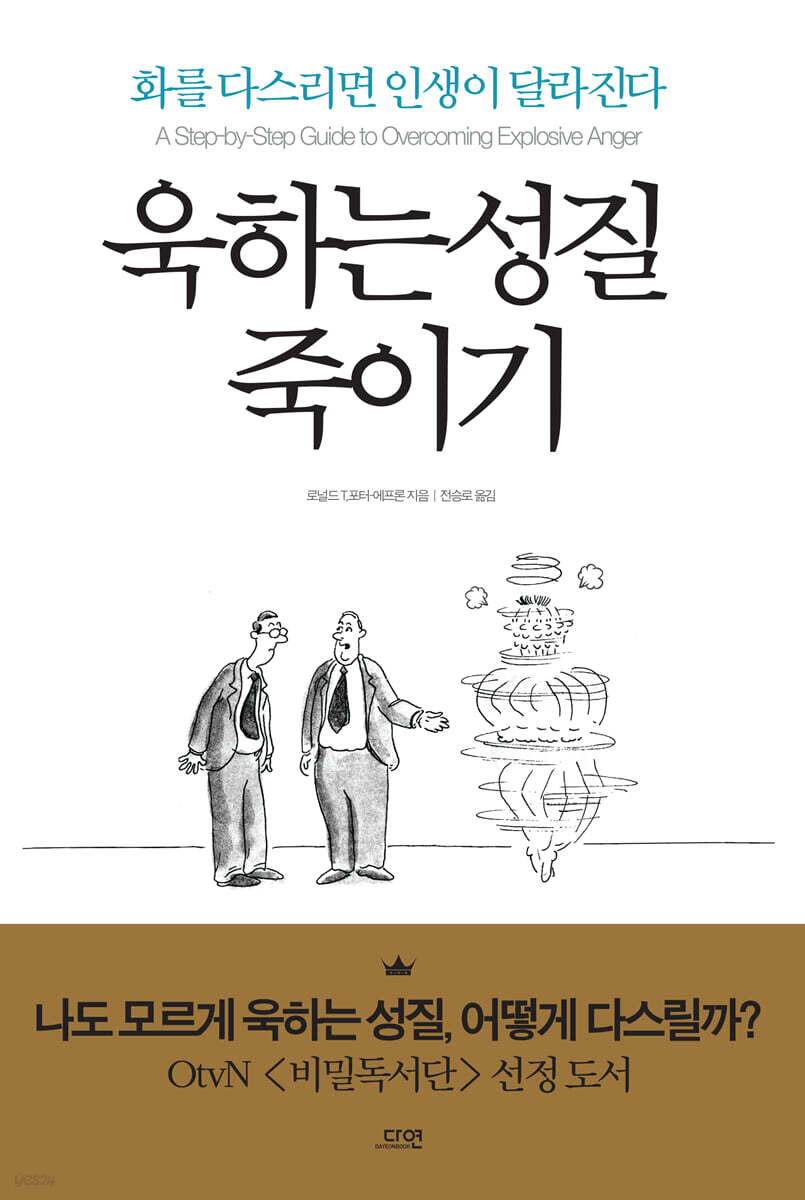 |
Description
Book Introduction
A technique to control and stop explosive emotions!
If you want to be happy, control your anger!
Ronald T., an anger expert and psychiatrist,
This is a book by Dr. Porter-Ephron that introduces how to effectively manage boiling anger.
It clearly explains the difference between anger and rage, explains what happens in the brain when anger progresses, and how the brains of angry people differ from those of non-angry people.
Additionally, it explains six types of anger and the situations that trigger them, and provides a self-assessment tool that readers can use to identify anger problems, teaching them how to end anger step by step and how to overcome it effectively.
If you want to be happy, control your anger!
Ronald T., an anger expert and psychiatrist,
This is a book by Dr. Porter-Ephron that introduces how to effectively manage boiling anger.
It clearly explains the difference between anger and rage, explains what happens in the brain when anger progresses, and how the brains of angry people differ from those of non-angry people.
Additionally, it explains six types of anger and the situations that trigger them, and provides a self-assessment tool that readers can use to identify anger problems, teaching them how to end anger step by step and how to overcome it effectively.
- You can preview some of the book's contents.
Preview
index
Acknowledgements
Chapter 1 What is Anger?
The temper that explodes without you knowing it | A modern disease that is getting worse | Why do we get angry | Anger is transformation | Another characteristic of anger | Partial anger and non-explosive anger | The high price we pay for anger | How free are you from anger? | How should we deal with anger?
Chapter 2 What Makes Us Anger
The Origins of a Bad Temper | Tantrums and Anger | Anger and Our Imperfect Brains | A Brain Full of Anger | Extreme Stress and Emotional Trauma | Alcohol, Drug Abuse, and Prescription Medication | Childhood Anger Management Training and Rewards | Anger as a Drug | Excessive Shame | Excessive Loss | Exposure to Anger
Chapter 3: Sudden Anger
Ricky's sudden outbursts of anger | Outbursts and loss of control | Mini-outbursts | Diagnosing outbursts | How to prevent them
Chapter 4: Potential Anger, Personal Retaliation, and Outbursts
Samuel's Latent Anger | The Difference Between Latent Anger and Outburst Anger | What Is Latent Anger? | Personal Retaliation and Outbursts | Diagnosing Latent Anger | How to Prevent Latent Anger
Chapter 5 Survival Fury
Terry Fights to Live | Have You Ever Had an Experience Like Terry? | The Roots of Survival Anger: Fear and Trauma | From Flight to Fight | The Brain's False Alarms, Sliding into Unreality, Survival Anger | The Fight-Flight Response of Survival Anger | Stopping Survival Anger
Chapter 6: Resigned Anger
Karen's Anger | Resignation Anger | What About You? | Keys to Understanding Resignation Anger | Stages of Resignation Anger Development | A Man with Resignation Anger | How to Prevent Resignation Anger | Find a More Effective Method | Accept Reality
Chapter 7 Anger from Shame
Harry, a man who often feels ignored | Anger from shame | Shame | Shame makes you want to hide | From shame to anger | How vulnerable are you to anger from shame? | How to prevent anger from shame
Chapter 8 Anger from Abandonment
A woman afraid of being abandoned | Abandonment anger starts in childhood | Children are not easy | When to feel secure in a relationship and when not | What attachment pattern works best for me? | How to be less anxious? | How to stop abandonment anger
Chapter 9 A Life Free from All Anger
Willie's Success Story | Reframing the Concept of Anger
Chapter 1 What is Anger?
The temper that explodes without you knowing it | A modern disease that is getting worse | Why do we get angry | Anger is transformation | Another characteristic of anger | Partial anger and non-explosive anger | The high price we pay for anger | How free are you from anger? | How should we deal with anger?
Chapter 2 What Makes Us Anger
The Origins of a Bad Temper | Tantrums and Anger | Anger and Our Imperfect Brains | A Brain Full of Anger | Extreme Stress and Emotional Trauma | Alcohol, Drug Abuse, and Prescription Medication | Childhood Anger Management Training and Rewards | Anger as a Drug | Excessive Shame | Excessive Loss | Exposure to Anger
Chapter 3: Sudden Anger
Ricky's sudden outbursts of anger | Outbursts and loss of control | Mini-outbursts | Diagnosing outbursts | How to prevent them
Chapter 4: Potential Anger, Personal Retaliation, and Outbursts
Samuel's Latent Anger | The Difference Between Latent Anger and Outburst Anger | What Is Latent Anger? | Personal Retaliation and Outbursts | Diagnosing Latent Anger | How to Prevent Latent Anger
Chapter 5 Survival Fury
Terry Fights to Live | Have You Ever Had an Experience Like Terry? | The Roots of Survival Anger: Fear and Trauma | From Flight to Fight | The Brain's False Alarms, Sliding into Unreality, Survival Anger | The Fight-Flight Response of Survival Anger | Stopping Survival Anger
Chapter 6: Resigned Anger
Karen's Anger | Resignation Anger | What About You? | Keys to Understanding Resignation Anger | Stages of Resignation Anger Development | A Man with Resignation Anger | How to Prevent Resignation Anger | Find a More Effective Method | Accept Reality
Chapter 7 Anger from Shame
Harry, a man who often feels ignored | Anger from shame | Shame | Shame makes you want to hide | From shame to anger | How vulnerable are you to anger from shame? | How to prevent anger from shame
Chapter 8 Anger from Abandonment
A woman afraid of being abandoned | Abandonment anger starts in childhood | Children are not easy | When to feel secure in a relationship and when not | What attachment pattern works best for me? | How to be less anxious? | How to stop abandonment anger
Chapter 9 A Life Free from All Anger
Willie's Success Story | Reframing the Concept of Anger
Into the book
People with a quick temper tend to put their thoughts into action.
No one sticks to the motto, "Keep your cool" when they're running wild with anger.
Perhaps, at that moment, the motto would be closer to 'Do as much as you can!'
So, they suddenly act impulsively and spew out cruel words.
When you are angry, you do things you would never do under normal circumstances.
That's why we say that exploding anger is like transformation.
They will later want to deny everything they have done.
But the truth is, he did it, and now it's time to take responsibility for his actions.
--- p.31
Step 1: Have hope.
You must have faith that you can overcome your irritable nature.
Stopping your temper may seem like an impossible task.
Why is that? Because anger, especially sudden anger, arises without any particular cause.
It's like going to a restaurant and the waiter suddenly shows up carrying a 2 kilogram steak.
When we asked, “Who ordered this?” the waiter replied, “You ordered it.
The answer is, “Here, take the bill.”
That huge steak is your anger and the bill is the price you pay for expressing your anger.
--- p.86
People with trauma sometimes get stuck in the past.
It's like being sucked into a black hole of past memories from which you can never escape.
Their past becomes their present, and grown men and women become children again, terrified and desperate.
I feel the same emotions I felt back then, and I think the same thoughts I had back then.
It is very difficult to act rationally when you are stuck in the past.
It is very difficult to suppress one's temper in a situation where one feels extremely threatened.
So I strongly encourage you to seek help to overcome your trauma.
Especially if you have dissociative identity disorder (DID), like the example I just gave, please get help.
--- pp.160-161
Forgiveness is a difficult and slow process.
It's not for everyone and it's not for every situation.
It's often much easier to empty your mind and live your life than to try to forgive someone.
Of course, forgiveness can stop the seething inside over old hurts.
That's why forgiveness is a useful way to prevent resigned anger.
Always remember that the best way to prevent resignation anger is to take more control over your life.
One approach might be to break down a large problem into its many facets and then look for ways to manage specific aspects.
Sometimes you have to accept that some things will never change and live your life in a way that gives you greater fulfillment.
--- p.193
Some other signs of anger may only appear just before an explosion.
For example, you might suddenly feel angry, or suddenly have cruel thoughts, or feel like you're being ignored.
These last signs are similar to the feeling you get when you are out for a walk and suddenly see a tsunami coming.
There is not much time left.
If you hurry, you will barely be able to get into a shelter before the tsunami hits.
First, calm your mind.
Take a few deep breaths and remind yourself not to attack the other person.
You have to stop yourself from getting angry and losing your temper.
If you really can't stand it anymore, get away from people and take a break.
--- pp.225-227
Each type of anger requires slightly different treatment.
This book examines six different types of anger and offers strategies for managing each type.
You should study this method carefully and also find other good ways to manage your anger.
If you don't feel confident about going through this process alone, it's a good idea to ask for help from people around you, such as family, friends, professional counselors, or doctors.
The important thing is that you can stop your temper and start a whole new life by breaking that habit.
No one sticks to the motto, "Keep your cool" when they're running wild with anger.
Perhaps, at that moment, the motto would be closer to 'Do as much as you can!'
So, they suddenly act impulsively and spew out cruel words.
When you are angry, you do things you would never do under normal circumstances.
That's why we say that exploding anger is like transformation.
They will later want to deny everything they have done.
But the truth is, he did it, and now it's time to take responsibility for his actions.
--- p.31
Step 1: Have hope.
You must have faith that you can overcome your irritable nature.
Stopping your temper may seem like an impossible task.
Why is that? Because anger, especially sudden anger, arises without any particular cause.
It's like going to a restaurant and the waiter suddenly shows up carrying a 2 kilogram steak.
When we asked, “Who ordered this?” the waiter replied, “You ordered it.
The answer is, “Here, take the bill.”
That huge steak is your anger and the bill is the price you pay for expressing your anger.
--- p.86
People with trauma sometimes get stuck in the past.
It's like being sucked into a black hole of past memories from which you can never escape.
Their past becomes their present, and grown men and women become children again, terrified and desperate.
I feel the same emotions I felt back then, and I think the same thoughts I had back then.
It is very difficult to act rationally when you are stuck in the past.
It is very difficult to suppress one's temper in a situation where one feels extremely threatened.
So I strongly encourage you to seek help to overcome your trauma.
Especially if you have dissociative identity disorder (DID), like the example I just gave, please get help.
--- pp.160-161
Forgiveness is a difficult and slow process.
It's not for everyone and it's not for every situation.
It's often much easier to empty your mind and live your life than to try to forgive someone.
Of course, forgiveness can stop the seething inside over old hurts.
That's why forgiveness is a useful way to prevent resigned anger.
Always remember that the best way to prevent resignation anger is to take more control over your life.
One approach might be to break down a large problem into its many facets and then look for ways to manage specific aspects.
Sometimes you have to accept that some things will never change and live your life in a way that gives you greater fulfillment.
--- p.193
Some other signs of anger may only appear just before an explosion.
For example, you might suddenly feel angry, or suddenly have cruel thoughts, or feel like you're being ignored.
These last signs are similar to the feeling you get when you are out for a walk and suddenly see a tsunami coming.
There is not much time left.
If you hurry, you will barely be able to get into a shelter before the tsunami hits.
First, calm your mind.
Take a few deep breaths and remind yourself not to attack the other person.
You have to stop yourself from getting angry and losing your temper.
If you really can't stand it anymore, get away from people and take a break.
--- pp.225-227
Each type of anger requires slightly different treatment.
This book examines six different types of anger and offers strategies for managing each type.
You should study this method carefully and also find other good ways to manage your anger.
If you don't feel confident about going through this process alone, it's a good idea to ask for help from people around you, such as family, friends, professional counselors, or doctors.
The important thing is that you can stop your temper and start a whole new life by breaking that habit.
--- p.272
Publisher's Review
The moment you get angry, everything disappears!
Control your boiling anger and achieve happiness, love, and success!
Anger is a more serious condition than extreme anger, and its consequences can be devastating! Knowing this, the author offers a step-by-step guide and plan to overcome anger outbursts.
If anger is a storm, then rage is a level 5 hurricane.
This can ruin relationships, cost you your job, and cause great emotional turmoil.
It also carries the potential for physical harm and more serious consequences.
Ronald T., an anger expert and psychiatrist,
Dr. Porter-Ephron understands the impact anger has on both the angry person and those around them.
This is why I wrote this book.
In this book, he provides:
- Clearly understand the difference between anger and rage
- What happens in the brain when anger progresses
- How the brains of angry people differ from those of non-angry people
- Describe the six angers and the situations that trigger them.
- A self-assessment tool that allows readers to identify anger issues.
- How to gradually end anger, skills to effectively overcome it, and coping methods
Anger and angry people
When 'blind rage' sets in, you lose partial or complete awareness and lose the ability to recognize and control your actions.
Some angry people experience blind rage, which occurs when they are overwhelmed with anger.
Total anger is much stronger than anger.
It is a work of the mind as well as the body, and it turns people into potentially lethal instruments of destruction.
At this time, some people who are angry will see red because the blood is pumped so rapidly and forcefully that it dilates the capillaries in the eyes.
For some people, anger is highly pleasurable.
One angry counselor said:
“When you let out your anger, you feel so good that you can’t put it into words.” Therefore, we can conclude that anger can be intoxicating and is highly addictive.
There are many different types of anger, including sudden anger, latent anger, survival anger, resignation anger, anger born of shame, and anger born of abandonment.
The cost of anger is enormous.
There are countless costs to be paid, including situations where one confines oneself or others, physical and mental harm to others, the resulting severing of relationships with them, the financial stress caused by not being able to function properly at work, and a drop in self-esteem.
We cannot simply stand by and watch anger, the fundamental source of suffering in our lives.
You need a plan and actions to control your anger.
Control your boiling anger and achieve happiness, love, and success!
Anger is a more serious condition than extreme anger, and its consequences can be devastating! Knowing this, the author offers a step-by-step guide and plan to overcome anger outbursts.
If anger is a storm, then rage is a level 5 hurricane.
This can ruin relationships, cost you your job, and cause great emotional turmoil.
It also carries the potential for physical harm and more serious consequences.
Ronald T., an anger expert and psychiatrist,
Dr. Porter-Ephron understands the impact anger has on both the angry person and those around them.
This is why I wrote this book.
In this book, he provides:
- Clearly understand the difference between anger and rage
- What happens in the brain when anger progresses
- How the brains of angry people differ from those of non-angry people
- Describe the six angers and the situations that trigger them.
- A self-assessment tool that allows readers to identify anger issues.
- How to gradually end anger, skills to effectively overcome it, and coping methods
Anger and angry people
When 'blind rage' sets in, you lose partial or complete awareness and lose the ability to recognize and control your actions.
Some angry people experience blind rage, which occurs when they are overwhelmed with anger.
Total anger is much stronger than anger.
It is a work of the mind as well as the body, and it turns people into potentially lethal instruments of destruction.
At this time, some people who are angry will see red because the blood is pumped so rapidly and forcefully that it dilates the capillaries in the eyes.
For some people, anger is highly pleasurable.
One angry counselor said:
“When you let out your anger, you feel so good that you can’t put it into words.” Therefore, we can conclude that anger can be intoxicating and is highly addictive.
There are many different types of anger, including sudden anger, latent anger, survival anger, resignation anger, anger born of shame, and anger born of abandonment.
The cost of anger is enormous.
There are countless costs to be paid, including situations where one confines oneself or others, physical and mental harm to others, the resulting severing of relationships with them, the financial stress caused by not being able to function properly at work, and a drop in self-esteem.
We cannot simply stand by and watch anger, the fundamental source of suffering in our lives.
You need a plan and actions to control your anger.
GOODS SPECIFICS
- Date of issue: February 5, 2025
- Page count, weight, size: 272 pages | 488g | 152*225*17mm
- ISBN13: 9791190456623
- ISBN10: 1190456621
You may also like
카테고리
korean


korean

![GQ KOREA Mark (Monthly): December [2025]](http://librairie.coreenne.fr/cdn/shop/files/8ef265dbbfbf186523ed75ba7319009d.jpg?v=1765340328&width=3840)


