

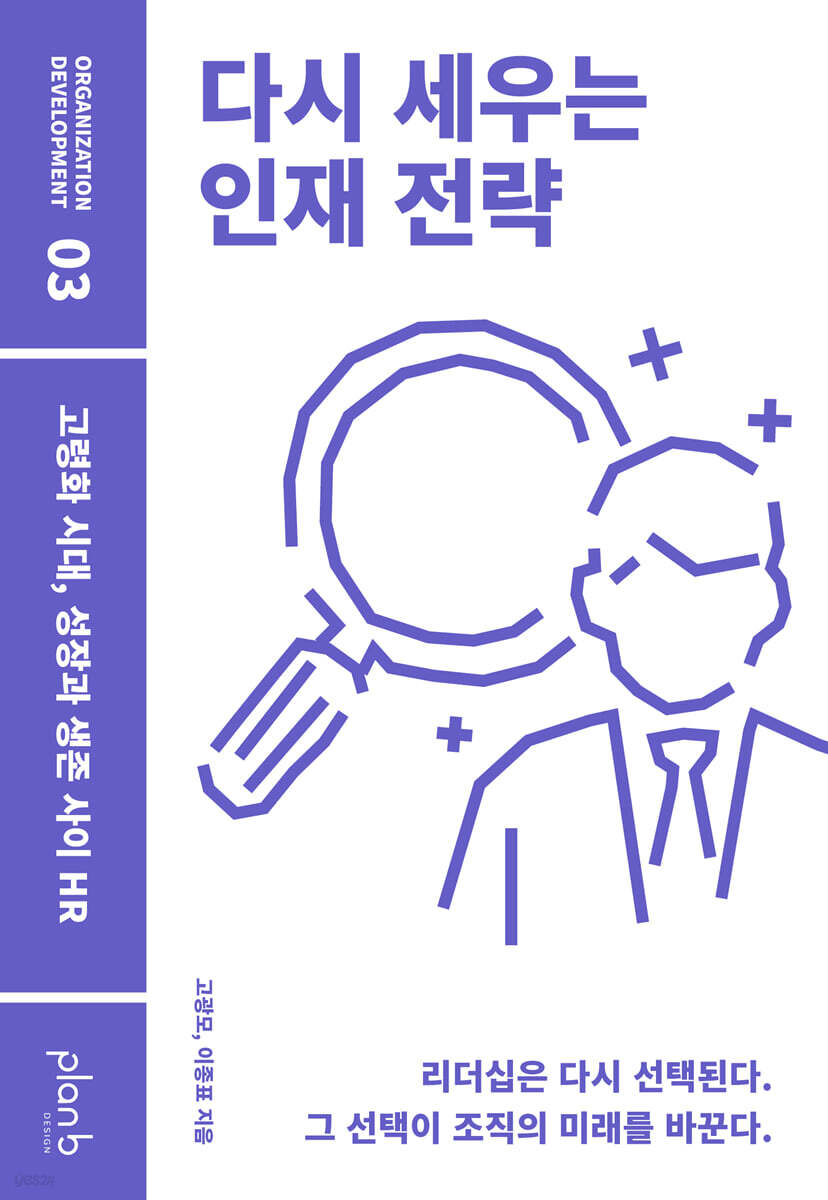
Rebuilding Talent Strategy
 |
Description
Book Introduction
Leadership Crisis and Solutions in the Aging Era of Korean Society and Business
The shadow of 'seniorityism' that has stalled Korean companies
Presenting a scientific solution to overcome the leadership crisis.
South Korean society and businesses are facing an aging population at an unprecedented rate, putting traditional talent management systems in a state of crisis.
This book offers a sharp analysis of how the seniority-based personnel system that formed the foundation of Korean companies is collapsing in the face of two massive waves: an aging population and digital transformation.
The analysis is that the past practice of viewing promotion as a reward for long-term service rather than a way to select leaders has pushed up the average age of the organization to the mid-to-late 40s (or even 50s) and exacerbated the "funnel-shaped" workforce structure in which skilled talent fails to acquire the capabilities needed for the new era.
These structural limitations are manifesting within organizations as phenomena called 'leadership phobia' and 'unbossing' (avoidance of management positions).
As leadership positions become increasingly demanding and offer minimal or even disadvantageous rewards compared to the increased responsibilities and risks of burnout, both younger and more senior employees are avoiding leadership positions.
Furthermore, the generational conflict is intensifying and the vitality of organizations is hitting rock bottom, as the phenomenon of "toxic leadership" based on seniority and the "young old fart" are combined.
Now is the time to abandon the old paradigm that "anyone can become a leader when the time comes," and make a fundamental shift toward screening and selecting a small number of prepared talents.
The author calls for a major shift toward a "scientific talent selection and development system" to overcome this leadership crisis and achieve sustainable growth.
In particular, it emphasizes the need to move away from leader selection methods that rely on experience and subjective intuition and instead objectively verify future potential capabilities through an Assessment Center (AC) with high predictive validity.
Furthermore, we propose that leaders utilize the Development Center (DC) to cultivate "human resource management capabilities" and build a "healthy self" that constantly evolves through a process of directly observing and reflecting on their own behavior.
This book will provide HR managers with a blueprint for future talent strategies, and a leadership survival guide for aspiring and current leaders in chaotic times.
The shadow of 'seniorityism' that has stalled Korean companies
Presenting a scientific solution to overcome the leadership crisis.
South Korean society and businesses are facing an aging population at an unprecedented rate, putting traditional talent management systems in a state of crisis.
This book offers a sharp analysis of how the seniority-based personnel system that formed the foundation of Korean companies is collapsing in the face of two massive waves: an aging population and digital transformation.
The analysis is that the past practice of viewing promotion as a reward for long-term service rather than a way to select leaders has pushed up the average age of the organization to the mid-to-late 40s (or even 50s) and exacerbated the "funnel-shaped" workforce structure in which skilled talent fails to acquire the capabilities needed for the new era.
These structural limitations are manifesting within organizations as phenomena called 'leadership phobia' and 'unbossing' (avoidance of management positions).
As leadership positions become increasingly demanding and offer minimal or even disadvantageous rewards compared to the increased responsibilities and risks of burnout, both younger and more senior employees are avoiding leadership positions.
Furthermore, the generational conflict is intensifying and the vitality of organizations is hitting rock bottom, as the phenomenon of "toxic leadership" based on seniority and the "young old fart" are combined.
Now is the time to abandon the old paradigm that "anyone can become a leader when the time comes," and make a fundamental shift toward screening and selecting a small number of prepared talents.
The author calls for a major shift toward a "scientific talent selection and development system" to overcome this leadership crisis and achieve sustainable growth.
In particular, it emphasizes the need to move away from leader selection methods that rely on experience and subjective intuition and instead objectively verify future potential capabilities through an Assessment Center (AC) with high predictive validity.
Furthermore, we propose that leaders utilize the Development Center (DC) to cultivate "human resource management capabilities" and build a "healthy self" that constantly evolves through a process of directly observing and reflecting on their own behavior.
This book will provide HR managers with a blueprint for future talent strategies, and a leadership survival guide for aspiring and current leaders in chaotic times.
- You can preview some of the book's contents.
Preview
index
Introduction | New Leadership Challenges in an Aging Society
Chapter 1: The World is Getting Old: Aging
I'm getting old really fast
Seniority-based pay was in place during the period of rapid economic growth.
It was a system that worked effectively.
In the aging workforce structure after the period of high growth,
Seniority is holding us back
Let's distinguish between the concepts of position, rank, and title.
The era of everyone getting promoted is over.
The changing world demands adaptation, regardless of age.
Chapter 2: Aging Creates Generational Conflict: Generational Conflict
We already have five generations working together at our company.
Our values will never be the same again.
Let's not brag about our age.
Past leadership can lead to management failure.
Still, no one wants to be a jerk
Why promote the wrong leader?
We will no longer tolerate the actions of bad leaders.
I became a young old fart by following my boss.
We need to change the rules of the game
Chapter 3: I Don't Want to Be a Leader, and I Don't Want to Be a Leader: Unbossed
Why don't you want to be a leader?
Companies are increasingly losing their need for leaders.
Flat and agile organizational operation
We demand a fundamental shift in the role of management.
If you mishandle unbossed leadership, it will collapse.
Unbossing must be designed appropriately.
Still, we need leaders
Chapter 4: Enduring as a Leader: Burnout
When I'm tired, I don't want to do anything.
Why am I getting tired?
When leaders get tired, the organization gets tired too.
We need to help our exhausted leaders.
Chapter 5: The World is Connected, But Leaders Are Stuck in Their Own Space: The Silo Phenomenon
How do silos manifest themselves?
Why does the silo phenomenon occur?
The silo phenomenon becomes more pronounced as the organization grows.
The more detailed the function, the greater the risk.
Silos can be overcome through sustained effort.
Action plan
Chapter 6: The World Has Changed and Adaptation Is Difficult: Digital Transformation
Changes in the world make everyone anxious.
The changing world is changing the role of leadership.
Why does leadership training fail?
What competencies should leaders develop?
Chapter 7: How to Prepare and Select Leaders in an Aging Society
We need to redesign our talent pipeline:
From selection to succession
We need to change the leader's development roadmap.
The concept of promotion must change from compensation to selection.
What are the problems and limitations of the existing leader selection method?
When it comes to selecting leaders, do we have enough information?
Now we need objective information.
For optimal talent selection and development
You need to combine evaluation methods
Chapter 8: Strategically Utilizing Assessment Centers (ACs) and Development Centers (DCs) for Future-Oriented Leadership
What is the competency development center process?
Post-inspection process
More Assessment/Development Centers (AC/DCs) are needed now.
DC overcomes the limitations of leadership development training
It helps
What is the difference between AC and DC?
What should I consider when implementing an AC/DC program?
Chapter 9: Why Leaders Need to Know Themselves: Self-Awareness
What is the self?
I am body, mind, relationships, and history.
Let's respect ourselves and encourage ourselves.
I need to constantly change myself to be healthy.
Leadership is not a theoretical type of mimicry.
It is a manifestation of the self.
Leadership is achieved through the meeting of self and self.
| Appendix | AC/DC Operation Case
Chapter 1: The World is Getting Old: Aging
I'm getting old really fast
Seniority-based pay was in place during the period of rapid economic growth.
It was a system that worked effectively.
In the aging workforce structure after the period of high growth,
Seniority is holding us back
Let's distinguish between the concepts of position, rank, and title.
The era of everyone getting promoted is over.
The changing world demands adaptation, regardless of age.
Chapter 2: Aging Creates Generational Conflict: Generational Conflict
We already have five generations working together at our company.
Our values will never be the same again.
Let's not brag about our age.
Past leadership can lead to management failure.
Still, no one wants to be a jerk
Why promote the wrong leader?
We will no longer tolerate the actions of bad leaders.
I became a young old fart by following my boss.
We need to change the rules of the game
Chapter 3: I Don't Want to Be a Leader, and I Don't Want to Be a Leader: Unbossed
Why don't you want to be a leader?
Companies are increasingly losing their need for leaders.
Flat and agile organizational operation
We demand a fundamental shift in the role of management.
If you mishandle unbossed leadership, it will collapse.
Unbossing must be designed appropriately.
Still, we need leaders
Chapter 4: Enduring as a Leader: Burnout
When I'm tired, I don't want to do anything.
Why am I getting tired?
When leaders get tired, the organization gets tired too.
We need to help our exhausted leaders.
Chapter 5: The World is Connected, But Leaders Are Stuck in Their Own Space: The Silo Phenomenon
How do silos manifest themselves?
Why does the silo phenomenon occur?
The silo phenomenon becomes more pronounced as the organization grows.
The more detailed the function, the greater the risk.
Silos can be overcome through sustained effort.
Action plan
Chapter 6: The World Has Changed and Adaptation Is Difficult: Digital Transformation
Changes in the world make everyone anxious.
The changing world is changing the role of leadership.
Why does leadership training fail?
What competencies should leaders develop?
Chapter 7: How to Prepare and Select Leaders in an Aging Society
We need to redesign our talent pipeline:
From selection to succession
We need to change the leader's development roadmap.
The concept of promotion must change from compensation to selection.
What are the problems and limitations of the existing leader selection method?
When it comes to selecting leaders, do we have enough information?
Now we need objective information.
For optimal talent selection and development
You need to combine evaluation methods
Chapter 8: Strategically Utilizing Assessment Centers (ACs) and Development Centers (DCs) for Future-Oriented Leadership
What is the competency development center process?
Post-inspection process
More Assessment/Development Centers (AC/DCs) are needed now.
DC overcomes the limitations of leadership development training
It helps
What is the difference between AC and DC?
What should I consider when implementing an AC/DC program?
Chapter 9: Why Leaders Need to Know Themselves: Self-Awareness
What is the self?
I am body, mind, relationships, and history.
Let's respect ourselves and encourage ourselves.
I need to constantly change myself to be healthy.
Leadership is not a theoretical type of mimicry.
It is a manifestation of the self.
Leadership is achieved through the meeting of self and self.
| Appendix | AC/DC Operation Case
Publisher's Review
This book sharply delves into the essence of the "leadership crisis," an organizational problem that anyone working in a Korean company can readily recognize.
It is striking that the phenomenon of "unbossed" among the younger generation and the problem of "old-timers" among the older generation are not simply dismissed as isolated phenomena, but rather as a "comprehensive human resources management crisis" stemming from the structural flaws in Korea's unique seniority-based and promotion culture.
In particular, it provides a sober analysis of the reality in which organizational structures are becoming "funnel-shaped" due to the extension of the retirement age and the aging population, and promotions are no longer perceived as compensation but as a shortcut to "responsibility and burnout."
This book declares a break with the past paradigm of 'anyone can be a leader' and emphasizes that only objective verification and competency-based leader selection can guarantee the survival of an organization.
The most practical part is that it provides concrete methodologies for overcoming failures in leadership development.
We explore the use of Assessment Centers (ACs) to ensure data-driven, rather than gut-based, selection, and the need for Development Centers (DCs) to enable leaders to objectively reflect on their own actions.
Furthermore, the part that demands that individual leaders possess a "healthy ego" and "self-awareness" and constantly change comes across as a message that goes beyond simply improving the HR system and calls for a fundamental change in leadership attitude.
This book is a must-read for HR professionals, providing them with a blueprint for reimagining their future talent strategies, and for aspiring or current leaders, a self-reflection guide essential in these turbulent times.
It is striking that the phenomenon of "unbossed" among the younger generation and the problem of "old-timers" among the older generation are not simply dismissed as isolated phenomena, but rather as a "comprehensive human resources management crisis" stemming from the structural flaws in Korea's unique seniority-based and promotion culture.
In particular, it provides a sober analysis of the reality in which organizational structures are becoming "funnel-shaped" due to the extension of the retirement age and the aging population, and promotions are no longer perceived as compensation but as a shortcut to "responsibility and burnout."
This book declares a break with the past paradigm of 'anyone can be a leader' and emphasizes that only objective verification and competency-based leader selection can guarantee the survival of an organization.
The most practical part is that it provides concrete methodologies for overcoming failures in leadership development.
We explore the use of Assessment Centers (ACs) to ensure data-driven, rather than gut-based, selection, and the need for Development Centers (DCs) to enable leaders to objectively reflect on their own actions.
Furthermore, the part that demands that individual leaders possess a "healthy ego" and "self-awareness" and constantly change comes across as a message that goes beyond simply improving the HR system and calls for a fundamental change in leadership attitude.
This book is a must-read for HR professionals, providing them with a blueprint for reimagining their future talent strategies, and for aspiring or current leaders, a self-reflection guide essential in these turbulent times.
GOODS SPECIFICS
- Date of issue: October 24, 2025
- Page count, weight, size: 262 pages | 145*210*20mm
- ISBN13: 9791168322172
- ISBN10: 1168322170
You may also like
카테고리
korean


korean

![GQ KOREA Mark (Monthly): December [2025]](http://librairie.coreenne.fr/cdn/shop/files/8ef265dbbfbf186523ed75ba7319009d.jpg?v=1765340328&width=3840)


