

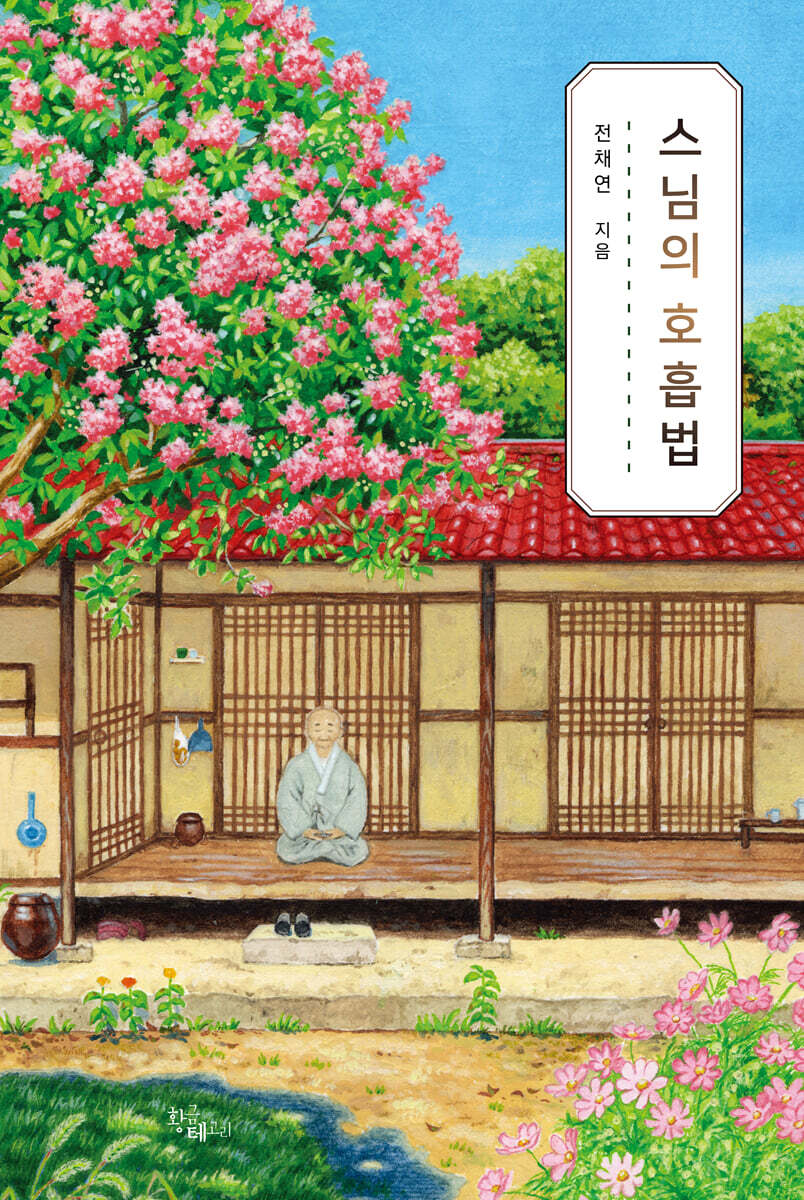
The monk's breathing method
 |
Description
Book Introduction
Are there any healthier breathing techniques for a better life?
After 20 years of social life, all that remained was an uncertain future, a shabby body, social phobia, and depression.
The author, who began the latter half of his life in frustration, happened to meet a monk who had been practicing Zen meditation for 40 years and learned breathing techniques from him.
Food scientists say that we are what we eat, but monks say that we are what we breathe.
Just as opera singers learn breathing techniques to perform well, and freedivers undergo special breathing training to stay underwater for long periods of time, how we breathe can change our lives.
When I started setting aside an hour a day to breathe, following the monk's teachings, everything changed.
Just by breathing properly, my condition changed, my racing emotions subsided, my depression went away, and my panic disorder symptoms disappeared.
We have discovered the potential to rebuild the body, mind, and soul of modern people in breathing techniques that were previously considered the exclusive domain of religious figures and practitioners.
The breathing method of Monk Kangseol, who devoted himself solely to breathing and Zen meditation for over 40 years under the great monks of Korean Buddhism, Seon Master Jeon Gang and Seon Master Songdam, was not vague or ambiguous like a Zen question and answer.
It is simple, clear, and systematic enough for modern people to accept.
As we follow the author's three-year journey with breathing techniques, we will see how much our lives can be restored simply by reorganizing the breathing we unconsciously exhale in our daily lives.
And you will come to realize that the pillar that supports not only your health but also your life is none other than your breathing.
After 20 years of social life, all that remained was an uncertain future, a shabby body, social phobia, and depression.
The author, who began the latter half of his life in frustration, happened to meet a monk who had been practicing Zen meditation for 40 years and learned breathing techniques from him.
Food scientists say that we are what we eat, but monks say that we are what we breathe.
Just as opera singers learn breathing techniques to perform well, and freedivers undergo special breathing training to stay underwater for long periods of time, how we breathe can change our lives.
When I started setting aside an hour a day to breathe, following the monk's teachings, everything changed.
Just by breathing properly, my condition changed, my racing emotions subsided, my depression went away, and my panic disorder symptoms disappeared.
We have discovered the potential to rebuild the body, mind, and soul of modern people in breathing techniques that were previously considered the exclusive domain of religious figures and practitioners.
The breathing method of Monk Kangseol, who devoted himself solely to breathing and Zen meditation for over 40 years under the great monks of Korean Buddhism, Seon Master Jeon Gang and Seon Master Songdam, was not vague or ambiguous like a Zen question and answer.
It is simple, clear, and systematic enough for modern people to accept.
As we follow the author's three-year journey with breathing techniques, we will see how much our lives can be restored simply by reorganizing the breathing we unconsciously exhale in our daily lives.
And you will come to realize that the pillar that supports not only your health but also your life is none other than your breathing.
- You can preview some of the book's contents.
Preview
index
Prologue_If I start breathing again
First Teaching: Build Cheongnyanggol
First meeting
Why Cheongnyanggol Should Be Built
How to check if Cheongnyanggol is standing
The moment the spine is erected
Why Do We Fall into Meditation While Practicing Zen?
How to stand upright and sit for a long time
Sitting with your chest out
Monk's Breathing Method 1
Two good monk movements for sitting meditation
Raise your arms and breathe│Breathe in a relaxed pose
How to straighten your spine
Relax your chest│Spine correction posture
Second Lesson: Practice Diaphragmatic Breathing
The breath of a practitioner and the breath of an ordinary person
The Principle of Diaphragmatic Breathing to Awaken Brain Cells
Comfortable breathing alone is not enough
Diaphragm Training for Older People
Breathing technique to enter a state of essence
Monk's Breathing Method 2
Diaphragmatic breathing to burn belly fat
Dietary Suggestions for Diaphragmatic Breathing
The Third Teaching: Your Heart Must Be Open
Why You Should Open Your Chest When Meditating
Overcome depression after half a year
Chest breathing that creates a good physical condition for meditation
Deep Breathing Nerve Clearing Technique
Purify old feelings
Monk's Breathing Method 3
Nerve massage techniques to create a body that breathes well
Kidney Massage│Brain Cleansing│Bong Massage│Ankle Knocking Exercise
The Fourth Teaching: Don't Let the Hwadu Break
Look at the topic in front of you
Breathing and the topic are not separate.
Breathe deeply and keep the topic uninterrupted.
The state of the one and only dream of the one and only Haengjujwa and Eomukdongjeong
Why you should bow halfway when sitting in meditation
Breathe precisely, more precisely
Being alone in the koan
The Wisdom of Self-Connection
What I gained through intensive practice
Monk's Breathing Method 4
Body care tips for those who practice meditation
Pelvic rotation│Upper and lower body communication massage│Standing hip joint release│Lying hip joint release│
Hip release in bed
The Fifth Teaching: Seon Nong Practice and Daily Practice
For life itself to become a practice
Work with the topic as your top priority.
The life of a self-sufficient, seon-nong-il-hui
Monk's Breathing Technique 5
How to use your body in everyday life
How to use your body when walking│How to use your body when standing and talking│Developing a sense of balance│
Posture of walking│Posture of sitting on a chair
Epilogue: The Breath We Take Is Ourselves
First Teaching: Build Cheongnyanggol
First meeting
Why Cheongnyanggol Should Be Built
How to check if Cheongnyanggol is standing
The moment the spine is erected
Why Do We Fall into Meditation While Practicing Zen?
How to stand upright and sit for a long time
Sitting with your chest out
Monk's Breathing Method 1
Two good monk movements for sitting meditation
Raise your arms and breathe│Breathe in a relaxed pose
How to straighten your spine
Relax your chest│Spine correction posture
Second Lesson: Practice Diaphragmatic Breathing
The breath of a practitioner and the breath of an ordinary person
The Principle of Diaphragmatic Breathing to Awaken Brain Cells
Comfortable breathing alone is not enough
Diaphragm Training for Older People
Breathing technique to enter a state of essence
Monk's Breathing Method 2
Diaphragmatic breathing to burn belly fat
Dietary Suggestions for Diaphragmatic Breathing
The Third Teaching: Your Heart Must Be Open
Why You Should Open Your Chest When Meditating
Overcome depression after half a year
Chest breathing that creates a good physical condition for meditation
Deep Breathing Nerve Clearing Technique
Purify old feelings
Monk's Breathing Method 3
Nerve massage techniques to create a body that breathes well
Kidney Massage│Brain Cleansing│Bong Massage│Ankle Knocking Exercise
The Fourth Teaching: Don't Let the Hwadu Break
Look at the topic in front of you
Breathing and the topic are not separate.
Breathe deeply and keep the topic uninterrupted.
The state of the one and only dream of the one and only Haengjujwa and Eomukdongjeong
Why you should bow halfway when sitting in meditation
Breathe precisely, more precisely
Being alone in the koan
The Wisdom of Self-Connection
What I gained through intensive practice
Monk's Breathing Method 4
Body care tips for those who practice meditation
Pelvic rotation│Upper and lower body communication massage│Standing hip joint release│Lying hip joint release│
Hip release in bed
The Fifth Teaching: Seon Nong Practice and Daily Practice
For life itself to become a practice
Work with the topic as your top priority.
The life of a self-sufficient, seon-nong-il-hui
Monk's Breathing Technique 5
How to use your body in everyday life
How to use your body when walking│How to use your body when standing and talking│Developing a sense of balance│
Posture of walking│Posture of sitting on a chair
Epilogue: The Breath We Take Is Ourselves
Into the book
“It took me a year to get a feel for proper posture after I started breathing.
When I felt a force like someone pushing my back up, my spine straightened, my chest opened up due to that force, and when I slightly released the force from my chest, a large, deep breath came into my lungs.
It was as if my body, sitting cross-legged, had found its perfect balance as a well-designed skeleton.
A feeling of being filled tightly with a soft center.
The monk said that even now, after 40 years of practicing Zen meditation, there are times when he experiences, without realizing it, the strength in areas that were tense while breathing.
Perhaps the greatest luxury a practitioner can enjoy is the sensation of each muscle being slightly relaxed and the tension suddenly released.”
--- p.41
"Why do modern people, living more abundantly than ever before, suffer from so much anxiety, impatience, and depression? It's because they can't fully exist in the present moment.
If you can't breathe, you can't stay in the present and you'll be swayed by the past or future.
Then, the quality of life declines, and the person's value itself declines.
If you think about it, this all happens because you’re not breathing properly.”
--- p.151
“Some people breathe shallowly when told to breathe deeply, but that’s not true.
In fact, the breathing that ordinary people do, the breathing that they do unconsciously just to survive, cannot be called breathing.
Shallow breathing is not breathing that develops consciousness; it is simply breathing that we do instinctively to survive.”
--- p.149
“If you work too hard and use your brain too much when your body can’t support it, you can easily get a nervous breakdown.
What is the principle?
Since we use our brain a lot, we need to supply enough oxygen to our brain through breathing, but we miss that.
All modern people are like that.
As I live a busy life and handle things as if I'm carrying out a mission, I keep losing my breath.
“If you can’t breathe deeply, it’s difficult to supply your body with enough oxygen, and if your brain is working at full capacity, you’re bound to suffer from a nervous breakdown and burnout.”
When I felt a force like someone pushing my back up, my spine straightened, my chest opened up due to that force, and when I slightly released the force from my chest, a large, deep breath came into my lungs.
It was as if my body, sitting cross-legged, had found its perfect balance as a well-designed skeleton.
A feeling of being filled tightly with a soft center.
The monk said that even now, after 40 years of practicing Zen meditation, there are times when he experiences, without realizing it, the strength in areas that were tense while breathing.
Perhaps the greatest luxury a practitioner can enjoy is the sensation of each muscle being slightly relaxed and the tension suddenly released.”
--- p.41
"Why do modern people, living more abundantly than ever before, suffer from so much anxiety, impatience, and depression? It's because they can't fully exist in the present moment.
If you can't breathe, you can't stay in the present and you'll be swayed by the past or future.
Then, the quality of life declines, and the person's value itself declines.
If you think about it, this all happens because you’re not breathing properly.”
--- p.151
“Some people breathe shallowly when told to breathe deeply, but that’s not true.
In fact, the breathing that ordinary people do, the breathing that they do unconsciously just to survive, cannot be called breathing.
Shallow breathing is not breathing that develops consciousness; it is simply breathing that we do instinctively to survive.”
--- p.149
“If you work too hard and use your brain too much when your body can’t support it, you can easily get a nervous breakdown.
What is the principle?
Since we use our brain a lot, we need to supply enough oxygen to our brain through breathing, but we miss that.
All modern people are like that.
As I live a busy life and handle things as if I'm carrying out a mission, I keep losing my breath.
“If you can’t breathe deeply, it’s difficult to supply your body with enough oxygen, and if your brain is working at full capacity, you’re bound to suffer from a nervous breakdown and burnout.”
--- p.187
Publisher's Review
The Power of Breathing to Rebuild Life
This book opens up a world of deep and intimate breathing to modern people who are obsessed with what is visible and are losing their own deep and delicate breathing.
Busy modern people don't have time to be conscious of their breathing.
We live without even being aware of whether we are breathing deeply or not.
Monk Kangseol, who has 40 years of experience in meditation, teaches that in order to live a healthy life in body, mind, and soul, one must breathe without interruption and one must not stop concentrating on the topic.
Whether you are going about your daily life, exercising, or meditating, your breathing should not stop.
In short, the core of the monk's breathing method is to train oneself to breathe slowly, deeply, and delicately, so that the koan and breathing become one, rather than the koan and breathing being separate.
It is not common to teach this type of breathing technique.
If you just breathe properly for an hour a day, following the monk's teachings, your posture will straighten, your condition will change, and your emotions will calm down.
Not only will your depression and anxiety disappear and you'll regain your confidence, but your entire attitude towards life will change.
Breathing techniques, once considered the exclusive domain of religious figures and practitioners, actually have the potential to rebuild the lives of modern people living in a fiercely competitive society.
Above all, the monk's breathing method contains the core principles of breathing that he personally learned through trial and error over 40 years, following the teachings of his teachers, Seon Master Jeon Gang and Great Monk Song Dam.
Should this simple and clear breathing technique remain the exclusive domain of religious figures and practitioners?
As you follow the monk's breathing method, you will witness how realigning the breathing you unconsciously exhale in everyday life, even without any specific purpose of practicing, can regenerate and restore your life.
In this age of material civilization, where everything is noisy and chaotic, and where the mind cannot keep up, I hope that the monk's breathing method will serve as a small guide for those who wish to live by listening to their inner voice, even if it means going a little slower.
This book opens up a world of deep and intimate breathing to modern people who are obsessed with what is visible and are losing their own deep and delicate breathing.
Busy modern people don't have time to be conscious of their breathing.
We live without even being aware of whether we are breathing deeply or not.
Monk Kangseol, who has 40 years of experience in meditation, teaches that in order to live a healthy life in body, mind, and soul, one must breathe without interruption and one must not stop concentrating on the topic.
Whether you are going about your daily life, exercising, or meditating, your breathing should not stop.
In short, the core of the monk's breathing method is to train oneself to breathe slowly, deeply, and delicately, so that the koan and breathing become one, rather than the koan and breathing being separate.
It is not common to teach this type of breathing technique.
If you just breathe properly for an hour a day, following the monk's teachings, your posture will straighten, your condition will change, and your emotions will calm down.
Not only will your depression and anxiety disappear and you'll regain your confidence, but your entire attitude towards life will change.
Breathing techniques, once considered the exclusive domain of religious figures and practitioners, actually have the potential to rebuild the lives of modern people living in a fiercely competitive society.
Above all, the monk's breathing method contains the core principles of breathing that he personally learned through trial and error over 40 years, following the teachings of his teachers, Seon Master Jeon Gang and Great Monk Song Dam.
Should this simple and clear breathing technique remain the exclusive domain of religious figures and practitioners?
As you follow the monk's breathing method, you will witness how realigning the breathing you unconsciously exhale in everyday life, even without any specific purpose of practicing, can regenerate and restore your life.
In this age of material civilization, where everything is noisy and chaotic, and where the mind cannot keep up, I hope that the monk's breathing method will serve as a small guide for those who wish to live by listening to their inner voice, even if it means going a little slower.
GOODS SPECIFICS
- Date of issue: October 20, 2024
- Page count, weight, size: 208 pages | 370g | 134*200*15mm
- ISBN13: 9791195382491
- ISBN10: 1195382499
You may also like
카테고리
korean


korean

![GQ KOREA Mark (Monthly): December [2025]](http://librairie.coreenne.fr/cdn/shop/files/8ef265dbbfbf186523ed75ba7319009d.jpg?v=1765340328&width=3840)


