

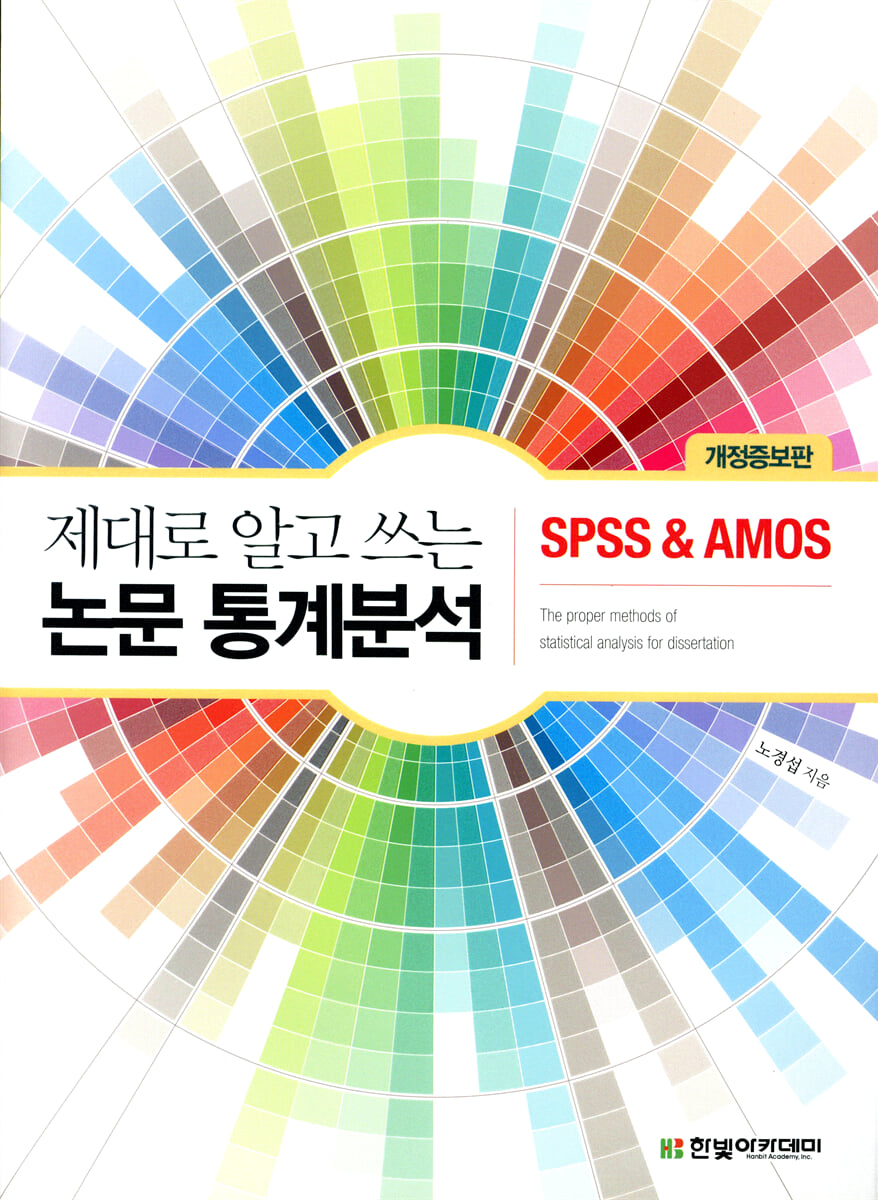
Statistical analysis of papers that are properly understood and written
 |
Description
Book Introduction
You need to know accurate statistical concepts and analysis methods to write a proper paper!
Rather than explaining in-depth statistical theory, 『Statistical Analysis for Papers』 precisely identifies essential statistical concepts and demonstrates in detail the process of analyzing data using tools (SPSS/AMOS), which are essential for paper writing, and then interpreting the resulting results.
By reviewing the analysis process and interpretations you've conducted based on this book, you'll be able to produce more robust and meaningful results.
What has changed in the revised and expanded edition is that some insufficient explanations have been supplemented or unnecessary explanations have been reduced.
Additionally, we added reverse coding and multiple response processing methods, multi-group comparison and analysis methods, and strengthened the explanation of higher-order factor analysis required for complex research models.
In addition, a section on the significance of indirect effects (using phantom variables) was added, and an explanation of the CMIN, the result value of the structural equation model, was also added.
『Statistical Analysis of Papers: Knowing and Writing Properly』 provides YouTube lectures.
If you don't understand it just from the book, you can listen to the author's lectures on YouTube (www.youtube.com/c/노경섭).
Rather than explaining in-depth statistical theory, 『Statistical Analysis for Papers』 precisely identifies essential statistical concepts and demonstrates in detail the process of analyzing data using tools (SPSS/AMOS), which are essential for paper writing, and then interpreting the resulting results.
By reviewing the analysis process and interpretations you've conducted based on this book, you'll be able to produce more robust and meaningful results.
What has changed in the revised and expanded edition is that some insufficient explanations have been supplemented or unnecessary explanations have been reduced.
Additionally, we added reverse coding and multiple response processing methods, multi-group comparison and analysis methods, and strengthened the explanation of higher-order factor analysis required for complex research models.
In addition, a section on the significance of indirect effects (using phantom variables) was added, and an explanation of the CMIN, the result value of the structural equation model, was also added.
『Statistical Analysis of Papers: Knowing and Writing Properly』 provides YouTube lectures.
If you don't understand it just from the book, you can listen to the author's lectures on YouTube (www.youtube.com/c/노경섭).
- You can preview some of the book's contents.
Preview
index
PART 01 Basic Knowledge for Paper Statistics
Chapter 01 Hypotheses and Significance Levels
1.1 Hypothesis / 1.2 Significance Level
CHAPTER 02 SCALE
2.1 Importance of Scale / 2.2 Types of Scale
Chapter 03 Data Collection for Research Questions
3.1 Data collection through measurement
3.2 Data collection through questionnaires
3.3 Desirable Questionnaire Writing Method
CHAPTER 04 SAMPLING
CHAPTER 05 Coding Survey Results
5.1 General Coding / 5.2 Reverse Coding
5.3 Coding Multiple Response Items
CHAPTER 06 Statistical Analysis Methods
PART 02 Statistical Analysis Using SPSS
Chapter 01 Understanding the Functions of SPSS Statistics
1.1 Data Edit Window / 1.2 Output Results Window
CHAPTER 02 Descriptive Statistics (Frequency Analysis)
CHAPTER 03 t black
3.1 What is the t-test? / 3.2 One-Sample t-test
3.3 Paired Samples t-Test / 3.4 Independent Samples t-Test
CHAPTER 04 Analysis of Variance
4.1 One-way ANOVA / 4.2 Two-way ANOVA
4.3 Multivariate ANOVA
CHAPTER 05 Validity and Reliability
5.1 Validity / 5.2 Reliability
CHAPTER 06 FACTOR ANALYSIS
6.1 What is factor analysis?
CHAPTER 07 Reliability Analysis
CHAPTER 08 Correlation Analysis
8.1 Association Analysis / 8.2 Correlation Analysis
8.3 Comparison between factor extraction and factor rotation
8.4 Cross-tabs and χ2 tests
CHAPTER 09 Beginner Regression Analysis (Simple/Multiple)
9.1 Simple Regression Analysis / 9.2 Multiple Regression Analysis
CHAPTER 10: Intermediate Regression Analysis (Stepwise/Hierarchical/Dummy)
10.1 Stepwise Regression Analysis
10.2 Hierarchical Regression Analysis
10.3 Regression Analysis Using Dummy Variables
CHAPTER 11 ADVANCED REGRESSION ANALYSIS (MODERATION/MEDIATION/LOGISTIC)
11.1 Moderated Regression Analysis
11.2 Parametric Regression Analysis
11.3 Logistic Regression Analysis
CHAPTER 12 Cluster Analysis
12.1 Hierarchical Cluster Analysis / 12.2 Nonhierarchical Cluster Analysis
PART 03 Statistical Analysis Using AMOS
CHAPTER 01 Understanding Structural Equation Models
1.1 Overview of structural equation models
1.2 Characteristics of structural equation models
1.3 Structural equation model
CHAPTER 02 Getting Started with AMOS
2.1 AMOS screen configuration
CHAPTER 03 Drawing and Analyzing Structural Equation Models
3.1 Setting the research question and writing the questionnaire
3.2 Drawing a structural equation model
3.3 Analyzing the results
CHAPTER 04 Confirmatory Factor Analysis
4.1 Concept of confirmatory factor analysis
4.2 Conducting confirmatory factor analysis
4.3 Validity Analysis
4.4 Validation
4.5 Higher-order factor analysis
CHAPTER 05 Path Analysis
5.1 Path Analysis
5.2 Total effect, direct effect, and indirect effect in path analysis
5.3 Testing the Significance of Indirect Effects (Parameters): Bootstrapping
5.4 Testing the Significance of Indirect Effects: Phantom Variable Modeling
CHAPTER 06 Structural Equation Model Analysis
6.1 Checking the analysis results
CHAPTER 07 Modifying the Structural Equation Model
7.1 Modification of structural equation models
7.2 Practice modifying structural equation models
CHAPTER 08 Analysis of the Moderating Effects of Structural Equation Models
8.1 What is moderating effect analysis?
8.2 Moderating Effect Analysis Practice
CHAPTER 09 Multi-Group Model Analysis
9.1 What is multi-group model analysis?
9.2 Multi-Group Model Analysis Practice
Chapter 01 Hypotheses and Significance Levels
1.1 Hypothesis / 1.2 Significance Level
CHAPTER 02 SCALE
2.1 Importance of Scale / 2.2 Types of Scale
Chapter 03 Data Collection for Research Questions
3.1 Data collection through measurement
3.2 Data collection through questionnaires
3.3 Desirable Questionnaire Writing Method
CHAPTER 04 SAMPLING
CHAPTER 05 Coding Survey Results
5.1 General Coding / 5.2 Reverse Coding
5.3 Coding Multiple Response Items
CHAPTER 06 Statistical Analysis Methods
PART 02 Statistical Analysis Using SPSS
Chapter 01 Understanding the Functions of SPSS Statistics
1.1 Data Edit Window / 1.2 Output Results Window
CHAPTER 02 Descriptive Statistics (Frequency Analysis)
CHAPTER 03 t black
3.1 What is the t-test? / 3.2 One-Sample t-test
3.3 Paired Samples t-Test / 3.4 Independent Samples t-Test
CHAPTER 04 Analysis of Variance
4.1 One-way ANOVA / 4.2 Two-way ANOVA
4.3 Multivariate ANOVA
CHAPTER 05 Validity and Reliability
5.1 Validity / 5.2 Reliability
CHAPTER 06 FACTOR ANALYSIS
6.1 What is factor analysis?
CHAPTER 07 Reliability Analysis
CHAPTER 08 Correlation Analysis
8.1 Association Analysis / 8.2 Correlation Analysis
8.3 Comparison between factor extraction and factor rotation
8.4 Cross-tabs and χ2 tests
CHAPTER 09 Beginner Regression Analysis (Simple/Multiple)
9.1 Simple Regression Analysis / 9.2 Multiple Regression Analysis
CHAPTER 10: Intermediate Regression Analysis (Stepwise/Hierarchical/Dummy)
10.1 Stepwise Regression Analysis
10.2 Hierarchical Regression Analysis
10.3 Regression Analysis Using Dummy Variables
CHAPTER 11 ADVANCED REGRESSION ANALYSIS (MODERATION/MEDIATION/LOGISTIC)
11.1 Moderated Regression Analysis
11.2 Parametric Regression Analysis
11.3 Logistic Regression Analysis
CHAPTER 12 Cluster Analysis
12.1 Hierarchical Cluster Analysis / 12.2 Nonhierarchical Cluster Analysis
PART 03 Statistical Analysis Using AMOS
CHAPTER 01 Understanding Structural Equation Models
1.1 Overview of structural equation models
1.2 Characteristics of structural equation models
1.3 Structural equation model
CHAPTER 02 Getting Started with AMOS
2.1 AMOS screen configuration
CHAPTER 03 Drawing and Analyzing Structural Equation Models
3.1 Setting the research question and writing the questionnaire
3.2 Drawing a structural equation model
3.3 Analyzing the results
CHAPTER 04 Confirmatory Factor Analysis
4.1 Concept of confirmatory factor analysis
4.2 Conducting confirmatory factor analysis
4.3 Validity Analysis
4.4 Validation
4.5 Higher-order factor analysis
CHAPTER 05 Path Analysis
5.1 Path Analysis
5.2 Total effect, direct effect, and indirect effect in path analysis
5.3 Testing the Significance of Indirect Effects (Parameters): Bootstrapping
5.4 Testing the Significance of Indirect Effects: Phantom Variable Modeling
CHAPTER 06 Structural Equation Model Analysis
6.1 Checking the analysis results
CHAPTER 07 Modifying the Structural Equation Model
7.1 Modification of structural equation models
7.2 Practice modifying structural equation models
CHAPTER 08 Analysis of the Moderating Effects of Structural Equation Models
8.1 What is moderating effect analysis?
8.2 Moderating Effect Analysis Practice
CHAPTER 09 Multi-Group Model Analysis
9.1 What is multi-group model analysis?
9.2 Multi-Group Model Analysis Practice
GOODS SPECIFICS
- Date of publication: February 28, 2019
- Page count, weight, size: 460 pages | 944g | 188*257*30mm
- ISBN13: 9791156644408
- ISBN10: 1156644402
You may also like
카테고리
korean


korean

![ELLE 엘르 스페셜 에디션 A형 : 12월 [2025]](http://librairie.coreenne.fr/cdn/shop/files/b8e27a3de6c9538896439686c6b0e8fb.jpg?v=1766436872&width=3840)


