

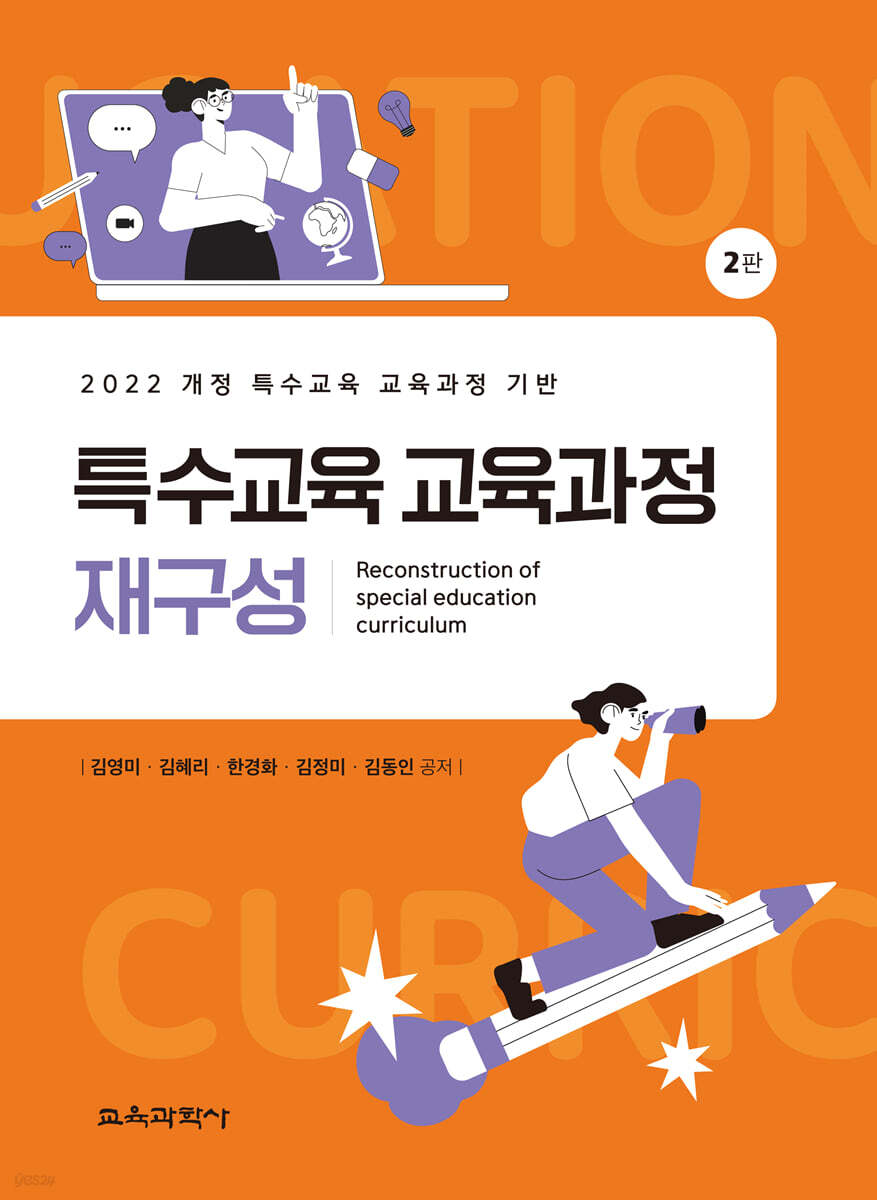
Restructuring the Special Education Curriculum
 |
Description
Book Introduction
As special education develops, the special education curriculum is regularly revised to provide education tailored to the characteristics of each student's disability type and degree.
However, it is true that it is difficult to directly apply the national curriculum to students with disabilities because the types of disabilities are diverse, and the degree and characteristics of disabilities vary greatly depending on the area of disability.
In particular, the current curriculum grants teachers a lot of discretion in organizing and operating the curriculum due to the reflection of the moderate and overlapping disabilities and the strengthening of the curriculum. In addition, the demands of the field, such as the free semester system in middle schools and the full implementation of the high school credit system in high schools, are increasing the burden of curriculum restructuring and responsible guidance on special education teachers.
This book is the first book on special education curriculum reconstruction, written with the purpose of providing theoretical knowledge and practical materials to special education teachers and prospective special education teachers who are experiencing these difficulties.
However, it is true that it is difficult to directly apply the national curriculum to students with disabilities because the types of disabilities are diverse, and the degree and characteristics of disabilities vary greatly depending on the area of disability.
In particular, the current curriculum grants teachers a lot of discretion in organizing and operating the curriculum due to the reflection of the moderate and overlapping disabilities and the strengthening of the curriculum. In addition, the demands of the field, such as the free semester system in middle schools and the full implementation of the high school credit system in high schools, are increasing the burden of curriculum restructuring and responsible guidance on special education teachers.
This book is the first book on special education curriculum reconstruction, written with the purpose of providing theoretical knowledge and practical materials to special education teachers and prospective special education teachers who are experiencing these difficulties.
index
Preface / 2
Part 1: Respond! Restructuring the Special Education Curriculum
Chapter 1 General Introduction to Special Education Curriculum ·································································································· 11
1.
The evolution of special education curriculum and its legal basis ········································11
1) Process of change ·················································································································11
2) Legal basis ····································································································17
2.
Key Contents of the 2022 Revised Special Education Curriculum ·················································19
1) Kindergarten Curriculum ·························································································24
2) Common Curriculum and Elective Curriculum ·······································································25
3) Basic Curriculum ·····························································································28
Chapter 2 2022 Revised Special Education Curriculum Details ························································· 33
1.
Characteristics of the 2022 Revised Special Education Curriculum ···········································33
2.
Key contents of each subject of the basic curriculum ································································36
1) Integrated curriculum: Good living, wise living, happy living ·················································36
2) Korean ··························································································································40
3) Society ·············································································································42
4) Mathematics ·············································································································43
5) Science ·············································································································45
6) Fruits ·············································································································46
7) Career and Occupation ································································································48
8) Physical Education ··························································································································49
9) Music ·············································································································51
10) Art ·······················································································································52
11) Selection: Information and Communication Technology Utilization ················································································53
12) Selection: Daily English ·········································································································54
13) Selection: Health ················································································································55
14) Creative experiential activities ·······················································································57
15) Daily Life Activities ···························································································59
Chapter 3 Curriculum Restructuring Theory and Strategies .......................................................................................... 61
1.
The skills teachers need to restructure the curriculum ·················································65
2.
Types of Curriculum Restructuring ·············································································69
3.
Curriculum Restructuring Theory ···············································································73
1) Distinction between curriculum documents and materials ································································································74
2) Curriculum Restructuring Process ················································································76
3) Curriculum Restructuring Process for Teacher Education Curriculum Development ··································77
4) Reconstruction according to the backward design model ·····························································82
5) Restructuring according to concept-based curriculum design ·································································91
Meet Part 2: Special Education Curriculum Restructuring Classes!
Chapter 1: Restructuring the Curriculum within the Subject ································································································· 107
1.
Sanction-Centered Curriculum Restructuring and Teaching and Learning Design ·················································107
1) Step 1: Select the sanctions to be reconstructed.
···································································108
2) Step 2: Set the purpose and intention of the reconstruction.
··············································109
3) Step 3: Analyze the learner's level.
·····························································109
4) Step 4: Develop a sanctions-centered curriculum thematic network (medium selection) ··············111
5) Step 5: Create a sanction-centered curriculum restructuring and structure table.
···············112
6) Step 6: Create a specific guidance plan centered on sanctions.
·································114
2.
Unit-by-unit curriculum restructuring and teaching/learning design for project-based learning 119
1) Decide on a project topic and create a topic network.
·······················································121
2) Plan and prepare project learning.
···································································123
3) Implement project learning.
···················································································130
Chapter 2: Restructuring the Integrated Curriculum and Designing Teaching and Learning ···································· 137
1.
Restructuring the Curriculum Across Subjects ·······················································································140
1) Learner Level Analysis ·······················································································140
2) Creating a curriculum mind map for topic selection ················································································140
3) Writing reasons for topic selection and reorganization ·············································································141
4) Analysis of thematically related curriculum and unit instruction plan ·····································142
5) Establishment of a reconstructed thematic network and map plan ···············································143
6) "The Feeding Diary of the Large Carp": Reconstructing Content Across Subjects ···········145
7) Preparation and implementation of detailed lesson plans by topic ·················································146
2.
Restructuring the Curriculum Between Subjects and Creative Experiential Activities: Focusing on Human Rights Education... 148
1) Creating a creative experiential activity mind map for topic selection ·················································148
2) Writing the reasons for selecting and reorganizing the topic ················································································150
3) Extracting relevant units by topic and creating a subject-by-topic curriculum structure table ···············151
4) Creating a reconstructed thematic network ··················································································155
5) Analysis of related units and preparation of a reorganization plan ·················································156
6) Preparation and implementation of detailed lesson plans by topic ·················································157
Part 3: Cooking the Special Education Curriculum!!
Chapter 1: Restructuring the Curriculum Based on Achievement Standards ·································································································· 163
1.
The significance of restructuring the curriculum around achievement standards ·················································163
1) Analysis of Achievement Criteria ·······································································································164
2) Achievement standards and evaluation plan ··························································································166
3) Class activity composition ·········································································································168
2.
Restructuring the Curriculum: A Case Study ·················································169
1) Class Characteristics Analysis ···································································································169
2) Analysis of Achievement Criteria ···························································································170
3) Evaluation Plan ·················································································································170
4) Class activity composition ·········································································································171
5) Class execution by period ·································································································172
Chapter 2 Special School Curriculum Based on the Basic Curriculum Achievement Standards ··························· 175
1.
Classification of Achievement Standards by Subject and Grade Level ·································································176
2.
Curriculum (content) planning based on achievement standards ···········································181
3.
Curriculum Evaluation Plan Based on Achievement Standards ·····························································183
4.
Assessment techniques based on achievement criteria ················································································185
5.
Other Considerations for Implementing Teacher Education Curriculum 186
Chapter 3: Major and Class Structure Related to the Environment ····················· 189
1.
Special School Majors and Curriculum 190
1) Curriculum organization and structure ····························································································190
2) Selection of subject (food processing) achievement standards ························191
3) Curriculum (Food Processing) Content System ·································································································193
4) Grade-by-grade subject (food processing) achievement standards and guidance elements ······································195
5) Curriculum for Food Processing ··································································································197
2.
Ecological Transition Education Linked to the Food Processing Curriculum ·················································198
1) Selection of guidance content that meets the achievement standards ·······················································199
2) Ecological Transition Education Teacher Preparation Materials ································································································200
3) Ecological Transition Education Student Presentation Materials ················································································204
3.
Ecological Transition Education Linked Practice Focus ·································································205
Appendix 1: Restructuring the Curriculum for Students with Multiple Disabilities ············· 209
Appendix 2: 2022 Revised Special Education Curriculum Content Structure by Subject ················································· 244
References ····························································································································280
Search ············································································································283
Part 1: Respond! Restructuring the Special Education Curriculum
Chapter 1 General Introduction to Special Education Curriculum ·································································································· 11
1.
The evolution of special education curriculum and its legal basis ········································11
1) Process of change ·················································································································11
2) Legal basis ····································································································17
2.
Key Contents of the 2022 Revised Special Education Curriculum ·················································19
1) Kindergarten Curriculum ·························································································24
2) Common Curriculum and Elective Curriculum ·······································································25
3) Basic Curriculum ·····························································································28
Chapter 2 2022 Revised Special Education Curriculum Details ························································· 33
1.
Characteristics of the 2022 Revised Special Education Curriculum ···········································33
2.
Key contents of each subject of the basic curriculum ································································36
1) Integrated curriculum: Good living, wise living, happy living ·················································36
2) Korean ··························································································································40
3) Society ·············································································································42
4) Mathematics ·············································································································43
5) Science ·············································································································45
6) Fruits ·············································································································46
7) Career and Occupation ································································································48
8) Physical Education ··························································································································49
9) Music ·············································································································51
10) Art ·······················································································································52
11) Selection: Information and Communication Technology Utilization ················································································53
12) Selection: Daily English ·········································································································54
13) Selection: Health ················································································································55
14) Creative experiential activities ·······················································································57
15) Daily Life Activities ···························································································59
Chapter 3 Curriculum Restructuring Theory and Strategies .......................................................................................... 61
1.
The skills teachers need to restructure the curriculum ·················································65
2.
Types of Curriculum Restructuring ·············································································69
3.
Curriculum Restructuring Theory ···············································································73
1) Distinction between curriculum documents and materials ································································································74
2) Curriculum Restructuring Process ················································································76
3) Curriculum Restructuring Process for Teacher Education Curriculum Development ··································77
4) Reconstruction according to the backward design model ·····························································82
5) Restructuring according to concept-based curriculum design ·································································91
Meet Part 2: Special Education Curriculum Restructuring Classes!
Chapter 1: Restructuring the Curriculum within the Subject ································································································· 107
1.
Sanction-Centered Curriculum Restructuring and Teaching and Learning Design ·················································107
1) Step 1: Select the sanctions to be reconstructed.
···································································108
2) Step 2: Set the purpose and intention of the reconstruction.
··············································109
3) Step 3: Analyze the learner's level.
·····························································109
4) Step 4: Develop a sanctions-centered curriculum thematic network (medium selection) ··············111
5) Step 5: Create a sanction-centered curriculum restructuring and structure table.
···············112
6) Step 6: Create a specific guidance plan centered on sanctions.
·································114
2.
Unit-by-unit curriculum restructuring and teaching/learning design for project-based learning 119
1) Decide on a project topic and create a topic network.
·······················································121
2) Plan and prepare project learning.
···································································123
3) Implement project learning.
···················································································130
Chapter 2: Restructuring the Integrated Curriculum and Designing Teaching and Learning ···································· 137
1.
Restructuring the Curriculum Across Subjects ·······················································································140
1) Learner Level Analysis ·······················································································140
2) Creating a curriculum mind map for topic selection ················································································140
3) Writing reasons for topic selection and reorganization ·············································································141
4) Analysis of thematically related curriculum and unit instruction plan ·····································142
5) Establishment of a reconstructed thematic network and map plan ···············································143
6) "The Feeding Diary of the Large Carp": Reconstructing Content Across Subjects ···········145
7) Preparation and implementation of detailed lesson plans by topic ·················································146
2.
Restructuring the Curriculum Between Subjects and Creative Experiential Activities: Focusing on Human Rights Education... 148
1) Creating a creative experiential activity mind map for topic selection ·················································148
2) Writing the reasons for selecting and reorganizing the topic ················································································150
3) Extracting relevant units by topic and creating a subject-by-topic curriculum structure table ···············151
4) Creating a reconstructed thematic network ··················································································155
5) Analysis of related units and preparation of a reorganization plan ·················································156
6) Preparation and implementation of detailed lesson plans by topic ·················································157
Part 3: Cooking the Special Education Curriculum!!
Chapter 1: Restructuring the Curriculum Based on Achievement Standards ·································································································· 163
1.
The significance of restructuring the curriculum around achievement standards ·················································163
1) Analysis of Achievement Criteria ·······································································································164
2) Achievement standards and evaluation plan ··························································································166
3) Class activity composition ·········································································································168
2.
Restructuring the Curriculum: A Case Study ·················································169
1) Class Characteristics Analysis ···································································································169
2) Analysis of Achievement Criteria ···························································································170
3) Evaluation Plan ·················································································································170
4) Class activity composition ·········································································································171
5) Class execution by period ·································································································172
Chapter 2 Special School Curriculum Based on the Basic Curriculum Achievement Standards ··························· 175
1.
Classification of Achievement Standards by Subject and Grade Level ·································································176
2.
Curriculum (content) planning based on achievement standards ···········································181
3.
Curriculum Evaluation Plan Based on Achievement Standards ·····························································183
4.
Assessment techniques based on achievement criteria ················································································185
5.
Other Considerations for Implementing Teacher Education Curriculum 186
Chapter 3: Major and Class Structure Related to the Environment ····················· 189
1.
Special School Majors and Curriculum 190
1) Curriculum organization and structure ····························································································190
2) Selection of subject (food processing) achievement standards ························191
3) Curriculum (Food Processing) Content System ·································································································193
4) Grade-by-grade subject (food processing) achievement standards and guidance elements ······································195
5) Curriculum for Food Processing ··································································································197
2.
Ecological Transition Education Linked to the Food Processing Curriculum ·················································198
1) Selection of guidance content that meets the achievement standards ·······················································199
2) Ecological Transition Education Teacher Preparation Materials ································································································200
3) Ecological Transition Education Student Presentation Materials ················································································204
3.
Ecological Transition Education Linked Practice Focus ·································································205
Appendix 1: Restructuring the Curriculum for Students with Multiple Disabilities ············· 209
Appendix 2: 2022 Revised Special Education Curriculum Content Structure by Subject ················································· 244
References ····························································································································280
Search ············································································································283
GOODS SPECIFICS
- Date of issue: February 28, 2024
- Page count, weight, size: 288 pages | 188*257*20mm
- ISBN13: 9788925418674
- ISBN10: 8925418673
You may also like
카테고리
korean


korean

![GQ KOREA Mark (Monthly): December [2025]](http://librairie.coreenne.fr/cdn/shop/files/8ef265dbbfbf186523ed75ba7319009d.jpg?v=1765340328&width=3840)


