

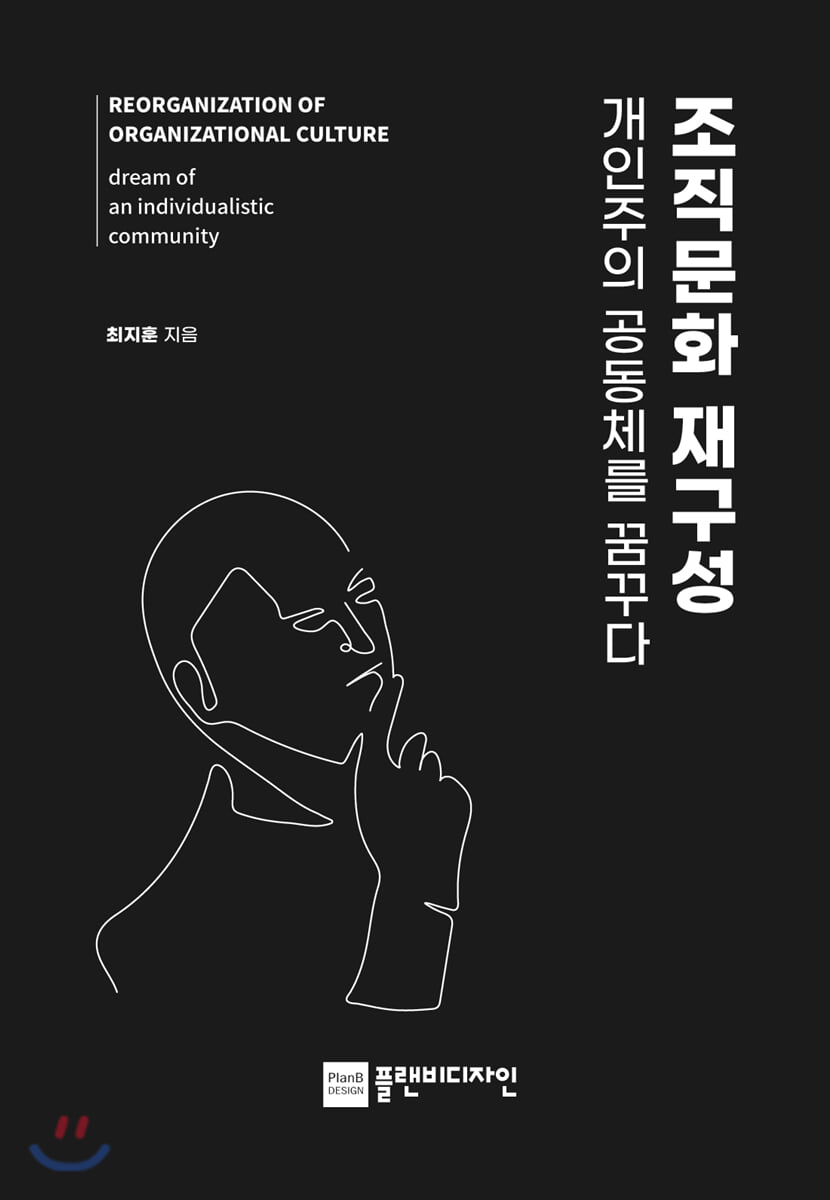
Restructuring organizational culture and dreaming of an individualistic community
 |
Description
Book Introduction
Why is it so difficult to create a good organizational culture?
Questions like these were the starting point for this book.
"Reconstructing Organizational Culture, Dreaming of an Individualistic Community" discusses how a group can move beyond the organization and become a community, and what is needed to create an organization that is truly our own while fostering individual identity within the organization.
How can individuals exist fully within an organization? And how can a fully intact organization be created? Meanwhile, what factors hinder fully intactness? What does an organizational culture where fully intactness prevails look like?
Before considering "agile" and a "horizontal organizational culture," we explore what fundamentally needs to be considered, how individuals exist within an organization, and what must be considered to overcome numerous limitations and restrictions and create a complete organizational culture.
In today's world, where individuals are experiencing alienation and isolation beyond the separation between individuals within organizations, this book presents a necessary alternative for individuals and organizations.
I would like to talk with leaders and members of any organization who are concerned about individual and organizational growth.
It can be a particularly useful guide for organizational culture, human resources/training, and internal communications personnel.
Questions like these were the starting point for this book.
"Reconstructing Organizational Culture, Dreaming of an Individualistic Community" discusses how a group can move beyond the organization and become a community, and what is needed to create an organization that is truly our own while fostering individual identity within the organization.
How can individuals exist fully within an organization? And how can a fully intact organization be created? Meanwhile, what factors hinder fully intactness? What does an organizational culture where fully intactness prevails look like?
Before considering "agile" and a "horizontal organizational culture," we explore what fundamentally needs to be considered, how individuals exist within an organization, and what must be considered to overcome numerous limitations and restrictions and create a complete organizational culture.
In today's world, where individuals are experiencing alienation and isolation beyond the separation between individuals within organizations, this book presents a necessary alternative for individuals and organizations.
I would like to talk with leaders and members of any organization who are concerned about individual and organizational growth.
It can be a particularly useful guide for organizational culture, human resources/training, and internal communications personnel.
- You can preview some of the book's contents.
Preview
index
prolog
Recommended article
Part 1.
From profit-seeking to neighbor-seeking
The fallacy of management and organizational objectives
From profit-seeking to neighbor-seeking
Love Needed in Organizations: Discernment
Idols within the organization
Why it is difficult for individuals to decide on their actions within an organization
On wholeness and authenticity
The development and evolution of organizations that foster individuality
Independence required for an organization
A Difference in Creating a Great Workplace Culture
Like a True Effective Follower: Types of Followers
Where does passivity within organizations come from?
Types of Leaders Inspired by Conversations with Colleagues
[Ending Part 1] On the Path from Pursuit of Profit to Pursuit of Neighbor
Part 2.
Beyond the organization to the community
Self-identity for a complete organization
An organizational culture built on individuality
Conditions for a company to become 'our company'
Characteristics of a complete community
If you think that 'it is difficult for a corporate organization to become a community'
If you don't want to talk to people from the same company
How Psychological Safety Is Created: The Organizational Culture Cycle
I agree, but I don't agree.
Organizational culture is the way its members exist.
The assumptions of a true community: conscious management and synergy.
What it takes to become a synergistic community
For the completion of a true community
[Ending Part 2] On the road from organization to community
Epilogue
References
Recommended article
Part 1.
From profit-seeking to neighbor-seeking
The fallacy of management and organizational objectives
From profit-seeking to neighbor-seeking
Love Needed in Organizations: Discernment
Idols within the organization
Why it is difficult for individuals to decide on their actions within an organization
On wholeness and authenticity
The development and evolution of organizations that foster individuality
Independence required for an organization
A Difference in Creating a Great Workplace Culture
Like a True Effective Follower: Types of Followers
Where does passivity within organizations come from?
Types of Leaders Inspired by Conversations with Colleagues
[Ending Part 1] On the Path from Pursuit of Profit to Pursuit of Neighbor
Part 2.
Beyond the organization to the community
Self-identity for a complete organization
An organizational culture built on individuality
Conditions for a company to become 'our company'
Characteristics of a complete community
If you think that 'it is difficult for a corporate organization to become a community'
If you don't want to talk to people from the same company
How Psychological Safety Is Created: The Organizational Culture Cycle
I agree, but I don't agree.
Organizational culture is the way its members exist.
The assumptions of a true community: conscious management and synergy.
What it takes to become a synergistic community
For the completion of a true community
[Ending Part 2] On the road from organization to community
Epilogue
References
Detailed image
Into the book
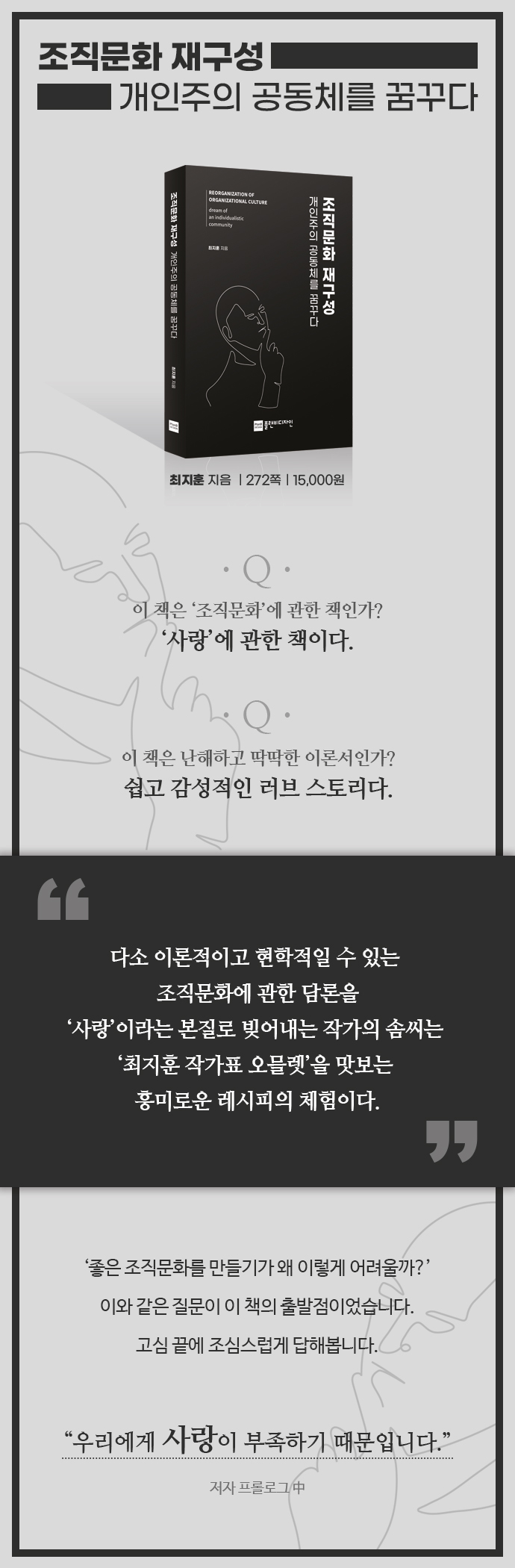
Management is a pursuit of value in itself, and its purpose is to create good relationships.
Soon, the goal of management will be to be a 'good neighbor'.
--- p.29
Hide-and-seek within an organization is a phenomenon in which individuals responsible for decision-making hide within the organization.
When a decision is wrong and causes discomfort within the organization, we shout, “It wasn’t me, it was the organization!”
'I couldn't help it because I was told to do it.
'Circumstances made it so.' They shift responsibility, claiming that it was not their intention.
When an organization is filled with highly dependent members, this hide-and-seek phenomenon occurs and the organizational culture falls into disarray.
--- p.50
Believing that only others have the power to control one's actions, without recognizing one's own power to think and decide for oneself.
Idolization of people, especially leaders within organizations, has become a common occurrence in our daily lives.
--- p.67
Maintaining your authenticity means maintaining your original identity.
Within the organization, we embrace various constraints and contradictions, and create alternatives by resolutely choosing our own thoughts and actions.
Rather than giving up freedom and lowering your own self-worth by choosing to become self-dependent, you properly enjoy the freedom given to you through your own independent thinking and power.
--- p.105
Because society is different from home, and because society demands different norms than home, we wear the mask of another role and go to work, existing in a way that is not true to ourselves.
Of course, organizations and homes cannot be the same in every way.
The relationship between family members who are tightly bound by blood and members of an organization who are loosely intertwined around work cannot be the same.
But what I want to point out is that it is an environment where one cannot help but split one's ego due to external pressure.
The difference between an organization and a home is a difference in role, not a difference in existence.
--- p.163
If power is a specific force that is used only on others, authority is the power to move others that is also used on me.
Power breeds compliance, authority breeds commitment.
Soon, the goal of management will be to be a 'good neighbor'.
--- p.29
Hide-and-seek within an organization is a phenomenon in which individuals responsible for decision-making hide within the organization.
When a decision is wrong and causes discomfort within the organization, we shout, “It wasn’t me, it was the organization!”
'I couldn't help it because I was told to do it.
'Circumstances made it so.' They shift responsibility, claiming that it was not their intention.
When an organization is filled with highly dependent members, this hide-and-seek phenomenon occurs and the organizational culture falls into disarray.
--- p.50
Believing that only others have the power to control one's actions, without recognizing one's own power to think and decide for oneself.
Idolization of people, especially leaders within organizations, has become a common occurrence in our daily lives.
--- p.67
Maintaining your authenticity means maintaining your original identity.
Within the organization, we embrace various constraints and contradictions, and create alternatives by resolutely choosing our own thoughts and actions.
Rather than giving up freedom and lowering your own self-worth by choosing to become self-dependent, you properly enjoy the freedom given to you through your own independent thinking and power.
--- p.105
Because society is different from home, and because society demands different norms than home, we wear the mask of another role and go to work, existing in a way that is not true to ourselves.
Of course, organizations and homes cannot be the same in every way.
The relationship between family members who are tightly bound by blood and members of an organization who are loosely intertwined around work cannot be the same.
But what I want to point out is that it is an environment where one cannot help but split one's ego due to external pressure.
The difference between an organization and a home is a difference in role, not a difference in existence.
--- p.163
If power is a specific force that is used only on others, authority is the power to move others that is also used on me.
Power breeds compliance, authority breeds commitment.
--- p.240
Publisher's Review
We all have a desire to work in a place with a good organizational culture.
The importance of organizational culture is also increasingly emphasized.
However, it is still difficult to talk about what organizational culture is, what kind of organizational culture is needed, and what kind of organizational culture should be formed.
Author Ji-Hoon Choi's book, "Reconstructing Organizational Culture, Dreaming of an Individualistic Community," is a book that answers these contemporary demands.
Author Ji-Hoon Choi, who has already shared profound insights into the nuances of organizational culture through "So, Internal Branding," delves a little deeper into the topic of "organizational culture."
The author explains the discourse on organizational culture, which can be somewhat theoretical and esoteric, by shaping it into the essence of 'love.'
The importance of organizational culture is also increasingly emphasized.
However, it is still difficult to talk about what organizational culture is, what kind of organizational culture is needed, and what kind of organizational culture should be formed.
Author Ji-Hoon Choi's book, "Reconstructing Organizational Culture, Dreaming of an Individualistic Community," is a book that answers these contemporary demands.
Author Ji-Hoon Choi, who has already shared profound insights into the nuances of organizational culture through "So, Internal Branding," delves a little deeper into the topic of "organizational culture."
The author explains the discourse on organizational culture, which can be somewhat theoretical and esoteric, by shaping it into the essence of 'love.'
GOODS SPECIFICS
- Date of issue: March 31, 2020
- Page count, weight, size: 272 pages | 356g | 130*188*17mm
- ISBN13: 9791189580285
- ISBN10: 1189580284
You may also like
카테고리
korean


korean

![GQ KOREA Mark (Monthly): December [2025]](http://librairie.coreenne.fr/cdn/shop/files/8ef265dbbfbf186523ed75ba7319009d.jpg?v=1765340328&width=3840)


