

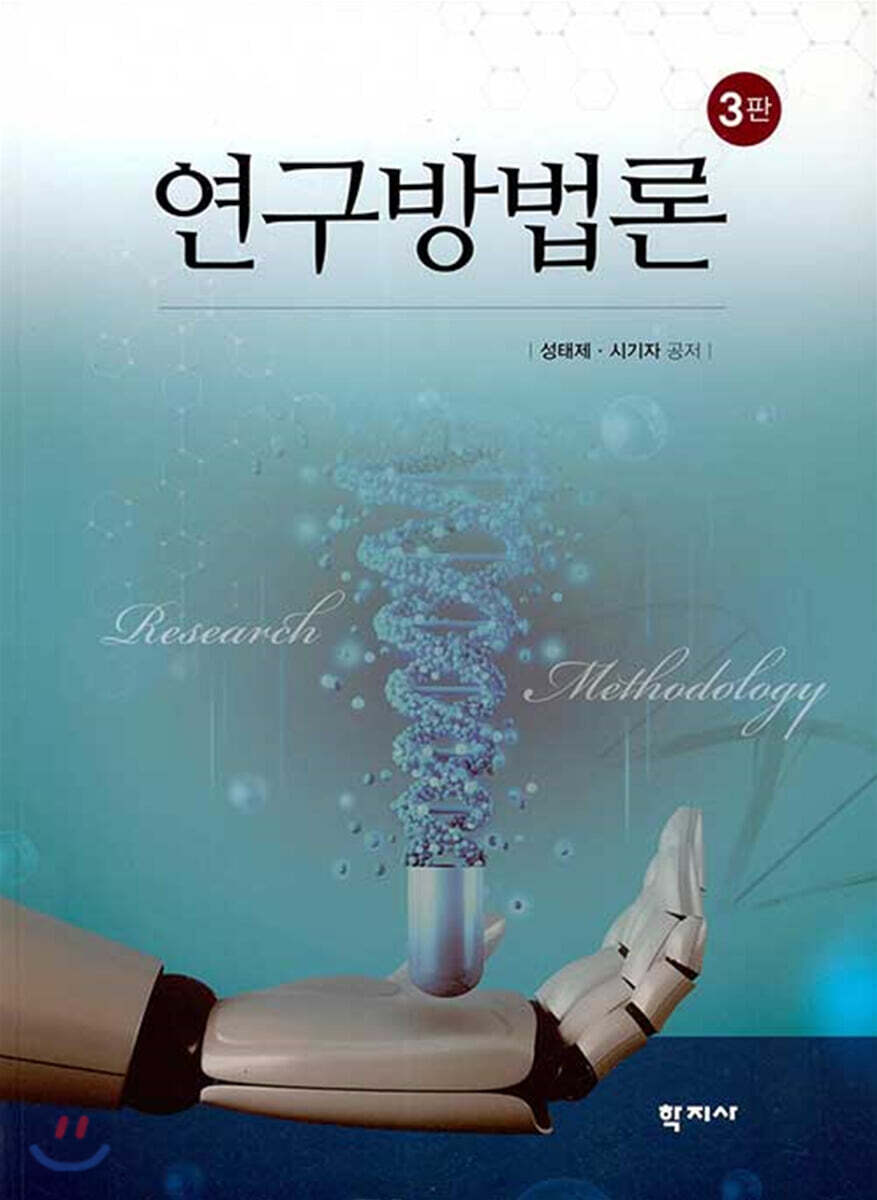
Research methodology
 |
Description
Book Introduction
The most significant feature of this book is that it provides an introduction to the basic structure of a dissertation, and provides a variety of examples of research questions, analysis methods, and results writing, focusing on research methods frequently used in dissertation writing so that researchers can easily understand and utilize them.
In particular, we attempted to increase researchers' understanding of statistical analysis by providing examples in conjunction with 『Easy-to-Understand Statistical Analysis』, which introduces how to use statistical analysis programs such as SPSS, AMOS, and jamovi.
In particular, we attempted to increase researchers' understanding of statistical analysis by providing examples in conjunction with 『Easy-to-Understand Statistical Analysis』, which introduces how to use statistical analysis programs such as SPSS, AMOS, and jamovi.
index
Part 1: Science and Research
Chapter 1.
Science and Research
Chapter 2.
Type of research
Part 2 Research Topics and Subjects
Chapter 3.
Research topic
Chapter 4.
Research plan
Chapter 5.
Literature review
Chapter 6.
Research subjects
Part 3 Measurement and Inspection
Chapter 7.
measurement
Chapter 8.
test
Chapter 9.
Validity
Chapter 10.
Reliability
Part 4 Research Methods
Chapter 11.
Research
Chapter 12.
Experimental research
Chapter 13.
observational study
Part 5: Statistics and Data Analysis
Chapter 14.
Basic Concepts of Statistics for Research
Chapter 15.
Statistical methods for group comparison
Chapter 16.
Statistical methods for relationship analysis
Chapter 17.
Data analysis procedure
Part 6: Writing and Evaluation of Research Reports
Chapter 18.
Research report
Chapter 19.
Evaluation of research and publication and presentation of papers
Chapter 20.
Research and Researcher Ethics
Chapter 21.
The structure and writing method of the thesis
Chapter 1.
Science and Research
Chapter 2.
Type of research
Part 2 Research Topics and Subjects
Chapter 3.
Research topic
Chapter 4.
Research plan
Chapter 5.
Literature review
Chapter 6.
Research subjects
Part 3 Measurement and Inspection
Chapter 7.
measurement
Chapter 8.
test
Chapter 9.
Validity
Chapter 10.
Reliability
Part 4 Research Methods
Chapter 11.
Research
Chapter 12.
Experimental research
Chapter 13.
observational study
Part 5: Statistics and Data Analysis
Chapter 14.
Basic Concepts of Statistics for Research
Chapter 15.
Statistical methods for group comparison
Chapter 16.
Statistical methods for relationship analysis
Chapter 17.
Data analysis procedure
Part 6: Writing and Evaluation of Research Reports
Chapter 18.
Research report
Chapter 19.
Evaluation of research and publication and presentation of papers
Chapter 20.
Research and Researcher Ethics
Chapter 21.
The structure and writing method of the thesis
Publisher's Review
The most significant feature of this book is that it provides an introduction to the basic structure of a dissertation, and provides a variety of examples of research questions, analysis methods, and results writing, focusing on research methods frequently used in dissertation writing so that researchers can easily understand and utilize them.
In particular, we attempted to increase researchers' understanding of statistical analysis by providing examples in conjunction with 『Easy-to-Understand Statistical Analysis』, which introduces how to use statistical analysis programs such as SPSS, AMOS, and jamovi.
『Research Methodology』 consists of 6 parts and 21 chapters.
Part 1 is about science and research, Part 2 is about research topics and subjects, Part 3 is about measurement and testing, Part 4 is about research methods, Part 5 is about statistics and data analysis, and Part 6 is about writing and evaluating research reports.
Part 2 covers exploring research questions, writing a research plan, literature review for research, and sampling methods for selecting research subjects.
Part 3 covers measurement and testing to identify the characteristics of the research subject, validity and reliability to verify the quality of the test tool, and intra- and inter-observer reliability.
Part 4 explains research methods such as survey research, experimental research, and observational research. Part 5 deals with statistical methods according to research problems, covering basic statistical concepts, statistical methods for group comparison methods, statistical methods for relationship analysis, and data analysis procedures.
In particular, when explaining each statistical method, not only the basic concepts but also the method of reporting the analysis results through examples were presented.
Part 6 covers writing research reports, evaluating research and publishing papers, research and researcher ethics, and the structure and writing of papers.
Chapter 20, Research and Researcher Ethics, presents the ethical standards of the American academic community, federal government, and domestic research institutions, including AERA (2011) and APA (2017). Chapter 21 explains the editing of papers by referring to the paper writing guidelines published by APA (2019).
The major revisions to the 3rd edition are as follows:
Chapter 5 updates the features of domestic and international literature search sites and provided materials, and Chapter 7 updates the list of domestic and international standardized tests and their main features.
Chapter 11 adds research trends in big data analysis to effectively utilize the vast amount of data of various types being explosively generated in the digital environment.
Chapter 20 updates the research ethics regulations of domestic and international research institutions and adds content on the Institutional Review Board (IRB) related to bioethics protection, which has recently become an issue. Chapter 17 and [Appendix] update the SPSS analysis examples to version 26.0 and add data analysis procedures using the jamovi program, which is available to researchers for free.
In Chapter 21, the principles of paper writing are supplemented based on the contents of the 7th edition of APA (2019).
In particular, we attempted to increase researchers' understanding of statistical analysis by providing examples in conjunction with 『Easy-to-Understand Statistical Analysis』, which introduces how to use statistical analysis programs such as SPSS, AMOS, and jamovi.
『Research Methodology』 consists of 6 parts and 21 chapters.
Part 1 is about science and research, Part 2 is about research topics and subjects, Part 3 is about measurement and testing, Part 4 is about research methods, Part 5 is about statistics and data analysis, and Part 6 is about writing and evaluating research reports.
Part 2 covers exploring research questions, writing a research plan, literature review for research, and sampling methods for selecting research subjects.
Part 3 covers measurement and testing to identify the characteristics of the research subject, validity and reliability to verify the quality of the test tool, and intra- and inter-observer reliability.
Part 4 explains research methods such as survey research, experimental research, and observational research. Part 5 deals with statistical methods according to research problems, covering basic statistical concepts, statistical methods for group comparison methods, statistical methods for relationship analysis, and data analysis procedures.
In particular, when explaining each statistical method, not only the basic concepts but also the method of reporting the analysis results through examples were presented.
Part 6 covers writing research reports, evaluating research and publishing papers, research and researcher ethics, and the structure and writing of papers.
Chapter 20, Research and Researcher Ethics, presents the ethical standards of the American academic community, federal government, and domestic research institutions, including AERA (2011) and APA (2017). Chapter 21 explains the editing of papers by referring to the paper writing guidelines published by APA (2019).
The major revisions to the 3rd edition are as follows:
Chapter 5 updates the features of domestic and international literature search sites and provided materials, and Chapter 7 updates the list of domestic and international standardized tests and their main features.
Chapter 11 adds research trends in big data analysis to effectively utilize the vast amount of data of various types being explosively generated in the digital environment.
Chapter 20 updates the research ethics regulations of domestic and international research institutions and adds content on the Institutional Review Board (IRB) related to bioethics protection, which has recently become an issue. Chapter 17 and [Appendix] update the SPSS analysis examples to version 26.0 and add data analysis procedures using the jamovi program, which is available to researchers for free.
In Chapter 21, the principles of paper writing are supplemented based on the contents of the 7th edition of APA (2019).
GOODS SPECIFICS
- Publication date: March 10, 2020
- Page count, weight, size: 524 pages | 1,062g | 188*255*35mm
- ISBN13: 9788999720383
- ISBN10: 8999720381
You may also like
카테고리
korean


korean

![GQ KOREA Mark (Monthly): December [2025]](http://librairie.coreenne.fr/cdn/shop/files/8ef265dbbfbf186523ed75ba7319009d.jpg?v=1765340328&width=3840)


