

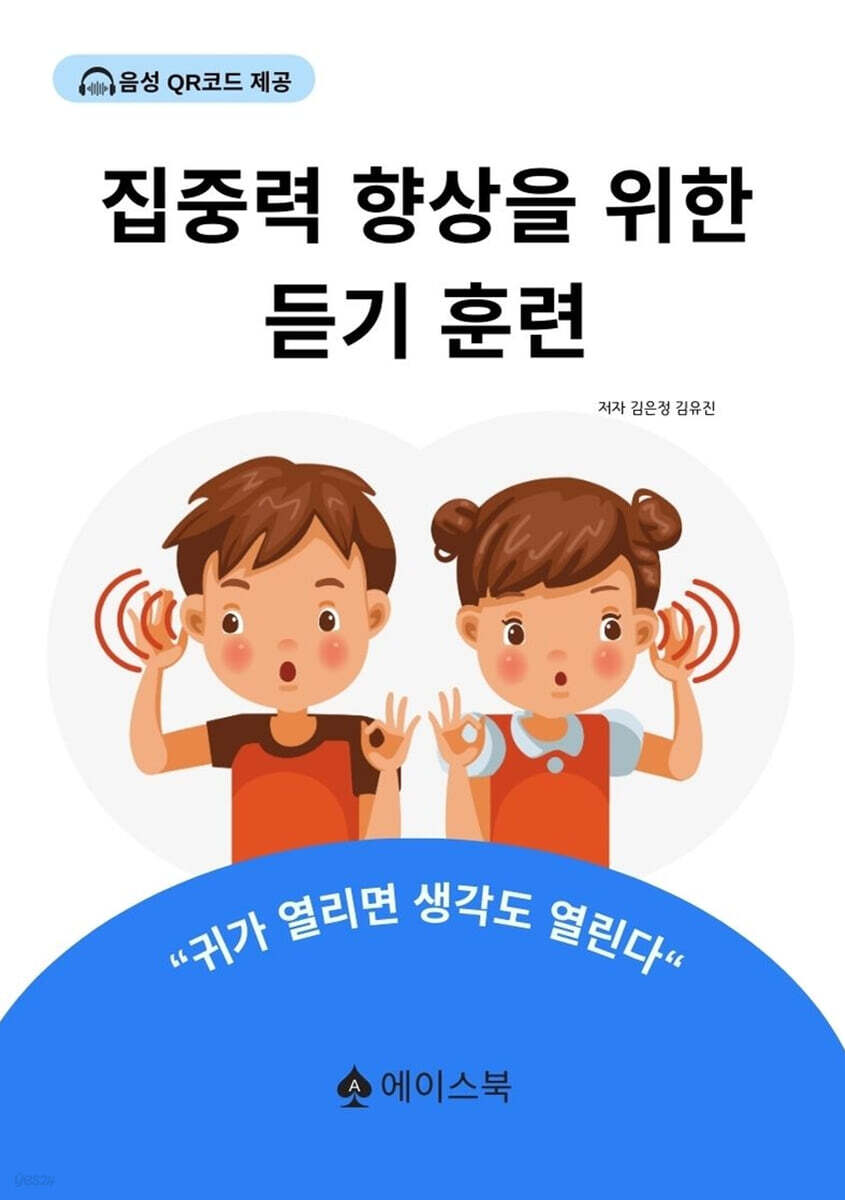
Listening exercises to improve concentration
 |
Description
Book Introduction
‘Listening’ is the starting point of language ability and the core of learning ability.
Language is broadly divided into expressive and receptive language, and among them, 'listening' is the most basic form of receptive language.
Preschool and early elementary school children, in particular, are at a developmental stage where they rely more on auditory language input than written language.
Listening skills during this period are not limited to language skills, but also serve as the foundation for various cognitive abilities such as attention, memory, thinking, and problem-solving skills.
However, in everyday life, children do not have many opportunities to intentionally practice auditory concentration.
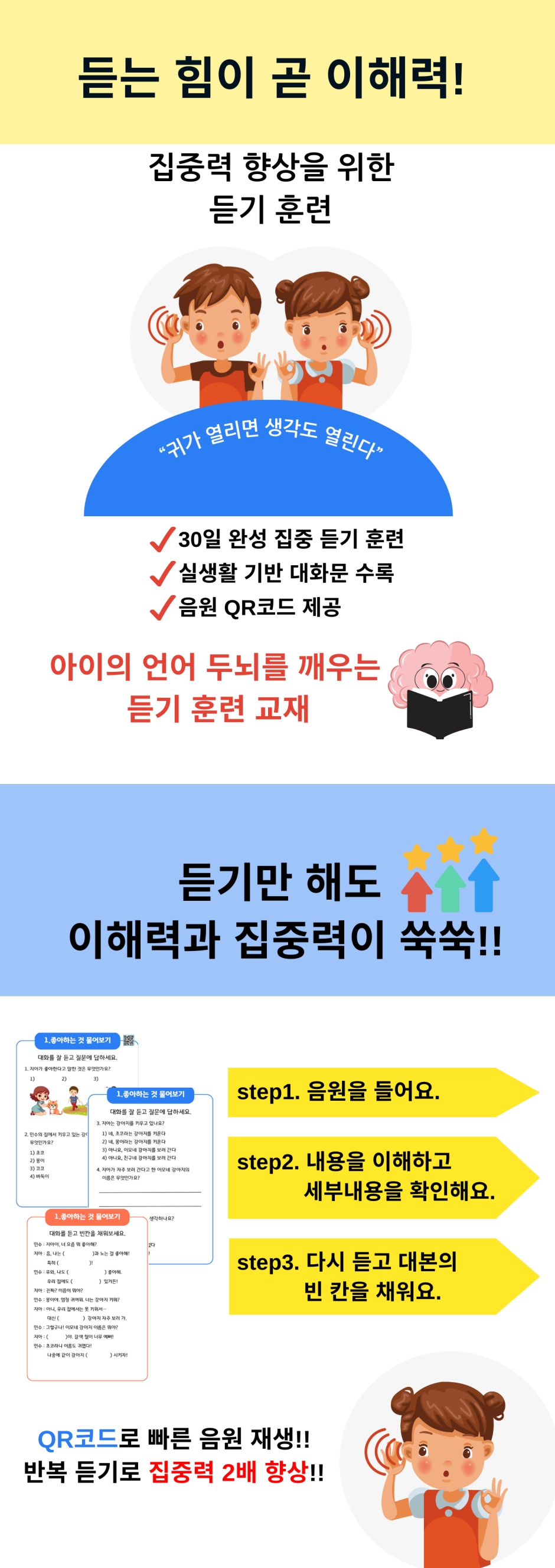
Based on these needs, this textbook was developed to enable children to repeatedly practice the entire process of focusing on auditory stimuli, structuring and understanding the content, and solving problems.
Language is broadly divided into expressive and receptive language, and among them, 'listening' is the most basic form of receptive language.
Preschool and early elementary school children, in particular, are at a developmental stage where they rely more on auditory language input than written language.
Listening skills during this period are not limited to language skills, but also serve as the foundation for various cognitive abilities such as attention, memory, thinking, and problem-solving skills.
However, in everyday life, children do not have many opportunities to intentionally practice auditory concentration.
Based on these needs, this textbook was developed to enable children to repeatedly practice the entire process of focusing on auditory stimuli, structuring and understanding the content, and solving problems.
index
1.
Ask what they like ------------------6
2.
Expressing gratitude -----------------------9
3.
Congratulations --------------------------12
4.
Making weekend plans ----------------------15
5.
Words of Praise --------------------------18
6.
Encouraging Words ---------------------------21
7.
Reconciliation -----------------------------24
8.
Conversation on the way home from school ----------------------------27
9.
Refusing a request -------------------------30
10.
Questions and Answers ----------------------33
11.
Riddle -----------------------------36
12.
Twenty Questions -------------------------39
13.
Ask about supplies ----------------------43
14.
Introduce yourself -------------------------46
15.
Receive congratulations ----------------------------49
16.
Message -----------------------------53
17.
Event Information ----------------------------57
18.
Classroom Change Notice ------------------------60
19.
Announcement of the closing ceremony --------------------------63
20.
Graduation Ceremony Information --------------------------66
21.
Explaining an Argument with a Friend ------------------70
22.
Borrowing Items --------------------------74
23.
Classroom Guide ------------------------77
24.
Waste separation -----------------------------81
25.
Music Time -----------------------------85
26.
Guiding you to the faculty office -----------------------88
27.
Announcement -----------------------------91
28.
Explaining Anxiety -------------------95
29.
Go to the infirmary ---------------------------99
30.
Setting a meeting place ---------------------- 103
31.
Choosing a mode of transportation ----------------------106
32.
Taking the bus ------------------------110
33.
Taking the train ------------------------114
34.
Using an airplane ----------------------118
35.
Transferring to the subway ----------------------122
36.
Using a gas station ----------------------126
37.
Using a car wash ----------------------130
38.
Tour Schedule ----------------------------134
39.
Packing Your Supplies ------------------------137
40.
Building Our Neighborhood ----------------------141
41.
Apologize -----------------------------144
42.
Notes -----------------------------147
43.
Butterflies and Moths --------------------------151
44.
Rose of Sharon and Taegeukgi ----------------------155
45.
Olympics -------------------------------158
46.
Vietnamese Clothing and Food --------------------161
47.
Korean Clothing and Food ----------------------165
48.
Making an appointment -----------------------------169
49.
Ride Description 1 -----------------------172
50.
Lost ------------------------176
51.
Mia Announcement -------------------------179
52.
Ride Description 2 -----------------------182
53.
Weather Forecast -----------------------------186
54.
Choosing a Snack --------------------------189
55.
Zoo ------------------------------192
56.
Find a Ride ------------------------196
57.
Share your thoughts ---------------------------199
58.
Invitation to our house --------------------------203
59.
Movie Plot --------------------------207
60.
Hospital Reception ----------------------------210
Script book --------------------------------------------------214
Ask what they like ------------------6
2.
Expressing gratitude -----------------------9
3.
Congratulations --------------------------12
4.
Making weekend plans ----------------------15
5.
Words of Praise --------------------------18
6.
Encouraging Words ---------------------------21
7.
Reconciliation -----------------------------24
8.
Conversation on the way home from school ----------------------------27
9.
Refusing a request -------------------------30
10.
Questions and Answers ----------------------33
11.
Riddle -----------------------------36
12.
Twenty Questions -------------------------39
13.
Ask about supplies ----------------------43
14.
Introduce yourself -------------------------46
15.
Receive congratulations ----------------------------49
16.
Message -----------------------------53
17.
Event Information ----------------------------57
18.
Classroom Change Notice ------------------------60
19.
Announcement of the closing ceremony --------------------------63
20.
Graduation Ceremony Information --------------------------66
21.
Explaining an Argument with a Friend ------------------70
22.
Borrowing Items --------------------------74
23.
Classroom Guide ------------------------77
24.
Waste separation -----------------------------81
25.
Music Time -----------------------------85
26.
Guiding you to the faculty office -----------------------88
27.
Announcement -----------------------------91
28.
Explaining Anxiety -------------------95
29.
Go to the infirmary ---------------------------99
30.
Setting a meeting place ---------------------- 103
31.
Choosing a mode of transportation ----------------------106
32.
Taking the bus ------------------------110
33.
Taking the train ------------------------114
34.
Using an airplane ----------------------118
35.
Transferring to the subway ----------------------122
36.
Using a gas station ----------------------126
37.
Using a car wash ----------------------130
38.
Tour Schedule ----------------------------134
39.
Packing Your Supplies ------------------------137
40.
Building Our Neighborhood ----------------------141
41.
Apologize -----------------------------144
42.
Notes -----------------------------147
43.
Butterflies and Moths --------------------------151
44.
Rose of Sharon and Taegeukgi ----------------------155
45.
Olympics -------------------------------158
46.
Vietnamese Clothing and Food --------------------161
47.
Korean Clothing and Food ----------------------165
48.
Making an appointment -----------------------------169
49.
Ride Description 1 -----------------------172
50.
Lost ------------------------176
51.
Mia Announcement -------------------------179
52.
Ride Description 2 -----------------------182
53.
Weather Forecast -----------------------------186
54.
Choosing a Snack --------------------------189
55.
Zoo ------------------------------192
56.
Find a Ride ------------------------196
57.
Share your thoughts ---------------------------199
58.
Invitation to our house --------------------------203
59.
Movie Plot --------------------------207
60.
Hospital Reception ----------------------------210
Script book --------------------------------------------------214
Detailed image
Publisher's Review
Listening is the starting point of language ability and the core of learning ability.
Language is broadly divided into expressive and receptive language, and among them, 'listening' is the most basic form of receptive language.
Preschool and early elementary school children, in particular, are at a developmental stage where they rely more on auditory language input than on written language.
Listening skills at this age are not limited to language skills, but also serve as the foundation for various cognitive abilities such as attention, memory, thinking, and problem-solving skills.
Auditory attention is a key component of listening skills.
This is not simply 'listening to sounds', but rather a series of cognitive processes that involve selectively paying attention to specific sounds, sustaining focus, and understanding their meaning.
With the recent increase in learning problems related to attention deficit disorder, the fields of educational psychology and speech therapy are emphasizing the importance of auditory attention training, and numerous studies have reported that auditory stimulation and training are essential, especially for children with delayed language development and difficulties learning to read and write.
However, in everyday life, children rarely have the opportunity to intentionally practice auditory concentration. With visual content like TV and YouTube becoming the primary source of information, children are not accustomed to activities that involve listening, understanding, and responding to sounds.
As a result, there is a growing decline in the ability to listen to and understand teachers' explanations at school, to listen to questions and grasp the main points, and to structure and remember content from conversations with friends.
Based on these needs, this textbook was developed to enable children to repeatedly practice the entire process of focusing on auditory stimuli, structuring and understanding the content, and solving problems.
It is a complex cognitive activity that involves receiving, interpreting, and constructing meaning from auditory information, and is a core ability that forms the basis of childhood learning.
I hope this textbook will serve as a tool that goes beyond simple listening practice for children, helping them develop concentration, comprehension, and problem-solving skills.
This will enable children to communicate and learn more effectively not only in school life, but also in social relationships and everyday communication.
Kim Eun-jung, Kim Yu-jin
Language is broadly divided into expressive and receptive language, and among them, 'listening' is the most basic form of receptive language.
Preschool and early elementary school children, in particular, are at a developmental stage where they rely more on auditory language input than on written language.
Listening skills at this age are not limited to language skills, but also serve as the foundation for various cognitive abilities such as attention, memory, thinking, and problem-solving skills.
Auditory attention is a key component of listening skills.
This is not simply 'listening to sounds', but rather a series of cognitive processes that involve selectively paying attention to specific sounds, sustaining focus, and understanding their meaning.
With the recent increase in learning problems related to attention deficit disorder, the fields of educational psychology and speech therapy are emphasizing the importance of auditory attention training, and numerous studies have reported that auditory stimulation and training are essential, especially for children with delayed language development and difficulties learning to read and write.
However, in everyday life, children rarely have the opportunity to intentionally practice auditory concentration. With visual content like TV and YouTube becoming the primary source of information, children are not accustomed to activities that involve listening, understanding, and responding to sounds.
As a result, there is a growing decline in the ability to listen to and understand teachers' explanations at school, to listen to questions and grasp the main points, and to structure and remember content from conversations with friends.
Based on these needs, this textbook was developed to enable children to repeatedly practice the entire process of focusing on auditory stimuli, structuring and understanding the content, and solving problems.
It is a complex cognitive activity that involves receiving, interpreting, and constructing meaning from auditory information, and is a core ability that forms the basis of childhood learning.
I hope this textbook will serve as a tool that goes beyond simple listening practice for children, helping them develop concentration, comprehension, and problem-solving skills.
This will enable children to communicate and learn more effectively not only in school life, but also in social relationships and everyday communication.
Kim Eun-jung, Kim Yu-jin
GOODS SPECIFICS
- Date of issue: May 7, 2025
- Page count, weight, size: 247 pages | 210*297*20mm
- ISBN13: 9791198843081
- ISBN10: 119884308X
You may also like
카테고리
korean


korean

![ELLE 엘르 스페셜 에디션 A형 : 12월 [2025]](http://librairie.coreenne.fr/cdn/shop/files/b8e27a3de6c9538896439686c6b0e8fb.jpg?v=1766436872&width=3840)


