

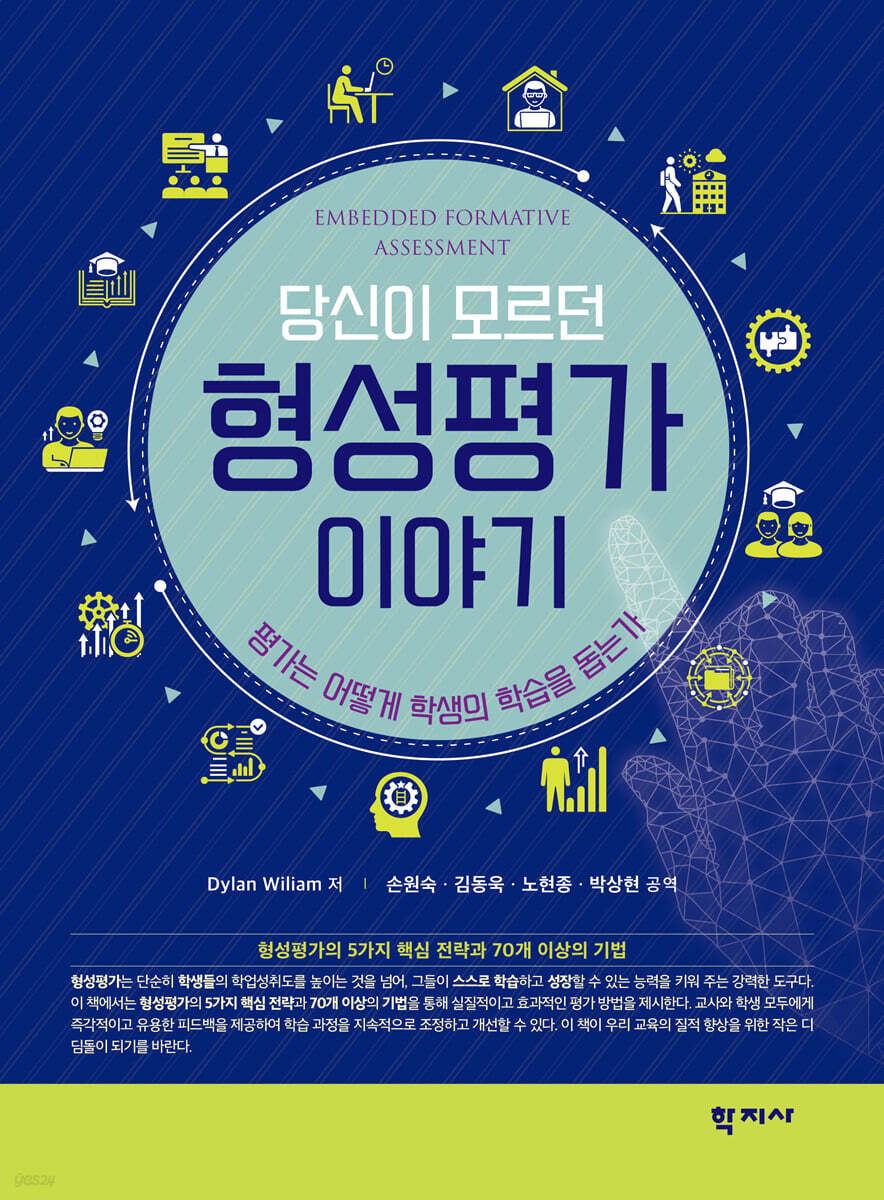
The Story of Formative Assessment You Didn't Know About
 |
Description
Book Introduction
"The Story of Formative Assessment You Didn't Know" redefines assessment as a process that helps learning, rather than a score-centered outcome measurement.
It covers the core concepts and necessity of formative assessment and provides 70 strategies that can be applied in actual classes.
It is structured around five core strategies: setting learning goals and achievement standards, formulating effective questions, providing appropriate feedback, encouraging collaboration among students, and promoting self-directed learning.
It covers the core concepts and necessity of formative assessment and provides 70 strategies that can be applied in actual classes.
It is structured around five core strategies: setting learning goals and achievement standards, formulating effective questions, providing appropriate feedback, encouraging collaboration among students, and promoting self-directed learning.
index
Translator's Preface
Author's Preface
Chapter 1: Why Academic Achievement Matters
1.
The importance of academic achievement
2.
Difficulties in improving academic achievement
3.
A Study of School Effectiveness Across Three Generations
4.
The Importance of Teacher Quality
5.
Ways to improve teacher quality
6.
conclusion
Chapter 2 The Need for Formative Assessment
1.
The Importance of Teacher Professional Development
2.
Origins of Formative Assessment
3.
Definition of formative assessment
4.
Formative assessment strategies
5.
Evaluation: The Bridge that Connects Teaching and Learning
6.
conclusion
Chapter 3: Clarifying, Sharing, and Understanding Learning Intentions and Achievement Standards
1.
The Importance of Learning Intentions
2.
When to Use Learning Intentions
3.
Problems and Achievement Criteria in the Construction of Learning Intentions
4.
Pros and Cons of Rubrics
5.
Practical techniques
6.
conclusion
Chapter 4: Deriving Learning Evidence
1.
Find out what students know
2.
Find out where students' ideas come from
3.
Practical techniques
4.
conclusion
Chapter 5: Providing Feedback to Improve Learning
1.
Quality of feedback
2.
Feedback as guidance for future actions
3.
Practical techniques
4.
conclusion
Chapter 6: Enabling Learners as Educational Resources for One Another
1.
Effective collaborative learning
2.
Practical techniques
3.
conclusion
Chapter 7: Enabling Learners to Take Charge of Their Own Learning
1.
Student self-evaluation
2.
Self-test
3.
self-regulated learning
4.
Practical techniques
5.
conclusion
Epilogue
References
Search
Author's Preface
Chapter 1: Why Academic Achievement Matters
1.
The importance of academic achievement
2.
Difficulties in improving academic achievement
3.
A Study of School Effectiveness Across Three Generations
4.
The Importance of Teacher Quality
5.
Ways to improve teacher quality
6.
conclusion
Chapter 2 The Need for Formative Assessment
1.
The Importance of Teacher Professional Development
2.
Origins of Formative Assessment
3.
Definition of formative assessment
4.
Formative assessment strategies
5.
Evaluation: The Bridge that Connects Teaching and Learning
6.
conclusion
Chapter 3: Clarifying, Sharing, and Understanding Learning Intentions and Achievement Standards
1.
The Importance of Learning Intentions
2.
When to Use Learning Intentions
3.
Problems and Achievement Criteria in the Construction of Learning Intentions
4.
Pros and Cons of Rubrics
5.
Practical techniques
6.
conclusion
Chapter 4: Deriving Learning Evidence
1.
Find out what students know
2.
Find out where students' ideas come from
3.
Practical techniques
4.
conclusion
Chapter 5: Providing Feedback to Improve Learning
1.
Quality of feedback
2.
Feedback as guidance for future actions
3.
Practical techniques
4.
conclusion
Chapter 6: Enabling Learners as Educational Resources for One Another
1.
Effective collaborative learning
2.
Practical techniques
3.
conclusion
Chapter 7: Enabling Learners to Take Charge of Their Own Learning
1.
Student self-evaluation
2.
Self-test
3.
self-regulated learning
4.
Practical techniques
5.
conclusion
Epilogue
References
Search
Publisher's Review
When you change the way you ask questions, your students learn differently.
Formative assessment techniques that help teachers and students grow together
Every teacher has experienced the struggle of asking a question in class but not being sure if the students really understood, or trying to give feedback but not knowing what would be truly helpful.
"The Story of Formative Assessment You Didn't Know" is a book that answers these questions in the educational field and presents specific practical methods for naturally integrating formative assessment into classes.
This book redefines assessment as a process that supports learning, rather than a score-based outcome measurement.
It covers the core concepts and necessity of formative assessment and provides 70 strategies that can be applied in actual classes.
It is structured around five core strategies: setting learning goals and achievement standards, formulating effective questions, providing appropriate feedback, encouraging collaboration among students, and promoting self-directed learning.
Author Dylan Williams is a world-renowned authority on formative assessment.
As Deputy Director of the Institute of Educational Studies, University College London, and Senior Research Director at the Educational Testing Service (ETS) in the United States, he has been at the forefront of establishing international standards for formative assessment and its practical application.
He has led the shift from 'assessment that grades' to 'assessment that supports learning', and has provided meaningful directions for classes for both teachers and students.
The author's research and extensive field experience are fully reflected throughout the book.
It goes beyond simple conceptual explanations and provides practical assistance to teachers by providing a variety of examples of cases and activities that can actually be applied in the classroom.
For example, there's a wealth of advice you can apply directly to your classes, including questioning techniques that measure students' understanding in real time and how to effectively manage feedback in situations where it might be confusing.
Experts specializing in educational evaluation participated in the translation.
Professor Son Won-sook of the College of Education at Kyungpook National University, along with teachers with extensive practical experience in the educational field, including Kim Dong-wook, Noh Hyeon-jong, and Park Sang-hyeon, worked together to complete a translation that balanced theory and practice.
It is precisely thanks to the in-depth participation of these education experts that "The Story of Formative Assessment You Didn't Know" is considered a must-read for current teachers, prospective teachers, teacher educators, and educational policy makers.
It provides specific guidance on how to check students' understanding, what effective feedback is, and how to connect assessment and instruction, helping teachers design lessons that foster mutual growth for both students and teachers.
Even in a rapidly changing educational environment, the power to deepen students' learning still lies within the teacher's classroom.
"The Story of Formative Assessment You Didn't Know About" will be the first step toward transforming your classes.
Formative assessment techniques that help teachers and students grow together
Every teacher has experienced the struggle of asking a question in class but not being sure if the students really understood, or trying to give feedback but not knowing what would be truly helpful.
"The Story of Formative Assessment You Didn't Know" is a book that answers these questions in the educational field and presents specific practical methods for naturally integrating formative assessment into classes.
This book redefines assessment as a process that supports learning, rather than a score-based outcome measurement.
It covers the core concepts and necessity of formative assessment and provides 70 strategies that can be applied in actual classes.
It is structured around five core strategies: setting learning goals and achievement standards, formulating effective questions, providing appropriate feedback, encouraging collaboration among students, and promoting self-directed learning.
Author Dylan Williams is a world-renowned authority on formative assessment.
As Deputy Director of the Institute of Educational Studies, University College London, and Senior Research Director at the Educational Testing Service (ETS) in the United States, he has been at the forefront of establishing international standards for formative assessment and its practical application.
He has led the shift from 'assessment that grades' to 'assessment that supports learning', and has provided meaningful directions for classes for both teachers and students.
The author's research and extensive field experience are fully reflected throughout the book.
It goes beyond simple conceptual explanations and provides practical assistance to teachers by providing a variety of examples of cases and activities that can actually be applied in the classroom.
For example, there's a wealth of advice you can apply directly to your classes, including questioning techniques that measure students' understanding in real time and how to effectively manage feedback in situations where it might be confusing.
Experts specializing in educational evaluation participated in the translation.
Professor Son Won-sook of the College of Education at Kyungpook National University, along with teachers with extensive practical experience in the educational field, including Kim Dong-wook, Noh Hyeon-jong, and Park Sang-hyeon, worked together to complete a translation that balanced theory and practice.
It is precisely thanks to the in-depth participation of these education experts that "The Story of Formative Assessment You Didn't Know" is considered a must-read for current teachers, prospective teachers, teacher educators, and educational policy makers.
It provides specific guidance on how to check students' understanding, what effective feedback is, and how to connect assessment and instruction, helping teachers design lessons that foster mutual growth for both students and teachers.
Even in a rapidly changing educational environment, the power to deepen students' learning still lies within the teacher's classroom.
"The Story of Formative Assessment You Didn't Know About" will be the first step toward transforming your classes.
GOODS SPECIFICS
- Date of issue: March 20, 2025
- Format: Paperback book binding method guide
- Page count, weight, size: 272 pages | 173*235*12mm
- ISBN13: 9788999733758
- ISBN10: 8999733750
You may also like
카테고리
korean


korean

![GQ KOREA Mark (Monthly): December [2025]](http://librairie.coreenne.fr/cdn/shop/files/8ef265dbbfbf186523ed75ba7319009d.jpg?v=1765340328&width=3840)


