

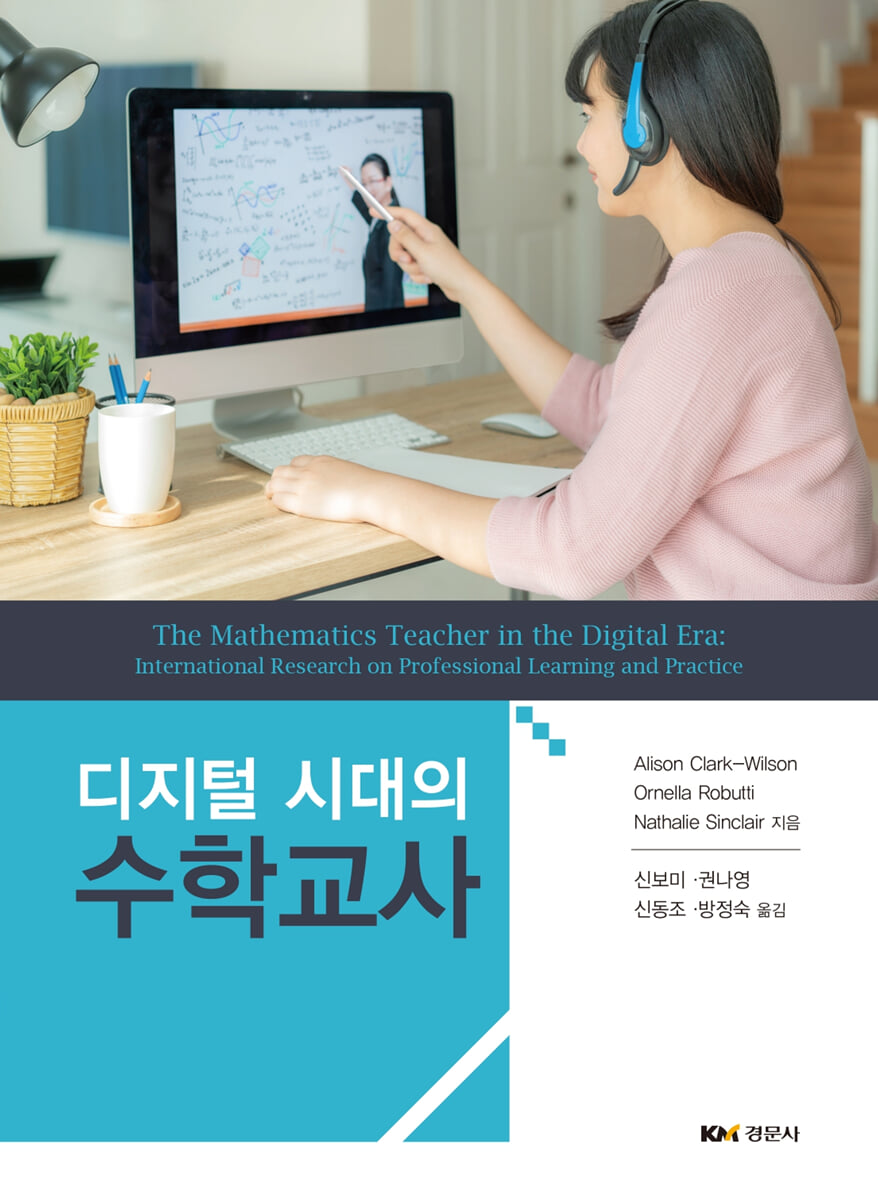
Math Teachers in the Digital Age
 |
Description
Book Introduction
"Math Teachers in the Digital Age" goes beyond simply addressing mathematics instruction using technology. It illuminates how mathematics education is changing in the digital environment, drawing on a variety of international research cases.
In particular, it covers specific topics related to the professional development and practice of mathematics teachers, such as developing teachers' digital technology utilization capabilities, designing and implementing technology-based classes, exploring mathematics using programming tools, and reflecting on teaching methods using video materials.
For example, teaching and learning using 3D pens, interactive classes using tablets, and exploring mathematical concepts through programming are all very helpful in exploring the practical problems and possibilities that math teachers face in relation to the use of technology.
Additionally, a study exploring the experiences of teachers who participated in online classes, which were suddenly implemented due to the COVID-19 pandemic, delves into the challenges and opportunities that remote learning presented.
In particular, it covers specific topics related to the professional development and practice of mathematics teachers, such as developing teachers' digital technology utilization capabilities, designing and implementing technology-based classes, exploring mathematics using programming tools, and reflecting on teaching methods using video materials.
For example, teaching and learning using 3D pens, interactive classes using tablets, and exploring mathematical concepts through programming are all very helpful in exploring the practical problems and possibilities that math teachers face in relation to the use of technology.
Additionally, a study exploring the experiences of teachers who participated in online classes, which were suddenly implemented due to the COVID-19 pandemic, delves into the challenges and opportunities that remote learning presented.
- You can preview some of the book's contents.
Preview
index
Chapter 1: Professional Development for Technology-Enabled Mathematics Instruction: Expanding Teacher and Facilitator Notification Skills
Chapter 2: Using the Tool Orchestration Model to Plan and Execute Technology-Based Mathematical Assignments in a Practical Course 35
Chapter 3: An Ensemble Perspective for Analyzing Multiplication Lessons Using TouchTimes 73
Chapter 4: Using First- and Second-Order Models in a Current Teacher's Video-Based Reflection on Teaching and Learning Using 3D Pens 103
Chapter 5: Opportunities and Challenges That Silent Video Assignments Bring to the Math Classroom 127
Chapter 6: Teaching Linear Equations Using Technology: A Flipped Classroom Perspective 159
Chapter 7 Tension and Proximity in Teaching-Learning Activities: A Case Study of One Teacher's Tablet-Based Instructional Implementation 195
Chapter 8: Digital Resources in the Documentation and Resource Systems of Kindergarten Teachers: A French Case Study 227
Chapter 9: Analyzing the Role of Elementary School Teachers in Dynamic Mathematics Instruction that Integrates Technology Resources in Challenging Socioeconomic Environments 255
Chapter 10: Analysis of the Curriculum for a Secondary School Teacher's Dynamic Mathematics Technology-Based Lesson on Shape Similarity 287
Chapter 11: Orchestrating the Use of Programming Technology for Authentic Mathematical Exploration Projects 315
Chapter 12: A Study of Professional Pathways Related to Digital Technology Integration: The Case of Vera, a Beginning Mathematics Teacher 353
Chapter 13: The Sudden Shift to Online Mathematics Education Due to the COVID-19 Pandemic: Listening to Latin American Teachers 379
Chapter 14: Meta-Pedagogical Transformation 2: Developing a Framework for Analyzing Teacher-Researcher Collaboration in Technological Environments 397
Chapter 15: A Theoretical Framework for Research on Mathematics Instruction Using Digital Technology 423
Search 453
Chapter 2: Using the Tool Orchestration Model to Plan and Execute Technology-Based Mathematical Assignments in a Practical Course 35
Chapter 3: An Ensemble Perspective for Analyzing Multiplication Lessons Using TouchTimes 73
Chapter 4: Using First- and Second-Order Models in a Current Teacher's Video-Based Reflection on Teaching and Learning Using 3D Pens 103
Chapter 5: Opportunities and Challenges That Silent Video Assignments Bring to the Math Classroom 127
Chapter 6: Teaching Linear Equations Using Technology: A Flipped Classroom Perspective 159
Chapter 7 Tension and Proximity in Teaching-Learning Activities: A Case Study of One Teacher's Tablet-Based Instructional Implementation 195
Chapter 8: Digital Resources in the Documentation and Resource Systems of Kindergarten Teachers: A French Case Study 227
Chapter 9: Analyzing the Role of Elementary School Teachers in Dynamic Mathematics Instruction that Integrates Technology Resources in Challenging Socioeconomic Environments 255
Chapter 10: Analysis of the Curriculum for a Secondary School Teacher's Dynamic Mathematics Technology-Based Lesson on Shape Similarity 287
Chapter 11: Orchestrating the Use of Programming Technology for Authentic Mathematical Exploration Projects 315
Chapter 12: A Study of Professional Pathways Related to Digital Technology Integration: The Case of Vera, a Beginning Mathematics Teacher 353
Chapter 13: The Sudden Shift to Online Mathematics Education Due to the COVID-19 Pandemic: Listening to Latin American Teachers 379
Chapter 14: Meta-Pedagogical Transformation 2: Developing a Framework for Analyzing Teacher-Researcher Collaboration in Technological Environments 397
Chapter 15: A Theoretical Framework for Research on Mathematics Instruction Using Digital Technology 423
Search 453
GOODS SPECIFICS
- Date of issue: March 7, 2025
- Page count, weight, size: 472 pages | 188*257*30mm
- ISBN13: 9791160737660
- ISBN10: 1160737665
You may also like
카테고리
korean


korean

![ELLE 엘르 스페셜 에디션 A형 : 12월 [2025]](http://librairie.coreenne.fr/cdn/shop/files/b8e27a3de6c9538896439686c6b0e8fb.jpg?v=1766436872&width=3840)


