

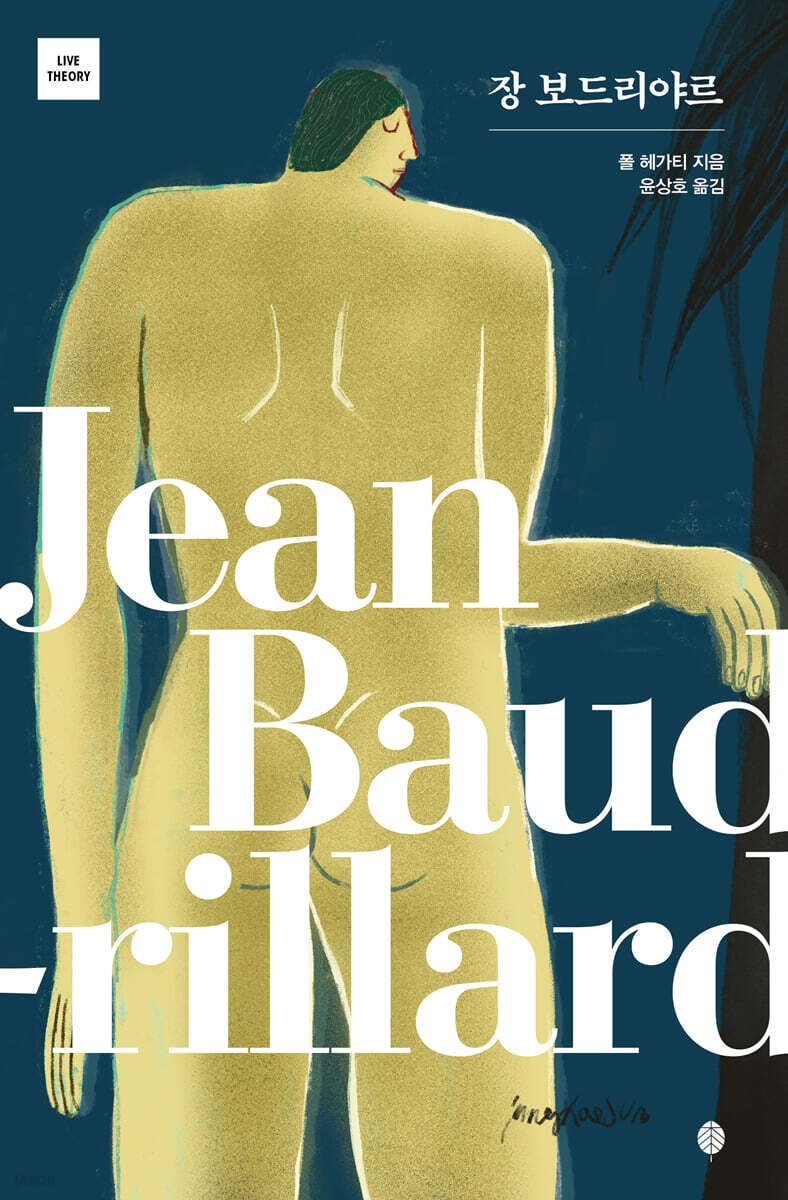
Jean Baudrillard
 |
Description
Book Introduction
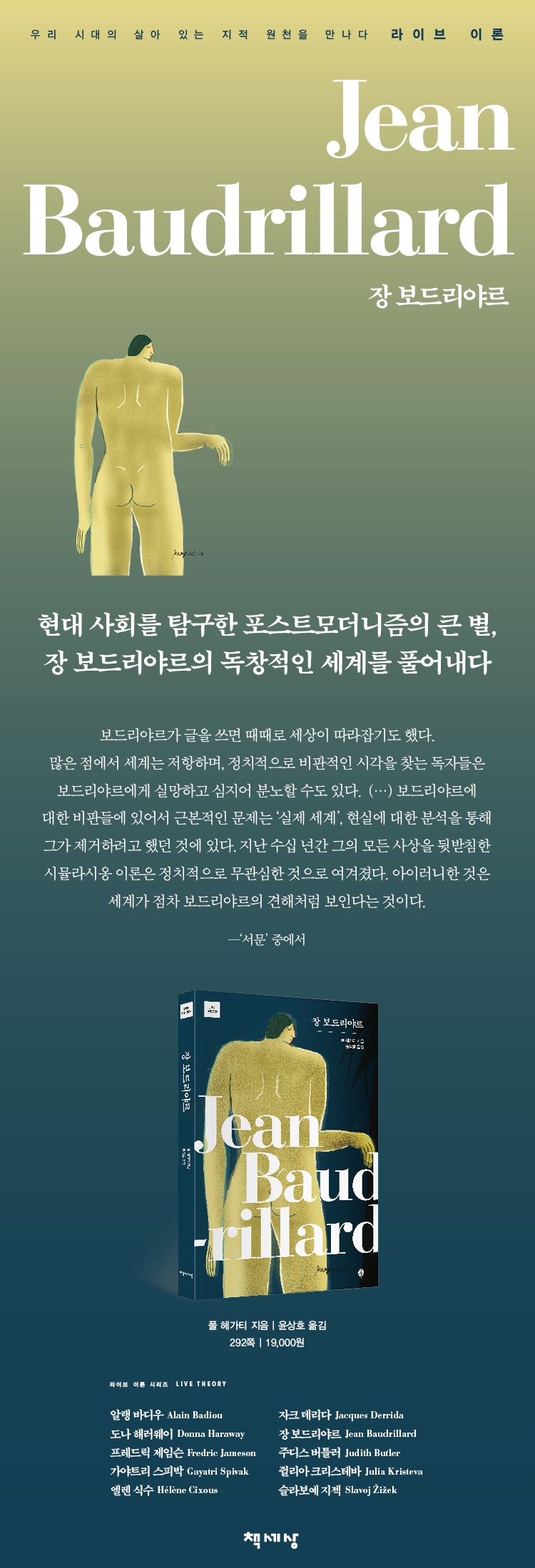
A great star of postmodernism who explored modernity,
Unraveling the unique and original world of Jean Baudrillard
Jean Baudrillard is considered one of the most representative intellectuals and the most outstanding social theorist of 20th-century France.
He explored the meaningful relationships between people living in today's mass consumer society and the overflowing objects, jobs, and images they possess, and developed groundbreaking theories that offer a new interpretation of modern society.
In particular, 'simulation theory', which explains the process by which images that replicate reality are perceived as more real than the original, has been accepted as an original and excellent theoretical framework for interpreting media, consumer society, the public, and popular culture, and has had a great influence on postmodern cultural theory, media, and modern philosophy since the 1970s.
This book is an introductory book that provides a general overview of Baudrillard's thoughts and writings.
Focusing on the key concepts of Baudrillard's thought, 'symbolic exchange' and 'simulation', we examine his theories and writings and highlight how he interacts with the theories and concepts of philosophers whom he mentioned or referenced, such as Marx, Nietzsche, Foucault, McLuhan, and Bataille.
In addition, in an interview with Baudrillard, he asks and answers about the relationship between the film "The Matrix" and Baudrillard's representative work "Simulation," his claim that "the Gulf War did not happen," and the criticism he received for his opinions on the 9/11 terrorist attacks and globalization, presenting a blueprint for understanding Baudrillard's theory.
The author argues that following Baudrillard's trajectory, which is often considered difficult, offers an opportunity for challenging reading.
His style of argument, which expresses his views through the outburst of assertions, claims, fictions, and metaphors, and his free-flowing style of argument that rejects refined academic conventions, encourages readers to delve into one aspect or fragment of the text rather than follow his theories.
Immersing ourselves in Baudrillard's thought system and challenging his broad interests and radical views will provide us with a different perspective on the present and the future.
Unraveling the unique and original world of Jean Baudrillard
Jean Baudrillard is considered one of the most representative intellectuals and the most outstanding social theorist of 20th-century France.
He explored the meaningful relationships between people living in today's mass consumer society and the overflowing objects, jobs, and images they possess, and developed groundbreaking theories that offer a new interpretation of modern society.
In particular, 'simulation theory', which explains the process by which images that replicate reality are perceived as more real than the original, has been accepted as an original and excellent theoretical framework for interpreting media, consumer society, the public, and popular culture, and has had a great influence on postmodern cultural theory, media, and modern philosophy since the 1970s.
This book is an introductory book that provides a general overview of Baudrillard's thoughts and writings.
Focusing on the key concepts of Baudrillard's thought, 'symbolic exchange' and 'simulation', we examine his theories and writings and highlight how he interacts with the theories and concepts of philosophers whom he mentioned or referenced, such as Marx, Nietzsche, Foucault, McLuhan, and Bataille.
In addition, in an interview with Baudrillard, he asks and answers about the relationship between the film "The Matrix" and Baudrillard's representative work "Simulation," his claim that "the Gulf War did not happen," and the criticism he received for his opinions on the 9/11 terrorist attacks and globalization, presenting a blueprint for understanding Baudrillard's theory.
The author argues that following Baudrillard's trajectory, which is often considered difficult, offers an opportunity for challenging reading.
His style of argument, which expresses his views through the outburst of assertions, claims, fictions, and metaphors, and his free-flowing style of argument that rejects refined academic conventions, encourages readers to delve into one aspect or fragment of the text rather than follow his theories.
Immersing ourselves in Baudrillard's thought system and challenging his broad interests and radical views will provide us with a different perspective on the present and the future.
- You can preview some of the book's contents.
Preview
index
Note
introduction
Chapter 1: Systems and Exchange: From Marxism to Symbols
Chapter 2: Simulation and the Decline of Reality
Chapter 3: Things Other Than Simulation
Chapter 4: The Hyperpolitical World
Chapter 5: Objects of Culture
Chapter 6: Interview with Baudrillard
Chapter 7: Before and After Baudrillard
Chapter 8 Conclusion: Singularity
Acknowledgements
Translator's Note
main
References
introduction
Chapter 1: Systems and Exchange: From Marxism to Symbols
Chapter 2: Simulation and the Decline of Reality
Chapter 3: Things Other Than Simulation
Chapter 4: The Hyperpolitical World
Chapter 5: Objects of Culture
Chapter 6: Interview with Baudrillard
Chapter 7: Before and After Baudrillard
Chapter 8 Conclusion: Singularity
Acknowledgements
Translator's Note
main
References
Detailed image
Into the book
Jean Baudrillard has been a global theorist for many years, emerging in the late 1960s alongside writers such as Michel Foucault, Jean-François Lyotard, Jacques Derrida, and Gilles Deleuze.
His writings cover virtually every phenomenon in the modern world: war, celebrity, information and communication technology, the end of Marxism, reality TV, the fate of history, graffiti, 9/11, photography, architecture, cloning, and more.
--- p.13
Alienation and transcendence disappear, and although Baudrillard does not see this positively, referring to it as a 'vacuum of human relations' or 'atrocity', he largely accepts it as a process that has occurred, and sees a recoverable and desirable state as one that must refer to ambivalence rather than precise and clear definitions (based on ideological critique, for example), which is itself a trick of modern (rationalist) society.
So then, what has been lost and hidden in the process of capitalist consumer society for Baudrillard?
--- p.45
The success of capital has removed it from reality, and as a result, 'the reality has died.' According to Baudrillard, capitalism, which had long been dominant in the way it diffused value (as a fixed property and/or attribution), finally succeeded in bringing about a 'structural form of value' in which value is exchanged, rather than a testable reality.
Therefore, the deification of value, its complete totalization, is the extinction of value as a true category.
--- p.73
Although the valorization of difference is greatly emphasized, Baudrillard regards difference as a trick and argues that 'difference is something that destroys otherness.'
Difference is not only a boastful arrogance, but is also, in fact, another form of oppression: “We respect your differences” is, in effect, “You savages, go on clinging to these distinctions.
This could be interpreted as, “Because that’s all you have.” The insistence on the right to difference is a simple matter of tying together two compulsions (right, ‘difference’).
In fact, what we end up with is a kind of conceptual globalization where indifference is the commodity.
--- p.130
Baudrillard has always been interested in a variety of contemporary cultural phenomena: events, physical objects, developments in art or science, or the way in which the 'macro' world of simulation (and by extension the virtual world) permeates the 'micro' level of the world.
Therefore, Baudrillard's perception of the contemporary world may seem synecdochical (the part is the whole and the whole is the part), but since the possibility of distinction (like a map or territory) has disappeared, we cannot talk about layers of representation.
--- p.173
Especially from the perspective of 'cultural difference', difference is generally seen as a positive reimagining of how the world is interconnected, free from hierarchies or assumptions that we all must adopt a single way of life or way of thinking.
But difference still means the coming together and mixing of several different fixed identities, and this is what culture itself is and always has been.
--- p.183
JB: You see that everywhere.
I went to Korea a while ago.
It was the same there too.
It was ultra-modern, it was incredibly booming and flashy, it was completely mediatized, but what they were pursuing was 'Koreanness [coreanite].'
That's what they're after.
They fully engage with this global culture into which they are born and seek resolution and reconciliation.
It used to be a poor and backward country, but now it is making great strides.
But what they are missing is ‘Koreanness.’
They ask Westerners to describe 'Koreanness' because it is not clear to them.
--- p.213~214
To some extent, Baudrillard hoped for a creative theoretical purity in which anxiety about influence would be transformed into indifference to the source material.
We should not think of this approach as accidental, and it makes it more difficult for both readers and writers to face the 'challenges' or 'provocations' that are freely floating.
Readers of Baudrillard's various writings will see the emergence of a fractal system in which each part is part of the whole, and the whole expresses the part.
--- p.238~239
Baudrillard's ideas become increasingly difficult as time goes by.
The resistances implied in his thoughts are swallowed up in the totality of simulation and later in the virtual.
But Baudrillard never seems to face the difficulties that a use-value-oriented reader might have when confronted with his texts.
Even though they have their own universe, the non-systematic thinker continues to fall prey to the world of singularities.
His writings cover virtually every phenomenon in the modern world: war, celebrity, information and communication technology, the end of Marxism, reality TV, the fate of history, graffiti, 9/11, photography, architecture, cloning, and more.
--- p.13
Alienation and transcendence disappear, and although Baudrillard does not see this positively, referring to it as a 'vacuum of human relations' or 'atrocity', he largely accepts it as a process that has occurred, and sees a recoverable and desirable state as one that must refer to ambivalence rather than precise and clear definitions (based on ideological critique, for example), which is itself a trick of modern (rationalist) society.
So then, what has been lost and hidden in the process of capitalist consumer society for Baudrillard?
--- p.45
The success of capital has removed it from reality, and as a result, 'the reality has died.' According to Baudrillard, capitalism, which had long been dominant in the way it diffused value (as a fixed property and/or attribution), finally succeeded in bringing about a 'structural form of value' in which value is exchanged, rather than a testable reality.
Therefore, the deification of value, its complete totalization, is the extinction of value as a true category.
--- p.73
Although the valorization of difference is greatly emphasized, Baudrillard regards difference as a trick and argues that 'difference is something that destroys otherness.'
Difference is not only a boastful arrogance, but is also, in fact, another form of oppression: “We respect your differences” is, in effect, “You savages, go on clinging to these distinctions.
This could be interpreted as, “Because that’s all you have.” The insistence on the right to difference is a simple matter of tying together two compulsions (right, ‘difference’).
In fact, what we end up with is a kind of conceptual globalization where indifference is the commodity.
--- p.130
Baudrillard has always been interested in a variety of contemporary cultural phenomena: events, physical objects, developments in art or science, or the way in which the 'macro' world of simulation (and by extension the virtual world) permeates the 'micro' level of the world.
Therefore, Baudrillard's perception of the contemporary world may seem synecdochical (the part is the whole and the whole is the part), but since the possibility of distinction (like a map or territory) has disappeared, we cannot talk about layers of representation.
--- p.173
Especially from the perspective of 'cultural difference', difference is generally seen as a positive reimagining of how the world is interconnected, free from hierarchies or assumptions that we all must adopt a single way of life or way of thinking.
But difference still means the coming together and mixing of several different fixed identities, and this is what culture itself is and always has been.
--- p.183
JB: You see that everywhere.
I went to Korea a while ago.
It was the same there too.
It was ultra-modern, it was incredibly booming and flashy, it was completely mediatized, but what they were pursuing was 'Koreanness [coreanite].'
That's what they're after.
They fully engage with this global culture into which they are born and seek resolution and reconciliation.
It used to be a poor and backward country, but now it is making great strides.
But what they are missing is ‘Koreanness.’
They ask Westerners to describe 'Koreanness' because it is not clear to them.
--- p.213~214
To some extent, Baudrillard hoped for a creative theoretical purity in which anxiety about influence would be transformed into indifference to the source material.
We should not think of this approach as accidental, and it makes it more difficult for both readers and writers to face the 'challenges' or 'provocations' that are freely floating.
Readers of Baudrillard's various writings will see the emergence of a fractal system in which each part is part of the whole, and the whole expresses the part.
--- p.238~239
Baudrillard's ideas become increasingly difficult as time goes by.
The resistances implied in his thoughts are swallowed up in the totality of simulation and later in the virtual.
But Baudrillard never seems to face the difficulties that a use-value-oriented reader might have when confronted with his texts.
Even though they have their own universe, the non-systematic thinker continues to fall prey to the world of singularities.
--- p.256
Publisher's Review
Meet the living intellectual sources of our time
Live Theory series
Jacques Derrida, Judith Butler, Alain Badiou, Donna Haraway, Frederic Jameson, and Gayatri Chakravorty Spivak—these are theorists who are considered the intellectual fountainheads of our time, and authors who are like mountains that readers of the humanities and social sciences must climb.
Although these have been constantly cited in Korea as conceptual resources and theoretical inspiration in various fields, attempts to comprehensively explain their respective theories are still lacking.
Accordingly, Book World Publishing is publishing a translation of the 'Live Theory' series published by Bloomsbury.
This series, which captures the lives and intellectual activities of leading contemporary theorists, as well as vivid interviews, in an appropriate volume, will allow readers to grasp their critical awareness and observe the trajectory of their thinking.
Live Theory series
Jacques Derrida, Judith Butler, Alain Badiou, Donna Haraway, Frederic Jameson, and Gayatri Chakravorty Spivak—these are theorists who are considered the intellectual fountainheads of our time, and authors who are like mountains that readers of the humanities and social sciences must climb.
Although these have been constantly cited in Korea as conceptual resources and theoretical inspiration in various fields, attempts to comprehensively explain their respective theories are still lacking.
Accordingly, Book World Publishing is publishing a translation of the 'Live Theory' series published by Bloomsbury.
This series, which captures the lives and intellectual activities of leading contemporary theorists, as well as vivid interviews, in an appropriate volume, will allow readers to grasp their critical awareness and observe the trajectory of their thinking.
GOODS SPECIFICS
- Date of issue: April 30, 2024
- Page count, weight, size: 292 pages | 138*210*20mm
- ISBN13: 9791171311156
- ISBN10: 117131115X
You may also like
카테고리
korean


korean

![ELLE 엘르 스페셜 에디션 A형 : 12월 [2025]](http://librairie.coreenne.fr/cdn/shop/files/b8e27a3de6c9538896439686c6b0e8fb.jpg?v=1766436872&width=3840)


