

Introduction to Probability and Statistics
 |
Description
Book Introduction
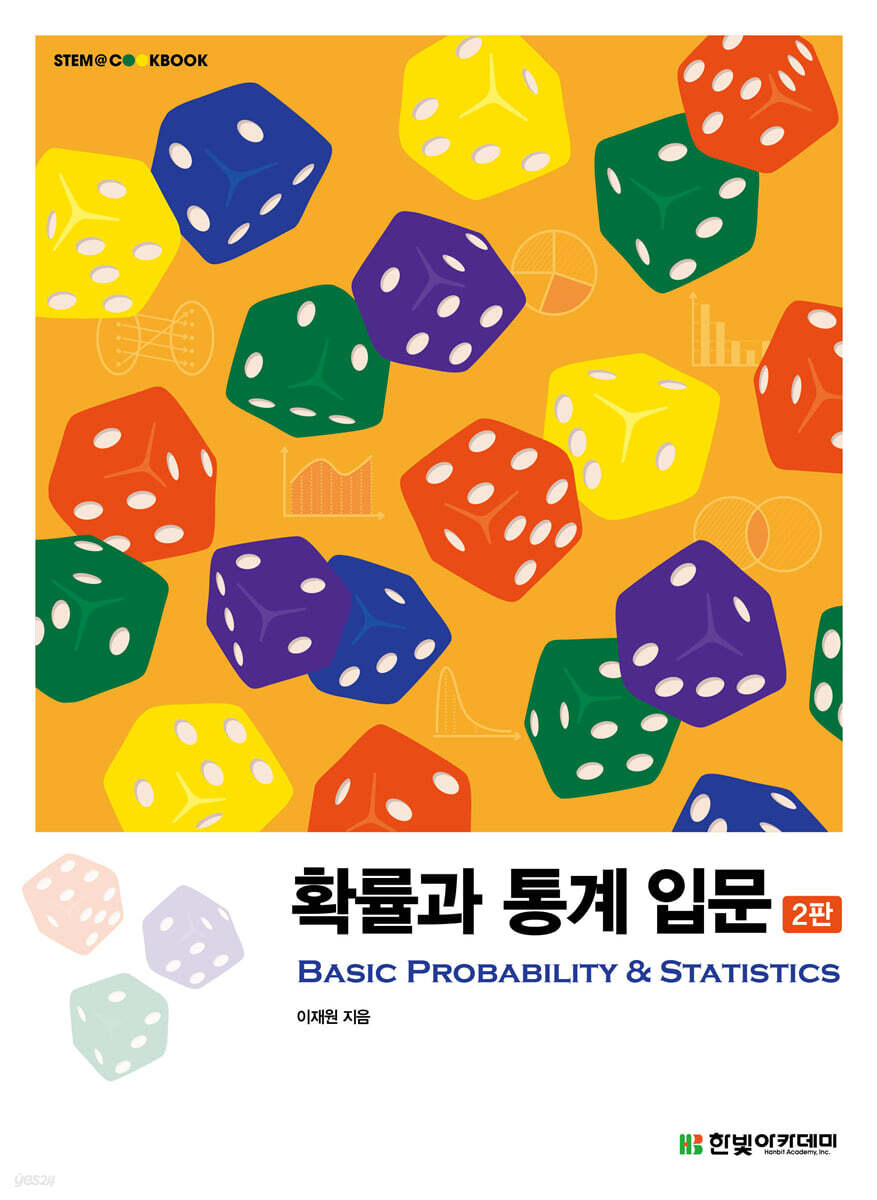
Probability and statistics that anyone can easily understand!
When dealing with probability and statistics, which are full of large numbers and complex formulas, approaching them only with mathematical thinking can feel difficult and boring.
Probability and statistics are not math, they are real life.
If you first understand where probability and statistics are used and why you should learn them, and then build a solid mathematical foundation, you can understand probability and statistics more easily and enjoyably.
By learning the key theories of probability and statistics through this book's concise and clear explanations and repeatedly applying them to various problems, you can develop not only problem-solving skills but also statistical thinking skills.
Starting with this book will make probability and statistics, which once seemed difficult, feel much more familiar.
When dealing with probability and statistics, which are full of large numbers and complex formulas, approaching them only with mathematical thinking can feel difficult and boring.
Probability and statistics are not math, they are real life.
If you first understand where probability and statistics are used and why you should learn them, and then build a solid mathematical foundation, you can understand probability and statistics more easily and enjoyably.
By learning the key theories of probability and statistics through this book's concise and clear explanations and repeatedly applying them to various problems, you can develop not only problem-solving skills but also statistical thinking skills.
Starting with this book will make probability and statistics, which once seemed difficult, feel much more familiar.
- You can preview some of the book's contents.
Preview
index
PART 01 Basics of Probability and Statistics
Chapter 01 Sets and Functions
1.1 Set
1.2 Function
1.3 Sequences and series
Practice problems
Chapter 02 Differentiation and Integration
2.1 Limits and continuity of functions
2.2 Differentiation
2.3 Integration
2.4 Partial differentiation
2.5 Double integral?
Practice problems
PART 02 Descriptive Statistics
Chapter 03 Organizing the Data
3.1 Types of data
3.2 Organizing qualitative data
3.3 Organizing quantitative data
Practice problems
Chapter 04 Numerical Characteristics of Data
4.1 Representative value
4.2 Scatterplot
4.3 Location scale and boxplot
4.4 Mean and Variance in Frequency Distribution Tables
Practice problems
PART 03 PROBABILITY AND PROBABILITY DISTRIBUTIONS
Chapter 05 Probability
5.1 Number of incidents and cases
5.2 Permutations and Combinations
5.3 Probability
5.4 Conditional probability
5.5 Bayes' theorem
Practice problems
Chapter 06 Random Variables
6.1 Discrete random variables
6.2 Continuous random variables
6.3 Expected value of random variables
Practice problems
Chapter 07 Joint Probability Distribution
7.1 Joint probability distribution
7.2 Conditional probability distribution
7.3 Expected value of the joint probability distribution
Practice problems
Chapter 08 Various probability distributions
8.1 Discrete probability distributions
8.2 Continuous probability distribution
Practice problems
PART 04 Inferential Statistics
Chapter 09 Sampling Distribution
9.1 Population distribution and sample distribution
9.2 Distribution of sample means
9.3 Distribution of sample proportions
Practice problems
Chapter 10 Estimation
10.1 Point estimation and interval estimation
10.2 Interval estimation of the population mean
10.3 Interval estimation of the population ratio
10.4 Determining sample size
Practice problems
Chapter 11 Hypothesis Testing
11.1 Statistical Hypothesis Testing
11.2 Hypothesis testing of the population mean
11.3 Hypothesis testing of population ratios
Practice problems
Appendix A Probability Tables for Major Distributions
Appendix B: Practice Problems and Answers
Search
Chapter 01 Sets and Functions
1.1 Set
1.2 Function
1.3 Sequences and series
Practice problems
Chapter 02 Differentiation and Integration
2.1 Limits and continuity of functions
2.2 Differentiation
2.3 Integration
2.4 Partial differentiation
2.5 Double integral?
Practice problems
PART 02 Descriptive Statistics
Chapter 03 Organizing the Data
3.1 Types of data
3.2 Organizing qualitative data
3.3 Organizing quantitative data
Practice problems
Chapter 04 Numerical Characteristics of Data
4.1 Representative value
4.2 Scatterplot
4.3 Location scale and boxplot
4.4 Mean and Variance in Frequency Distribution Tables
Practice problems
PART 03 PROBABILITY AND PROBABILITY DISTRIBUTIONS
Chapter 05 Probability
5.1 Number of incidents and cases
5.2 Permutations and Combinations
5.3 Probability
5.4 Conditional probability
5.5 Bayes' theorem
Practice problems
Chapter 06 Random Variables
6.1 Discrete random variables
6.2 Continuous random variables
6.3 Expected value of random variables
Practice problems
Chapter 07 Joint Probability Distribution
7.1 Joint probability distribution
7.2 Conditional probability distribution
7.3 Expected value of the joint probability distribution
Practice problems
Chapter 08 Various probability distributions
8.1 Discrete probability distributions
8.2 Continuous probability distribution
Practice problems
PART 04 Inferential Statistics
Chapter 09 Sampling Distribution
9.1 Population distribution and sample distribution
9.2 Distribution of sample means
9.3 Distribution of sample proportions
Practice problems
Chapter 10 Estimation
10.1 Point estimation and interval estimation
10.2 Interval estimation of the population mean
10.3 Interval estimation of the population ratio
10.4 Determining sample size
Practice problems
Chapter 11 Hypothesis Testing
11.1 Statistical Hypothesis Testing
11.2 Hypothesis testing of the population mean
11.3 Hypothesis testing of population ratios
Practice problems
Appendix A Probability Tables for Major Distributions
Appendix B: Practice Problems and Answers
Search
Detailed image

Publisher's Review
An introductory book on probability and statistics that explains everything from the basics.
This is a great book to start learning probability and statistics.
This book explains the core theories of probability and statistics as concisely and clearly as possible, and is structured to enable students to apply them to a variety of problems and solve them independently. Part 01 reviews the basic mathematics essential for learning probability and statistics. Parts 02 through 04 explain the key concepts of probability and statistics in a simple and clear manner, providing a wealth of examples and "I Can Do" problems to solidify their understanding.
Lastly, you can develop your problem-solving and application skills by solving the practice problems in each chapter step by step [Basic → Application → Advanced].
If you follow the friendly explanations in this book step by step, you can easily learn probability and statistics.
This is a great book to start learning probability and statistics.
This book explains the core theories of probability and statistics as concisely and clearly as possible, and is structured to enable students to apply them to a variety of problems and solve them independently. Part 01 reviews the basic mathematics essential for learning probability and statistics. Parts 02 through 04 explain the key concepts of probability and statistics in a simple and clear manner, providing a wealth of examples and "I Can Do" problems to solidify their understanding.
Lastly, you can develop your problem-solving and application skills by solving the practice problems in each chapter step by step [Basic → Application → Advanced].
If you follow the friendly explanations in this book step by step, you can easily learn probability and statistics.
GOODS SPECIFICS
- Date of issue: June 30, 2023
- Page count, weight, size: 500 pages | 188*257*30mm
- ISBN13: 9791156646679
- ISBN10: 1156646677
You may also like
카테고리
korean


korean

![GQ KOREA Mark (Monthly): December [2025]](http://librairie.coreenne.fr/cdn/shop/files/8ef265dbbfbf186523ed75ba7319009d.jpg?v=1765340328&width=3840)


