

Harper Biochemistry
 |
Description
Book Introduction
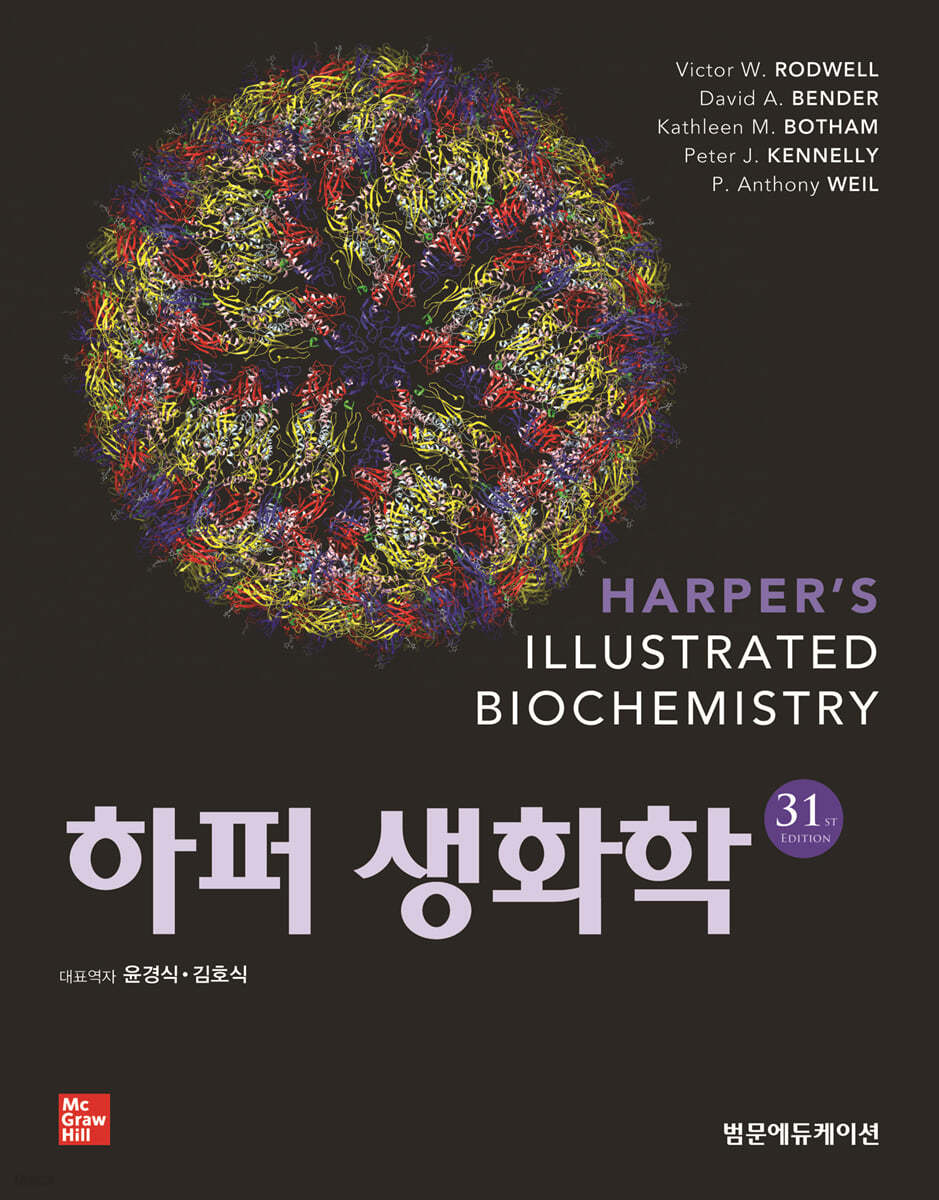
Harper's Biochemistry, 31st Edition, is a textbook that provides a clear understanding of biochemical principles relevant to clinical medicine.
A total of 58 chapters will help you understand the medical relevance of biochemistry.
The newly added chapter, “Biochemistry of Transition Metals,” covers the importance and general availability of transition metals.
Questions are arranged in 11 sections, with answers provided in the appendix. Each chapter covers the biomedical significance of the given topic and the topics discussed in that chapter.
A total of 58 chapters will help you understand the medical relevance of biochemistry.
The newly added chapter, “Biochemistry of Transition Metals,” covers the importance and general availability of transition metals.
Questions are arranged in 11 sections, with answers provided in the appendix. Each chapter covers the biomedical significance of the given topic and the topics discussed in that chapter.
- You can preview some of the book's contents.
Preview
index
Translator's Preface iii
Author's Preface v
Co-author vii
Section I Structure and Function of Proteins and Enzymes 1
1 Biochemistry and Medicine 1
2 water and pH 6
3 amino acids and 15 peptides
4 Proteins: Determination of Primary Structure 25
5 Proteins: Higher-Order Structure 35
Section II Enzymes: Kinetics, Mechanisms, Regulation, and the Role of Transition Metals 51
6 Proteins: Myoglobin and Hemoglobin 51
7 Enzymes: Mechanism of Action 61
8 Enzymes: Kinetics 75
9 Enzymes: Activity Regulation 90
10 Biochemical Roles of Transition Metals 101
Section III Bioenergetics 115
11 Bioenergetics: The Role of ATP 115
12 Biological Oxidation 121
13 Respiratory Chain and Oxidative Phosphorylation 128
Section IV Carbohydrate Metabolism 141
14 Ambassador Overview & Ambassador Fuel Supply 141
15 Physiologically Important Carbohydrates 154
16 Citric Acid Cycle: Acetyl-CoA Metabolism 163
17 Glycolysis and Pyruvate Oxidation 170
18 Party Ambassadors 177
19 Gluconeogenesis and Blood Sugar Regulation 185
20 Phosphate Pentose Pathway and Other Hexose Metabolism Pathways 195
Section V Lipid Metabolism 209
21 Physiologically Important Lipids 209
22 Fatty Acid Oxidation: Ketone Production 221
23 Biosynthesis of fatty acids and eicosanoids 231
24 Metabolism of Acylglycerols and Sphingolipids 245
25 Transport and Storage of Lipids 253
26 Cholesterol biosynthesis, transport, and secretion 267
Section VI Protein and Amino Acid Metabolism 283
27 Biosynthesis of nutritionally non-essential amino acids 283
28 Protein metabolism and metabolism of nitrogen in amino acids 290
29 Decomposition of the amino acid carbon skeleton 302
30 Conversion of amino acids into specialized products 318
31 Porphyrins and Bile Pigments 328
Section VII Structure, Function, and Replication of Information Macromolecules 343
32 nucleotides 343
33 Purine and pyrimidine nucleotide metabolism 351
34 Structure and Function of Nucleic Acids 363
35 DNA Structure, Replication, and Repair 376
36 RNA synthesis, processing, and modification 402
37 Protein Synthesis and the Genetic Code 422
38 Regulation of Gene Expression 439
39 Molecular Genetics, Recombinant DNA, and Genomic Technologies 464
Section VIII Biochemistry of Extracellular and Intracellular Communication 495
Act 40: Structure and Function 495
41 Diversity of the Endocrine System 518
42 Hormonal Action and Signaling 541
Section IX Special Topics (A) 563
43 Nutrition, Digestion, and Absorption 563
44 Micronutrients: Vitamins and Minerals 572
45 Free Radicals and Antioxidant Nutrients 587
46 glycoproteins 592
47 Metabolism of xenobiotics 603
48 Clinical Biochemistry 608
Section X Special Topics (B) 625
49 Intracellular trafficking and sorting of proteins 625
50 Extracellular matrix 645
51 Muscle and Cytoskeleton 666
52 Plasma proteins and immunoglobulins 684
53 red blood cells 705
54 white blood cells 716
Section XI Special Topics (C) 729
55 Hemostasis and Thrombosis 729
56 Cancer: Overview 742
57 Biochemistry of Aging 771
58 Biochemical history 785
Answer Bank 797
Search 803
Author's Preface v
Co-author vii
Section I Structure and Function of Proteins and Enzymes 1
1 Biochemistry and Medicine 1
2 water and pH 6
3 amino acids and 15 peptides
4 Proteins: Determination of Primary Structure 25
5 Proteins: Higher-Order Structure 35
Section II Enzymes: Kinetics, Mechanisms, Regulation, and the Role of Transition Metals 51
6 Proteins: Myoglobin and Hemoglobin 51
7 Enzymes: Mechanism of Action 61
8 Enzymes: Kinetics 75
9 Enzymes: Activity Regulation 90
10 Biochemical Roles of Transition Metals 101
Section III Bioenergetics 115
11 Bioenergetics: The Role of ATP 115
12 Biological Oxidation 121
13 Respiratory Chain and Oxidative Phosphorylation 128
Section IV Carbohydrate Metabolism 141
14 Ambassador Overview & Ambassador Fuel Supply 141
15 Physiologically Important Carbohydrates 154
16 Citric Acid Cycle: Acetyl-CoA Metabolism 163
17 Glycolysis and Pyruvate Oxidation 170
18 Party Ambassadors 177
19 Gluconeogenesis and Blood Sugar Regulation 185
20 Phosphate Pentose Pathway and Other Hexose Metabolism Pathways 195
Section V Lipid Metabolism 209
21 Physiologically Important Lipids 209
22 Fatty Acid Oxidation: Ketone Production 221
23 Biosynthesis of fatty acids and eicosanoids 231
24 Metabolism of Acylglycerols and Sphingolipids 245
25 Transport and Storage of Lipids 253
26 Cholesterol biosynthesis, transport, and secretion 267
Section VI Protein and Amino Acid Metabolism 283
27 Biosynthesis of nutritionally non-essential amino acids 283
28 Protein metabolism and metabolism of nitrogen in amino acids 290
29 Decomposition of the amino acid carbon skeleton 302
30 Conversion of amino acids into specialized products 318
31 Porphyrins and Bile Pigments 328
Section VII Structure, Function, and Replication of Information Macromolecules 343
32 nucleotides 343
33 Purine and pyrimidine nucleotide metabolism 351
34 Structure and Function of Nucleic Acids 363
35 DNA Structure, Replication, and Repair 376
36 RNA synthesis, processing, and modification 402
37 Protein Synthesis and the Genetic Code 422
38 Regulation of Gene Expression 439
39 Molecular Genetics, Recombinant DNA, and Genomic Technologies 464
Section VIII Biochemistry of Extracellular and Intracellular Communication 495
Act 40: Structure and Function 495
41 Diversity of the Endocrine System 518
42 Hormonal Action and Signaling 541
Section IX Special Topics (A) 563
43 Nutrition, Digestion, and Absorption 563
44 Micronutrients: Vitamins and Minerals 572
45 Free Radicals and Antioxidant Nutrients 587
46 glycoproteins 592
47 Metabolism of xenobiotics 603
48 Clinical Biochemistry 608
Section X Special Topics (B) 625
49 Intracellular trafficking and sorting of proteins 625
50 Extracellular matrix 645
51 Muscle and Cytoskeleton 666
52 Plasma proteins and immunoglobulins 684
53 red blood cells 705
54 white blood cells 716
Section XI Special Topics (C) 729
55 Hemostasis and Thrombosis 729
56 Cancer: Overview 742
57 Biochemistry of Aging 771
58 Biochemical history 785
Answer Bank 797
Search 803
Publisher's Review
Harper's Biochemistry, 31st Edition provides a clear understanding of biochemical principles relevant to clinical medicine.
Featuring unparalleled material and a wealth of medically relevant case studies, the 31st edition of Harper's Biochemistry continues to emphasize the close relationship between biochemistry and the understanding of disease, pathology, and the practice of medicine.
Provides a clear and concise review of the fundamentals of biochemistry that every student needs to understand to succeed in medical school.
A total of 58 chapters will help you understand the medical relevance of biochemistry.
- Over 600 illustrations enhance understanding of the content.
- Case studies highlight the clinical relevance of biochemistry.
- The newly added chapter “Biochemistry of Transition Metals” covers the importance and general distribution of transition metals.
- Questions are arranged by 11 sections, and the answers are included in the appendix.
- Learning objectives are described in the introduction of each chapter.
- Each chapter covers the biomedical significance of a given topic and the topics discussed in that chapter.
Featuring unparalleled material and a wealth of medically relevant case studies, the 31st edition of Harper's Biochemistry continues to emphasize the close relationship between biochemistry and the understanding of disease, pathology, and the practice of medicine.
Provides a clear and concise review of the fundamentals of biochemistry that every student needs to understand to succeed in medical school.
A total of 58 chapters will help you understand the medical relevance of biochemistry.
- Over 600 illustrations enhance understanding of the content.
- Case studies highlight the clinical relevance of biochemistry.
- The newly added chapter “Biochemistry of Transition Metals” covers the importance and general distribution of transition metals.
- Questions are arranged by 11 sections, and the answers are included in the appendix.
- Learning objectives are described in the introduction of each chapter.
- Each chapter covers the biomedical significance of a given topic and the topics discussed in that chapter.
GOODS SPECIFICS
- Date of issue: March 27, 2023
- Page count, weight, size: 872 pages | 215*275*40mm
- ISBN13: 9791159433924
- ISBN10: 1159433925
You may also like
카테고리
korean


korean

![GQ KOREA Mark (Monthly): December [2025]](http://librairie.coreenne.fr/cdn/shop/files/8ef265dbbfbf186523ed75ba7319009d.jpg?v=1765340328&width=3840)


