

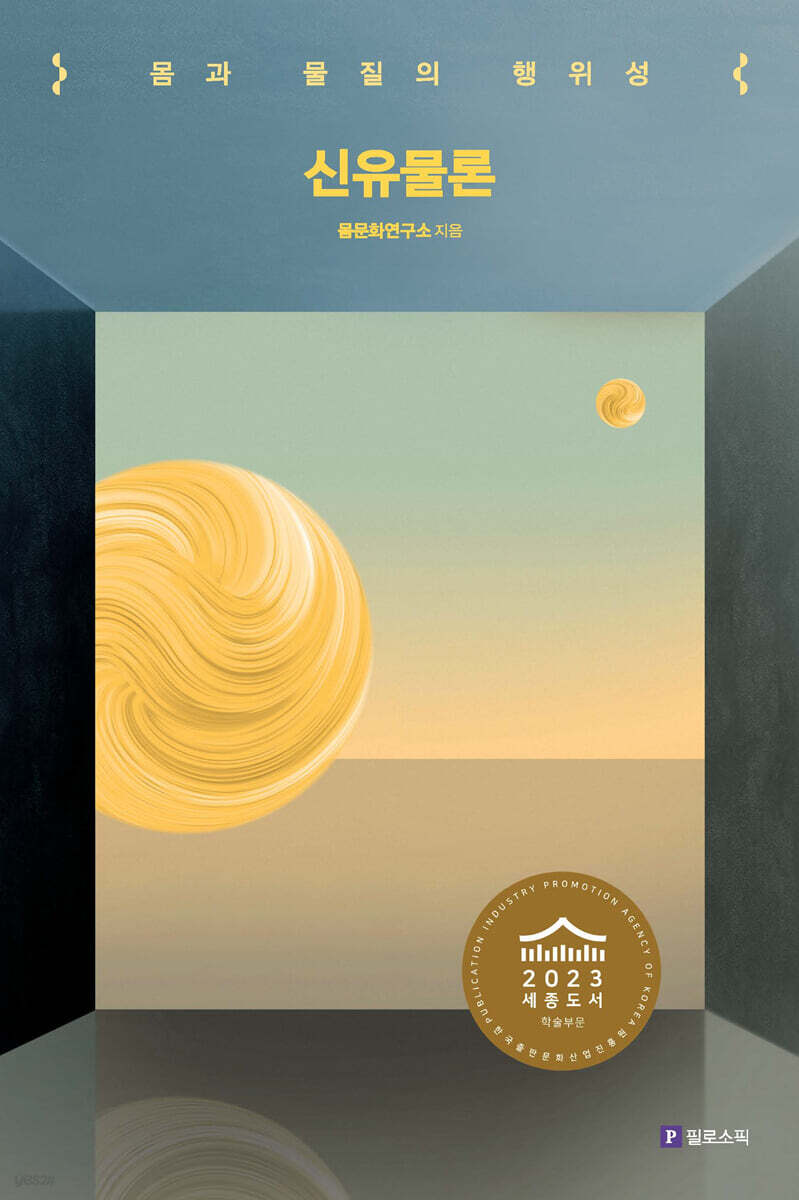
New Materialism
 |
Description
Book Introduction
In the age of climate change, we need a shift in thinking.
“Humans are not the only ones who act as subjects.
Matter also acts.”_From the text
Moving away from human-centered thinking
Traces of the unique thinking of nine scholars who imagined an equal relationship between humans and nature!
Throughout the history of philosophy, matter and nature that do not follow human will have always been a source of problems.
Francis Bacon, known as the father of modern natural science, called nature that brings misfortune to humans, such as typhoons, floods, diseases, and earthquakes, “perverse nature” or “corrupt nature.”
Because of this, matter was considered to be something that needed modification, correction, improvement, and change by humans, and humans dominated nature.
However, with the destruction of the ecosystem, global warming, abnormally high and low temperatures, and rising sea levels, nature has begun to threaten humans.
This phenomenon was not something that could be solved through science and technology, as humanists claimed.
People who realized that existing ways of thinking could not identify the cause of the problem and devise appropriate solutions finally came to the conclusion that a change in perspective on nature and material things was necessary.
A new materialism emerged that attempted to theorize the agency of matter that had been overlooked by materialism and idealism.
New materialism is a theoretical effort to reconstruct the agency of non-human beings, previously considered inert matter, and of matter, previously defined in an overly anthropocentric way.
This is an attempt to break away from the mindset that only humans can act independently and to highlight that nature can act like humans, thereby renewing the relationship between humans and nature, in addition to the numerous concepts we have taken for granted so far.
New materialism is not yet a coherent system or a clearly defined and coherent theory.
Therefore, in this book, theorists are arbitrarily classified into speculative realism and feminist new materialism.
Beginning with Bruno Latour, Quentin Meillassoux, and Graham Harman, and then moving on to Jane Bennett, Vicky Kirby, Karen Burrard, and Donna Haraway, the reader will gain an understanding of the more-than-human world.
“Humans are not the only ones who act as subjects.
Matter also acts.”_From the text
Moving away from human-centered thinking
Traces of the unique thinking of nine scholars who imagined an equal relationship between humans and nature!
Throughout the history of philosophy, matter and nature that do not follow human will have always been a source of problems.
Francis Bacon, known as the father of modern natural science, called nature that brings misfortune to humans, such as typhoons, floods, diseases, and earthquakes, “perverse nature” or “corrupt nature.”
Because of this, matter was considered to be something that needed modification, correction, improvement, and change by humans, and humans dominated nature.
However, with the destruction of the ecosystem, global warming, abnormally high and low temperatures, and rising sea levels, nature has begun to threaten humans.
This phenomenon was not something that could be solved through science and technology, as humanists claimed.
People who realized that existing ways of thinking could not identify the cause of the problem and devise appropriate solutions finally came to the conclusion that a change in perspective on nature and material things was necessary.
A new materialism emerged that attempted to theorize the agency of matter that had been overlooked by materialism and idealism.
New materialism is a theoretical effort to reconstruct the agency of non-human beings, previously considered inert matter, and of matter, previously defined in an overly anthropocentric way.
This is an attempt to break away from the mindset that only humans can act independently and to highlight that nature can act like humans, thereby renewing the relationship between humans and nature, in addition to the numerous concepts we have taken for granted so far.
New materialism is not yet a coherent system or a clearly defined and coherent theory.
Therefore, in this book, theorists are arbitrarily classified into speculative realism and feminist new materialism.
Beginning with Bruno Latour, Quentin Meillassoux, and Graham Harman, and then moving on to Jane Bennett, Vicky Kirby, Karen Burrard, and Donna Haraway, the reader will gain an understanding of the more-than-human world.
index
Introduction · 6
1.
Bruno Latour's Thought as New Materialism_Kim Hwan-seok
2.
Reality as Absolute Contingency: Quentin Meillassoux's Speculative Realism_Jeong Ji-eun
3.
Graham Harman's Object-Oriented Ontology and Immaterialism_Seo Yun-ho
4.
Jane Bennett's "Living Matter"_Im Ji-yeon
5.
Vicki Kirby's 'Reading, Writing, and Speaking Body'_Im So-yeon
6.
Karen Burrard's "Meeting the Universe in the Middle": A Body Made of Relationships and Entanglements_Park Shin-hyun
7.
New Materialism, Haraway, Compostism_Periodization
8.
What is Performative New Materialism?_Park Jun-young
9.
Matter and Body in New Materialism_Kim Jong-gap
1.
Bruno Latour's Thought as New Materialism_Kim Hwan-seok
2.
Reality as Absolute Contingency: Quentin Meillassoux's Speculative Realism_Jeong Ji-eun
3.
Graham Harman's Object-Oriented Ontology and Immaterialism_Seo Yun-ho
4.
Jane Bennett's "Living Matter"_Im Ji-yeon
5.
Vicki Kirby's 'Reading, Writing, and Speaking Body'_Im So-yeon
6.
Karen Burrard's "Meeting the Universe in the Middle": A Body Made of Relationships and Entanglements_Park Shin-hyun
7.
New Materialism, Haraway, Compostism_Periodization
8.
What is Performative New Materialism?_Park Jun-young
9.
Matter and Body in New Materialism_Kim Jong-gap
Into the book
In Latour, the term 'Nonhuman' is used more often than the term 'Matter', which is the core concept of new materialism, but the important point is that the perspective from which 'Matter' is viewed is not as an 'Object' without agency - that is, the opposite of the 'Subject' - as in conventional materialism, but as a 'Thing' with agency, which is the core of new materialism.
It is precisely for this reason that Latour is considered a pioneer of new materialism, as he was the first scholar to argue that non-human matter should be viewed as an 'object' with agency.
--- p.47
The newly emerging new materialism includes various theories, including Meillassoux's speculative realism, Graham Harman's object-oriented ontology, and Jane Bennett's vitalist materialism.
However, there is a common goal that unites them: they seek to break away from the framework of human-centered or human-relationship thinking.
And Mayasu can be said to be the first to introduce such new materialist ideas.
--- p.56
Object-oriented ontology, which seeks to understand objects as the fundamental structure of the world, rejects both reductionist and excessively constructivist approaches to objects.
To understand a technical object, social phenomenon, or work of art, we can analyze it by reducing it to simpler objects.
--- p.97
The democratic ideal of equality was limited to human equality, freedom was understood to center on human freedom, and love was used as the highest ability to expand human values.
Of course, the human world has not yet fully realized the values of equality, freedom, and love.
However, in order to properly realize this value, it is time for us to move beyond a human-centered perspective.
For example, it is not realistic to achieve complete women's equality while simultaneously abusing animals.
When women are likened to uncivilized nature, like animals, and equality is limited to the human realm, paradoxically, human equality becomes difficult to achieve.
--- p.116~117
What Kirby proposes is definitely not a return to past science or past ways of knowing.
He says that in order to read and communicate the text written by nature, we need a different way of knowing, a different science, a different culture.
We need a 'different language' to understand the body, matter, nature, and non-human speech and writing.
--- p.156
'Meeting the universe in the middle' would mean that all things with the capacity to act contribute to the creation of the universe through internal operations, so humans should abandon their self-righteous attitude and adopt a humble attitude of taking responsibility for their own roles by 'compromising with the universe and coordinating opinions with the universe.'
Humans are held to greater responsibility when they respond sensitively, taking into account the intertwined relationships and possibilities, rather than when they monopolize responsibility.
--- p.186
Against skepticism and defeatism, Haraway says the world “can still change.”
We can't control how Gaia operates, but I believe we can fix some things if we recognize that we are compost, live mercilessly in the thick of the present, and respond to the urgent pleas of our companion species.
The reason he “makes a fuss” over and over again about the “ouroboros-style composting” that “only has a beginning and no end” is to remind us that the world has been created by “multi-species compost communities” that, in powerful fleeting moments, collaborate unconditionally and mercilessly to pioneer alternative paths, and are quietly, barely, still creating the world.
His composting urges us not to give up hope that history can change in the face of cynicism, despair, and fear.
--- p.225
In conclusion, the substances of new materialism have equal relationships with each other in the potential dimension, but their ability to form relationships in the actual dimension is different.
Within more relationships and more networks, matter exerts greater power and, based on this, seeks to expand relationships.
As the capacity for relationships diminishes, the disturbances intensify, and thus the relationship diminishes further.
--- p.255
New materialism is a theory that grants the ability to act to matter, which was previously treated as passive, inert, and inert.
Matter is not only subject to movement, but also has the ability to actively react and move itself.
I also wholeheartedly agree with this new materialist position.
The problem I want to point out is that before the advent of new materialism, the capacity for action of such matter was considered an inherent property of the body.
It is precisely for this reason that Latour is considered a pioneer of new materialism, as he was the first scholar to argue that non-human matter should be viewed as an 'object' with agency.
--- p.47
The newly emerging new materialism includes various theories, including Meillassoux's speculative realism, Graham Harman's object-oriented ontology, and Jane Bennett's vitalist materialism.
However, there is a common goal that unites them: they seek to break away from the framework of human-centered or human-relationship thinking.
And Mayasu can be said to be the first to introduce such new materialist ideas.
--- p.56
Object-oriented ontology, which seeks to understand objects as the fundamental structure of the world, rejects both reductionist and excessively constructivist approaches to objects.
To understand a technical object, social phenomenon, or work of art, we can analyze it by reducing it to simpler objects.
--- p.97
The democratic ideal of equality was limited to human equality, freedom was understood to center on human freedom, and love was used as the highest ability to expand human values.
Of course, the human world has not yet fully realized the values of equality, freedom, and love.
However, in order to properly realize this value, it is time for us to move beyond a human-centered perspective.
For example, it is not realistic to achieve complete women's equality while simultaneously abusing animals.
When women are likened to uncivilized nature, like animals, and equality is limited to the human realm, paradoxically, human equality becomes difficult to achieve.
--- p.116~117
What Kirby proposes is definitely not a return to past science or past ways of knowing.
He says that in order to read and communicate the text written by nature, we need a different way of knowing, a different science, a different culture.
We need a 'different language' to understand the body, matter, nature, and non-human speech and writing.
--- p.156
'Meeting the universe in the middle' would mean that all things with the capacity to act contribute to the creation of the universe through internal operations, so humans should abandon their self-righteous attitude and adopt a humble attitude of taking responsibility for their own roles by 'compromising with the universe and coordinating opinions with the universe.'
Humans are held to greater responsibility when they respond sensitively, taking into account the intertwined relationships and possibilities, rather than when they monopolize responsibility.
--- p.186
Against skepticism and defeatism, Haraway says the world “can still change.”
We can't control how Gaia operates, but I believe we can fix some things if we recognize that we are compost, live mercilessly in the thick of the present, and respond to the urgent pleas of our companion species.
The reason he “makes a fuss” over and over again about the “ouroboros-style composting” that “only has a beginning and no end” is to remind us that the world has been created by “multi-species compost communities” that, in powerful fleeting moments, collaborate unconditionally and mercilessly to pioneer alternative paths, and are quietly, barely, still creating the world.
His composting urges us not to give up hope that history can change in the face of cynicism, despair, and fear.
--- p.225
In conclusion, the substances of new materialism have equal relationships with each other in the potential dimension, but their ability to form relationships in the actual dimension is different.
Within more relationships and more networks, matter exerts greater power and, based on this, seeks to expand relationships.
As the capacity for relationships diminishes, the disturbances intensify, and thus the relationship diminishes further.
--- p.255
New materialism is a theory that grants the ability to act to matter, which was previously treated as passive, inert, and inert.
Matter is not only subject to movement, but also has the ability to actively react and move itself.
I also wholeheartedly agree with this new materialist position.
The problem I want to point out is that before the advent of new materialism, the capacity for action of such matter was considered an inherent property of the body.
--- p.262
GOODS SPECIFICS
- Date of issue: June 30, 2022
- Page count, weight, size: 292 pages | 147*220*20mm
- ISBN13: 9791157832613
- ISBN10: 115783261X
You may also like
카테고리
korean


korean

![GQ KOREA Mark (Monthly): December [2025]](http://librairie.coreenne.fr/cdn/shop/files/8ef265dbbfbf186523ed75ba7319009d.jpg?v=1765340328&width=3840)


