

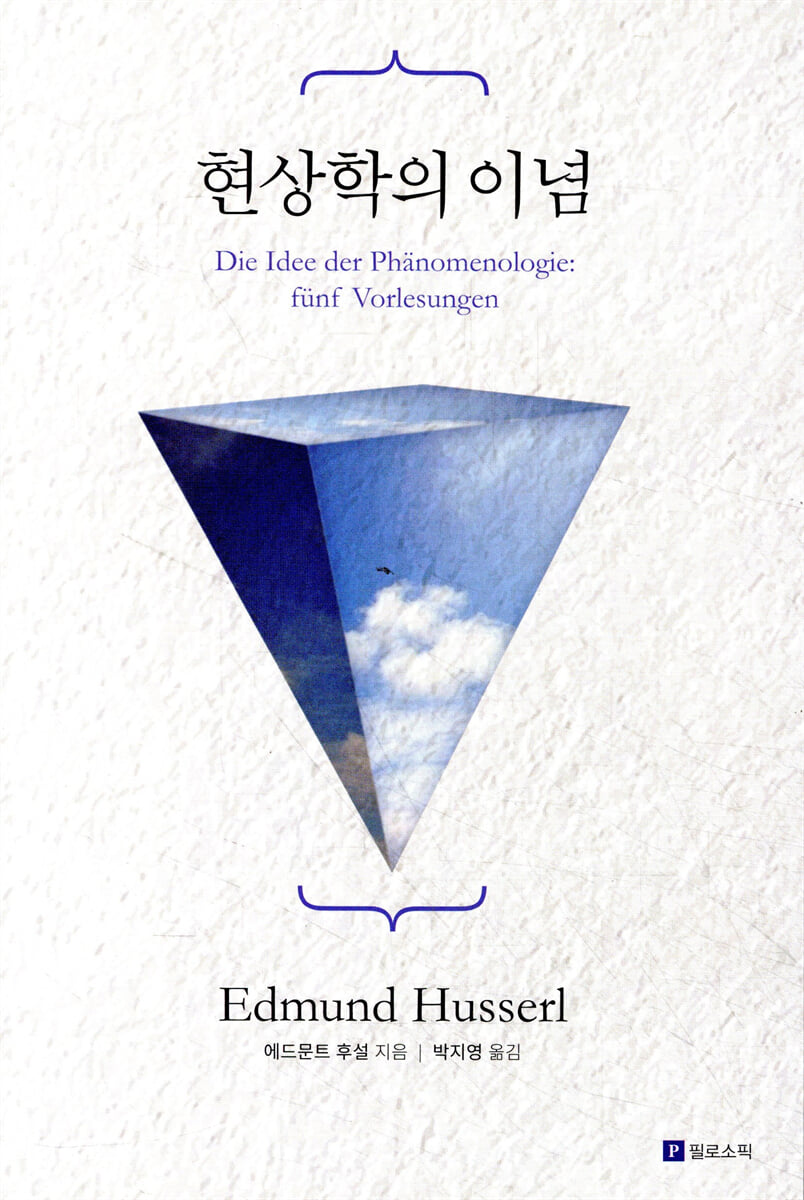
The idea of phenomenology
 |
Description
Book Introduction
Lecture notes on the first public presentation of Husserl's transcendental phenomenology's ideas and methods
『The Idea of Phenomenology』 is a lecture note given by the German philosopher Edmund Husserl at the University of Göttingen in 1907.
Husserl gave a lecture series titled “Outline of Phenomenology and the Critique of Reason” in the summer semester of 1907, and the first five lectures, which constituted the introduction to this series, were published as “The Idea of Phenomenology” in Volume 2 of “The Complete Works of Husserl.”
《The Idea of Phenomenology》 is a lecture record in which the core ideas that determine Husserl's entire transcendental phenomenology are publicly announced for the first time, and it presents in detail the idea of transcendental phenomenology and its core ideas, such as phenomenological reduction and composition.
『The Idea of Phenomenology』 is a lecture note given by the German philosopher Edmund Husserl at the University of Göttingen in 1907.
Husserl gave a lecture series titled “Outline of Phenomenology and the Critique of Reason” in the summer semester of 1907, and the first five lectures, which constituted the introduction to this series, were published as “The Idea of Phenomenology” in Volume 2 of “The Complete Works of Husserl.”
《The Idea of Phenomenology》 is a lecture record in which the core ideas that determine Husserl's entire transcendental phenomenology are publicly announced for the first time, and it presents in detail the idea of transcendental phenomenology and its core ideas, such as phenomenological reduction and composition.
index
Translator's Preface
Reasoning stage of the lecture
Lecture 1
1.
Natural thinking attitude and natural learning
2.
philosophical (reflective) thinking attitude
3.
The irrationality of cognitive reflection in the natural attitude
4.
The dual task of true cognitive criticism
5.
Critique of True Knowledge as a Phenomenology of Knowledge
6.
A New Dimension in Philosophy: Philosophy's Own Method Against Science
Lecture 2
1.
The starting point of a critique of knowledge: doubting all knowledge.
2.
Securing an absolutely certain foundation in relation to Descartes's reflections on doubt
3.
The realm of absolute givenness
4.
Repetition and Supplementation: A Refutation of Arguments Denying the Possibility of a Critique of Epistemology
5.
The Mystery of Natural Cognition: Transcendence
6.
Distinction between the two concepts of immanence and transcendence
7.
The First Problem of the Critique of Knowledge: The Possibility of Transcendental Knowledge
8.
The principle of epistemological reduction
Lecture 3
1.
Performing epistemological reduction: excluding everything transcendent
2.
Subject of inquiry: pure phenomena
3.
The question of the "objective validity" of absolute phenomena
4.
The impossibility of limiting oneself to individual givenness: phenomenological cognition as cognition of essence.
5.
The two meanings of the concept of 'apriori'
Lecture 4
1.
Expanding the scope of inquiry through orientation
2.
The Self-Givenance of the Universal: A Philosophical Method of Analyzing Essence
3.
A Critique of the Emotional Theory of Evidence: Evidence as Self-Difference
4.
Not limited to the realm of intrinsic nature: the theme of all self-givenness
Lecture 5
1.
The composition of time consciousness
2.
Understanding essence as a clear given of essence: The constitution of individual essence and the constitution of universal consciousness.
3.
categorical givenness
4.
The very thing conceived symbolically
5.
The broadest area of inquiry: the composition of various modes of objectivity in cognition - the problem of the correlation between cognition and the object of cognition.
Appendix 1 /
Appendix 2 /
Appendix 3 /
Reasoning stage of the lecture
Lecture 1
1.
Natural thinking attitude and natural learning
2.
philosophical (reflective) thinking attitude
3.
The irrationality of cognitive reflection in the natural attitude
4.
The dual task of true cognitive criticism
5.
Critique of True Knowledge as a Phenomenology of Knowledge
6.
A New Dimension in Philosophy: Philosophy's Own Method Against Science
Lecture 2
1.
The starting point of a critique of knowledge: doubting all knowledge.
2.
Securing an absolutely certain foundation in relation to Descartes's reflections on doubt
3.
The realm of absolute givenness
4.
Repetition and Supplementation: A Refutation of Arguments Denying the Possibility of a Critique of Epistemology
5.
The Mystery of Natural Cognition: Transcendence
6.
Distinction between the two concepts of immanence and transcendence
7.
The First Problem of the Critique of Knowledge: The Possibility of Transcendental Knowledge
8.
The principle of epistemological reduction
Lecture 3
1.
Performing epistemological reduction: excluding everything transcendent
2.
Subject of inquiry: pure phenomena
3.
The question of the "objective validity" of absolute phenomena
4.
The impossibility of limiting oneself to individual givenness: phenomenological cognition as cognition of essence.
5.
The two meanings of the concept of 'apriori'
Lecture 4
1.
Expanding the scope of inquiry through orientation
2.
The Self-Givenance of the Universal: A Philosophical Method of Analyzing Essence
3.
A Critique of the Emotional Theory of Evidence: Evidence as Self-Difference
4.
Not limited to the realm of intrinsic nature: the theme of all self-givenness
Lecture 5
1.
The composition of time consciousness
2.
Understanding essence as a clear given of essence: The constitution of individual essence and the constitution of universal consciousness.
3.
categorical givenness
4.
The very thing conceived symbolically
5.
The broadest area of inquiry: the composition of various modes of objectivity in cognition - the problem of the correlation between cognition and the object of cognition.
Appendix 1 /
Appendix 2 /
Appendix 3 /
Publisher's Review
By elucidating the enormous problem of the nature of perception,
Unraveling the Mystery of Recognition
What Husserl seeks to explain in this book is the possibility of transcendental knowledge.
How can we reach beyond our consciousness and experience transcendent objects? This enigmatic question has led countless philosophers to the frustrating brink of skepticism.
Husserl seeks an answer to this question through rigorous philosophical reflection and a thorough critique of knowledge that is unparalleled.
The idea of phenomenology demands that we begin from the realm of knowledge that is most clearly given to us, without any preconceived presuppositions or preconceived notions.
The perception given as a starting point is the one directly presented by the critique of perception, the kind of perception that absolutely clearly and undoubtedly excludes all skepticism about its possibility.
The philosophical method that Husserl presents to reach this realization is the method of phenomenological reduction, which is the 'exclusion of all transcendental things.'
Through phenomenological reduction we remain in the realm of consciousness' immanence.
But the problem is this.
If we must remain in the realm of consciousness, how can we explain how transcendental objects are perceived and experienced by us?
Husserl finds a clue to the solution by presenting a more detailed and profound definition of the concept of phenomenological reduction.
Phenomenological reduction does not mean reduction to substantial immanence, that is, reduction to the realm of what substantively belongs to conscious experience.
So, after performing phenomenological reduction, the realm of perception is not limited to zero.
Phenomenological reduction means reduction to the realm of absolutely given evidence.
So, all intentional objects that are intentionally immanent while transcending consciousness in substance are included in the realm of cognition.
The intentional object of consciousness is not an intrinsic part of the phenomenon and can never be found in the phenomenon.
But something that cannot be dissolved into the phenomenon is constituted within the phenomenon.
These objective things that appear in phenomena also belong to the realm of evidence by being given absolutely to our consciousness.
This is because when we intuit a pure phenomenon, the object is not outside of perception or 'consciousness', but is given simultaneously in the sense of being the absolute self-given of what is purely intuited.
This construction of things is possible because consciousness transcends the given, and since transcendence is an essential function of cognition, we can always construct meaning by transcending consciousness and relate to transcendent objects through the meaning thus constructed.
With the kindest commentary
An Introduction to Core Concepts in Phenomenology
In addition, these lecture notes present in detail numerous core concepts of phenomenology, such as essential intuition, evidence, categorical givenness, and time consciousness.
In addition, it provides commentary in the form of footnotes to explain difficult-to-understand phenomenological contents as kindly as possible.
Therefore, this book will be an excellent introductory text for beginners in phenomenology, allowing them to properly experience the essence of phenomenology's ideas and methods. It is also expected to provide researchers familiar with phenomenology with many new insights regarding the issue of recognizability.
Unraveling the Mystery of Recognition
What Husserl seeks to explain in this book is the possibility of transcendental knowledge.
How can we reach beyond our consciousness and experience transcendent objects? This enigmatic question has led countless philosophers to the frustrating brink of skepticism.
Husserl seeks an answer to this question through rigorous philosophical reflection and a thorough critique of knowledge that is unparalleled.
The idea of phenomenology demands that we begin from the realm of knowledge that is most clearly given to us, without any preconceived presuppositions or preconceived notions.
The perception given as a starting point is the one directly presented by the critique of perception, the kind of perception that absolutely clearly and undoubtedly excludes all skepticism about its possibility.
The philosophical method that Husserl presents to reach this realization is the method of phenomenological reduction, which is the 'exclusion of all transcendental things.'
Through phenomenological reduction we remain in the realm of consciousness' immanence.
But the problem is this.
If we must remain in the realm of consciousness, how can we explain how transcendental objects are perceived and experienced by us?
Husserl finds a clue to the solution by presenting a more detailed and profound definition of the concept of phenomenological reduction.
Phenomenological reduction does not mean reduction to substantial immanence, that is, reduction to the realm of what substantively belongs to conscious experience.
So, after performing phenomenological reduction, the realm of perception is not limited to zero.
Phenomenological reduction means reduction to the realm of absolutely given evidence.
So, all intentional objects that are intentionally immanent while transcending consciousness in substance are included in the realm of cognition.
The intentional object of consciousness is not an intrinsic part of the phenomenon and can never be found in the phenomenon.
But something that cannot be dissolved into the phenomenon is constituted within the phenomenon.
These objective things that appear in phenomena also belong to the realm of evidence by being given absolutely to our consciousness.
This is because when we intuit a pure phenomenon, the object is not outside of perception or 'consciousness', but is given simultaneously in the sense of being the absolute self-given of what is purely intuited.
This construction of things is possible because consciousness transcends the given, and since transcendence is an essential function of cognition, we can always construct meaning by transcending consciousness and relate to transcendent objects through the meaning thus constructed.
With the kindest commentary
An Introduction to Core Concepts in Phenomenology
In addition, these lecture notes present in detail numerous core concepts of phenomenology, such as essential intuition, evidence, categorical givenness, and time consciousness.
In addition, it provides commentary in the form of footnotes to explain difficult-to-understand phenomenological contents as kindly as possible.
Therefore, this book will be an excellent introductory text for beginners in phenomenology, allowing them to properly experience the essence of phenomenology's ideas and methods. It is also expected to provide researchers familiar with phenomenology with many new insights regarding the issue of recognizability.
GOODS SPECIFICS
- Date of issue: August 5, 2020
- Page count, weight, size: 152 pages | 140*210*20mm
- ISBN13: 9791157831913
- ISBN10: 1157831915
You may also like
카테고리
korean


korean

![GQ KOREA Mark (Monthly): December [2025]](http://librairie.coreenne.fr/cdn/shop/files/8ef265dbbfbf186523ed75ba7319009d.jpg?v=1765340328&width=3840)


