

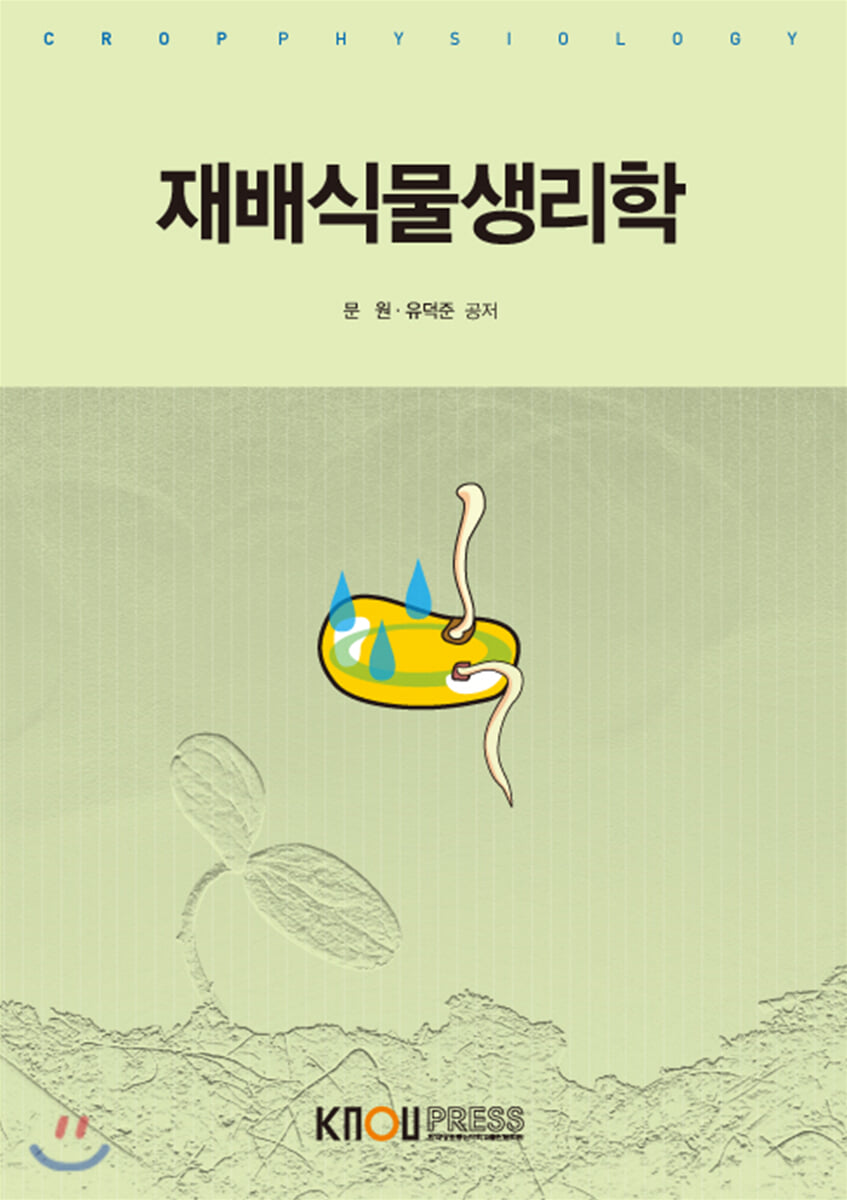
Cultivated Plant Physiology
 |
Description
Book Introduction
The contents of this book are organized into 5 parts and 16 chapters by topic, and are divided into plant anatomy, water and nutrient physiology, photosynthesis and respiration, growth and development physiology, and growth control, with an appendix.
Each section introduces relevant references and organizes key terms by chapter.
There are many pictures and tables in the text, and the key points are summarized at the bottom while avoiding duplication with the text.
And at the end of each chapter, the content is summarized and practice problems are provided.
In addition, detailed information on lipid metabolism, secondary products, and phytochrome, which are major plant physiology that could not be covered due to topic selection and table of contents, is included as an appendix.
Each section introduces relevant references and organizes key terms by chapter.
There are many pictures and tables in the text, and the key points are summarized at the bottom while avoiding duplication with the text.
And at the end of each chapter, the content is summarized and practice problems are provided.
In addition, detailed information on lipid metabolism, secondary products, and phytochrome, which are major plant physiology that could not be covered due to topic selection and table of contents, is included as an appendix.
index
Part 1: Anatomical Forms of Plants
Chapter 1: Structure and Morphology of Plants
Chapter 2 Plant Cells
Part 2: Water and Nutrient Physiology
Chapter 3: Properties of Water and Water Potential
Chapter 4 Absorption, Movement, and Excretion of Moisture
Chapter 5 Mineral Nutrition of Plants
Chapter 6 Absorption and Assimilation of Mineral Nutrients
Part 3 Photosynthesis and Respiration
Chapter 7 Photosynthesis
Chapter 8 Transportation and Storage of Fairy Products
Chapter 9 Plant Respiration
Part 4: Growth and Developmental Physiology
Chapter 10 Plant Dormancy
Chapter 11 Seed Germination
Chapter 12 Plant Growth and Physiology
Chapter 13: Physiology of Flowering
Chapter 14 Fruition and Aging
Part 5: Regulation of Growth
Chapter 15 Plant Hormones
Chapter 16: Environmental and Stress Physiology
supplement
1.
Lipid metabolism
2.
secondary products
3.
Phytochrome
Chapter 1: Structure and Morphology of Plants
Chapter 2 Plant Cells
Part 2: Water and Nutrient Physiology
Chapter 3: Properties of Water and Water Potential
Chapter 4 Absorption, Movement, and Excretion of Moisture
Chapter 5 Mineral Nutrition of Plants
Chapter 6 Absorption and Assimilation of Mineral Nutrients
Part 3 Photosynthesis and Respiration
Chapter 7 Photosynthesis
Chapter 8 Transportation and Storage of Fairy Products
Chapter 9 Plant Respiration
Part 4: Growth and Developmental Physiology
Chapter 10 Plant Dormancy
Chapter 11 Seed Germination
Chapter 12 Plant Growth and Physiology
Chapter 13: Physiology of Flowering
Chapter 14 Fruition and Aging
Part 5: Regulation of Growth
Chapter 15 Plant Hormones
Chapter 16: Environmental and Stress Physiology
supplement
1.
Lipid metabolism
2.
secondary products
3.
Phytochrome
Publisher's Review
Cultivated plants are generally called crops.
Why cultivated plant physiology and not plant physiology? It's meant to be more comprehensive in its focus on plants.
Cultivated plant physiology is an applied science and must be distinguished from pure plant physiology.
Of course, it is appropriate to understand the physiological phenomena of plants from an agricultural or agricultural perspective.
However, it must be acknowledged that there are areas where the academic boundaries between plant physiology and cultivated plant physiology are unclear.
The original academic goal of cultivated plant physiology is to understand the various life phenomena occurring within plants and to apply that understanding to agricultural science.
Today's agriculture is a precision science and technology, and most of the advanced technologies applied to crop production have been developed thanks to research in cultivated plant physiology.
Therefore, in order to understand advanced agricultural technologies and further develop new agricultural technologies, a physiological understanding of cultivated plants is necessary.
In this respect, when studying cultivated plant physiology, it is important to consider what the relevant information and knowledge mean to agronomy and agriculture.
The contents of this book are organized into 5 parts and 16 chapters by topic, and are divided into plant anatomy, water and nutrient physiology, photosynthesis and respiration, growth and development physiology, and growth control, with an appendix.
Each section introduces relevant references and organizes key terms by chapter.
There are many pictures and tables in the text, and the key points are summarized at the bottom while avoiding duplication with the text.
And at the end of each chapter, the content is summarized and practice problems are provided.
In addition, detailed information on lipid metabolism, secondary products, and phytochrome, which are major plant physiology that could not be covered due to topic selection and table of contents, is included as an appendix.
Why cultivated plant physiology and not plant physiology? It's meant to be more comprehensive in its focus on plants.
Cultivated plant physiology is an applied science and must be distinguished from pure plant physiology.
Of course, it is appropriate to understand the physiological phenomena of plants from an agricultural or agricultural perspective.
However, it must be acknowledged that there are areas where the academic boundaries between plant physiology and cultivated plant physiology are unclear.
The original academic goal of cultivated plant physiology is to understand the various life phenomena occurring within plants and to apply that understanding to agricultural science.
Today's agriculture is a precision science and technology, and most of the advanced technologies applied to crop production have been developed thanks to research in cultivated plant physiology.
Therefore, in order to understand advanced agricultural technologies and further develop new agricultural technologies, a physiological understanding of cultivated plants is necessary.
In this respect, when studying cultivated plant physiology, it is important to consider what the relevant information and knowledge mean to agronomy and agriculture.
The contents of this book are organized into 5 parts and 16 chapters by topic, and are divided into plant anatomy, water and nutrient physiology, photosynthesis and respiration, growth and development physiology, and growth control, with an appendix.
Each section introduces relevant references and organizes key terms by chapter.
There are many pictures and tables in the text, and the key points are summarized at the bottom while avoiding duplication with the text.
And at the end of each chapter, the content is summarized and practice problems are provided.
In addition, detailed information on lipid metabolism, secondary products, and phytochrome, which are major plant physiology that could not be covered due to topic selection and table of contents, is included as an appendix.
GOODS SPECIFICS
- Date of publication: July 25, 2013
- Page count, weight, size: 484 pages | 172*245*30mm
- ISBN13: 9788920011221
- ISBN10: 8920011222
You may also like
카테고리
korean


korean

![GQ KOREA Mark (Monthly): December [2025]](http://librairie.coreenne.fr/cdn/shop/files/8ef265dbbfbf186523ed75ba7319009d.jpg?v=1765340328&width=3840)


