

Design and Human Psychology
 |
Description
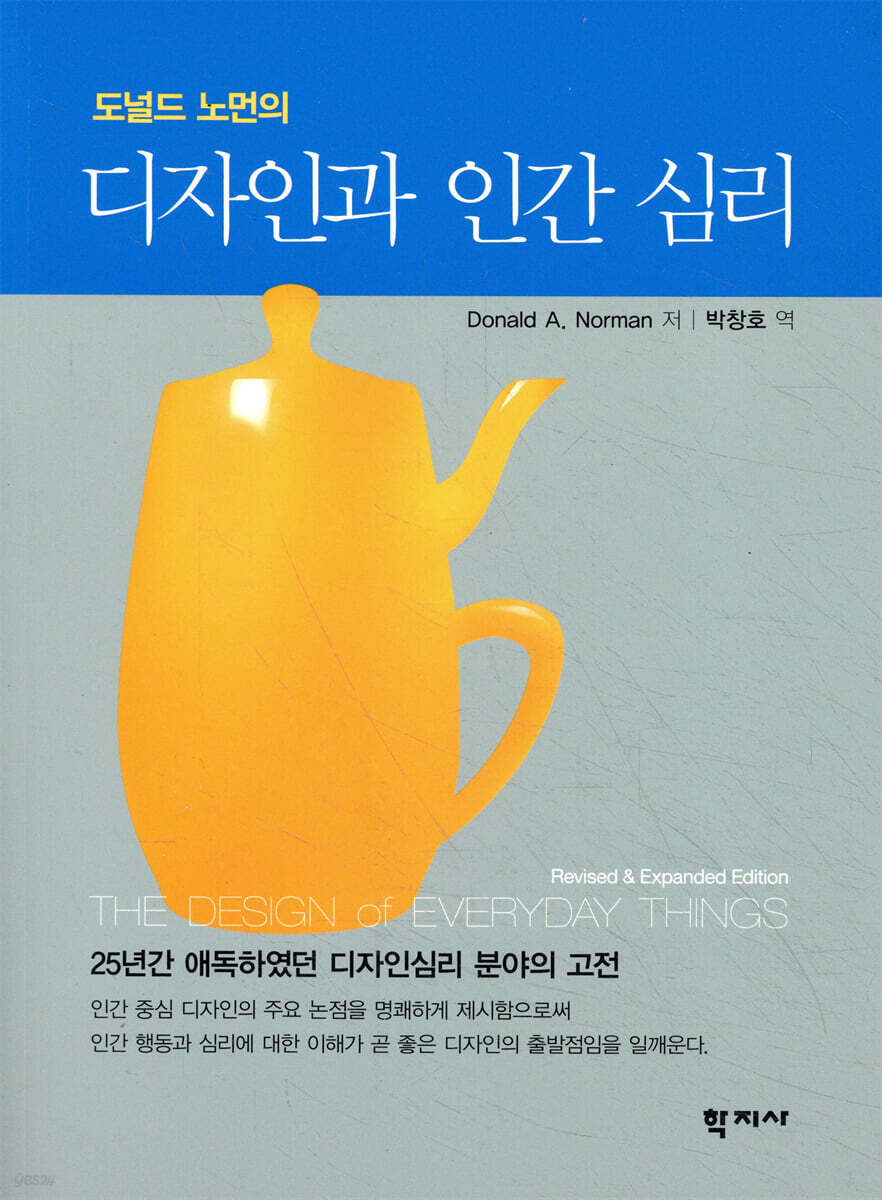
Book Introduction
『Design and Human Psychology』 has been widely read for over 25 years since its first edition was published in 1988, and is now recognized as a classic in the field of design.
The book was also very popular as a popular book on everyday objects and general psychology, so much so that the word "door," which was difficult to spell properly, was even named Norman's doors.
In this revised and expanded edition, published in 2013, Norman has preserved the fun and usefulness of the first edition while incorporating 25 years of experience and insight into a single volume: Design and Human Psychology (Revised and Expanded Edition).
While retaining the framework of the first edition to a certain extent, "Design and Human Psychology" reflects the technological and industrial advancements that have occurred over the past 25 years, presenting contemporary examples and new issues, synthesizing the experiences and reflections gained over the years.
Overall, the changes include revisions to the design principles presented in the first edition, a greater emphasis on the role of emotions and the importance of culture in design, and a detailed treatment of the human-centered design process, issues in the design field, and the complexities of business.
This design classic is valuable as a popular psychology book that helps readers understand human behavior and psychology through everyday objects like doors, thermostats, and automobiles, and as an introductory design book that sketches the psychological principles of design and the complexities of practice.
By clearly presenting the main points of design, it also enlightens designers and related professionals that understanding human behavior and psychology is the starting point for good design.
It also presents a vision of design studies as a comprehensive science that integrates various fields such as psychology, engineering, and business administration with design at its center.
The book was also very popular as a popular book on everyday objects and general psychology, so much so that the word "door," which was difficult to spell properly, was even named Norman's doors.
In this revised and expanded edition, published in 2013, Norman has preserved the fun and usefulness of the first edition while incorporating 25 years of experience and insight into a single volume: Design and Human Psychology (Revised and Expanded Edition).
While retaining the framework of the first edition to a certain extent, "Design and Human Psychology" reflects the technological and industrial advancements that have occurred over the past 25 years, presenting contemporary examples and new issues, synthesizing the experiences and reflections gained over the years.
Overall, the changes include revisions to the design principles presented in the first edition, a greater emphasis on the role of emotions and the importance of culture in design, and a detailed treatment of the human-centered design process, issues in the design field, and the complexities of business.
This design classic is valuable as a popular psychology book that helps readers understand human behavior and psychology through everyday objects like doors, thermostats, and automobiles, and as an introductory design book that sketches the psychological principles of design and the complexities of practice.
By clearly presenting the main points of design, it also enlightens designers and related professionals that understanding human behavior and psychology is the starting point for good design.
It also presents a vision of design studies as a comprehensive science that integrates various fields such as psychology, engineering, and business administration with design at its center.
index
Translator's Preface
Preface to the Revised Edition
Chapter 1: Psychopathology of Consumer Goods
The complexity of modern devices
human-centered design
Basic principles of interaction
System Image
The paradox of technology
The challenge of design
Chapter 2: The Psychology of Everyday Behavior
How People Work: The Gap Between Execution and Evaluation
Seven Steps to Action
Human thinking: largely subconscious
Human cognition and emotion
Seven stages of action and three levels of processing
People are storytellers
Blaming the wrong thing
Blaming yourself
Seven Steps to Action: Seven Fundamental Design Principles
Chapter 3: Knowledge in the Head and Knowledge in the World
Taking correct action with inaccurate knowledge
Memory is knowledge in the head.
The structure of memory
Approximate Models: Memory in the Real World
Knowledge in the head
The exchange relationship between knowledge in the world and knowledge in the head
Memory across multiple heads and devices
natural response
Culture and Design: Natural Responses May Vary by Culture
Chapter 4: Knowing What to Do: Constraints, Discoverability, and Feedback
Four types of constraints: physical, cultural, semantic, and logical.
Application of behavioral support, signifiers, and constraints to everyday objects
Constraints that force desired behavior
Customs, constraints, and support for actions
Faucets: A Case Study in Design
Using sound as a signifier
Chapter 5: Human Error? No, Bad Design
Understanding Why Errors Occur
Intentional violation
Two Kinds of Errors: Mistakes and Mistakes
Classification of mistakes
Classification of errors
social and institutional pressures
Report an error
Error detection
Design for errors
When good design isn't enough
Resilience Engineering
The Paradox of Automation
Design principles for handling errors
Chapter 6: Thinking about Design
Solve the right problem
Double diamond model of design
Human-Centered Design Process
What I just said? It doesn't actually work that way.
Design Challenge
Complexity is good, chaos is bad.
Standardization and Technology
Making things difficult on purpose
Design: Developing technology for people
Chapter 7: Design in the Business World
Competitive power
New technologies force change
How long does it take to introduce a new product?
Two forms of innovation: incremental and radical
Everyday Product Design: 1988–2038
The future of books
The Ethical Obligations of Design
Thinking about design and thinking about design
General Reading and Notes
Preface to the Revised Edition
Chapter 1: Psychopathology of Consumer Goods
The complexity of modern devices
human-centered design
Basic principles of interaction
System Image
The paradox of technology
The challenge of design
Chapter 2: The Psychology of Everyday Behavior
How People Work: The Gap Between Execution and Evaluation
Seven Steps to Action
Human thinking: largely subconscious
Human cognition and emotion
Seven stages of action and three levels of processing
People are storytellers
Blaming the wrong thing
Blaming yourself
Seven Steps to Action: Seven Fundamental Design Principles
Chapter 3: Knowledge in the Head and Knowledge in the World
Taking correct action with inaccurate knowledge
Memory is knowledge in the head.
The structure of memory
Approximate Models: Memory in the Real World
Knowledge in the head
The exchange relationship between knowledge in the world and knowledge in the head
Memory across multiple heads and devices
natural response
Culture and Design: Natural Responses May Vary by Culture
Chapter 4: Knowing What to Do: Constraints, Discoverability, and Feedback
Four types of constraints: physical, cultural, semantic, and logical.
Application of behavioral support, signifiers, and constraints to everyday objects
Constraints that force desired behavior
Customs, constraints, and support for actions
Faucets: A Case Study in Design
Using sound as a signifier
Chapter 5: Human Error? No, Bad Design
Understanding Why Errors Occur
Intentional violation
Two Kinds of Errors: Mistakes and Mistakes
Classification of mistakes
Classification of errors
social and institutional pressures
Report an error
Error detection
Design for errors
When good design isn't enough
Resilience Engineering
The Paradox of Automation
Design principles for handling errors
Chapter 6: Thinking about Design
Solve the right problem
Double diamond model of design
Human-Centered Design Process
What I just said? It doesn't actually work that way.
Design Challenge
Complexity is good, chaos is bad.
Standardization and Technology
Making things difficult on purpose
Design: Developing technology for people
Chapter 7: Design in the Business World
Competitive power
New technologies force change
How long does it take to introduce a new product?
Two forms of innovation: incremental and radical
Everyday Product Design: 1988–2038
The future of books
The Ethical Obligations of Design
Thinking about design and thinking about design
General Reading and Notes
GOODS SPECIFICS
- Date of publication: September 20, 2016
- Format: Hardcover book binding method guide
- Page count, weight, size: 396 pages | 700g | 174*236*18mm
- ISBN13: 9788999708862
- ISBN10: 8999708861
You may also like
카테고리
korean


korean

![ELLE 엘르 스페셜 에디션 A형 : 12월 [2025]](http://librairie.coreenne.fr/cdn/shop/files/b8e27a3de6c9538896439686c6b0e8fb.jpg?v=1766436872&width=3840)


