

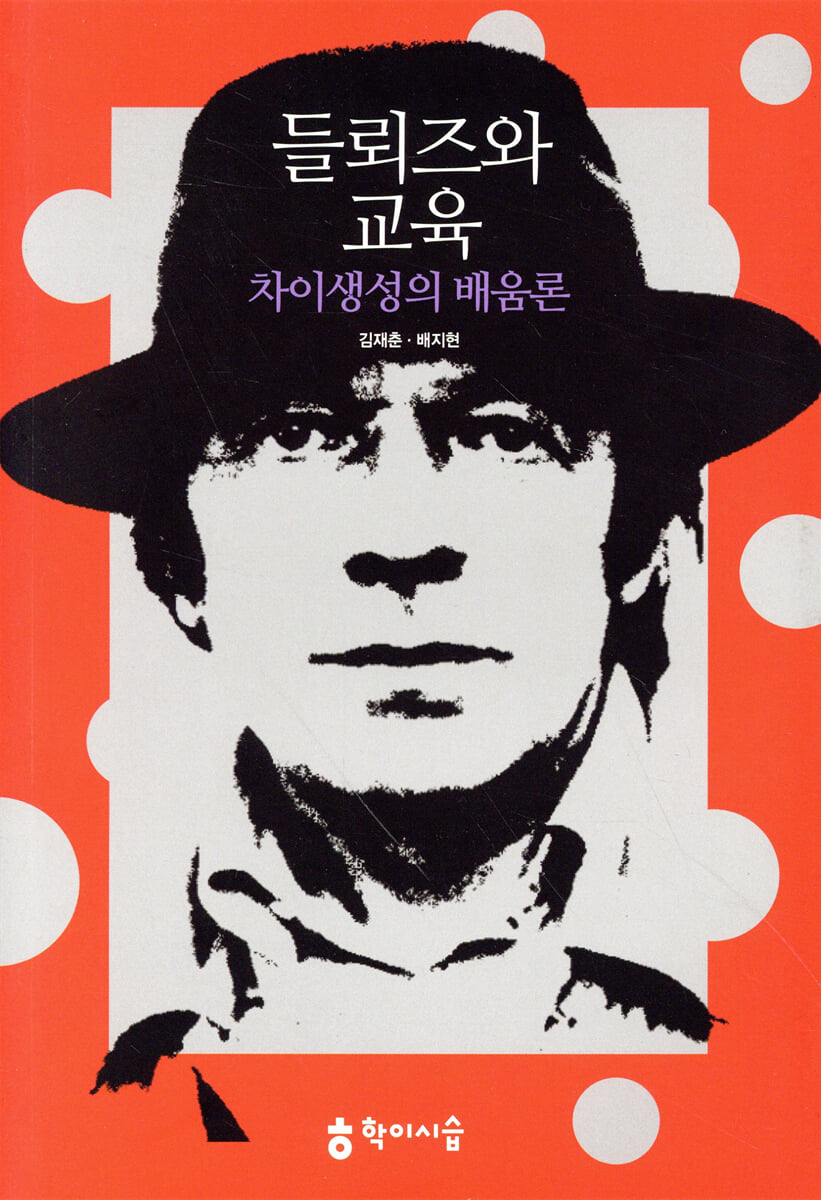
Deleuze and Education
 |
Description
Book Introduction
What kind of activity is learning? Is it something that is taught and nurtured? What happens if we overturn the traditional, teacher-centered interpretation? What new meanings of learning might we find? The author finds answers in Gilles Deleuze's "Philosophy of Difference."
We are attempting to explore new ways of thinking about education.
Because true life and learning are possible not through repetition of the same thing, but through ‘repetition of creating differences.’
We are attempting to explore new ways of thinking about education.
Because true life and learning are possible not through repetition of the same thing, but through ‘repetition of creating differences.’
index
Opening the Book: An Exploration into Rethinking Education
Introduction: A New Understanding of Learning Through Deleuze's Philosophy
Part 1: Why Deleuze is Needed in Education
01 Why Deleuze in Education?
A metaphor for educational play at sea
Plato's Allegory of the Cave
02 Difference in repetition, repetition of difference
Difference in repetition
Repetition of differences
The unity of being written through difference and repetition
03 Education of Difference Creation through Deleuze's Philosophy
Three types of education
Education for the creation of differences that pursues equality of existence
Part 2: The Principle of Difference Creation: Strength and Ideology
04 Intensity as an emotional principle of difference generation
The emotional and material depth of existence
Kant's intensity and Deleuze's intensity
Characteristics of the robbery
05 Ideology as an ideal principle of difference creation
The relationship between strength and ideology
Ideology as a Manifold
How ideology works
06 Ontology of Difference Generation
Reality composed of ideology, intensity, and reality
The origin and change of existence
Part 3: Deleuze's Theory of Learning
Lesson 07: Encountering Symbols
Learning as an activity that encounters symbols
Symbols as content of learning
The power of symbols
Lesson 2: Infiltrating Ideology
Learning as an activity that explores ideology
The process of exploration within ideology
How cognitive abilities are generated from ideology
Lesson 3: Creating Differences Through the Association of Symbols and Ideologies
The structure of learning formed by the union of symbols and ideologies
Learning as a thought triggered by the object of encounter
Part 4: Deleuze's Education: Towards Learning the Production of Difference
10 Educational Body and Subject from a Deleuzeian Perspective
The educational body from a Deleuzeian perspective
The educational subject from a Deleuzeian perspective
11. Educational Application of the Learning Theory of Difference Generation
Education for learning to create differences
Learning theory and curriculum of difference production
Reconceptualizing the Curriculum: "Breaking the Path" and "Finding the Traces"
The Meaning of Teaching in the Education of 12 Differences
Characteristics of teaching in the education of difference generation
The relationship between learning and teaching in the education of difference generation
Closing the book
supplement
1 The Evolution of Deleuze's Thought
2 Deleuze's Philosophy, Science, and Art
3 Overview of Differences and Repetitions
References
Search
Introduction: A New Understanding of Learning Through Deleuze's Philosophy
Part 1: Why Deleuze is Needed in Education
01 Why Deleuze in Education?
A metaphor for educational play at sea
Plato's Allegory of the Cave
02 Difference in repetition, repetition of difference
Difference in repetition
Repetition of differences
The unity of being written through difference and repetition
03 Education of Difference Creation through Deleuze's Philosophy
Three types of education
Education for the creation of differences that pursues equality of existence
Part 2: The Principle of Difference Creation: Strength and Ideology
04 Intensity as an emotional principle of difference generation
The emotional and material depth of existence
Kant's intensity and Deleuze's intensity
Characteristics of the robbery
05 Ideology as an ideal principle of difference creation
The relationship between strength and ideology
Ideology as a Manifold
How ideology works
06 Ontology of Difference Generation
Reality composed of ideology, intensity, and reality
The origin and change of existence
Part 3: Deleuze's Theory of Learning
Lesson 07: Encountering Symbols
Learning as an activity that encounters symbols
Symbols as content of learning
The power of symbols
Lesson 2: Infiltrating Ideology
Learning as an activity that explores ideology
The process of exploration within ideology
How cognitive abilities are generated from ideology
Lesson 3: Creating Differences Through the Association of Symbols and Ideologies
The structure of learning formed by the union of symbols and ideologies
Learning as a thought triggered by the object of encounter
Part 4: Deleuze's Education: Towards Learning the Production of Difference
10 Educational Body and Subject from a Deleuzeian Perspective
The educational body from a Deleuzeian perspective
The educational subject from a Deleuzeian perspective
11. Educational Application of the Learning Theory of Difference Generation
Education for learning to create differences
Learning theory and curriculum of difference production
Reconceptualizing the Curriculum: "Breaking the Path" and "Finding the Traces"
The Meaning of Teaching in the Education of 12 Differences
Characteristics of teaching in the education of difference generation
The relationship between learning and teaching in the education of difference generation
Closing the book
supplement
1 The Evolution of Deleuze's Thought
2 Deleuze's Philosophy, Science, and Art
3 Overview of Differences and Repetitions
References
Search
Into the book
Deleuze views repetition from the perspective of ‘repetition in art’ rather than ‘repetition in everyday life.’
That is, rather than thinking about repetition within generality, we reconceptualize repetition outside of generality.
It is to think of repetition in relation to singularity, which is non-exchangeable and irreplaceable.
From this perspective, Deleuze emphasizes the 'paradox of repetition' that overturns the common sense about repetition.
Repetition is 'repeating something that cannot be started again.'
---From "02 Difference in Repetition, Repetition of Difference"
We actively develop our existence and expand our potential to the fullest extent on the canvas of education.
The canvas of education can become the most equal place when students, whether superior or inferior, can experiment and develop their own 'differences.'
When both the student learning and the teacher teaching can fully realize 'creating difference' or 'becoming different', the brush of education can paint a pleasant sound.
Deleuze's following story encourages us to imagine such an education.
---From "03 Education of Difference Creation Through Deleuze's Philosophy"
Deleuze's idea of 'learning as an activity that encounters signs' tells us that learning is never the same as re-recognizing something that already exists.
It also shows that understanding abstract knowledge with only consciousness and intellect without emotional involvement is not learning.
The greatest resonance that Deleuze's theory of learning provides us lies in the fact that learning is not an activity of 'reproduction of identity' that views phenomena identically according to the existing knowledge system, but rather an activity of 'creation of difference' that produces new knowledge according to the guidance of signs that are sensed specifically.
---From "07 Learning 1: Encountering Symbols"
Deleuze tells us that the body of the learner who practices learning has an enormous capacity for creation.
The body is the soil of difference creation, constantly generating different sensations within the emotional magnetic field created by other objects.
The body is also a trigger for the creation of differences, allowing the new sensations that arise from this to be transferred into new perspectives and styles.
According to this Deleuzian perspective, education primarily needs to devise concrete practical strategies to enable the learner's 'body' to become a more fertile soil for the production of difference, a more powerful fuse for the production of difference.
That is, rather than thinking about repetition within generality, we reconceptualize repetition outside of generality.
It is to think of repetition in relation to singularity, which is non-exchangeable and irreplaceable.
From this perspective, Deleuze emphasizes the 'paradox of repetition' that overturns the common sense about repetition.
Repetition is 'repeating something that cannot be started again.'
---From "02 Difference in Repetition, Repetition of Difference"
We actively develop our existence and expand our potential to the fullest extent on the canvas of education.
The canvas of education can become the most equal place when students, whether superior or inferior, can experiment and develop their own 'differences.'
When both the student learning and the teacher teaching can fully realize 'creating difference' or 'becoming different', the brush of education can paint a pleasant sound.
Deleuze's following story encourages us to imagine such an education.
---From "03 Education of Difference Creation Through Deleuze's Philosophy"
Deleuze's idea of 'learning as an activity that encounters signs' tells us that learning is never the same as re-recognizing something that already exists.
It also shows that understanding abstract knowledge with only consciousness and intellect without emotional involvement is not learning.
The greatest resonance that Deleuze's theory of learning provides us lies in the fact that learning is not an activity of 'reproduction of identity' that views phenomena identically according to the existing knowledge system, but rather an activity of 'creation of difference' that produces new knowledge according to the guidance of signs that are sensed specifically.
---From "07 Learning 1: Encountering Symbols"
Deleuze tells us that the body of the learner who practices learning has an enormous capacity for creation.
The body is the soil of difference creation, constantly generating different sensations within the emotional magnetic field created by other objects.
The body is also a trigger for the creation of differences, allowing the new sensations that arise from this to be transferred into new perspectives and styles.
According to this Deleuzian perspective, education primarily needs to devise concrete practical strategies to enable the learner's 'body' to become a more fertile soil for the production of difference, a more powerful fuse for the production of difference.
---From "10 Educational Body and Subject from Deleuze's Perspective"
Publisher's Review
What is education?
It is an activity of ‘teaching and nurturing’.
School education represents the traditional interpretation of education.
School education teaches and raises students with the ‘logic of identity.’
The teacher gives a problem with an answer, and the student works to find the answer by solving the problem.
There is no opportunity to find solutions by experimenting and thinking about various learning materials.
Learning and life are about repeating the same thing over and over again.
Is this education suited to the political, economic, social, and cultural context of the 21st century, the era of the future?
Answering with Deleuze's 'philosophy of difference'
We find a new meaning in education through Deleuze's philosophy that "true life and learning are possible not through repetition of the same thing, but through 'repetition of difference creation.'"
Learning is an activity that constantly creates differences in thinking and life.
This book deeply examines the meaning of learning implicit in Deleuze's philosophy, offers a new understanding of the activity of learning, and explores the possibilities of education and curriculum based on differential generative thinking.
Contents of the book
In Part 1, we explain the education of identity and the education of difference by comparing it to educational play in the sea and Plato's allegory of the cave, and we examine why Deleuze's philosophy is necessary in education.
We explore the meaning of 'difference' and 'repetition', the representative conceptual axes that constitute Deleuze's philosophy of difference creation, and present a new educational model that pursues ontological equality through creation.
In Part 2, we explore the principles of difference creation: ‘intensity’ and ‘ideology.’
In addition, we discuss the structure of Deleuze's ontology of difference creation based on these two principles.
Part 3 explores Deleuze's theory of learning based on these questions.
In Part 4, we explore the educational implications of Deleuze's theory of learning.
We discuss what implications Deleuze's theory of learning provides for education and what new vision it presents for education.
It is an activity of ‘teaching and nurturing’.
School education represents the traditional interpretation of education.
School education teaches and raises students with the ‘logic of identity.’
The teacher gives a problem with an answer, and the student works to find the answer by solving the problem.
There is no opportunity to find solutions by experimenting and thinking about various learning materials.
Learning and life are about repeating the same thing over and over again.
Is this education suited to the political, economic, social, and cultural context of the 21st century, the era of the future?
Answering with Deleuze's 'philosophy of difference'
We find a new meaning in education through Deleuze's philosophy that "true life and learning are possible not through repetition of the same thing, but through 'repetition of difference creation.'"
Learning is an activity that constantly creates differences in thinking and life.
This book deeply examines the meaning of learning implicit in Deleuze's philosophy, offers a new understanding of the activity of learning, and explores the possibilities of education and curriculum based on differential generative thinking.
Contents of the book
In Part 1, we explain the education of identity and the education of difference by comparing it to educational play in the sea and Plato's allegory of the cave, and we examine why Deleuze's philosophy is necessary in education.
We explore the meaning of 'difference' and 'repetition', the representative conceptual axes that constitute Deleuze's philosophy of difference creation, and present a new educational model that pursues ontological equality through creation.
In Part 2, we explore the principles of difference creation: ‘intensity’ and ‘ideology.’
In addition, we discuss the structure of Deleuze's ontology of difference creation based on these two principles.
Part 3 explores Deleuze's theory of learning based on these questions.
In Part 4, we explore the educational implications of Deleuze's theory of learning.
We discuss what implications Deleuze's theory of learning provides for education and what new vision it presents for education.
GOODS SPECIFICS
- Date of issue: March 18, 2016
- Page count, weight, size: 336 pages | 153*224*30mm
- ISBN13: 9791130421131
- ISBN10: 1130421139
You may also like
카테고리
korean


korean

![GQ KOREA Mark (Monthly): December [2025]](http://librairie.coreenne.fr/cdn/shop/files/8ef265dbbfbf186523ed75ba7319009d.jpg?v=1765340328&width=3840)


