

music therapy
 |
Description
Book Introduction
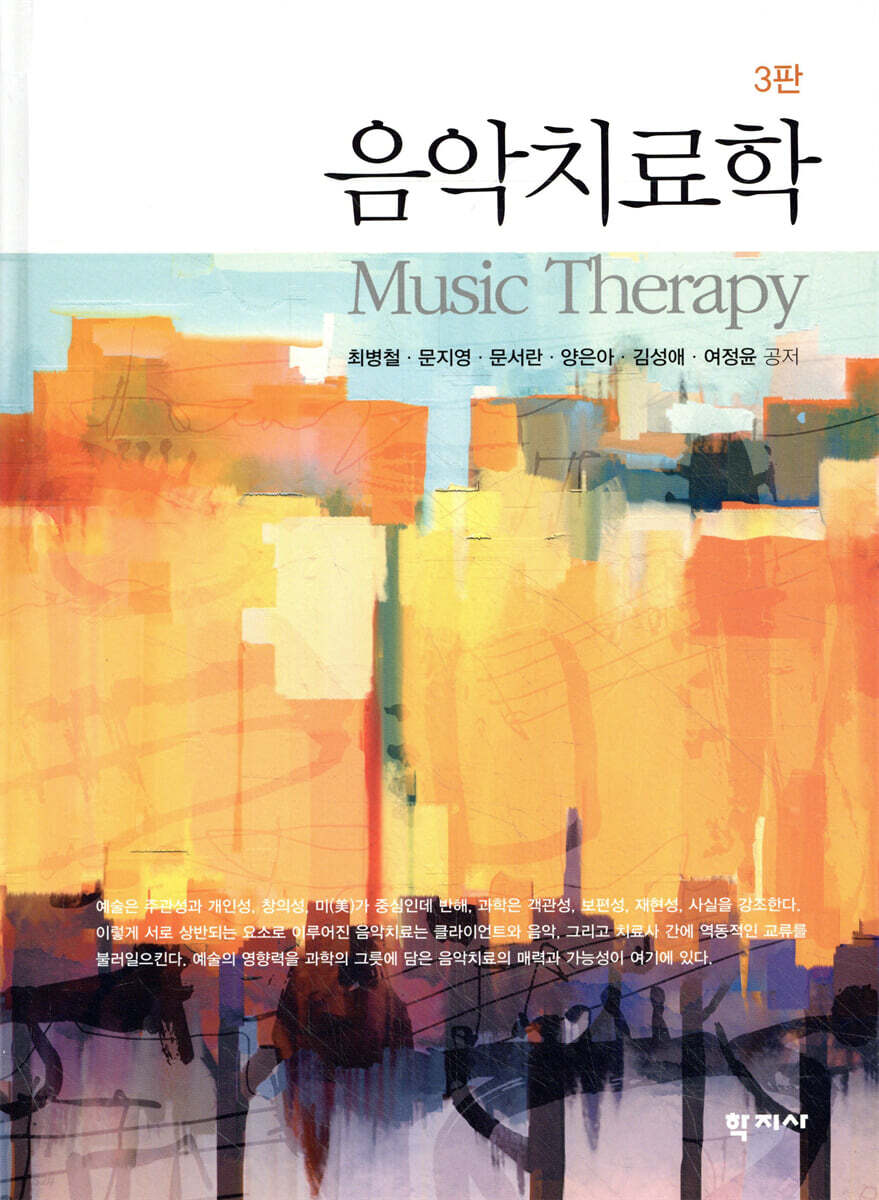
This book examines the principles and application of music therapy, as well as the methods of individualized music therapy, through the definition and historical background of music therapy, its power and function, theories and methods, and processes for a basic understanding of music therapy.
Furthermore, this revised and supplemented edition is significant in that it reflects the experiences of music therapy in major clinical fields such as mental illness, geriatric diseases, autism spectrum disorder, intellectual disability, emotional and behavioral disorders, physical disabilities, and hospitals, with the participation of professional music therapists with extensive experience in each clinical field.
As music therapy education in Korea celebrates its 20th anniversary, this book will serve as a guide for all those studying music therapy.
Furthermore, this revised and supplemented edition is significant in that it reflects the experiences of music therapy in major clinical fields such as mental illness, geriatric diseases, autism spectrum disorder, intellectual disability, emotional and behavioral disorders, physical disabilities, and hospitals, with the participation of professional music therapists with extensive experience in each clinical field.
As music therapy education in Korea celebrates its 20th anniversary, this book will serve as a guide for all those studying music therapy.
index
preface
Introduction
Chapter 1.
music therapy
1.
What is music therapy?
2.
The purpose and effects of music therapy
3.
Who do music therapists work for?
4.
Where do music therapists work?
5.
Qualifications and Responsibilities of a Music Therapist
6.
Music therapist training course
7.
Music therapist qualification management
Chapter 2.
Historical Background of Music Therapy
1.
Music therapy from ancient times to the late 19th century
2.
From the early 20th century to the dawn of music therapy
3.
The Birth of the Music Therapy Movement
4.
The founding of the National Music Therapy Association in the United States
5.
The development of music therapy in the United States
6.
Music therapy in Korea
Chapter 3.
The power and function of music
1.
Physiological responses to music
2.
Psychological response to music
3.
Social Response to Music
4.
The intrinsic elements of music that trigger a reaction
5.
Music as a communication function
Chapter 4.
Theory and Methods of Music Therapy
1.
The development of music therapy in the United States
2.
Development of music therapy theory
3.
Therapeutic music experience
Chapter 5.
Music therapy course
1.
Diagnostic evaluation
2.
Setting treatment goals and objectives
3.
Music activity plan
4.
Writing a treatment application plan
5.
Application of therapeutic activities and evaluation of patient response
Chapter 6.
Music therapy for people with mental illness
1.
schizophrenia
2.
Depressive disorder and bipolar disorder
3.
Other mental disorders
4.
Application of music therapy
5.
Music therapy methods
6.
Music therapy stages
7.
Purpose of music therapy
8.
Music Therapy Model
9.
Music Therapy Diagnostic Assessment
Chapter 7.
Music therapy for elderly patients
1.
Aging and the elderly
2.
Trends in music therapy for the elderly
3.
Clinical environment for geriatric music therapy in Korea
4.
Application of music therapy to the elderly
5.
Approaches to music therapy for the elderly
Chapter 8.
Music therapy for emotional and behavioral disorders in children and adolescents
1.
intellectual disability
2.
Attention Deficit Hyperactivity Disorder
3.
Disruptive Behavior Disorder and Conduct Disorder
4.
tic disorder
5.
learning disabilities
6.
Internet? Smartphone addiction
Chapter 9.
Music Therapy for Children with Autism Spectrum Disorder
1.
Definition of autism spectrum disorder
2.
Diagnosis and Evaluation of Autism Spectrum Disorder
3.
Causes and prevalence of autism spectrum disorder
4.
Behavioral characteristics of autism spectrum disorder
5.
Evidence for the Application of Music Therapy to Children with Autism Spectrum Disorder
6.
Areas of application of music therapy
7.
Considerations for Music Therapy Activities with Children with Autism Spectrum Disorder
Chapter 10.
Music therapy for people with physical disabilities
1.
cognitive dysfunction
2.
speech impediment
3.
walking disorder
Chapter 11.
Stress management and music therapy in hospitals
1.
Music activities for stress management
2.
Music therapy in general hospitals
supplement
Appendix 1.
Music, clinical skills, and music therapy training content for music therapist training
Appendix 2.
Checklist for Effective Music Therapy Sessions
Appendix 3.
Activity Plan Evaluation Checklist
Appendix 4.
Music Therapy Session Evaluation Form
Appendix 5.
Audio Critiques
Appendix 6.
Topics to discuss through song lyrics
Search
Introduction
Chapter 1.
music therapy
1.
What is music therapy?
2.
The purpose and effects of music therapy
3.
Who do music therapists work for?
4.
Where do music therapists work?
5.
Qualifications and Responsibilities of a Music Therapist
6.
Music therapist training course
7.
Music therapist qualification management
Chapter 2.
Historical Background of Music Therapy
1.
Music therapy from ancient times to the late 19th century
2.
From the early 20th century to the dawn of music therapy
3.
The Birth of the Music Therapy Movement
4.
The founding of the National Music Therapy Association in the United States
5.
The development of music therapy in the United States
6.
Music therapy in Korea
Chapter 3.
The power and function of music
1.
Physiological responses to music
2.
Psychological response to music
3.
Social Response to Music
4.
The intrinsic elements of music that trigger a reaction
5.
Music as a communication function
Chapter 4.
Theory and Methods of Music Therapy
1.
The development of music therapy in the United States
2.
Development of music therapy theory
3.
Therapeutic music experience
Chapter 5.
Music therapy course
1.
Diagnostic evaluation
2.
Setting treatment goals and objectives
3.
Music activity plan
4.
Writing a treatment application plan
5.
Application of therapeutic activities and evaluation of patient response
Chapter 6.
Music therapy for people with mental illness
1.
schizophrenia
2.
Depressive disorder and bipolar disorder
3.
Other mental disorders
4.
Application of music therapy
5.
Music therapy methods
6.
Music therapy stages
7.
Purpose of music therapy
8.
Music Therapy Model
9.
Music Therapy Diagnostic Assessment
Chapter 7.
Music therapy for elderly patients
1.
Aging and the elderly
2.
Trends in music therapy for the elderly
3.
Clinical environment for geriatric music therapy in Korea
4.
Application of music therapy to the elderly
5.
Approaches to music therapy for the elderly
Chapter 8.
Music therapy for emotional and behavioral disorders in children and adolescents
1.
intellectual disability
2.
Attention Deficit Hyperactivity Disorder
3.
Disruptive Behavior Disorder and Conduct Disorder
4.
tic disorder
5.
learning disabilities
6.
Internet? Smartphone addiction
Chapter 9.
Music Therapy for Children with Autism Spectrum Disorder
1.
Definition of autism spectrum disorder
2.
Diagnosis and Evaluation of Autism Spectrum Disorder
3.
Causes and prevalence of autism spectrum disorder
4.
Behavioral characteristics of autism spectrum disorder
5.
Evidence for the Application of Music Therapy to Children with Autism Spectrum Disorder
6.
Areas of application of music therapy
7.
Considerations for Music Therapy Activities with Children with Autism Spectrum Disorder
Chapter 10.
Music therapy for people with physical disabilities
1.
cognitive dysfunction
2.
speech impediment
3.
walking disorder
Chapter 11.
Stress management and music therapy in hospitals
1.
Music activities for stress management
2.
Music therapy in general hospitals
supplement
Appendix 1.
Music, clinical skills, and music therapy training content for music therapist training
Appendix 2.
Checklist for Effective Music Therapy Sessions
Appendix 3.
Activity Plan Evaluation Checklist
Appendix 4.
Music Therapy Session Evaluation Form
Appendix 5.
Audio Critiques
Appendix 6.
Topics to discuss through song lyrics
Search
Publisher's Review
Today, we live in an era in which science and civilization are in harmony and flourishing to the fullest extent since the dawn of human history.
We would naturally expect to live a life of immense happiness and satisfaction, but the reality is not like that.
Rather, they live a tense life with an unknown anxiety as they are exposed to increased stress both mentally and physically.
In these circumstances, our concern is to protect our own hearts and live the life we desire without being shaken by any circumstances. In particular, we long for a fundamental change of heart rather than temporary material assistance.
In that sense, music is something familiar to people, and in fact, everyone has had moments when they were comforted by music when they were going through hard times, so they can relate to the unfamiliar term 'music therapy'.
However, people's perception was limited to 'what kind of music should you listen to at this time?' and not an understanding of music therapy as a professional profession.
In that sense, I believe that 『Music Therapy』, first published in 1994, contributed to accurately introducing music therapy to Korea, a country that was then considered a wasteland for music therapy, and to establishing it as a specialized field.
This book examines the principles and application of music therapy, as well as the methods of individualized music therapy, through the definition and historical background of music therapy, its power and function, theories and methods, and processes for a basic understanding of music therapy.
Furthermore, this revised and supplemented edition is significant in that it reflects the experiences of music therapy in major clinical fields such as mental illness, geriatric diseases, autism spectrum disorder, intellectual disability, emotional and behavioral disorders, physical disabilities, and hospitals, with the participation of professional music therapists with extensive experience in each clinical field.
As music therapy education in Korea celebrates its 20th anniversary, this book will serve as a guide for all those studying music therapy.
We would naturally expect to live a life of immense happiness and satisfaction, but the reality is not like that.
Rather, they live a tense life with an unknown anxiety as they are exposed to increased stress both mentally and physically.
In these circumstances, our concern is to protect our own hearts and live the life we desire without being shaken by any circumstances. In particular, we long for a fundamental change of heart rather than temporary material assistance.
In that sense, music is something familiar to people, and in fact, everyone has had moments when they were comforted by music when they were going through hard times, so they can relate to the unfamiliar term 'music therapy'.
However, people's perception was limited to 'what kind of music should you listen to at this time?' and not an understanding of music therapy as a professional profession.
In that sense, I believe that 『Music Therapy』, first published in 1994, contributed to accurately introducing music therapy to Korea, a country that was then considered a wasteland for music therapy, and to establishing it as a specialized field.
This book examines the principles and application of music therapy, as well as the methods of individualized music therapy, through the definition and historical background of music therapy, its power and function, theories and methods, and processes for a basic understanding of music therapy.
Furthermore, this revised and supplemented edition is significant in that it reflects the experiences of music therapy in major clinical fields such as mental illness, geriatric diseases, autism spectrum disorder, intellectual disability, emotional and behavioral disorders, physical disabilities, and hospitals, with the participation of professional music therapists with extensive experience in each clinical field.
As music therapy education in Korea celebrates its 20th anniversary, this book will serve as a guide for all those studying music therapy.
GOODS SPECIFICS
- Date of issue: September 15, 2015
- Page count, weight, size: 509 pages | 176*248*35mm
- ISBN13: 9788999708046
- ISBN10: 8999708047
You may also like
카테고리
korean


korean

![ELLE 엘르 스페셜 에디션 A형 : 12월 [2025]](http://librairie.coreenne.fr/cdn/shop/files/b8e27a3de6c9538896439686c6b0e8fb.jpg?v=1766436872&width=3840)


