

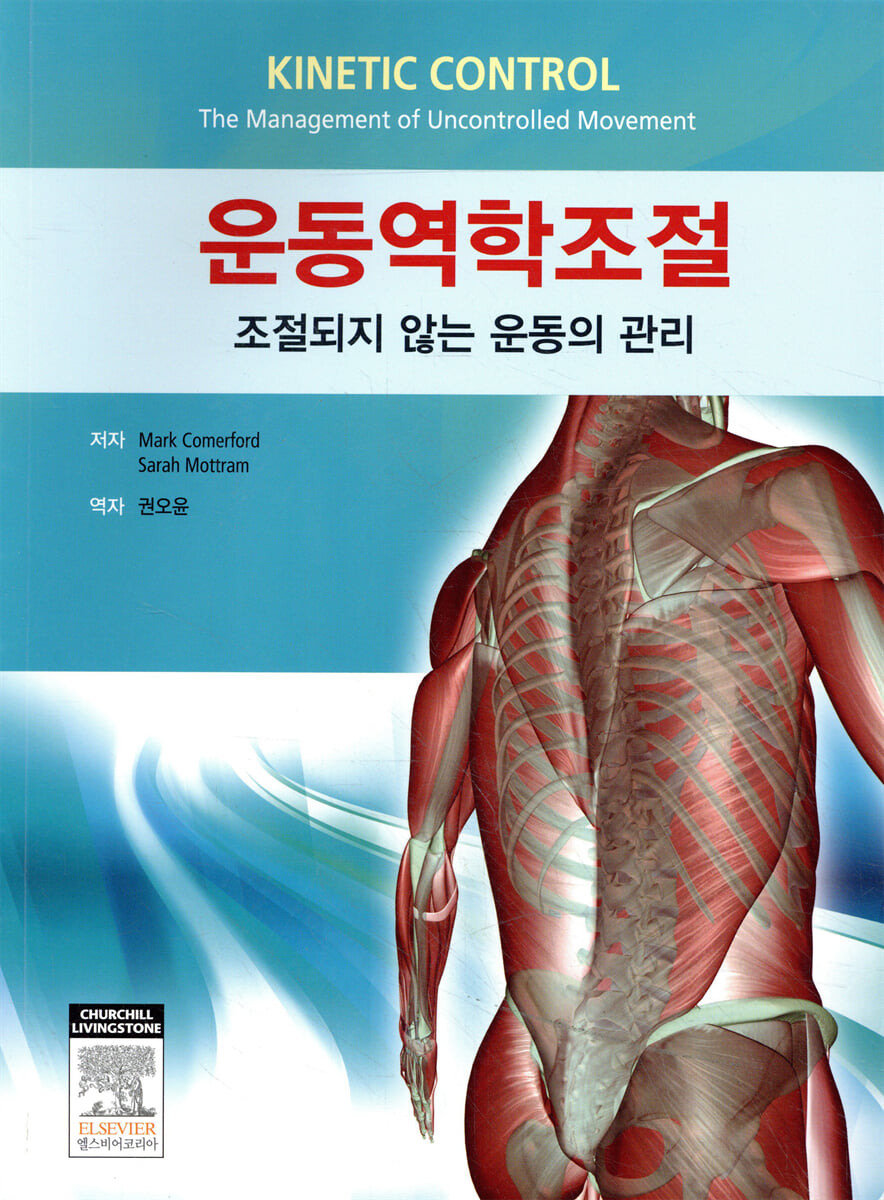
Kinetic control
 |
Description
index
SECTION 1
Chapter 1 Uncontrolled Movement
01 Understanding Exercise and Function
02 Classification and Finding of UCM
03 Model for retraining and evaluating motor deficits
04 UCM Evaluation and Management
05 Clinical Reasoning Process
06 Clinical Inference in Diagnostic Systems
07 Disability Assessment Model
Chapter 2 Muscle Function and Physiology
01 Introduction: Motor Control
02 Analysis of muscle function
03 Muscle Functions: Main Roles
04 Exercise Mobilization
05 Comparison of low and high threshold mobilization
06 Muscle Stiffness
07 Pain and Mobilization
08 Mobilization Dysfunction: Inhibition and Facilitation Abnormalities
09 Changed Strategies in Dysfunctional Situations
10 Sense of effort, centripetal input and mobilization
11 Dysfunctional Links
12 Muscle Recruitment Training
13 Clinical Guidelines for Mobilization Training
Chapter 3 Assessment and Classification of Uncontrolled Movement
01 Subgroup classification of neuromusculoskeletal pain
02 UCM Evaluation Principles
03 Clinical Evaluation of UCM
Chapter 4 Retraining Strategies for Uncontrolled Exercise
01 Rehabilitation Management and Retraining
02 Therapeutic Exercise
03 Location and direction of UCM
04 Core Principles of Motor Control Pattern Retraining
05 Challenges in Retraining Neuromusculoskeletal Dysfunction
06 Integration into functional tasks and activities
07 Conclusion
SECTION 2
Chapter 5 Lumbar and Pelvic Area
01 Introduction
02 Diagnosis of the location and direction of UCM in the lumbar spine
03 Finding the location and direction of the UCM in the lumbar spine
04 Clinical Example
05 Exercise and postural control in the SIJ and pelvis
06 Examination for UCM: Reexamining the Principles
Chapter 6 Cervical Vertebrae
01 Overview
02 Diagnosis of the direction and location of UCM in the cervical spine
03 Finding the location and direction of the UCM in the cervical spine
Chapter 7 The Spine
01 Introduction
02 Diagnosis of the location and direction of UCM in the spine
Chapter 8 Shoulder Girdle
01 Overview
02 Diagnosis of the location and direction of UCM in the scapula
03 Finding the location and direction of the UCM in the shoulder-spine and glenohumeral joint
Chapter 9 Hip Joint
01 Overview
02 Diagnosis of the location and direction of UCM in the hip joint
03 Finding the location and direction of the UCM in the hip joint
Chapter 1 Uncontrolled Movement
01 Understanding Exercise and Function
02 Classification and Finding of UCM
03 Model for retraining and evaluating motor deficits
04 UCM Evaluation and Management
05 Clinical Reasoning Process
06 Clinical Inference in Diagnostic Systems
07 Disability Assessment Model
Chapter 2 Muscle Function and Physiology
01 Introduction: Motor Control
02 Analysis of muscle function
03 Muscle Functions: Main Roles
04 Exercise Mobilization
05 Comparison of low and high threshold mobilization
06 Muscle Stiffness
07 Pain and Mobilization
08 Mobilization Dysfunction: Inhibition and Facilitation Abnormalities
09 Changed Strategies in Dysfunctional Situations
10 Sense of effort, centripetal input and mobilization
11 Dysfunctional Links
12 Muscle Recruitment Training
13 Clinical Guidelines for Mobilization Training
Chapter 3 Assessment and Classification of Uncontrolled Movement
01 Subgroup classification of neuromusculoskeletal pain
02 UCM Evaluation Principles
03 Clinical Evaluation of UCM
Chapter 4 Retraining Strategies for Uncontrolled Exercise
01 Rehabilitation Management and Retraining
02 Therapeutic Exercise
03 Location and direction of UCM
04 Core Principles of Motor Control Pattern Retraining
05 Challenges in Retraining Neuromusculoskeletal Dysfunction
06 Integration into functional tasks and activities
07 Conclusion
SECTION 2
Chapter 5 Lumbar and Pelvic Area
01 Introduction
02 Diagnosis of the location and direction of UCM in the lumbar spine
03 Finding the location and direction of the UCM in the lumbar spine
04 Clinical Example
05 Exercise and postural control in the SIJ and pelvis
06 Examination for UCM: Reexamining the Principles
Chapter 6 Cervical Vertebrae
01 Overview
02 Diagnosis of the direction and location of UCM in the cervical spine
03 Finding the location and direction of the UCM in the cervical spine
Chapter 7 The Spine
01 Introduction
02 Diagnosis of the location and direction of UCM in the spine
Chapter 8 Shoulder Girdle
01 Overview
02 Diagnosis of the location and direction of UCM in the scapula
03 Finding the location and direction of the UCM in the shoulder-spine and glenohumeral joint
Chapter 9 Hip Joint
01 Overview
02 Diagnosis of the location and direction of UCM in the hip joint
03 Finding the location and direction of the UCM in the hip joint
Publisher's Review
Key Features
A guidebook for identifying and managing "uncontrolled movement" resulting from incorrect exercise.
· A new theoretical book that complements the existing concept of motor system damage with the new concept of uncontrolled movement.
A must-read for anyone who prescribes or teaches individually tailored exercise for chronic pain, work-related musculoskeletal pain, relapses, or problems promoting musculoskeletal health.
This book presents a comprehensive framework for the assessment and retraining of motor control that has evolved over the past 25 years.
Based on scientific research on the process of assessment and retraining of 'uncontrolled movement', which has a significant impact on the occurrence of movement disorders and pain, the impact of uncontrolled movement on symptoms, especially pain, movement function, symptom recurrence, and disability, is established.
The exercise testing process proposed in this book divides uncontrolled exercise into diagnostic subgroups.
This can be used to develop customer-specific retraining programs by allowing them to be categorized.
This process optimizes the management of musculoskeletal pain and recurrent injuries.
It allows you to prioritize your work and management.
Uncontrolled movement can be reliably detected in clinical settings and may be associated with musculoskeletal pain, recurrence, and prognosis.
This book will help clinicians around the world effectively identify and retrain dysregulated movements, enabling people to move better, feel better, and do more.
A guidebook for identifying and managing "uncontrolled movement" resulting from incorrect exercise.
· A new theoretical book that complements the existing concept of motor system damage with the new concept of uncontrolled movement.
A must-read for anyone who prescribes or teaches individually tailored exercise for chronic pain, work-related musculoskeletal pain, relapses, or problems promoting musculoskeletal health.
This book presents a comprehensive framework for the assessment and retraining of motor control that has evolved over the past 25 years.
Based on scientific research on the process of assessment and retraining of 'uncontrolled movement', which has a significant impact on the occurrence of movement disorders and pain, the impact of uncontrolled movement on symptoms, especially pain, movement function, symptom recurrence, and disability, is established.
The exercise testing process proposed in this book divides uncontrolled exercise into diagnostic subgroups.
This can be used to develop customer-specific retraining programs by allowing them to be categorized.
This process optimizes the management of musculoskeletal pain and recurrent injuries.
It allows you to prioritize your work and management.
Uncontrolled movement can be reliably detected in clinical settings and may be associated with musculoskeletal pain, recurrence, and prognosis.
This book will help clinicians around the world effectively identify and retrain dysregulated movements, enabling people to move better, feel better, and do more.
GOODS SPECIFICS
- Date of issue: November 8, 2013
- Page count, weight, size: 564 pages | 188*256*35mm
- ISBN13: 9788994961538
- ISBN10: 8994961534
You may also like
카테고리
korean


korean

![ELLE 엘르 스페셜 에디션 A형 : 12월 [2025]](http://librairie.coreenne.fr/cdn/shop/files/b8e27a3de6c9538896439686c6b0e8fb.jpg?v=1766436872&width=3840)


