

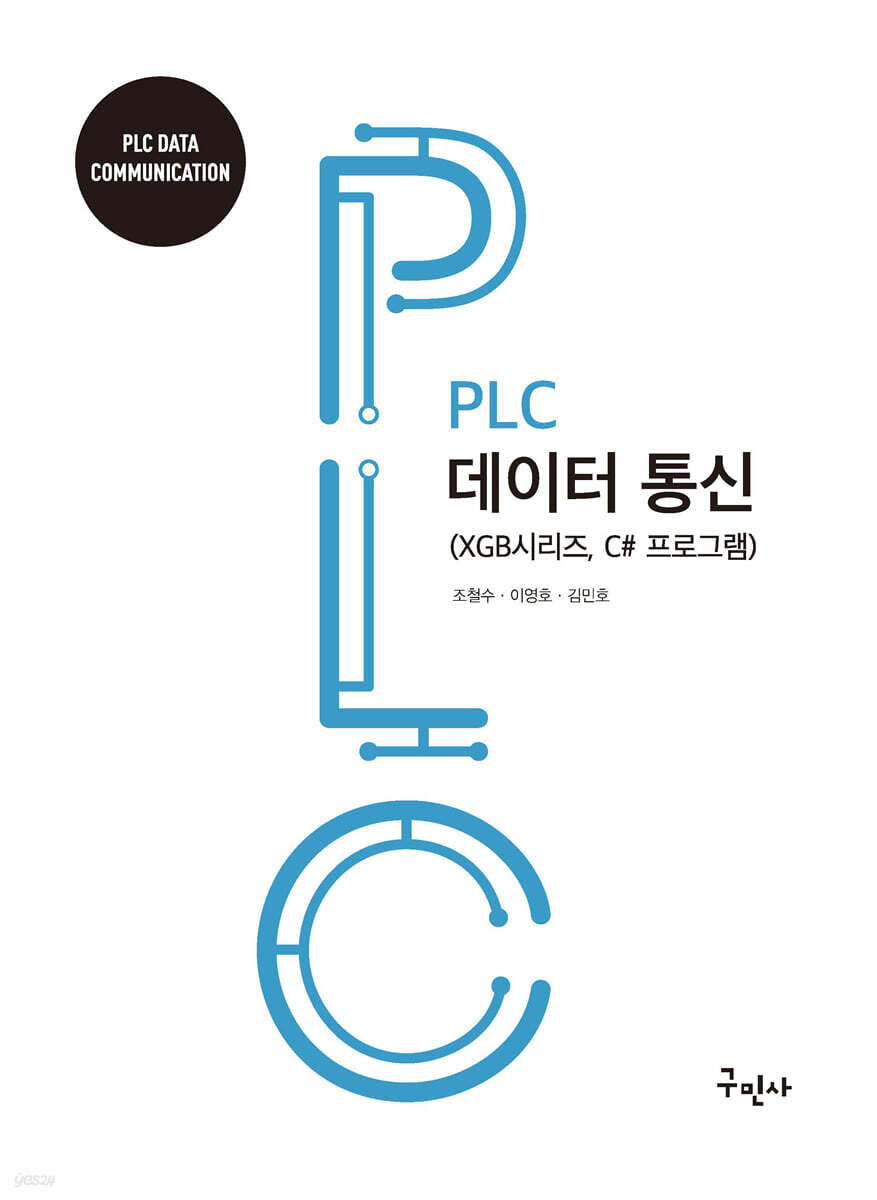
PLC data communication
 |
Description
Book Introduction
Smart Factory, which is applied to the industrial sector in the 4th Industrial Revolution, or Industry 4.0, or the domestic manufacturing innovation 3.0, aims to apply technology that enables one-stop manufacturing by combining ICT technology with the current automation system technology.
It is expected that all industries will enter this phase of full automation in the future.
According to a recent research report on the Fourth Industrial Revolution, there is a growing number of cases where manufacturing and digital technologies are combining to increase productivity in manufacturing companies.
As companies adopting Internet of Things (IoT) technology reduce costs and improve productivity, the number of companies adopting data-driven decision-making is expected to continue to increase.
In this way, Smart Factory uses IoT technology to collect various information (temperature, humidity, voltage, current, power, production volume, errors, production time, logistics, etc.) from the production site in real time, monitors the current situation in real time not only on site but also in the office, and quickly takes appropriate measures as needed.
PLCs are widely used in the current automation industry, and they are the core of the automation industry, playing a role in actually directing production automation by combining various automation devices such as robots and sensors.
It is a device that is leading the industry.
This textbook describes the technology for monitoring and collecting various information from the production site contained in the PLC through communication, as well as the technology for controlling the production site by directly issuing commands to the PLC from the office.
In this textbook, we used the XBM-DN32H PLC of the XGB series, which was developed by LS Industrial Systems in Korea and is applied to small-scale automation equipment, and wrote a communication program between the PC and the PLC using the Visual Studio 2019 C# program.
We hope that this textbook will help educators and students who teach PLC communication-related technologies in the Smart Factory field, as well as engineers working in the Smart Factory field, improve their skills.
It is expected that all industries will enter this phase of full automation in the future.
According to a recent research report on the Fourth Industrial Revolution, there is a growing number of cases where manufacturing and digital technologies are combining to increase productivity in manufacturing companies.
As companies adopting Internet of Things (IoT) technology reduce costs and improve productivity, the number of companies adopting data-driven decision-making is expected to continue to increase.
In this way, Smart Factory uses IoT technology to collect various information (temperature, humidity, voltage, current, power, production volume, errors, production time, logistics, etc.) from the production site in real time, monitors the current situation in real time not only on site but also in the office, and quickly takes appropriate measures as needed.
PLCs are widely used in the current automation industry, and they are the core of the automation industry, playing a role in actually directing production automation by combining various automation devices such as robots and sensors.
It is a device that is leading the industry.
This textbook describes the technology for monitoring and collecting various information from the production site contained in the PLC through communication, as well as the technology for controlling the production site by directly issuing commands to the PLC from the office.
In this textbook, we used the XBM-DN32H PLC of the XGB series, which was developed by LS Industrial Systems in Korea and is applied to small-scale automation equipment, and wrote a communication program between the PC and the PLC using the Visual Studio 2019 C# program.
We hope that this textbook will help educators and students who teach PLC communication-related technologies in the Smart Factory field, as well as engineers working in the Smart Factory field, improve their skills.
- You can preview some of the book's contents.
Preview
index
01 Serial communication
01.
Serial Communication Overview
02.
Serial communication classification
02 XBM-DN32H
01.
System Overview
02.
Built-in Cnet communication
03.
Built-in FEnet communication
04.
Input/output wiring
03 RS-232 serial communication
01.
Communication-related basic settings
02.
Server functions
03.
Command
04.
Practice
04 Modbus RTU
01.
Modbus RTU Server
02. XG5000 Settings
03.
Practice
05 Modbus TCP/IP
01.
Modbus TCP/IP protocol
02. XG5000 Settings
03.
Practice
06 Ethernet-only communication (TCP)
01. XGT Dedicated Protocol Protocol Overview
02.
Frame structure
03. Header structure of XGT dedicated protocol
04. Data types of XGT dedicated protocol
05. Commands for XGT-specific protocol
06. Header and data structure of XGT-specific protocol
07.
Execute command
08. XG5000 Settings
09.
Practice
07 Appendix
01.
Serial Communication Overview
02.
Serial communication classification
02 XBM-DN32H
01.
System Overview
02.
Built-in Cnet communication
03.
Built-in FEnet communication
04.
Input/output wiring
03 RS-232 serial communication
01.
Communication-related basic settings
02.
Server functions
03.
Command
04.
Practice
04 Modbus RTU
01.
Modbus RTU Server
02. XG5000 Settings
03.
Practice
05 Modbus TCP/IP
01.
Modbus TCP/IP protocol
02. XG5000 Settings
03.
Practice
06 Ethernet-only communication (TCP)
01. XGT Dedicated Protocol Protocol Overview
02.
Frame structure
03. Header structure of XGT dedicated protocol
04. Data types of XGT dedicated protocol
05. Commands for XGT-specific protocol
06. Header and data structure of XGT-specific protocol
07.
Execute command
08. XG5000 Settings
09.
Practice
07 Appendix
GOODS SPECIFICS
- Date of issue: November 10, 2025
- Page count, weight, size: 486 pages | 188*257*30mm
- ISBN13: 9791168756267
- ISBN10: 116875626X
You may also like
카테고리
korean


korean

![GQ KOREA Mark (Monthly): December [2025]](http://librairie.coreenne.fr/cdn/shop/files/8ef265dbbfbf186523ed75ba7319009d.jpg?v=1765340328&width=3840)


