

Vision and Spread of Gender Law
 |
Description
index
Part 1: Social, Historical, and Gender Law of the Korean Family
1.
The "Customary" Problem in Korean Family Law: Focusing on the Patriarchal System Yang Hyun-ah 3
2.
Colonial Family Customs and Gender Order:
Hong Yang-hee, 23, focuses on the issues of women's incapacity, restrictions on parental rights, sexual control, and limited inheritance.
3.
Limitations on granting maternal surnames and surnames to children and ways to overcome them:
Chae Hye-mi, 41, Focusing on Discourse Analysis in Online Women's Communities
4.
Records of the Constitutional Lawsuit to Abolish the Household System, by Lee Yu-jeong, 55
[Excerpt from the Constitutional Court's Decision Finding the Household System Unconstitutional] / 72
Part 2: Japanese Military Sexual Slavery, Victims' Testimony, and Postcolonialism
5.
Rediscovering History: The Lives and Struggles of Female Guerrilla Fighters, by Choi Gi-ja, 83
6.
Oral History of Women in US Military Base Towns: Listening to Their Opinions in Relationships by Lee Eun-jin, 103
7.
The 2000 Women's International War Crimes Tribunal on the Issue of Military Sexual Slavery by Japan and the Joint Indictment by the Prosecutors of North and South Korea: Its Significance and Japan's Post-Trial Kim Bu-ja 115
8.
Compensation claims for victims of Japanese military comfort women:
Lee Eun-kyung 130 in the context of the 2015 Korea-Japan Agreement and state immunity
9.
International Human Rights Law and Victims' Rights as Seen Through the Japanese Military's "Comfort Women" Victims' Lawsuits:
The Footsteps of a Legal Struggle That Overcame the Limits of State Immunity Lee Sang-hee 148
Part 3: Reproductive Rights and Care Policy
10.
Where Should We Go After the Unconstitutional Decision on Abortion? Oh Seung-i, 167
11.
In a society with an extremely low birth rate, why do women choose to remain single and childless?
The Role of Law in Redistributing Care: Focusing on Structural Inequality as Seen Through Statistics Korea's Time Use Survey Kim Soo-young 182
12.
Unlit Area, Men's Reproductive Rights, New Phil Sik 198
13.
Reproductive Justice: Focusing on the Reproductive Rights of People with Disabilities and Sexual Minorities, Na Young-Jeong, 215
14.
Baby Boxes and Protected Births: A Look at Ethics of Care by Lee Hyun-ah, 236
[Excerpt from the Constitutional Court's Decision Declaring Abortion Unconstitutional] / 259
[Former President Moon Jae-in's Constitutional Amendment Provisions on Reproductive Rights] / 268
Part 4: Gender Violence and Women's Fundamental Rights
15.
Gender Violence as Discrimination, the Right to Freedom from Gender Violence as a Right to Equality Kim Jeong-hye 273
16.
Directions for improving the sexual violence legal system under criminal law:
Jang Da-hye 290: Focusing on the Meaning of Sexual Self-Determination
17.
Kim Soo-ah, 308, reports on Ahn Hee-jung's trial and the sensitivity of adults.
18.
The Birth of the "Victim/Perpetrator" of Domestic Violence: The Desperate Private Rescue of Domestic Violence Victims Kim Hyun-kyung and Yang Hyun-ah 321
19.
Reforming the Domestic Violence Punishment Act to Address Dating Violence: Focusing on the Transition to a Law Responding to Violence in Intimate Relationships (Moon Ji-seon, 336)
[Excerpt from Seoul High Court Sexual Assault Case Ruling] / 353
Part 5: Composition of the Logic of Substantive Equality
20.
Reconstructing the Concept of Employment Discrimination Based on the Employer's Duty of Care: Focusing on Implications from US Case Law Kim Seon-hwa 363
21.
Reconstructing the Concept of Gender Discrimination in Employment for Substantive Equality: From the Direct/Indirect Discrimination Dichotomy to Complex Discrimination, Park Joo-young, 379
22.
Equal Pay for Work of Equal Value (Kumi Young 398)
23.
Dismantling the idea of a 'male-centered military service obligation': Constitutional Court, 2010.
11.
25.
Kim Hyun-ji 415, focusing on the sentence 2006 Heonma 328
Part 6: Education and Dissemination of Gender Law
24.
The quantitative growth of female lawyers and qualitative changes in legal culture Hong In 435
25.
Changes in Career Preferences of the 42nd Judicial Research and Training Class and Their Causes: Focusing on the Decline in Preference for Judges and Prosecutors and the Preference for Large and Midsize Law Firms Lee Jun-seok 450
26. The ICC's Healing and Restorative Mechanism and the Role of Legal Realism Kim Jin 463
27.
487th Seonja Cha, a graduate of the Law School's Gender Law Education Program
1.
The "Customary" Problem in Korean Family Law: Focusing on the Patriarchal System Yang Hyun-ah 3
2.
Colonial Family Customs and Gender Order:
Hong Yang-hee, 23, focuses on the issues of women's incapacity, restrictions on parental rights, sexual control, and limited inheritance.
3.
Limitations on granting maternal surnames and surnames to children and ways to overcome them:
Chae Hye-mi, 41, Focusing on Discourse Analysis in Online Women's Communities
4.
Records of the Constitutional Lawsuit to Abolish the Household System, by Lee Yu-jeong, 55
[Excerpt from the Constitutional Court's Decision Finding the Household System Unconstitutional] / 72
Part 2: Japanese Military Sexual Slavery, Victims' Testimony, and Postcolonialism
5.
Rediscovering History: The Lives and Struggles of Female Guerrilla Fighters, by Choi Gi-ja, 83
6.
Oral History of Women in US Military Base Towns: Listening to Their Opinions in Relationships by Lee Eun-jin, 103
7.
The 2000 Women's International War Crimes Tribunal on the Issue of Military Sexual Slavery by Japan and the Joint Indictment by the Prosecutors of North and South Korea: Its Significance and Japan's Post-Trial Kim Bu-ja 115
8.
Compensation claims for victims of Japanese military comfort women:
Lee Eun-kyung 130 in the context of the 2015 Korea-Japan Agreement and state immunity
9.
International Human Rights Law and Victims' Rights as Seen Through the Japanese Military's "Comfort Women" Victims' Lawsuits:
The Footsteps of a Legal Struggle That Overcame the Limits of State Immunity Lee Sang-hee 148
Part 3: Reproductive Rights and Care Policy
10.
Where Should We Go After the Unconstitutional Decision on Abortion? Oh Seung-i, 167
11.
In a society with an extremely low birth rate, why do women choose to remain single and childless?
The Role of Law in Redistributing Care: Focusing on Structural Inequality as Seen Through Statistics Korea's Time Use Survey Kim Soo-young 182
12.
Unlit Area, Men's Reproductive Rights, New Phil Sik 198
13.
Reproductive Justice: Focusing on the Reproductive Rights of People with Disabilities and Sexual Minorities, Na Young-Jeong, 215
14.
Baby Boxes and Protected Births: A Look at Ethics of Care by Lee Hyun-ah, 236
[Excerpt from the Constitutional Court's Decision Declaring Abortion Unconstitutional] / 259
[Former President Moon Jae-in's Constitutional Amendment Provisions on Reproductive Rights] / 268
Part 4: Gender Violence and Women's Fundamental Rights
15.
Gender Violence as Discrimination, the Right to Freedom from Gender Violence as a Right to Equality Kim Jeong-hye 273
16.
Directions for improving the sexual violence legal system under criminal law:
Jang Da-hye 290: Focusing on the Meaning of Sexual Self-Determination
17.
Kim Soo-ah, 308, reports on Ahn Hee-jung's trial and the sensitivity of adults.
18.
The Birth of the "Victim/Perpetrator" of Domestic Violence: The Desperate Private Rescue of Domestic Violence Victims Kim Hyun-kyung and Yang Hyun-ah 321
19.
Reforming the Domestic Violence Punishment Act to Address Dating Violence: Focusing on the Transition to a Law Responding to Violence in Intimate Relationships (Moon Ji-seon, 336)
[Excerpt from Seoul High Court Sexual Assault Case Ruling] / 353
Part 5: Composition of the Logic of Substantive Equality
20.
Reconstructing the Concept of Employment Discrimination Based on the Employer's Duty of Care: Focusing on Implications from US Case Law Kim Seon-hwa 363
21.
Reconstructing the Concept of Gender Discrimination in Employment for Substantive Equality: From the Direct/Indirect Discrimination Dichotomy to Complex Discrimination, Park Joo-young, 379
22.
Equal Pay for Work of Equal Value (Kumi Young 398)
23.
Dismantling the idea of a 'male-centered military service obligation': Constitutional Court, 2010.
11.
25.
Kim Hyun-ji 415, focusing on the sentence 2006 Heonma 328
Part 6: Education and Dissemination of Gender Law
24.
The quantitative growth of female lawyers and qualitative changes in legal culture Hong In 435
25.
Changes in Career Preferences of the 42nd Judicial Research and Training Class and Their Causes: Focusing on the Decline in Preference for Judges and Prosecutors and the Preference for Large and Midsize Law Firms Lee Jun-seok 450
26. The ICC's Healing and Restorative Mechanism and the Role of Legal Realism Kim Jin 463
27.
487th Seonja Cha, a graduate of the Law School's Gender Law Education Program
Publisher's Review
Opening remarks
This book is a thrilling project that charts the growth and expansion of gender law in Korea, and its vision.
This is especially true because gender law is a somewhat unfamiliar field outside of law.
Gender law is a field that looks at legal phenomena from a gender perspective and promotes social change. It is a field of law that should be utilized in all areas of legislation, judiciary, and administration, that is, in making laws, interpreting laws in courts, and establishing national policies.
It is a field of law that seeks to become a 'living' field by listening to the desires and hardships of people living in reality.
Gender is a vast social system and at the same time an individual identity that exists everywhere we live.
Since law is a field that seeks the logic of justice, combining the two creates a field that seeks to inject justice into gender relations.
In this book, many authors express their thoughts.
The 27 authors discuss family and family law in Korean society and history (Part 1); the recovery of victims and the post-colonial state of Korean society as seen through issues such as the Japanese military sexual slavery system (Part 2); the necessity and content of a new 'reproductive rights' policy along with the effectiveness of the abortion law in the criminal law (Part 3); gender violence, mainly violence against women, and the issue of women's basic rights (Part 4); how to construct substantive equality between genders (Part 5); and the tasks of education and dissemination of gender law (Part 6).
It's really broad and packed with content.
I would like to point out that the contributors to this book are mainly my colleagues and students, but I actually invited a fairly narrow range of contributors.
For an introduction to the authors, please refer to the introduction at the end of this book.
So, many more researchers and legal practitioners have taken an interest in gender law and written about various issues, but due to space limitations, this book only includes a portion of their work.
This is a collection of related research, focusing mainly on the areas and methodologies of gender law that I have studied so far.
I would say that these are studies that further develop and deepen my interests.
As previously mentioned, gender law is a "living" field of law, and has been working to provide better solutions by intervening in various issues such as family, sexual violence, childbirth and care, and labor.
So, I have been deeply involved in lawsuits and rulings regarding the abolition of the household system, division of property in divorce, and calculation of contribution.
Of course, the foundation for the revision of the family law was laid by many senior legal professionals and like-minded individuals, including Attorney Lee Tae-young.
Furthermore, we are currently deeply interested in establishing alternative partnership systems, such as the Life Partnership Act.
We worked with practitioners who represented victims of various forms of sexual and domestic violence to develop a logic that was "gender-sensitive," and as a result, we achieved gender equality rulings.
To realize "equal pay for work of equal value" under labor law, I am deeply interested in identifying the undervalued labor value of women and the nature, distribution, and policies of care work.
We have broadened the horizons of gender law by examining not only domestic law but also international law and referring to foreign laws.
For example, in the case of the Japanese military sexual slavery issue and other issues of "liquidating the past," we have referenced international human rights law to establish logic appropriate to the domestic situation and recorded the "voices" of the victims in order to restore the victims' rights.
Of course, these achievements were possible through extensive collaboration not only among scholars but also among lawyers, judges, prosecutors, legislative researchers, and civic group activists.
Currently, research clubs on gender and law are continuing to network with professionals such as courts and lawyers.
This book contains traces of such efforts.
Although these are individual writings, they are based on collective and intersectional activities.
In this regard, I would like to share some suggestions for further expanding gender law in the future.
As before, Korean gender law must find its logic and methodology within the context of social history.
I believe that we must conduct research with sincerity to transform Korean society while faithfully referencing foreign legal theories.
In particular, when approaching laws related to death and memory, such as ancestral rites, funerals, and clan reunions, we need to pay even more attention to the positions and wisdom of our female ancestors.
Moreover, we live in a time when diverse and intersectional gender law research is increasingly needed, encompassing class, disability, gender, generation, and even considering the diaspora abroad.
Furthermore, we must find the nexus between the political economy system and the gender system, as well as family, reproduction, and labor, to further enrich the meaning and effectiveness of gender policy.
For example, we need to find examples and empirically investigate how universalizing policies that support equal division of labor between men and women in the workplace and work-life balance can further develop and balance our society's politics and economy.
Rather than simply placing women on the boards of directors of large corporations as "tokens," society and businesses must awaken to the idea that highly educated Korean women can actually contribute to creating "different logic" and different businesses.
Even in the legal community, we must not simply view the increase in women as a phenomenon that enhances gender equality, but rather as a valuable asset that leads to pluralistic and fair judgment. We must create and find connections between gender and non-gender phenomena.
To achieve these discoveries and changes, gender law must never be isolated.
Rather, we must actively communicate and cooperate with other legal fields and people.
Although I used the word "diffusion" in the title of this book, I hope it is done with the character of sharing and accepting perspectives, like the "permeation" of liquid.
To this end, exchanges with positive law, procedural law, international law, and foreign law within the field of law are important, but interdisciplinary research with other fields such as social sciences, natural sciences, and engineering must also be actively pursued.
In the current climate crisis, isn't it true that legal efforts to address agriculture and climate issues, for example, are impossible with only law?
It's a task that requires a multidisciplinary approach.
On the other hand, we must also actively utilize research methods provided by other fields, such as social sciences and engineering.
For gender law to become more realistic, empirical research, such as interviews, focus group observations, and existing statistical analysis, should be actively utilized to understand how reproductive justice is implemented in everyday life.
I hope that future gender law studies will further expand and permeate reality with these aspects and characteristics.
The last chapter of this book is mainly devoted to articles on education.
No matter how brilliant the research results in the field of gender law are, what good are they if they are not widely known to the public?
Gender law is an essential part of human rights and sex education in primary and secondary schools.
In a reality where the culture and practices of sexual relations are constantly changing, education on gender equality, pregnancy, childbirth, and the responsibilities associated with it, will become more urgent than college entrance exams.
Moreover, gender law should be integrated as an essential component of legal education at universities and graduate schools, as well as in the broader civil service training.
Otherwise, many areas will be judged by legal professionals and civil servants who lack ‘gender awareness.’
Furthermore, gender-sensitive legal education for legal professionals and business leaders is also crucial.
These people will play the role of helmsman, promoting democracy and diversity within the organization while dividing and evaluating the work of the relevant members.
Gender law is essential for our society's leaders, so please give this book as a gift!
Finally, I would like to thank everyone who helped make this book possible.
Above all, I would like to express my deepest gratitude to all the authors who willingly contributed to this book.
Although I couldn't introduce each paper individually, I am grateful to you for providing me with your precious writings, which are like an extension of yourself.
I would also like to express my gratitude to Master Choi Hyeong-jun, who helped me edit the book until the last semester.
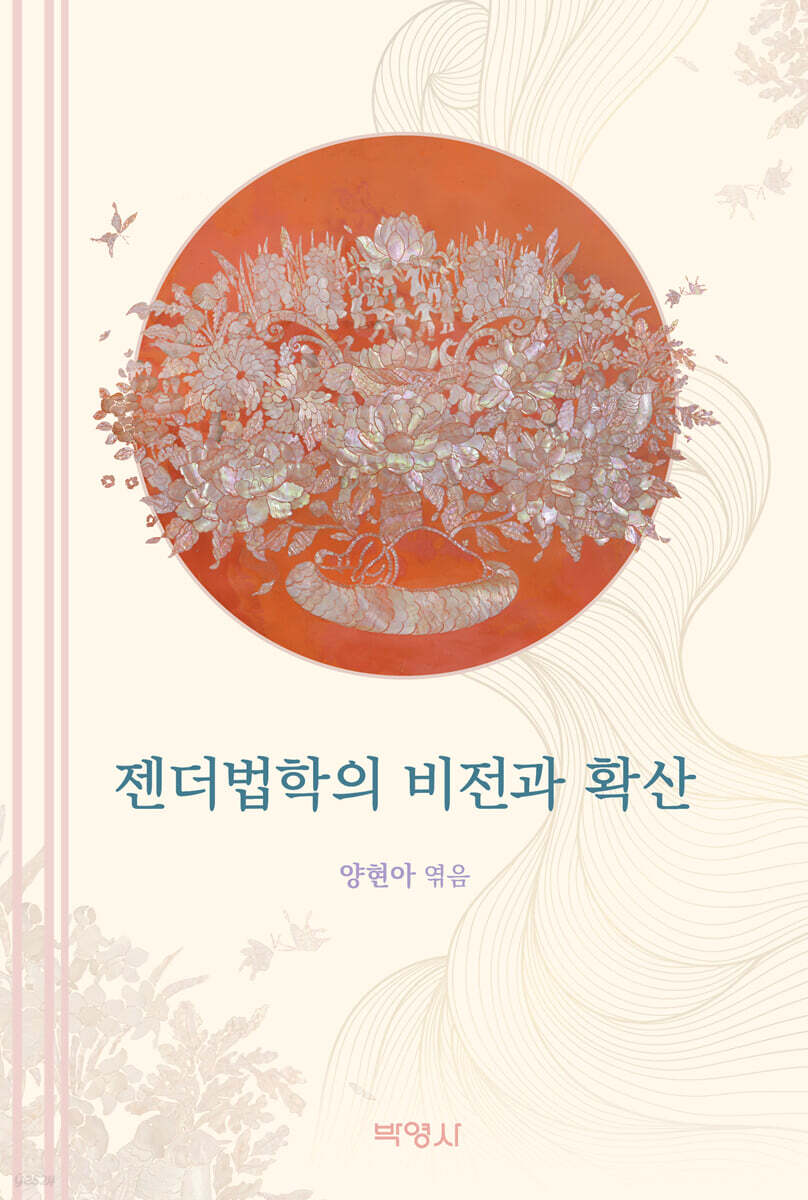
I would also like to express my deepest gratitude to author Ha In-seon, who kindly allowed me to use the picture on the cover of the book.
Furthermore, we would like to thank Seoul National University College of Law & Law School and the Korean Gender Law Society for providing a safe haven for the authors of this book.
The Korean Gender Law Association has long been our ‘secret hill.’
The Public Interest and Human Rights Law Center at Seoul National University Law Research Institute included this book in the "Public Interest and Human Rights" series, which facilitated its publication.
Finally, I would like to thank the publisher, Park Young-sa, and especially Director Kim Seon-min.
I conclude my opening remarks with the hope that in the future, more gender law specialists will be trained and the field will expand as a civic education.
September 2025, a day when the heat had passed and a cool breeze was blowing
Sanjini Yang Hyun-ah's belly
This book is a thrilling project that charts the growth and expansion of gender law in Korea, and its vision.
This is especially true because gender law is a somewhat unfamiliar field outside of law.
Gender law is a field that looks at legal phenomena from a gender perspective and promotes social change. It is a field of law that should be utilized in all areas of legislation, judiciary, and administration, that is, in making laws, interpreting laws in courts, and establishing national policies.
It is a field of law that seeks to become a 'living' field by listening to the desires and hardships of people living in reality.
Gender is a vast social system and at the same time an individual identity that exists everywhere we live.
Since law is a field that seeks the logic of justice, combining the two creates a field that seeks to inject justice into gender relations.
In this book, many authors express their thoughts.
The 27 authors discuss family and family law in Korean society and history (Part 1); the recovery of victims and the post-colonial state of Korean society as seen through issues such as the Japanese military sexual slavery system (Part 2); the necessity and content of a new 'reproductive rights' policy along with the effectiveness of the abortion law in the criminal law (Part 3); gender violence, mainly violence against women, and the issue of women's basic rights (Part 4); how to construct substantive equality between genders (Part 5); and the tasks of education and dissemination of gender law (Part 6).
It's really broad and packed with content.
I would like to point out that the contributors to this book are mainly my colleagues and students, but I actually invited a fairly narrow range of contributors.
For an introduction to the authors, please refer to the introduction at the end of this book.
So, many more researchers and legal practitioners have taken an interest in gender law and written about various issues, but due to space limitations, this book only includes a portion of their work.
This is a collection of related research, focusing mainly on the areas and methodologies of gender law that I have studied so far.
I would say that these are studies that further develop and deepen my interests.
As previously mentioned, gender law is a "living" field of law, and has been working to provide better solutions by intervening in various issues such as family, sexual violence, childbirth and care, and labor.
So, I have been deeply involved in lawsuits and rulings regarding the abolition of the household system, division of property in divorce, and calculation of contribution.
Of course, the foundation for the revision of the family law was laid by many senior legal professionals and like-minded individuals, including Attorney Lee Tae-young.
Furthermore, we are currently deeply interested in establishing alternative partnership systems, such as the Life Partnership Act.
We worked with practitioners who represented victims of various forms of sexual and domestic violence to develop a logic that was "gender-sensitive," and as a result, we achieved gender equality rulings.
To realize "equal pay for work of equal value" under labor law, I am deeply interested in identifying the undervalued labor value of women and the nature, distribution, and policies of care work.
We have broadened the horizons of gender law by examining not only domestic law but also international law and referring to foreign laws.
For example, in the case of the Japanese military sexual slavery issue and other issues of "liquidating the past," we have referenced international human rights law to establish logic appropriate to the domestic situation and recorded the "voices" of the victims in order to restore the victims' rights.
Of course, these achievements were possible through extensive collaboration not only among scholars but also among lawyers, judges, prosecutors, legislative researchers, and civic group activists.
Currently, research clubs on gender and law are continuing to network with professionals such as courts and lawyers.
This book contains traces of such efforts.
Although these are individual writings, they are based on collective and intersectional activities.
In this regard, I would like to share some suggestions for further expanding gender law in the future.
As before, Korean gender law must find its logic and methodology within the context of social history.
I believe that we must conduct research with sincerity to transform Korean society while faithfully referencing foreign legal theories.
In particular, when approaching laws related to death and memory, such as ancestral rites, funerals, and clan reunions, we need to pay even more attention to the positions and wisdom of our female ancestors.
Moreover, we live in a time when diverse and intersectional gender law research is increasingly needed, encompassing class, disability, gender, generation, and even considering the diaspora abroad.
Furthermore, we must find the nexus between the political economy system and the gender system, as well as family, reproduction, and labor, to further enrich the meaning and effectiveness of gender policy.
For example, we need to find examples and empirically investigate how universalizing policies that support equal division of labor between men and women in the workplace and work-life balance can further develop and balance our society's politics and economy.
Rather than simply placing women on the boards of directors of large corporations as "tokens," society and businesses must awaken to the idea that highly educated Korean women can actually contribute to creating "different logic" and different businesses.
Even in the legal community, we must not simply view the increase in women as a phenomenon that enhances gender equality, but rather as a valuable asset that leads to pluralistic and fair judgment. We must create and find connections between gender and non-gender phenomena.
To achieve these discoveries and changes, gender law must never be isolated.
Rather, we must actively communicate and cooperate with other legal fields and people.
Although I used the word "diffusion" in the title of this book, I hope it is done with the character of sharing and accepting perspectives, like the "permeation" of liquid.
To this end, exchanges with positive law, procedural law, international law, and foreign law within the field of law are important, but interdisciplinary research with other fields such as social sciences, natural sciences, and engineering must also be actively pursued.
In the current climate crisis, isn't it true that legal efforts to address agriculture and climate issues, for example, are impossible with only law?
It's a task that requires a multidisciplinary approach.
On the other hand, we must also actively utilize research methods provided by other fields, such as social sciences and engineering.
For gender law to become more realistic, empirical research, such as interviews, focus group observations, and existing statistical analysis, should be actively utilized to understand how reproductive justice is implemented in everyday life.
I hope that future gender law studies will further expand and permeate reality with these aspects and characteristics.
The last chapter of this book is mainly devoted to articles on education.
No matter how brilliant the research results in the field of gender law are, what good are they if they are not widely known to the public?
Gender law is an essential part of human rights and sex education in primary and secondary schools.
In a reality where the culture and practices of sexual relations are constantly changing, education on gender equality, pregnancy, childbirth, and the responsibilities associated with it, will become more urgent than college entrance exams.
Moreover, gender law should be integrated as an essential component of legal education at universities and graduate schools, as well as in the broader civil service training.
Otherwise, many areas will be judged by legal professionals and civil servants who lack ‘gender awareness.’
Furthermore, gender-sensitive legal education for legal professionals and business leaders is also crucial.
These people will play the role of helmsman, promoting democracy and diversity within the organization while dividing and evaluating the work of the relevant members.
Gender law is essential for our society's leaders, so please give this book as a gift!
Finally, I would like to thank everyone who helped make this book possible.
Above all, I would like to express my deepest gratitude to all the authors who willingly contributed to this book.
Although I couldn't introduce each paper individually, I am grateful to you for providing me with your precious writings, which are like an extension of yourself.
I would also like to express my gratitude to Master Choi Hyeong-jun, who helped me edit the book until the last semester.
I would also like to express my deepest gratitude to author Ha In-seon, who kindly allowed me to use the picture on the cover of the book.
Furthermore, we would like to thank Seoul National University College of Law & Law School and the Korean Gender Law Society for providing a safe haven for the authors of this book.
The Korean Gender Law Association has long been our ‘secret hill.’
The Public Interest and Human Rights Law Center at Seoul National University Law Research Institute included this book in the "Public Interest and Human Rights" series, which facilitated its publication.
Finally, I would like to thank the publisher, Park Young-sa, and especially Director Kim Seon-min.
I conclude my opening remarks with the hope that in the future, more gender law specialists will be trained and the field will expand as a civic education.
September 2025, a day when the heat had passed and a cool breeze was blowing
Sanjini Yang Hyun-ah's belly
GOODS SPECIFICS
- Date of issue: October 25, 2025
- Page count, weight, size: 520 pages | 153*225*35mm
- ISBN13: 9791130324937
- ISBN10: 1130324931
You may also like
카테고리
korean


korean

![GQ KOREA Mark (Monthly): December [2025]](http://librairie.coreenne.fr/cdn/shop/files/8ef265dbbfbf186523ed75ba7319009d.jpg?v=1765340328&width=3840)


