

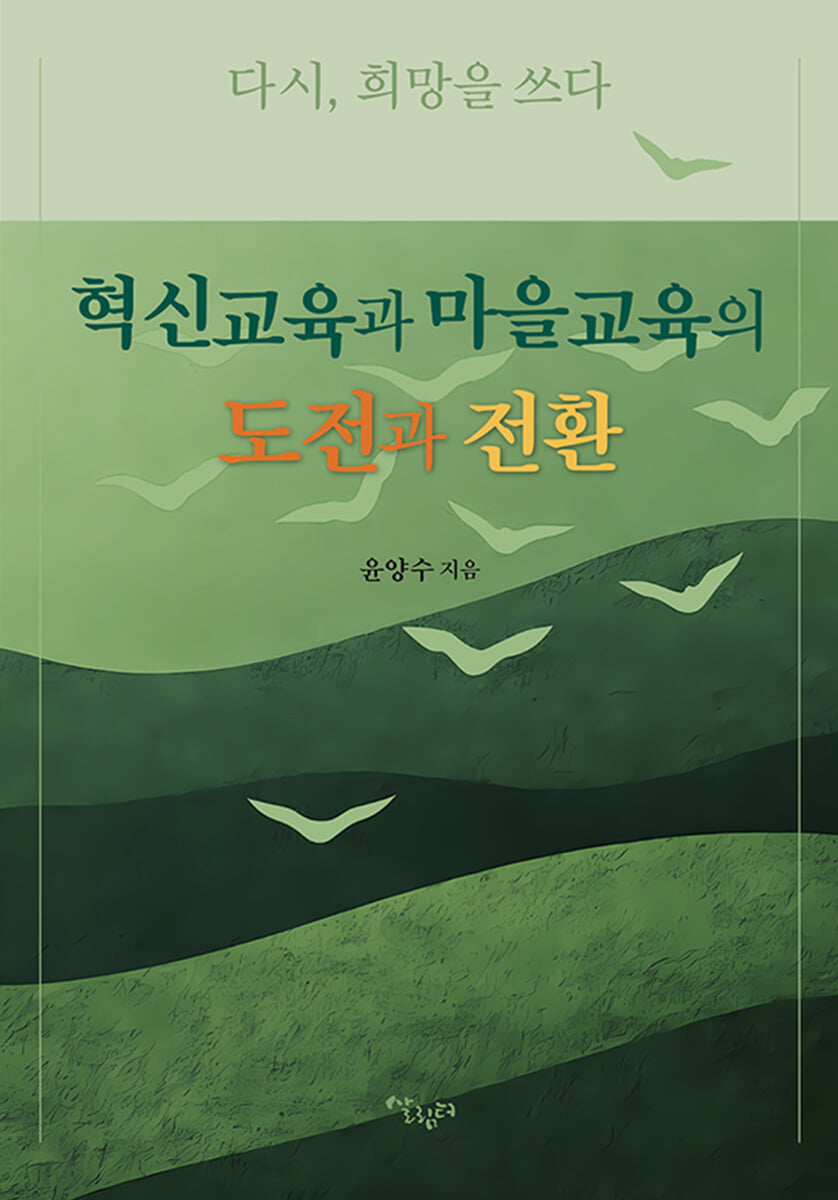
Challenges and Transformations in Innovative Education and Village Education
 |
Description
Book Introduction
To write a sustainable message of hope
"Writing Hope Again: The Transformation of Innovative Education and Village Education" is a book that examines the achievements and limitations of innovative education and village education, which have been experimented with and accumulated in the Korean educational field over the past decade, and then seeks a new path forward.
Author Yangsu Yoon asks where education should go in the face of the massive changes that have emerged since COVID-19: the decline of teacher authority, teacher burnout, the decline of the school-age population, the extinction of local communities, the climate crisis, and the technological Big Bang.
He poses the fundamental question, “Is innovative education over, or does it need to start again?” and emphasizes that what is needed now is not more passion, but the institutionalization of performance.
This book, particularly focusing on the proposition that "burnout and innovation cannot coexist," proposes innovation that is firmly established on a sustainable institutional foundation, rather than a movement that relies solely on the dedication of teachers and villagers.
As the accumulated experience from many villages shows, policy retreats easily discourage resident participation and destroy the achievements and intangible assets of the movement.
Therefore, both innovative education and village education must be established within the framework of laws and systems.
The COVID-19 pandemic, which brought the entire world to a standstill, meant that classrooms and classes were suspended, but it was also a turning point for digital transformation.
Edtech and AI can be useful tools, but blindly accepting them without a philosophy is dangerous.
The author suggests that teachers must transform from mere practitioners into learning professionals, and that they must renew the narrative of classroom innovation through communal practice, "separately yet together."
Over the past 10 to 15 years, innovative education has achieved results in changing the grammar of curriculum, classes, and assessment, and in democratizing schools and strengthening educational power.
However, there are clear limitations to the achievements being spread to a universal education system.
Village education is also difficult to sustain if it relies on the passion of teachers and residents.
This book emphasizes that only through institutionalization, not policy fads, can innovative education and village education advance Korean education to the next level.
"Writing Hope Again" goes beyond simply trying to overcome the educational crisis with slogans and carries an urgent message: we must establish innovative education and village education as an institutionalized system.
This message emphasizes that education can only continue a sustainable narrative of hope when it cultivates students as citizens, teachers as learning professionals, and villages as community assets.
"Writing Hope Again: The Transformation of Innovative Education and Village Education" is a book that examines the achievements and limitations of innovative education and village education, which have been experimented with and accumulated in the Korean educational field over the past decade, and then seeks a new path forward.
Author Yangsu Yoon asks where education should go in the face of the massive changes that have emerged since COVID-19: the decline of teacher authority, teacher burnout, the decline of the school-age population, the extinction of local communities, the climate crisis, and the technological Big Bang.
He poses the fundamental question, “Is innovative education over, or does it need to start again?” and emphasizes that what is needed now is not more passion, but the institutionalization of performance.
This book, particularly focusing on the proposition that "burnout and innovation cannot coexist," proposes innovation that is firmly established on a sustainable institutional foundation, rather than a movement that relies solely on the dedication of teachers and villagers.
As the accumulated experience from many villages shows, policy retreats easily discourage resident participation and destroy the achievements and intangible assets of the movement.
Therefore, both innovative education and village education must be established within the framework of laws and systems.
The COVID-19 pandemic, which brought the entire world to a standstill, meant that classrooms and classes were suspended, but it was also a turning point for digital transformation.
Edtech and AI can be useful tools, but blindly accepting them without a philosophy is dangerous.
The author suggests that teachers must transform from mere practitioners into learning professionals, and that they must renew the narrative of classroom innovation through communal practice, "separately yet together."
Over the past 10 to 15 years, innovative education has achieved results in changing the grammar of curriculum, classes, and assessment, and in democratizing schools and strengthening educational power.
However, there are clear limitations to the achievements being spread to a universal education system.
Village education is also difficult to sustain if it relies on the passion of teachers and residents.
This book emphasizes that only through institutionalization, not policy fads, can innovative education and village education advance Korean education to the next level.
"Writing Hope Again" goes beyond simply trying to overcome the educational crisis with slogans and carries an urgent message: we must establish innovative education and village education as an institutionalized system.
This message emphasizes that education can only continue a sustainable narrative of hope when it cultivates students as citizens, teachers as learning professionals, and villages as community assets.
- You can preview some of the book's contents.
Preview
index
Recommendation
Opening remarks
Part 1: Schools, Reloading for Innovation
1.
School and parking lot
2.
Agents and Agencies
3.
Experimentation and Challenge: The Politics of Innovation in the Age of Viewers
4.
The politics of innovation
5.
EdTech and Education
6.
Digital Transformation and Shadows of Education
Part 2 Village: Audience or Partner?
1.
Youth Village Learning Center
2. Challenges of the Youth Village Learning Center Project
3.
Asan Village Education Challenges
4.
Is Min an audience member or a partner?
5.
Trust, is it somewhere out there?
Part 3: Community Practice and Growth
1.
The time when the seams are out of alignment
2.
Direction of Class Innovation
3.
Self-directed learning and learner initiative
4.
Community Practice and Teacher Growth
5.
Truth or Opinion
6.
A place of learning, writing, and hope
Part 4: Improving the Institutional Foundation
1.
Institutionalization of innovative education
2.
Improvement of the principal appointment system
3.
Improvement of the teacher rotation system
4.
Legislation of village education
5.
In an era of regional extinction, small schools and villages respond.
Epilogue Like an Indian, Like Alice
Opening remarks
Part 1: Schools, Reloading for Innovation
1.
School and parking lot
2.
Agents and Agencies
3.
Experimentation and Challenge: The Politics of Innovation in the Age of Viewers
4.
The politics of innovation
5.
EdTech and Education
6.
Digital Transformation and Shadows of Education
Part 2 Village: Audience or Partner?
1.
Youth Village Learning Center
2. Challenges of the Youth Village Learning Center Project
3.
Asan Village Education Challenges
4.
Is Min an audience member or a partner?
5.
Trust, is it somewhere out there?
Part 3: Community Practice and Growth
1.
The time when the seams are out of alignment
2.
Direction of Class Innovation
3.
Self-directed learning and learner initiative
4.
Community Practice and Teacher Growth
5.
Truth or Opinion
6.
A place of learning, writing, and hope
Part 4: Improving the Institutional Foundation
1.
Institutionalization of innovative education
2.
Improvement of the principal appointment system
3.
Improvement of the teacher rotation system
4.
Legislation of village education
5.
In an era of regional extinction, small schools and villages respond.
Epilogue Like an Indian, Like Alice
Publisher's Review
The core message of this book
Part 1: Schools, Reloading for Innovation
It highlights the conflicts and decline of teachers' authority in schools and suggests the need for student leadership and collaborative initiative. It emphasizes that in the midst of the digital transformation driven by AI and edutech, innovation must not be a mere fad, but a community-based practice.
Part 2 Village: Audience or Partner?
The case of the Youth Village Learning Center and the Chungnam Happy Education District demonstrates the potential for cooperation between schools and villages, but this too is facing a crisis due to policy regression.
The village education community points out that it cannot continue without legislation.
Part 3: Community Practice and Growth
He revisits the classroom innovation and community practices that have been hampered by COVID-19 and says teachers must grow into learning professionals.
I believe that the essence of education must be restored through learner-led initiative, a culture of democratic discussion, and the combination of writing and learning.
Part 4: Improving the Institutional Foundation
The achievements of innovative education and village education cannot be sustained unless they are institutionalized.
We propose that innovative education and village education should become institutional assets of Korean education through specific policy alternatives, such as principal appointments, teacher personnel systems, revitalizing small schools, and legalizing village education.
Part 1: Schools, Reloading for Innovation
It highlights the conflicts and decline of teachers' authority in schools and suggests the need for student leadership and collaborative initiative. It emphasizes that in the midst of the digital transformation driven by AI and edutech, innovation must not be a mere fad, but a community-based practice.
Part 2 Village: Audience or Partner?
The case of the Youth Village Learning Center and the Chungnam Happy Education District demonstrates the potential for cooperation between schools and villages, but this too is facing a crisis due to policy regression.
The village education community points out that it cannot continue without legislation.
Part 3: Community Practice and Growth
He revisits the classroom innovation and community practices that have been hampered by COVID-19 and says teachers must grow into learning professionals.
I believe that the essence of education must be restored through learner-led initiative, a culture of democratic discussion, and the combination of writing and learning.
Part 4: Improving the Institutional Foundation
The achievements of innovative education and village education cannot be sustained unless they are institutionalized.
We propose that innovative education and village education should become institutional assets of Korean education through specific policy alternatives, such as principal appointments, teacher personnel systems, revitalizing small schools, and legalizing village education.
GOODS SPECIFICS
- Date of issue: September 30, 2025
- Page count, weight, size: 212 pages | 140*200*20mm
- ISBN13: 9791159303296
- ISBN10: 1159303290
You may also like
카테고리
korean


korean

![GQ KOREA Mark (Monthly): December [2025]](http://librairie.coreenne.fr/cdn/shop/files/8ef265dbbfbf186523ed75ba7319009d.jpg?v=1765340328&width=3840)


