

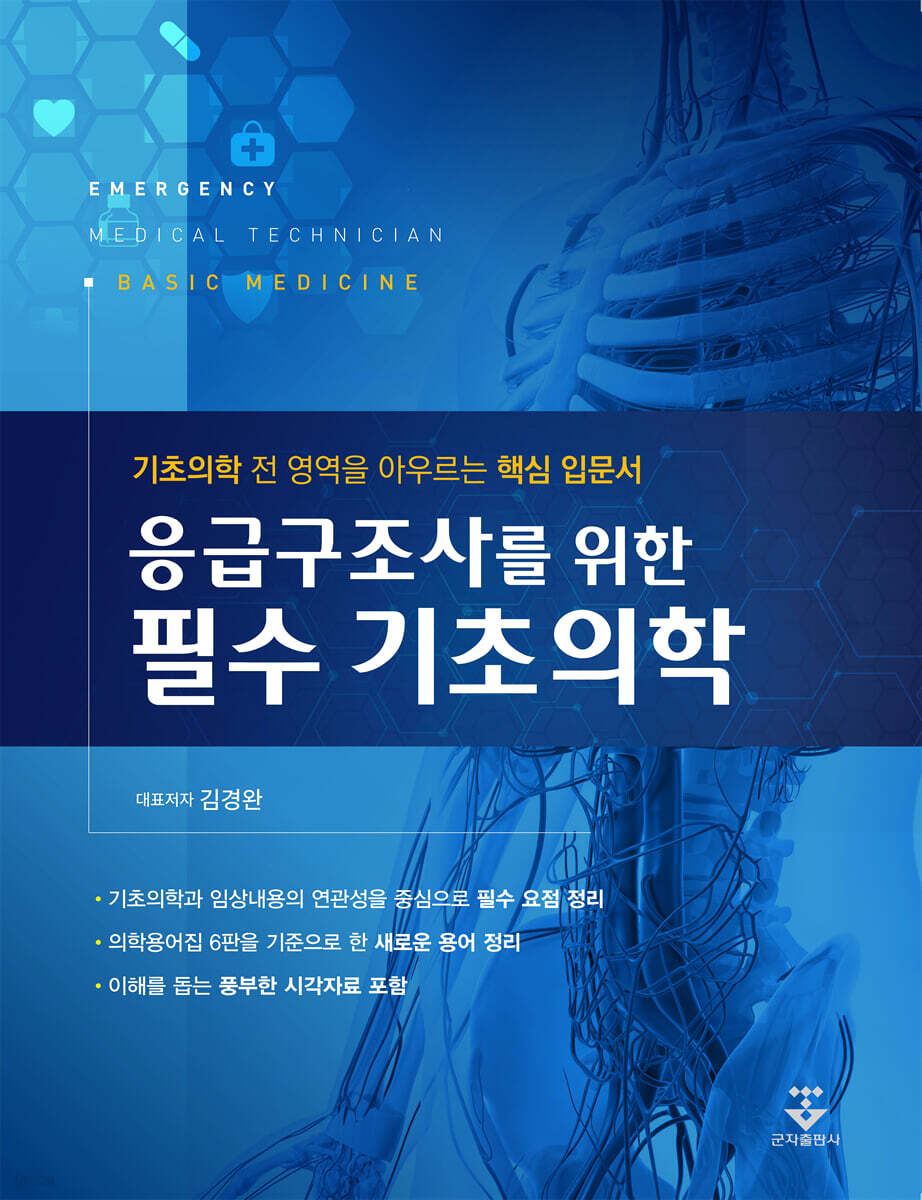
Essential Basic Medical Science for Emergency Medical Technicians
 |
Description
Book Introduction
Basic medicine is a discipline that includes anatomy, which studies the structure and form of the human body, as well as physiology, pathology, and pharmacology, which deal with functions. It is a fundamental and essential subject that health and medical students must take to acquire clinical expertise in medicine.
Beginning with the designation criteria for emergency medical technician training institutions, which will be implemented on January 31, 2026, the importance of basic medicine is growing amid these changes, playing a vital role in understanding the connection with clinical practice.
This textbook, responding to these contemporary demands, summarizes and illustrates the core content that emergency medical technicians must master before graduation.
In particular, the connection between basic medicine and clinical practice was emphasized to reduce the learning burden and to make it easier for students to summarize and review.
Additionally, medical terms are written based on widely used new terms from the 6th edition of the Korean Medical Association's Medical Terminology.
This enabled students to communicate smoothly not only with medical professionals but also with patients and the general public in clinical settings.
In addition, the writing team put a lot of effort into inserting appropriate pictures and diagrams and organizing them in a way that matches the explanations so that anyone can lecture without difficulty.
Beginning with the designation criteria for emergency medical technician training institutions, which will be implemented on January 31, 2026, the importance of basic medicine is growing amid these changes, playing a vital role in understanding the connection with clinical practice.
This textbook, responding to these contemporary demands, summarizes and illustrates the core content that emergency medical technicians must master before graduation.
In particular, the connection between basic medicine and clinical practice was emphasized to reduce the learning burden and to make it easier for students to summarize and review.
Additionally, medical terms are written based on widely used new terms from the 6th edition of the Korean Medical Association's Medical Terminology.
This enabled students to communicate smoothly not only with medical professionals but also with patients and the general public in clinical settings.
In addition, the writing team put a lot of effort into inserting appropriate pictures and diagrams and organizing them in a way that matches the explanations so that anyone can lecture without difficulty.
index
Part 1.
Anatomy
1.
Introduction and structural units of anatomy
2.
Cell structure and function
3.
skeletal system
4.
joint system
5.
Muscular system
Part 2.
Physiology
1.
cells and tissues
2.
Neurons and Excitation Transmission
3.
Muscles and Exercise
4.
blood
5.
heart
6.
Circulatory blood pressure
7.
respiratory system
8.
genitourinary system
9.
Digestion and absorption
10.
Nutrition and Metabolism
11.
Nervous system (pain)
12.
sensory system
13.
endocrine system
Part 3.
pathology
1.
Pathogenesis
2.
Cell damage and adaptation
3.
Inflammation and Recovery
4.
Fluids and Hemodynamics
5.
infection
6.
immune system
7.
tumor
8.
congenital diseases
9.
aging
10.
circulatory system
11.
respiratory system
12.
digestive system
13.
urinary system
14.
reproductive system
15.
endocrine system
16.
blood and lymphatic systems
17.
nervous system
18.
musculoskeletal system
19.
sense organs and skin
Part 4.
Pharmacology
1.
General
2.
autonomic nervous system
3.
Drugs used in cardiovascular emergency treatment
4.
Drugs used in respiratory emergency treatment
5.
Drugs used in emergency treatment of the nervous system
6.
Drugs used in endocrine emergency treatment
7.
Drugs used in obstetric emergency care
8.
Drugs used in first aid for poisoning
9.
Drugs used to treat pain
10.
Drugs used in gastrointestinal emergency treatment
Anatomy
1.
Introduction and structural units of anatomy
2.
Cell structure and function
3.
skeletal system
4.
joint system
5.
Muscular system
Part 2.
Physiology
1.
cells and tissues
2.
Neurons and Excitation Transmission
3.
Muscles and Exercise
4.
blood
5.
heart
6.
Circulatory blood pressure
7.
respiratory system
8.
genitourinary system
9.
Digestion and absorption
10.
Nutrition and Metabolism
11.
Nervous system (pain)
12.
sensory system
13.
endocrine system
Part 3.
pathology
1.
Pathogenesis
2.
Cell damage and adaptation
3.
Inflammation and Recovery
4.
Fluids and Hemodynamics
5.
infection
6.
immune system
7.
tumor
8.
congenital diseases
9.
aging
10.
circulatory system
11.
respiratory system
12.
digestive system
13.
urinary system
14.
reproductive system
15.
endocrine system
16.
blood and lymphatic systems
17.
nervous system
18.
musculoskeletal system
19.
sense organs and skin
Part 4.
Pharmacology
1.
General
2.
autonomic nervous system
3.
Drugs used in cardiovascular emergency treatment
4.
Drugs used in respiratory emergency treatment
5.
Drugs used in emergency treatment of the nervous system
6.
Drugs used in endocrine emergency treatment
7.
Drugs used in obstetric emergency care
8.
Drugs used in first aid for poisoning
9.
Drugs used to treat pain
10.
Drugs used in gastrointestinal emergency treatment
Publisher's Review
Basic medicine is a discipline that includes anatomy, which studies the structure and form of the human body, as well as physiology, pathology, and pharmacology, which deal with functions. It is a fundamental and essential subject that health and medical students must take to acquire clinical expertise in medicine.
Beginning with the designation criteria for emergency medical technician training institutions, which will be implemented on January 31, 2026, the importance of basic medicine is growing amid these changes, playing a vital role in understanding the connection with clinical practice.
Beginning with the designation criteria for emergency medical technician training institutions, which will be implemented on January 31, 2026, the importance of basic medicine is growing amid these changes, playing a vital role in understanding the connection with clinical practice.
GOODS SPECIFICS
- Date of issue: September 10, 2025
- Format: Paperback book binding method guide
- Page count, weight, size: 692 pages | 212*275mm
- ISBN13: 9791170683421
You may also like
카테고리
korean


korean

![ELLE 엘르 스페셜 에디션 A형 : 12월 [2025]](http://librairie.coreenne.fr/cdn/shop/files/b8e27a3de6c9538896439686c6b0e8fb.jpg?v=1766436872&width=3840)


