

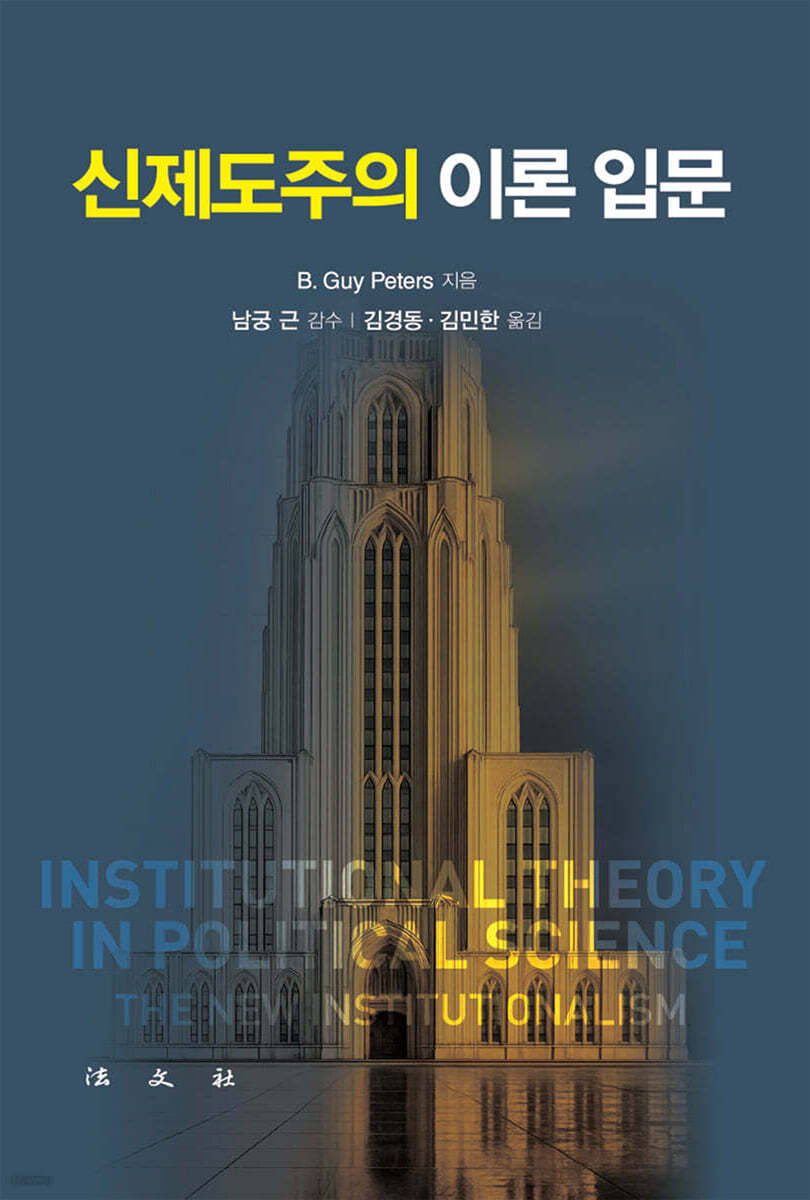
Introduction to Neo-Institutional Theory
 |
Description
index
1.
Old institutionalism and new institutionalism
1.1 Old institutionalism
1.2 The prototype of the theory of old institutionalism
1.3 The Revolution in Behaviorism and Rational Choice Theory
1.4 Behaviorism and Rationalism as the Background of New Institutionalism
1.5 Various types of institutional theory
1.6 Book Structure
SECTION 1 Various Types of Institutionalism
2.
The Roots of Neo-Institutionalism: "Normative Institutionalism"
2.1 What is a system?
2.2 Formation of the system
2.3 Changes in the system
2.4 Individuals and Institutions
2.5 System Design
2.6 Limitations of the theory
2.7 Good system
3.
Rational choice theory and institutional theory
3.1 Rationality of the system
3.2 Different Types of Rational Choice Institutionalism
3.3 Questions about institutional theory
4.
Legacies of the Past: Historical Institutionalism
4.1 Path dependence as a central concept
4.2 Questions about the system
5.
empirical institutionalism
5.1 Building an Empirical Theory of Institutions
5.2 Different types of empirical questions
5.3 Questions of Institutional Theory
6.
Ideas as the Foundation of Institutions: Discursive and Constructivist Institutionalism
6.1 Questions about the system
6.2 Problems of Discursive Institutionalism
7.
sociological institutionalism
7.1 The Roots of Institutionalism in Sociology
7.2 Contemporary Sociological Institutionalism
7.3 Questions about the system
SECTION 2 Application of Institutional Theory
8.
Interest representation system
8.1 Political Parties and Party Systems
8.2 Interest Arbitration
8.3 Questions about the system
9.
international institutionalism
9.1 The International System as an Institution
9.2 Regime Theory as Institutional Theory
9.3 Questions about the system
SECTION 3 Issues of Institutionalism
10.
Informal institutions and governance
10.1 What is an (informal) system?
10.2 Informal Institutions and Institutional Theory
10.3 Additional Questions About the System
11.
Institutionalization and Deinstitutionalization: Their Role in Institutional Theory
11.1 Different Types of Institutionalization
11.2 Issues of institutionalization
SECTION 4 CONCLUSION
12.
Conclusion: One or Multiple Institutionalisms?
12.1 Similarities in Institutional Analysis
12.2 Differences Between Institutional Theories: Not All Theories Are Created Equal
Old institutionalism and new institutionalism
1.1 Old institutionalism
1.2 The prototype of the theory of old institutionalism
1.3 The Revolution in Behaviorism and Rational Choice Theory
1.4 Behaviorism and Rationalism as the Background of New Institutionalism
1.5 Various types of institutional theory
1.6 Book Structure
SECTION 1 Various Types of Institutionalism
2.
The Roots of Neo-Institutionalism: "Normative Institutionalism"
2.1 What is a system?
2.2 Formation of the system
2.3 Changes in the system
2.4 Individuals and Institutions
2.5 System Design
2.6 Limitations of the theory
2.7 Good system
3.
Rational choice theory and institutional theory
3.1 Rationality of the system
3.2 Different Types of Rational Choice Institutionalism
3.3 Questions about institutional theory
4.
Legacies of the Past: Historical Institutionalism
4.1 Path dependence as a central concept
4.2 Questions about the system
5.
empirical institutionalism
5.1 Building an Empirical Theory of Institutions
5.2 Different types of empirical questions
5.3 Questions of Institutional Theory
6.
Ideas as the Foundation of Institutions: Discursive and Constructivist Institutionalism
6.1 Questions about the system
6.2 Problems of Discursive Institutionalism
7.
sociological institutionalism
7.1 The Roots of Institutionalism in Sociology
7.2 Contemporary Sociological Institutionalism
7.3 Questions about the system
SECTION 2 Application of Institutional Theory
8.
Interest representation system
8.1 Political Parties and Party Systems
8.2 Interest Arbitration
8.3 Questions about the system
9.
international institutionalism
9.1 The International System as an Institution
9.2 Regime Theory as Institutional Theory
9.3 Questions about the system
SECTION 3 Issues of Institutionalism
10.
Informal institutions and governance
10.1 What is an (informal) system?
10.2 Informal Institutions and Institutional Theory
10.3 Additional Questions About the System
11.
Institutionalization and Deinstitutionalization: Their Role in Institutional Theory
11.1 Different Types of Institutionalization
11.2 Issues of institutionalization
SECTION 4 CONCLUSION
12.
Conclusion: One or Multiple Institutionalisms?
12.1 Similarities in Institutional Analysis
12.2 Differences Between Institutional Theories: Not All Theories Are Created Equal
Publisher's Review
Preface to the Korean edition
I am very pleased and honored to hear that a book on institutions and institutional theory is being translated into Korean.
I have had the pleasure of visiting Korea several times over the past several years and conducting research with Korean colleagues.
I sincerely hope that this translation will benefit Korea's vibrant and thoughtful academic community.
It is significant that a book on the system is being published at this time.
In the United States, South Korea, and other countries, the institutions that underpin governance are facing challenges, and their resilience is being questioned.
In particular, democratic nations must rely on strong institutions and the “guardrails” they provide to protect the community from unacceptable individual deviations.
These institutions are a key means of protecting the rule of law and individual rights.
In times when institutions are under attack, it is necessary to reemphasize the central role of institutions in governance and the virtues of a government governed by law, not just by people.
My book focuses not simply on describing government institutions, but on presenting various perspectives to understand how institutions function.
Understanding the comprehensive function of institutions is essential to understanding their impact within a political system.
For example, we can recognize that the civil service system is an important institution for governance, but we need to understand how that system functions internally and how it interacts with other government institutions.
Do members of the civil service act in accordance with values like integrity and accountability, or do they only pursue their own or organizational interests? A diverse approach to the system will help us interpret their behavior and ultimately lead to better performance.
Rather than taking a single perspective on institutional behavior, this book looks at institutions through a variety of lenses.
Each perspective offers insights into understanding institutions and the behavior of their members, but also has limitations.
The implicit, and sometimes explicit, argument of this book is therefore that to truly understand the structure of institutions, we must comprehensively consider a variety of approaches.
The important point here is that institutional explanations largely rely on structural explanations.
This approach serves as a counterweight to the overemphasis on individual behavior in the social sciences, especially political science.
This imbalance existed decades ago when James March and Johan Olsen advocated “New Institutionalism,” and it still exists today.
Institutionalists have only partially succeeded in showing that thinking about structure provides insights that cannot be gained by simply examining the “atomized individuals” who are the objects of much political science study.
We hope that this book will contribute to a better understanding of the system and its impact.
This institutionalist approach does not lack concern for human values.
Normative and sociological institutional theories are heavily based on the values within institutions that shape the behavior of their members.
Institutions reflect cultural values and also have their own unique values.
My interest in culture is one of the reasons I am so excited to translate this book into Korean.
Although the scholarly approach in this book is based primarily on research in Western academia, it is important to consider how it relates to other political and cultural settings.
I hope to gain valuable insights from existing institutional theories from different cultural perspectives.
I express my deepest gratitude and admiration to my Korean friends and fellow scholars who made the publication of this translated version possible.
Professors Kim Min-han, Kim Kyung-dong, and Namgung Geun invested a great deal of time and effort into this project, resulting in a translation that faithfully preserves the meaning of the original text while making it easy for readers to understand.
Also, thanks to Alex Petiffer of Edward Elgar Publishing for his help in making this work possible.
And finally, we would like to express our sincere gratitude to our readers who made our hard work meaningful.
Reviewer's note
B.
Professor Guy Peters provided me with warm advice and encouragement as my doctoral dissertation committee member at the University of Pittsburgh in the late 1980s.
That relationship led to nearly 40 years of academic exchange, and the professor's series of publications on institutional theory, public policy, governance, and policy coordination have had a profound influence on my research and academic activities.
Institutional Theory in Political Science: The New Institutionalism is a book that clearly organizes the genealogy and issues of new institutionalism theory in political science.
I have been reading and teaching this book since its first publication in 1999, and with each new edition I have been amazed by the breadth and depth of the professor's insights.
This book served as a guide for me in understanding the flow and evolution of neo-institutional theory and the operating principles of political institutions.
Professors Kim Min-han and Kim Kyung-dong, who translated this book, are promising young scholars who received direct instruction from Professor Peters around 2020.
These are the professor's most dedicated students who have recently been exposed to his theories and critical thinking more closely than anyone else, and they have put in deep thought and effort to accurately convey the meaning of the original text.
As a reviewer, I had a valuable time relearning a lot through discussions with the translators.
We hope that this translation will serve as an opportunity to spread a broader understanding of neo-institutional theory in Korean public administration and social science circles.
I also hope that through this book, Professor Peters' theoretical insights and academic passion will resonate deeply with Korean researchers and students.
I also express my deepest gratitude to Professors Kim Min-han and Kim Kyung-dong for their dedicated efforts in this valuable translation project.
I am very pleased and honored to hear that a book on institutions and institutional theory is being translated into Korean.
I have had the pleasure of visiting Korea several times over the past several years and conducting research with Korean colleagues.
I sincerely hope that this translation will benefit Korea's vibrant and thoughtful academic community.
It is significant that a book on the system is being published at this time.
In the United States, South Korea, and other countries, the institutions that underpin governance are facing challenges, and their resilience is being questioned.
In particular, democratic nations must rely on strong institutions and the “guardrails” they provide to protect the community from unacceptable individual deviations.
These institutions are a key means of protecting the rule of law and individual rights.
In times when institutions are under attack, it is necessary to reemphasize the central role of institutions in governance and the virtues of a government governed by law, not just by people.
My book focuses not simply on describing government institutions, but on presenting various perspectives to understand how institutions function.
Understanding the comprehensive function of institutions is essential to understanding their impact within a political system.
For example, we can recognize that the civil service system is an important institution for governance, but we need to understand how that system functions internally and how it interacts with other government institutions.
Do members of the civil service act in accordance with values like integrity and accountability, or do they only pursue their own or organizational interests? A diverse approach to the system will help us interpret their behavior and ultimately lead to better performance.
Rather than taking a single perspective on institutional behavior, this book looks at institutions through a variety of lenses.
Each perspective offers insights into understanding institutions and the behavior of their members, but also has limitations.
The implicit, and sometimes explicit, argument of this book is therefore that to truly understand the structure of institutions, we must comprehensively consider a variety of approaches.
The important point here is that institutional explanations largely rely on structural explanations.
This approach serves as a counterweight to the overemphasis on individual behavior in the social sciences, especially political science.
This imbalance existed decades ago when James March and Johan Olsen advocated “New Institutionalism,” and it still exists today.
Institutionalists have only partially succeeded in showing that thinking about structure provides insights that cannot be gained by simply examining the “atomized individuals” who are the objects of much political science study.
We hope that this book will contribute to a better understanding of the system and its impact.
This institutionalist approach does not lack concern for human values.
Normative and sociological institutional theories are heavily based on the values within institutions that shape the behavior of their members.
Institutions reflect cultural values and also have their own unique values.
My interest in culture is one of the reasons I am so excited to translate this book into Korean.
Although the scholarly approach in this book is based primarily on research in Western academia, it is important to consider how it relates to other political and cultural settings.
I hope to gain valuable insights from existing institutional theories from different cultural perspectives.
I express my deepest gratitude and admiration to my Korean friends and fellow scholars who made the publication of this translated version possible.
Professors Kim Min-han, Kim Kyung-dong, and Namgung Geun invested a great deal of time and effort into this project, resulting in a translation that faithfully preserves the meaning of the original text while making it easy for readers to understand.
Also, thanks to Alex Petiffer of Edward Elgar Publishing for his help in making this work possible.
And finally, we would like to express our sincere gratitude to our readers who made our hard work meaningful.
Reviewer's note
B.
Professor Guy Peters provided me with warm advice and encouragement as my doctoral dissertation committee member at the University of Pittsburgh in the late 1980s.
That relationship led to nearly 40 years of academic exchange, and the professor's series of publications on institutional theory, public policy, governance, and policy coordination have had a profound influence on my research and academic activities.
Institutional Theory in Political Science: The New Institutionalism is a book that clearly organizes the genealogy and issues of new institutionalism theory in political science.
I have been reading and teaching this book since its first publication in 1999, and with each new edition I have been amazed by the breadth and depth of the professor's insights.
This book served as a guide for me in understanding the flow and evolution of neo-institutional theory and the operating principles of political institutions.
Professors Kim Min-han and Kim Kyung-dong, who translated this book, are promising young scholars who received direct instruction from Professor Peters around 2020.
These are the professor's most dedicated students who have recently been exposed to his theories and critical thinking more closely than anyone else, and they have put in deep thought and effort to accurately convey the meaning of the original text.
As a reviewer, I had a valuable time relearning a lot through discussions with the translators.
We hope that this translation will serve as an opportunity to spread a broader understanding of neo-institutional theory in Korean public administration and social science circles.
I also hope that through this book, Professor Peters' theoretical insights and academic passion will resonate deeply with Korean researchers and students.
I also express my deepest gratitude to Professors Kim Min-han and Kim Kyung-dong for their dedicated efforts in this valuable translation project.
GOODS SPECIFICS
- Date of issue: August 30, 2025
- Page count, weight, size: 442 pages | 152*224*30mm
- ISBN13: 9788918916217
- ISBN10: 8918916213
You may also like
카테고리
korean


korean

![ELLE 엘르 스페셜 에디션 A형 : 12월 [2025]](http://librairie.coreenne.fr/cdn/shop/files/b8e27a3de6c9538896439686c6b0e8fb.jpg?v=1766436872&width=3840)


