

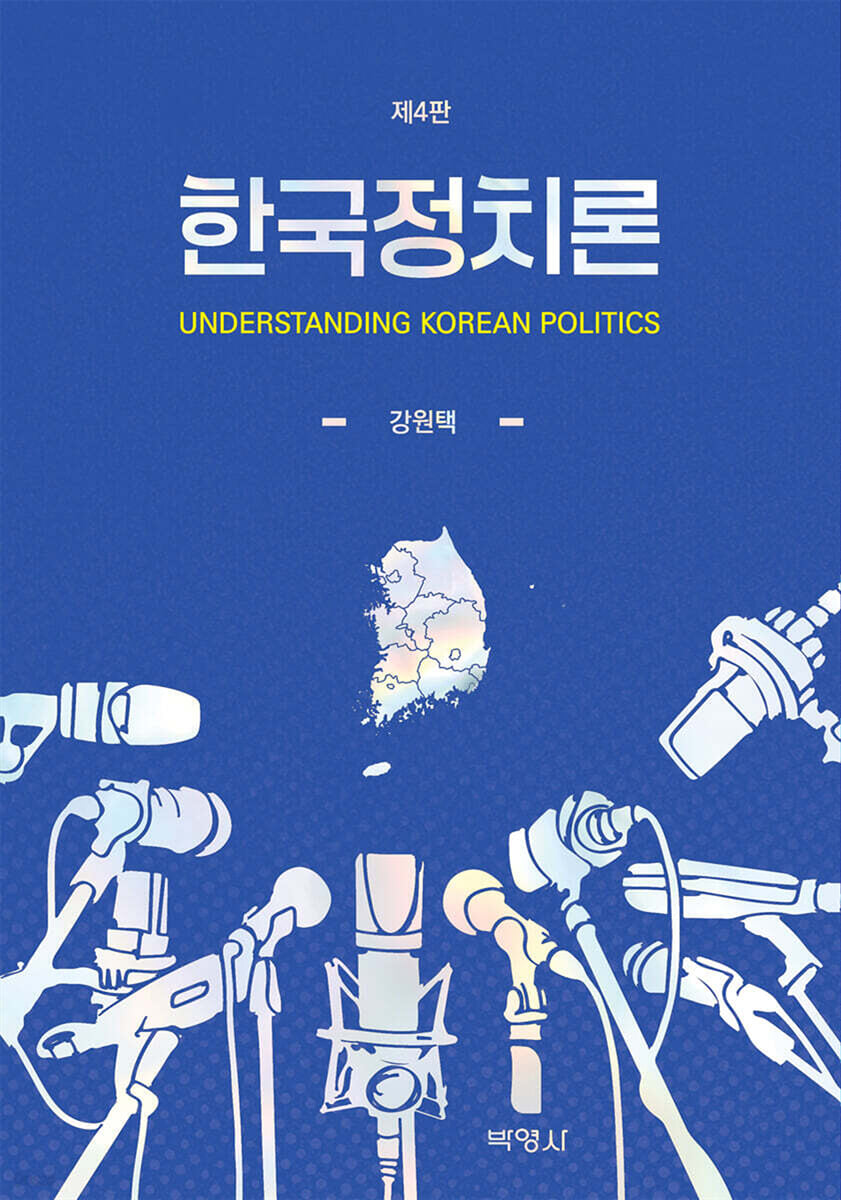
Korean political theory
 |
Description
Book Introduction
This revised edition includes additional details and outcomes from various political events, including the 2024 National Assembly elections, and includes the latest research findings from researchers discussing changes in Korean politics, including political polarization.
- You can preview some of the book's contents.
Preview
index
Chapter 1: Forms of Government
1.
Historical Origins 1
2.
The Evolution of the Presidential System 8
(1) Syngman Rhee's Regime: Individual Rule and Long-Term Dictatorship 8
(2) Second Republic: Parliamentary Cabinet System 11
(3) The Third Republic: The Revival of a Strong Presidential System 13
(4) Yushin regime: one-man lifelong dictatorship 18
(5) The Fifth Republic: An Extension of the Yushin Regime Without Park Chung-hee 22
(6) The Sixth Republic: Democratization and the Establishment of the '87 Regime' 27
3.
Status and Authority 33
4.
Characteristics of the Korean Presidential System 40
(1) Role Conflict 40
(2) Relations with the National Assembly: Dual Legitimacy 42
(3) Imperial President vs. Lame Duck President 48
5.
Sintering 58
Chapter 2 National Assembly
1.
Origins and Historical Development 61
2.
Institutions and Organizations 72
(1) Circle composition 72
(2) Organization of the National Assembly 74
3.
Functions and Permissions 88
(1) Legislation 88
(2) Budget, Settlement 92
(3) State investigation, state audit 95
(4) Personnel Hearing 97
(5) Requests for the attendance of the Prime Minister and State Council members and 101 questions to the government
(6) Impeachment Power 102
(7) Proposal for the dismissal of State Council Member 104
4.
Characteristics of the Korean National Assembly 106
(1) Government-ruling party vs. opposition party, legislative branch vs. executive branch 106
(2) Political control and policy checks and balances 110
(3) Party doctrine and autonomy of members 113
(4) Consensus system, majority rule, and National Assembly Advancement Act 115
5.
Sintering 125
Chapter 3 Political Parties
1.
The Origin and Development of Political Parties 127
(1) Immediately after liberation 127
(2) The founding of the Liberal Party and the emergence of opposition politics 130
(3) Democratic Republican Party and New Democratic Party 137
(4) Democratic Justice Party and New Korea Democratic Party 143
(5) Party politics after democratization 145
2.
Political party system 151
3.
Characteristics of Korean Party Politics 156
(1) Political parties among voters 156
(2) Political Parties in the Government 169
(3) Political parties in the National Assembly 172
4.
Sintering 174
Chapter 4 Elections
1.
The Origins and Development of Electoral Politics 177
(1) Elections before the Constitutional Assembly 177
(2) Elections in the First Republic 181
(3) Elections in the Second Republic 186
(4) Elections in the Third Republic 189
(5) Yushin regime 198
(6) Fifth Republic 201
2.
Elections after Democratization 205
(1) Presidential Election 205
(2) National Assembly election 218
3.
Referendum 234
4.
Characteristics of Korean Electoral Politics 236
(1) Elections before democratization 236
(2) Elections after Democratization: Factors influencing Voting 243
(3) Ideological voting 245
(4) Issue voting, economic voting, retrospective voting, candidate factors 246
5.
Electoral System 248
(1) Introduction of the electoral system 248
(2) 1958 Election Law Amendment 250
(3) Second Republic 252
(4) The Third Republic and the Revision of the Election Law 253
(5) Electoral system of the Yushin era 255
(6) Electoral System of the Fifth Republic 255
(7) After democratization 255
6.
Sintering 258
Chapter 5 Executive Branch
1.
The Formation and Change of the Korean Bureaucracy 261
(1) US Military Government 261
(2) First Republic 263
(3) Park Chung-hee era 270
(4) Chun Doo-hwan regime 278
(5) 280 after democratization
2.
The Influence of the Bureaucracy in Korean Politics 283
3.
Democratic Control over Bureaucracy 289
4.
Sintering 293
Chapter 6 Judiciary
1.
The Origins and Evolution of the Judiciary 295
2.
Constitutional Court 302
3.
Judiciary and Politics 306
4.
Sintering 321
Chapter 7 Local Politics
1.
Origins and Historical Development 323
(1) First Republic 323
(2) Second Republic 329
(3) From the Third Republic to the Fifth Republic 330
(4) After democratization 331
2.
Institutions and Authority 335
(1) Organization and Authority 335
(2) Resident Participation System 338
(3) Educational Autonomy 343
(4) Local Council Election System 344
3.
Problems of Local Autonomy in Korea 346
(1) Weak power and biased representation 346
(2) Institutional challenges related to local autonomy structure 353
4.
Sintering 359
Chapter 8 Democratization
1.
Introduction and Development of Democracy 361
2.
Democratic Transition 369
3.
Democratic Consolidation 380
(1) Establishment of procedural democracy 381
(2) Depoliticization of the military and the resolution of past history 385
(3) Exclusion of extremist politics and centripetal competition 390
4.
Sintering 394
Chapter 9 Civil Society and Informatization
1.
Historical Development 397
2.
Civil Society after Democratization 403
3.
Informatization and Civil Society 415
4.
Sintering 427
Chapter 10 Inter-Korean Relations and Unification Policy
1.
Changes in Inter-Korean Relations 429
2.
Development of Unification Policy 444
3.
North Korea in Korean Politics 456
(1) Anti-communism 456
(2) Ideological conflict 461
4.
Sintering 466
Reference 469
Biographical Index 495
Item Index 498
1.
Historical Origins 1
2.
The Evolution of the Presidential System 8
(1) Syngman Rhee's Regime: Individual Rule and Long-Term Dictatorship 8
(2) Second Republic: Parliamentary Cabinet System 11
(3) The Third Republic: The Revival of a Strong Presidential System 13
(4) Yushin regime: one-man lifelong dictatorship 18
(5) The Fifth Republic: An Extension of the Yushin Regime Without Park Chung-hee 22
(6) The Sixth Republic: Democratization and the Establishment of the '87 Regime' 27
3.
Status and Authority 33
4.
Characteristics of the Korean Presidential System 40
(1) Role Conflict 40
(2) Relations with the National Assembly: Dual Legitimacy 42
(3) Imperial President vs. Lame Duck President 48
5.
Sintering 58
Chapter 2 National Assembly
1.
Origins and Historical Development 61
2.
Institutions and Organizations 72
(1) Circle composition 72
(2) Organization of the National Assembly 74
3.
Functions and Permissions 88
(1) Legislation 88
(2) Budget, Settlement 92
(3) State investigation, state audit 95
(4) Personnel Hearing 97
(5) Requests for the attendance of the Prime Minister and State Council members and 101 questions to the government
(6) Impeachment Power 102
(7) Proposal for the dismissal of State Council Member 104
4.
Characteristics of the Korean National Assembly 106
(1) Government-ruling party vs. opposition party, legislative branch vs. executive branch 106
(2) Political control and policy checks and balances 110
(3) Party doctrine and autonomy of members 113
(4) Consensus system, majority rule, and National Assembly Advancement Act 115
5.
Sintering 125
Chapter 3 Political Parties
1.
The Origin and Development of Political Parties 127
(1) Immediately after liberation 127
(2) The founding of the Liberal Party and the emergence of opposition politics 130
(3) Democratic Republican Party and New Democratic Party 137
(4) Democratic Justice Party and New Korea Democratic Party 143
(5) Party politics after democratization 145
2.
Political party system 151
3.
Characteristics of Korean Party Politics 156
(1) Political parties among voters 156
(2) Political Parties in the Government 169
(3) Political parties in the National Assembly 172
4.
Sintering 174
Chapter 4 Elections
1.
The Origins and Development of Electoral Politics 177
(1) Elections before the Constitutional Assembly 177
(2) Elections in the First Republic 181
(3) Elections in the Second Republic 186
(4) Elections in the Third Republic 189
(5) Yushin regime 198
(6) Fifth Republic 201
2.
Elections after Democratization 205
(1) Presidential Election 205
(2) National Assembly election 218
3.
Referendum 234
4.
Characteristics of Korean Electoral Politics 236
(1) Elections before democratization 236
(2) Elections after Democratization: Factors influencing Voting 243
(3) Ideological voting 245
(4) Issue voting, economic voting, retrospective voting, candidate factors 246
5.
Electoral System 248
(1) Introduction of the electoral system 248
(2) 1958 Election Law Amendment 250
(3) Second Republic 252
(4) The Third Republic and the Revision of the Election Law 253
(5) Electoral system of the Yushin era 255
(6) Electoral System of the Fifth Republic 255
(7) After democratization 255
6.
Sintering 258
Chapter 5 Executive Branch
1.
The Formation and Change of the Korean Bureaucracy 261
(1) US Military Government 261
(2) First Republic 263
(3) Park Chung-hee era 270
(4) Chun Doo-hwan regime 278
(5) 280 after democratization
2.
The Influence of the Bureaucracy in Korean Politics 283
3.
Democratic Control over Bureaucracy 289
4.
Sintering 293
Chapter 6 Judiciary
1.
The Origins and Evolution of the Judiciary 295
2.
Constitutional Court 302
3.
Judiciary and Politics 306
4.
Sintering 321
Chapter 7 Local Politics
1.
Origins and Historical Development 323
(1) First Republic 323
(2) Second Republic 329
(3) From the Third Republic to the Fifth Republic 330
(4) After democratization 331
2.
Institutions and Authority 335
(1) Organization and Authority 335
(2) Resident Participation System 338
(3) Educational Autonomy 343
(4) Local Council Election System 344
3.
Problems of Local Autonomy in Korea 346
(1) Weak power and biased representation 346
(2) Institutional challenges related to local autonomy structure 353
4.
Sintering 359
Chapter 8 Democratization
1.
Introduction and Development of Democracy 361
2.
Democratic Transition 369
3.
Democratic Consolidation 380
(1) Establishment of procedural democracy 381
(2) Depoliticization of the military and the resolution of past history 385
(3) Exclusion of extremist politics and centripetal competition 390
4.
Sintering 394
Chapter 9 Civil Society and Informatization
1.
Historical Development 397
2.
Civil Society after Democratization 403
3.
Informatization and Civil Society 415
4.
Sintering 427
Chapter 10 Inter-Korean Relations and Unification Policy
1.
Changes in Inter-Korean Relations 429
2.
Development of Unification Policy 444
3.
North Korea in Korean Politics 456
(1) Anti-communism 456
(2) Ideological conflict 461
4.
Sintering 466
Reference 469
Biographical Index 495
Item Index 498
Publisher's Review
In publishing the 4th edition
This revised edition has been released earlier than originally scheduled.
The third revised edition was published in February 2023, and a new revised edition has been published in just two and a half years.
The reason for this was that the political situation changed rapidly due to President Yoon Seok-yeol's unexpected declaration of martial law on December 3, 2024, and his subsequent impeachment, which led to an early presidential election in June 2025, and these political changes had to be reflected in the book.
But even before that, the need for revision was felt.
This is because the extreme confrontation between the opposition-led National Assembly and the president has brought about a major change in the political practices and trends that have continued since democratization.
For example, the opposition party's unilateral legislation, the impeachment of various public officials, and the president's frequent exercise of veto power are unprecedented phenomena.
There was a need to reflect this changing situation in the book and interpret its political significance.
We also had to examine the implications of this series of political changes for Korean democracy.
This revised edition also includes the content and outcomes of various political events that occurred between now and the 2024 National Assembly elections, and includes the latest research findings from researchers discussing changes in Korean politics, such as political polarization.
Because of this, although it was a revised edition published after a short period of time, there was a lot of content that needed to be rewritten or added.
In the preface to the revised third edition, he pointed out that there were concerns that "Korean politics is not necessarily moving in a positive direction," and wrote that while the phenomenon of democratic regression is appearing worldwide, our country is not free from such signs of crisis.
Those concerns became reality in just two years.
Fortunately, democracy in Korea was restored thanks to citizen resistance, military restraint, and a properly functioning political system.
But this kind of crisis can come again at any time.
It is a situation where reform of the political system is necessary to control and alleviate political confrontation and conflict so that it does not escalate to extreme levels.
Furthermore, raising civic awareness that values coexistence and tolerance rather than hostility and exclusion is also an essential condition for protecting democracy.
As we have experienced this time, politics has a direct and profound impact on our lives.
We need to know our politics properly.
In that respect, it is very important to have knowledge and a proper understanding of the origins, institutions, and workings of our politics.
While working on this revised edition, I felt the weight of the textbook 『Korean Political Theory』 even more strongly.
August 2025
This revised edition has been released earlier than originally scheduled.
The third revised edition was published in February 2023, and a new revised edition has been published in just two and a half years.
The reason for this was that the political situation changed rapidly due to President Yoon Seok-yeol's unexpected declaration of martial law on December 3, 2024, and his subsequent impeachment, which led to an early presidential election in June 2025, and these political changes had to be reflected in the book.
But even before that, the need for revision was felt.
This is because the extreme confrontation between the opposition-led National Assembly and the president has brought about a major change in the political practices and trends that have continued since democratization.
For example, the opposition party's unilateral legislation, the impeachment of various public officials, and the president's frequent exercise of veto power are unprecedented phenomena.
There was a need to reflect this changing situation in the book and interpret its political significance.
We also had to examine the implications of this series of political changes for Korean democracy.
This revised edition also includes the content and outcomes of various political events that occurred between now and the 2024 National Assembly elections, and includes the latest research findings from researchers discussing changes in Korean politics, such as political polarization.
Because of this, although it was a revised edition published after a short period of time, there was a lot of content that needed to be rewritten or added.
In the preface to the revised third edition, he pointed out that there were concerns that "Korean politics is not necessarily moving in a positive direction," and wrote that while the phenomenon of democratic regression is appearing worldwide, our country is not free from such signs of crisis.
Those concerns became reality in just two years.
Fortunately, democracy in Korea was restored thanks to citizen resistance, military restraint, and a properly functioning political system.
But this kind of crisis can come again at any time.
It is a situation where reform of the political system is necessary to control and alleviate political confrontation and conflict so that it does not escalate to extreme levels.
Furthermore, raising civic awareness that values coexistence and tolerance rather than hostility and exclusion is also an essential condition for protecting democracy.
As we have experienced this time, politics has a direct and profound impact on our lives.
We need to know our politics properly.
In that respect, it is very important to have knowledge and a proper understanding of the origins, institutions, and workings of our politics.
While working on this revised edition, I felt the weight of the textbook 『Korean Political Theory』 even more strongly.
August 2025
GOODS SPECIFICS
- Date of issue: August 25, 2025
- Page count, weight, size: 528 pages | 176*248*35mm
- ISBN13: 9791130323978
- ISBN10: 1130323978
You may also like
카테고리
korean


korean

![ELLE 엘르 스페셜 에디션 A형 : 12월 [2025]](http://librairie.coreenne.fr/cdn/shop/files/b8e27a3de6c9538896439686c6b0e8fb.jpg?v=1766436872&width=3840)


