

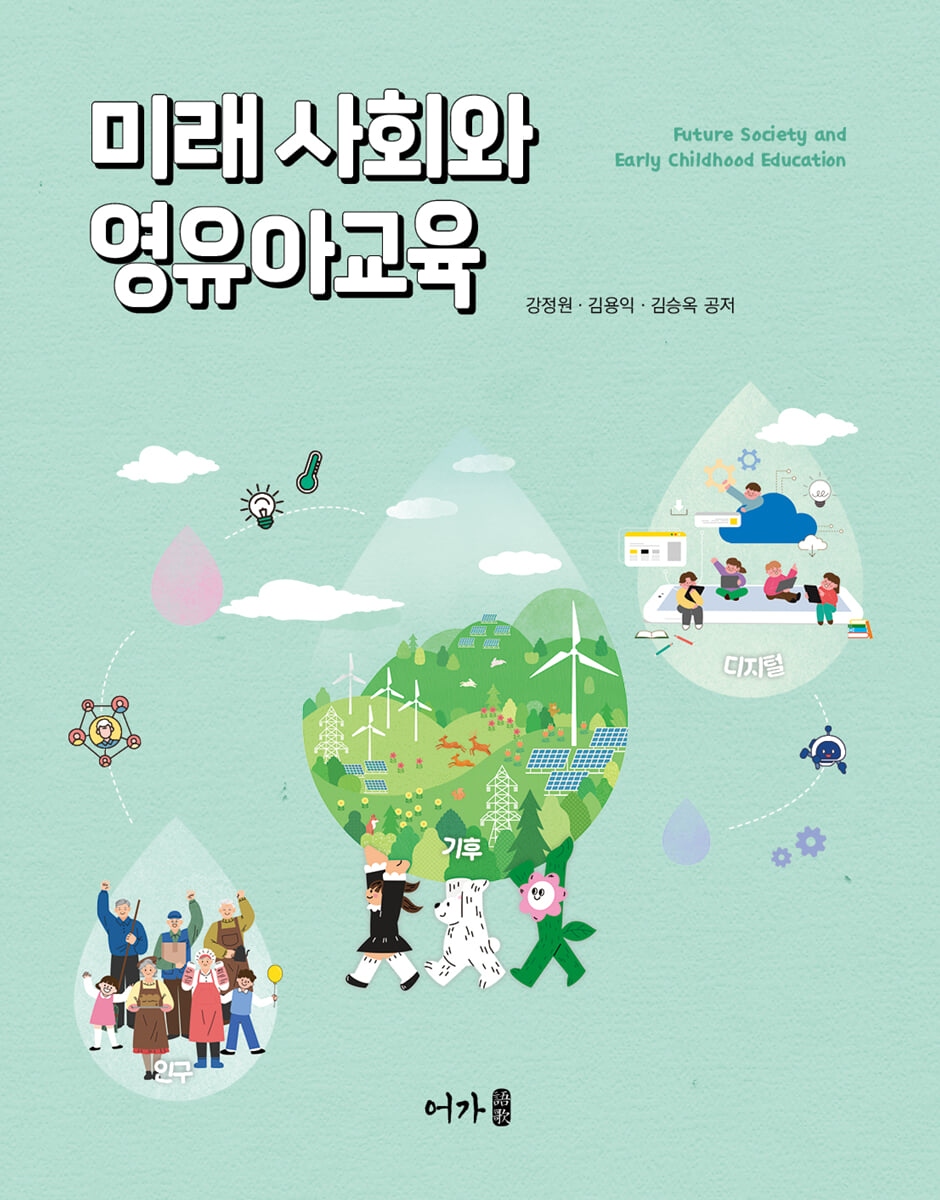
Future Society and Early Childhood Education
 |
Description
Book Introduction
"Future Society and Early Childhood Education" was designed to help you, as you walk alongside your children in this rapidly changing future society, consider what you need to learn and prepare for now.
As the world we live in is changing due to demographic shifts, climate crises, and digital transformation, the old ways of providing early childhood education are no longer sufficient.
Teachers must be able to read these changing trends and implement the most appropriate education for children within them.
As the world we live in is changing due to demographic shifts, climate crises, and digital transformation, the old ways of providing early childhood education are no longer sufficient.
Teachers must be able to read these changing trends and implement the most appropriate education for children within them.
index
Part 1: The Importance of Early Childhood Education in Future Society
Chapter 1: Capacity of Citizens in Future Society
1.
Changes in future society
2.
Citizen competencies required by future society
Chapter 2 The Role of Early Childhood Education
1.
The effectiveness of early childhood education
2.
The impact of adverse childhood experiences
Chapter 3: Future Competencies of Early Childhood Teachers
1.
Core competencies of infants and toddlers
2.
Future educational competencies of early childhood teachers
Part 2: Population Change and Early Childhood Education
Chapter 4 Population Change and Social Issues
1.
Understanding the population
2.
Social problems caused by population change
Chapter 5: Direction of Population Education
1.
The concept and necessity of population education
2.
Goals of population education
3.
Contents of population education
4.
Approaches to Early Childhood Population Education
Chapter 6: The Reality of Early Childhood Population Education
1.
Leveraging everyday experiences
2.
Supporting learning through play and activities
3.
Experiences in relationship with the ecological environment
4.
Statistical experience of demographic phenomena
5.
Use of various media
Part 3: Climate Change and Early Childhood Education
Chapter 7 Climate Change and Social Issues
1.
Understanding Climate Change
2.
Social problems caused by climate change
Chapter 8: Direction of Climate Change Education
1.
The concept and necessity of climate change education
2.
Goals of Climate Change Education
3.
Contents of climate change education
4.
Approaches to Climate Change Education for Infants and Toddlers
Chapter 9: Climate Change Education for Young Children in Practice
1.
Exploring and practicing alternative behaviors
2.
Use of various video media
3.
Using storytelling in picture books as a conceptual organizer
4.
Field experience in environmental protection in the local community
5.
Utilizing Virtual Reality EdTech
6.
Sharing experiences with families on climate change education
Part 4: Changes in the Digital Environment and Early Childhood Education
Chapter 10: Changes in the Digital Environment and Social Issues
1.
Understanding the digital environment
2.
Social problems caused by changes in the digital environment
Chapter 11: Digital Environment and the Direction of Education
1.
The concept and necessity of digital education
2.
Goals of digital education for young children
3.
Contents of digital education for young children
4.
Approaches to Digital Education for Early Childhood
Chapter 12: The Reality of Early Childhood Digital Education
1.
The First Step to Digital Education: Digital Citizenship Education
2.
An educational approach that focuses on children's thoughts and play
3.
Interaction and collaboration through digital
4.
Free exploration and problem solving
5.
Balance between digital and analog
References |
Chapter 1: Capacity of Citizens in Future Society
1.
Changes in future society
2.
Citizen competencies required by future society
Chapter 2 The Role of Early Childhood Education
1.
The effectiveness of early childhood education
2.
The impact of adverse childhood experiences
Chapter 3: Future Competencies of Early Childhood Teachers
1.
Core competencies of infants and toddlers
2.
Future educational competencies of early childhood teachers
Part 2: Population Change and Early Childhood Education
Chapter 4 Population Change and Social Issues
1.
Understanding the population
2.
Social problems caused by population change
Chapter 5: Direction of Population Education
1.
The concept and necessity of population education
2.
Goals of population education
3.
Contents of population education
4.
Approaches to Early Childhood Population Education
Chapter 6: The Reality of Early Childhood Population Education
1.
Leveraging everyday experiences
2.
Supporting learning through play and activities
3.
Experiences in relationship with the ecological environment
4.
Statistical experience of demographic phenomena
5.
Use of various media
Part 3: Climate Change and Early Childhood Education
Chapter 7 Climate Change and Social Issues
1.
Understanding Climate Change
2.
Social problems caused by climate change
Chapter 8: Direction of Climate Change Education
1.
The concept and necessity of climate change education
2.
Goals of Climate Change Education
3.
Contents of climate change education
4.
Approaches to Climate Change Education for Infants and Toddlers
Chapter 9: Climate Change Education for Young Children in Practice
1.
Exploring and practicing alternative behaviors
2.
Use of various video media
3.
Using storytelling in picture books as a conceptual organizer
4.
Field experience in environmental protection in the local community
5.
Utilizing Virtual Reality EdTech
6.
Sharing experiences with families on climate change education
Part 4: Changes in the Digital Environment and Early Childhood Education
Chapter 10: Changes in the Digital Environment and Social Issues
1.
Understanding the digital environment
2.
Social problems caused by changes in the digital environment
Chapter 11: Digital Environment and the Direction of Education
1.
The concept and necessity of digital education
2.
Goals of digital education for young children
3.
Contents of digital education for young children
4.
Approaches to Digital Education for Early Childhood
Chapter 12: The Reality of Early Childhood Digital Education
1.
The First Step to Digital Education: Digital Citizenship Education
2.
An educational approach that focuses on children's thoughts and play
3.
Interaction and collaboration through digital
4.
Free exploration and problem solving
5.
Balance between digital and analog
References |
Publisher's Review
This book was designed to help you, as you walk alongside your children in this rapidly changing future society, consider what you need to learn and prepare for now.
As the world we live in shifts due to demographic changes, climate crisis, and digital transformation, the old ways of providing early childhood education are no longer sufficient.
Teachers must be able to read these changing trends and implement the most appropriate education for children within them.
Part 1 deals with the overall changes in future society and the importance of early childhood education accordingly.
Amidst various changes such as the Fourth Industrial Revolution, a hyper-connected society, population decline, and the climate crisis, we are asking fundamental questions: "Why is early childhood education more important now?" and "What competencies should teachers possess?"
This will serve as a starting point for you to rediscover your identity and sense of mission as a prospective teacher.
Part 2 focuses on the rapid shift in population structure, one of the major changes in future society.
We understand the social problems brought about by population changes such as low birth rates, aging populations, and family breakdown, and suggest educational approaches to address them.
In particular, it contains specific methods for teachers to work with children by introducing various educational practices that can naturally foster population sensitivity in the daily lives of infants and toddlers.
Part 3 addresses the climate crisis, a global challenge.
How can we cultivate the ecological sensitivity and practical skills children need to survive in an era of increasingly unpredictable climate change? To this end, based on an understanding of various current social issues, we present directions and practical examples of environmental education that can begin in early childhood.
We help you develop an attitude of living in harmony with the environment based on hope rather than fear and empathy rather than coercion.
Part 4 focuses on the rapidly evolving digital landscape.
Digital technology can enrich education, but it can also pose a threat to early childhood development.
This course covers the vision and capabilities teachers need in the digital age, as well as educational approaches that can positively utilize digital technology without harming children's development.
It also demonstrates the potential of digital education through a variety of real-world examples that balance play and learning.
Each part is designed to enable prospective teachers to organically connect theory and practice, with a consistent structure of 'Understanding social change → Problem analysis → Presenting educational direction → Introducing real-world examples (play and activities) suitable for infants and toddlers.'
Beyond simply acquiring knowledge, we aim to help you develop your convictions and practical skills as a teacher.
As the world we live in shifts due to demographic changes, climate crisis, and digital transformation, the old ways of providing early childhood education are no longer sufficient.
Teachers must be able to read these changing trends and implement the most appropriate education for children within them.
Part 1 deals with the overall changes in future society and the importance of early childhood education accordingly.
Amidst various changes such as the Fourth Industrial Revolution, a hyper-connected society, population decline, and the climate crisis, we are asking fundamental questions: "Why is early childhood education more important now?" and "What competencies should teachers possess?"
This will serve as a starting point for you to rediscover your identity and sense of mission as a prospective teacher.
Part 2 focuses on the rapid shift in population structure, one of the major changes in future society.
We understand the social problems brought about by population changes such as low birth rates, aging populations, and family breakdown, and suggest educational approaches to address them.
In particular, it contains specific methods for teachers to work with children by introducing various educational practices that can naturally foster population sensitivity in the daily lives of infants and toddlers.
Part 3 addresses the climate crisis, a global challenge.
How can we cultivate the ecological sensitivity and practical skills children need to survive in an era of increasingly unpredictable climate change? To this end, based on an understanding of various current social issues, we present directions and practical examples of environmental education that can begin in early childhood.
We help you develop an attitude of living in harmony with the environment based on hope rather than fear and empathy rather than coercion.
Part 4 focuses on the rapidly evolving digital landscape.
Digital technology can enrich education, but it can also pose a threat to early childhood development.
This course covers the vision and capabilities teachers need in the digital age, as well as educational approaches that can positively utilize digital technology without harming children's development.
It also demonstrates the potential of digital education through a variety of real-world examples that balance play and learning.
Each part is designed to enable prospective teachers to organically connect theory and practice, with a consistent structure of 'Understanding social change → Problem analysis → Presenting educational direction → Introducing real-world examples (play and activities) suitable for infants and toddlers.'
Beyond simply acquiring knowledge, we aim to help you develop your convictions and practical skills as a teacher.
GOODS SPECIFICS
- Date of issue: August 1, 2025
- Page count, weight, size: 352 pages | 188*240*30mm
- ISBN13: 9791170751809
- ISBN10: 1170751806
You may also like
카테고리
korean


korean

![GQ KOREA Mark (Monthly): December [2025]](http://librairie.coreenne.fr/cdn/shop/files/8ef265dbbfbf186523ed75ba7319009d.jpg?v=1765340328&width=3840)


