

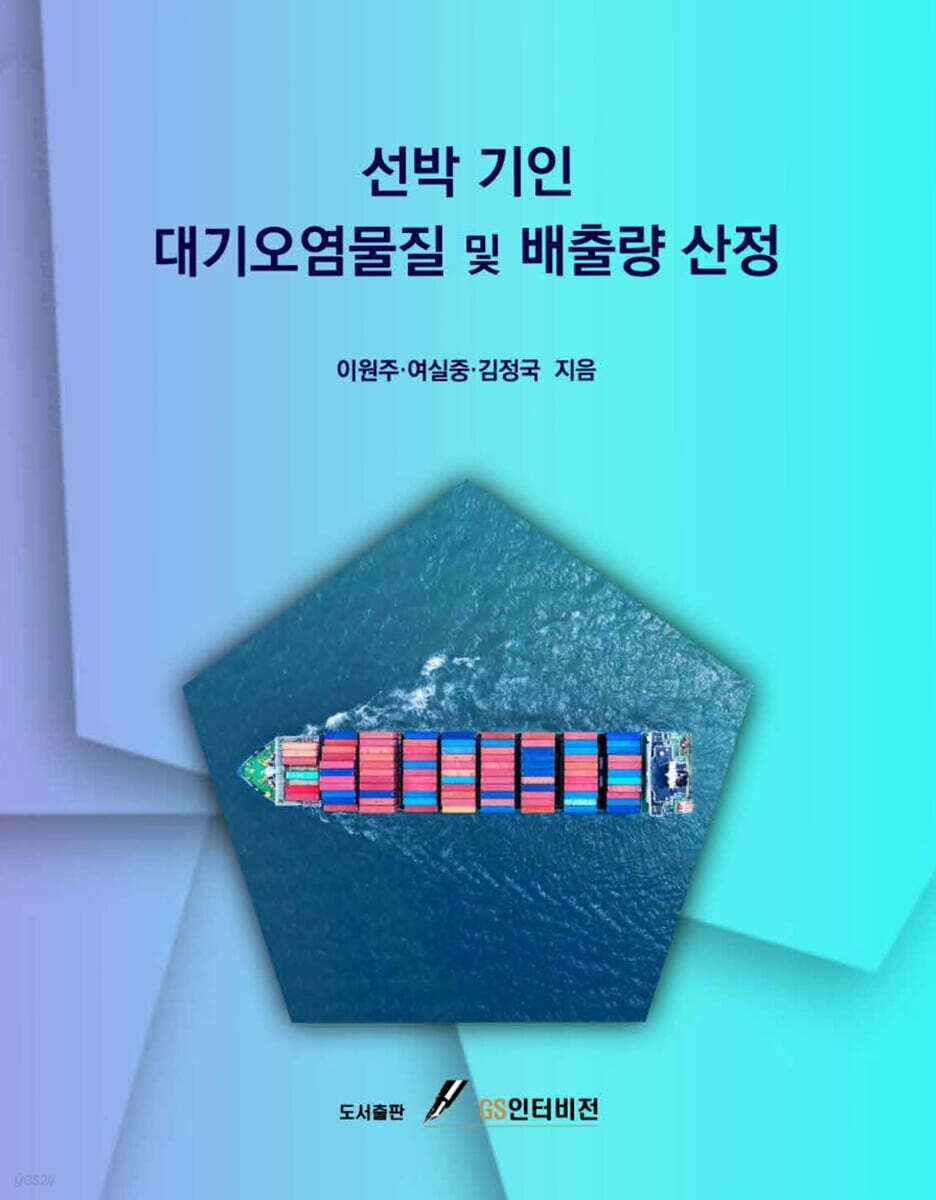
Estimation of ship-borne air pollutants and emissions
 |
Description
Book Introduction
『Ship-Originated Air Pollutants and Emissions Estimation』 seeks to cover the topic of “Ship Emissions Estimation Methodology” in depth.
Beyond a simple technical approach, the core objective of this book is to establish a methodological foundation for scientifically and systematically quantifying air pollutants emitted from ships and utilizing this information to formulate environmental policies and design industrial strategies.
Beyond a simple technical approach, the core objective of this book is to establish a methodological foundation for scientifically and systematically quantifying air pollutants emitted from ships and utilizing this information to formulate environmental policies and design industrial strategies.
index
Chapter 1.
Background and Importance of Ship-Originated Air Pollution
1.1 Domestic and international environmental regulations and policies
1.1.1 Domestic environmental regulations and policies
1.1.2 International Maritime Organization (IMO) regulations
1.1.3 Other overseas environmental regulations and policies
1.2 Overview of Shipborne Air Pollution
1.2.1 Nitrogen oxides (NOx)
1.2.2 Sulfur oxides (SOx)
1.2.3 Carbon dioxide (CO2)
1.2.4 Particulate Matter (PM)
1.2.5 Volatile organic compounds (VOCs)
1.2.6 Carbon monoxide (CO)
1.2.7 Unburned hydrocarbon (UHC)
1.3 Current Status and Prospects of Ship-Originated Air Pollutant Reduction Technologies
1.3.1 Exhaust Gas Recirculation (EGR) System
1.3.2 Selective Catalytic Reduction (SCR) System
1.3.3 Sulfur oxide exhaust gas purification device (scrubber)
1.4 Alternative Fuels: Low-Carbon Emission Fuels
1.4.1 Liquefied Natural Gas (LNG)
1.4.2 Liquefied Petroleum Gas (LPG)
1.4.3 Methanol
1.5 Alternative fuels: carbon-neutral fuels, carbon-free fuels
1.5.1 Biodiesel
1.5.2 Ammonia
1.5.3 Hydrogen
1.6 Electricity and Fuel Cell
1.6.1 Electric propulsion vessels
1.6.2 Fuel cell (FC)
1.7 Others (Nuclear)
Chapter 2.
Method for calculating air pollutant emissions
2.1 Guidelines for Calculating Emissions
2.1.1 Background on the Development of the US Emissions Accounting Guidelines
2.1.2 The Importance of Port-Related Emissions Inventories
2.1.3 Composition of the Guidelines
2.1.4 Types of pollutant lists
2.1.5 Marine boundary
2.1.6 General
2.2 Detailed Method for Calculating Emissions from Ocean-Going Vessels
2.2.1 Emissions Estimation Overview
2.2.2 Vessel Characteristics
2.2.3 Vessel Activity Data Sources
2.2.4 Emission Factor
2.2.5 Auxiliary engine and boiler loads by operating mode
2.2.6 Low load adjustment factor
2.2.7 AIS Inventory Calculation
2.2.8 Calculating Alternative Inventory
2.2.9 Projecting future emissions inventories
Chatper 3.
Full-cycle evaluation theory
3.1 Introduction to Life Cycle Assessment (LCA)
3.1.1 History of Life Cycle Assessment (LCA)
3.1.2 Analysis tools for evaluating the environmental aspects of products
3.1.3 Life Cycle Assessment (LCA)
3.1.4 Advantages and Disadvantages of LCA
3.1.5 Expected effects of LCA
3.1.6 Simplified LCA
3.2 Goal and Scope Definition
3.2.1 Production System and Function
3.2.2 System Boundary
3.2.3 Data Category
3.2.4 Example of the Goal and Scope Definition
3.3 Life Cycle Inventory Analysis (LCI Analysis)
3.3.1 Preparation for Data Collection
3.3.2 Data Collection and Verification
3.3.3 Calculation of Environmental Load per Unit Process
3.3.4 Calculation of Environmental Load per Unit Functional Unit
3.3.5 Life Cycle Inventory Database (LCI DB)
3.3.6 Creating an LCI table for a product system
3.3.7 Allocation
3.4 Life Cycle Impact Assessment (LCIA)
3.4.1 Classification
3.4.2 Characterization
3.4.3 Normalization
3.4.4 Weighting
3.5 Interpretation
3.5.1 Identification of Key Issues
3.5.2 Evaluation of Completeness, Sensitivity, Consistency, and Data Quality Requirements
3.5.3 Conclusions and Recommendations
3.6 Example of LCA
3.6.1 Defining Goals and Scope
3.6.2 LCI
3.6.3 LCIA
3.6.4 Interpretation
References
Background and Importance of Ship-Originated Air Pollution
1.1 Domestic and international environmental regulations and policies
1.1.1 Domestic environmental regulations and policies
1.1.2 International Maritime Organization (IMO) regulations
1.1.3 Other overseas environmental regulations and policies
1.2 Overview of Shipborne Air Pollution
1.2.1 Nitrogen oxides (NOx)
1.2.2 Sulfur oxides (SOx)
1.2.3 Carbon dioxide (CO2)
1.2.4 Particulate Matter (PM)
1.2.5 Volatile organic compounds (VOCs)
1.2.6 Carbon monoxide (CO)
1.2.7 Unburned hydrocarbon (UHC)
1.3 Current Status and Prospects of Ship-Originated Air Pollutant Reduction Technologies
1.3.1 Exhaust Gas Recirculation (EGR) System
1.3.2 Selective Catalytic Reduction (SCR) System
1.3.3 Sulfur oxide exhaust gas purification device (scrubber)
1.4 Alternative Fuels: Low-Carbon Emission Fuels
1.4.1 Liquefied Natural Gas (LNG)
1.4.2 Liquefied Petroleum Gas (LPG)
1.4.3 Methanol
1.5 Alternative fuels: carbon-neutral fuels, carbon-free fuels
1.5.1 Biodiesel
1.5.2 Ammonia
1.5.3 Hydrogen
1.6 Electricity and Fuel Cell
1.6.1 Electric propulsion vessels
1.6.2 Fuel cell (FC)
1.7 Others (Nuclear)
Chapter 2.
Method for calculating air pollutant emissions
2.1 Guidelines for Calculating Emissions
2.1.1 Background on the Development of the US Emissions Accounting Guidelines
2.1.2 The Importance of Port-Related Emissions Inventories
2.1.3 Composition of the Guidelines
2.1.4 Types of pollutant lists
2.1.5 Marine boundary
2.1.6 General
2.2 Detailed Method for Calculating Emissions from Ocean-Going Vessels
2.2.1 Emissions Estimation Overview
2.2.2 Vessel Characteristics
2.2.3 Vessel Activity Data Sources
2.2.4 Emission Factor
2.2.5 Auxiliary engine and boiler loads by operating mode
2.2.6 Low load adjustment factor
2.2.7 AIS Inventory Calculation
2.2.8 Calculating Alternative Inventory
2.2.9 Projecting future emissions inventories
Chatper 3.
Full-cycle evaluation theory
3.1 Introduction to Life Cycle Assessment (LCA)
3.1.1 History of Life Cycle Assessment (LCA)
3.1.2 Analysis tools for evaluating the environmental aspects of products
3.1.3 Life Cycle Assessment (LCA)
3.1.4 Advantages and Disadvantages of LCA
3.1.5 Expected effects of LCA
3.1.6 Simplified LCA
3.2 Goal and Scope Definition
3.2.1 Production System and Function
3.2.2 System Boundary
3.2.3 Data Category
3.2.4 Example of the Goal and Scope Definition
3.3 Life Cycle Inventory Analysis (LCI Analysis)
3.3.1 Preparation for Data Collection
3.3.2 Data Collection and Verification
3.3.3 Calculation of Environmental Load per Unit Process
3.3.4 Calculation of Environmental Load per Unit Functional Unit
3.3.5 Life Cycle Inventory Database (LCI DB)
3.3.6 Creating an LCI table for a product system
3.3.7 Allocation
3.4 Life Cycle Impact Assessment (LCIA)
3.4.1 Classification
3.4.2 Characterization
3.4.3 Normalization
3.4.4 Weighting
3.5 Interpretation
3.5.1 Identification of Key Issues
3.5.2 Evaluation of Completeness, Sensitivity, Consistency, and Data Quality Requirements
3.5.3 Conclusions and Recommendations
3.6 Example of LCA
3.6.1 Defining Goals and Scope
3.6.2 LCI
3.6.3 LCIA
3.6.4 Interpretation
References
Publisher's Review
preface
Today, humanity faces a common challenge called the 'environment'.
Climate change is no longer a distant future problem; air pollution and resource depletion are already tangible in our daily lives.
This crisis not only threatens the balance of the ecosystem, but also threatens the sustainability of humanity.
Environmental issues are now a necessity, not a choice, and solutions must begin with actions based on scientific evidence.
Amidst these contemporary demands, the shipping and shipbuilding industries are facing a major turning point.
Ships are a key means of transport, carrying over 90% of global logistics, but they are also a "mobile source of pollution" that emits various air pollutants, including carbon dioxide, nitrogen oxides, sulfur oxides, and particulate matter (PM).
Environmental regulations from governments around the world, including the International Maritime Organization (IMO), are becoming increasingly stringent, and the industry is in desperate need of practical and specific solutions to address them.
This book begins with this problem in mind and delves into the topic of “methodology for calculating ship emissions.”
Beyond a simple technical approach, the core objective of this book is to establish a methodological foundation for scientifically and systematically quantifying air pollutants emitted from ships and utilizing this knowledge to formulate environmental policies and design industrial strategies.
This book aims to:
First, we systematically organize the types and characteristics of ship emissions and broadly examine domestic and international environmental regulatory trends.
Second, we have organized emission calculation techniques for ports and the sea and enhanced their practicality through practical application cases.
Third, we introduce a customized emission assessment technique that reflects the characteristics of various types of ships, operating conditions, and fuels.
Fourth, it was designed to enable a more comprehensive and quantitative evaluation by incorporating a life cycle (LCA) approach.
This book will serve as a practical guide for a diverse range of readers, including environmental experts, managers in the shipping and port industries, undergraduate and graduate students studying related fields, and environmental policymakers in government and local governments.
Additionally, we aimed to increase the usability of this textbook by utilizing various international reports and domestic and international statistics along with practical case studies, thereby combining theory and practice.
The shipping industry is both the artery of human civilization and a responsible player in today's era of environmental crisis.
I sincerely hope that this book will serve as a bridge connecting the marine industry, academia, and policymaking, and that it will provide deep insight and practical tools to all those concerned about the sustainability of the marine environment.
All authors
Today, humanity faces a common challenge called the 'environment'.
Climate change is no longer a distant future problem; air pollution and resource depletion are already tangible in our daily lives.
This crisis not only threatens the balance of the ecosystem, but also threatens the sustainability of humanity.
Environmental issues are now a necessity, not a choice, and solutions must begin with actions based on scientific evidence.
Amidst these contemporary demands, the shipping and shipbuilding industries are facing a major turning point.
Ships are a key means of transport, carrying over 90% of global logistics, but they are also a "mobile source of pollution" that emits various air pollutants, including carbon dioxide, nitrogen oxides, sulfur oxides, and particulate matter (PM).
Environmental regulations from governments around the world, including the International Maritime Organization (IMO), are becoming increasingly stringent, and the industry is in desperate need of practical and specific solutions to address them.
This book begins with this problem in mind and delves into the topic of “methodology for calculating ship emissions.”
Beyond a simple technical approach, the core objective of this book is to establish a methodological foundation for scientifically and systematically quantifying air pollutants emitted from ships and utilizing this knowledge to formulate environmental policies and design industrial strategies.
This book aims to:
First, we systematically organize the types and characteristics of ship emissions and broadly examine domestic and international environmental regulatory trends.
Second, we have organized emission calculation techniques for ports and the sea and enhanced their practicality through practical application cases.
Third, we introduce a customized emission assessment technique that reflects the characteristics of various types of ships, operating conditions, and fuels.
Fourth, it was designed to enable a more comprehensive and quantitative evaluation by incorporating a life cycle (LCA) approach.
This book will serve as a practical guide for a diverse range of readers, including environmental experts, managers in the shipping and port industries, undergraduate and graduate students studying related fields, and environmental policymakers in government and local governments.
Additionally, we aimed to increase the usability of this textbook by utilizing various international reports and domestic and international statistics along with practical case studies, thereby combining theory and practice.
The shipping industry is both the artery of human civilization and a responsible player in today's era of environmental crisis.
I sincerely hope that this book will serve as a bridge connecting the marine industry, academia, and policymaking, and that it will provide deep insight and practical tools to all those concerned about the sustainability of the marine environment.
All authors
GOODS SPECIFICS
- Date of issue: July 31, 2025
- Page count, weight, size: 239 pages | 190*240*20mm
- ISBN13: 9791155765166
- ISBN10: 1155765168
You may also like
카테고리
korean


korean

![ELLE 엘르 스페셜 에디션 A형 : 12월 [2025]](http://librairie.coreenne.fr/cdn/shop/files/b8e27a3de6c9538896439686c6b0e8fb.jpg?v=1766436872&width=3840)


