

computer architecture
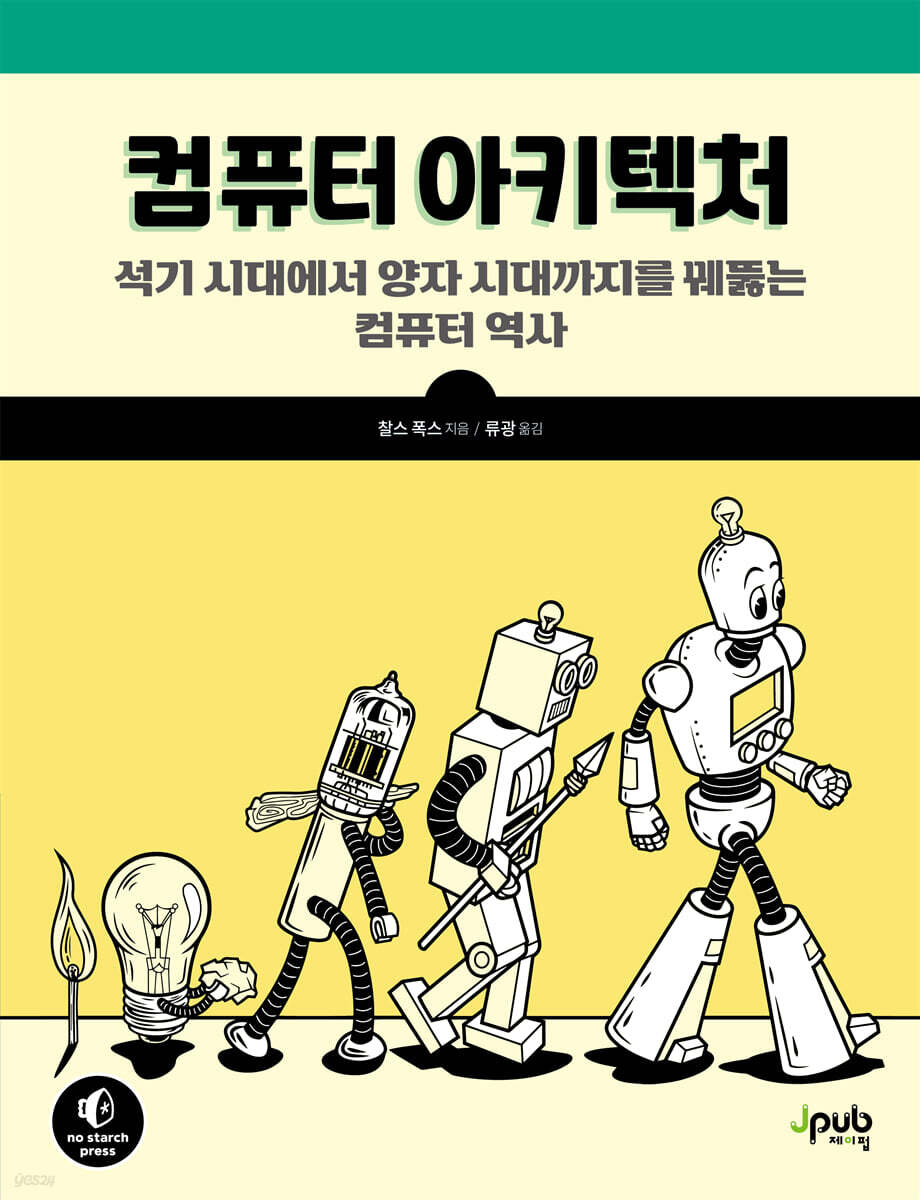 |
Description
Book Introduction
The Past, Present, and Future of Architecture: Learning from the History of Computers
The explosive growth of LLMs and the emergence of new development cultures like Vibe Coding are disrupting the IT ecosystem. However, knowledge of computer architecture, the root and heart of modern computing, serves as a compass that guides developers in the right direction amidst this storm of rapid change.
Combining history, theory, practice, and real-world examples, this book provides an insightful exploration of the rapidly changing world of computing.
Beyond simply reading and understanding texts on computer architecture, it also provides opportunities to touch, build, and program architectures directly.
Explore the basic structure of the CPU by programming Charles Babbage's Analytical Engine, designed during the Victorian era.
Expand your understanding of electronic components to include programming the Commodore 64 and Amiga, 8-bit and 16-bit retro gaming computers.
We delve deep into mainstream architectures, x86 and RISC-V, and explore ideas for future technologies, including the cloud and supercomputers.
Whether students, professionals, or simply technology enthusiasts, this book will help readers understand key milestones in the history of computer architecture and connect directly with the technologies that define today's world.
Experience the digital world firsthand through this exciting and insightful book.
- You can preview some of the book's contents.
Preview
index
About the Author, Editor, and Translator xiv
Translator's Preface xvi
Beta Reader Review xviii
Starting off xx
Acknowledgements xxxviii
PART I BASIC CONCEPTS
CHAPTER 1 Historical Architectures 3
1.1 What is a computer? 4
1.2 Before the Industrial Revolution 7
1.2.1 Stone Age 7 / 1.2.2 Bronze Age 9 / 1.2.3 Iron Age 11
1.2.4 The Islamic Golden Age 13 / 1.2.5 The Renaissance and the Age of Enlightenment 15
1.3 Steam Age 17
1.3.1 Jacquard loom 17 / 1.3.2 Victorian barrel organs and music boxes 18
1.3.3 Babbage's Difference Engine 18 / 1.3.4 Babbage's Analytical Engine 20
1.3.5 Mechanical Differential Analyzer 24
1.4 Diesel Era 25
1.4.1 Hollerith Table Calculator and IBM 26 / 1.4.2 Electromechanical Differential Analyzer 28
1.4.3 Electromechanical Machines of World War II 28 / 1.4.4 Z3 31
1.5 Electric Age 31
1.5.1 Purely Electronic Cryptography of World War II 32 / 1.5.2 ENIAC 33
1.5.3 VM ENIAC 35 / 1.5.4 Manchester Baby 35
1.5.5 The 1950s and Commercial Computing 37
1.6 Transistor Era 38
1.6.1 The 1960s and Large Transistors 38 / 1.6.2 The 1970s and Integrated Circuits 40
1.6.3 The Golden Age of the 1980s 41 / 1.6.4 The Boring 1990s 42
1.6.5 The 2000s and Community Restructuring 44
1.6.6 The 2010s and the End of Moore's Law 45
1.6.7 Cloud and the Internet of Things (IoT) in the 2020s 48
1.7 So what was the first computer? 50
Chapter Summary 51
Practice Assignment 51
Further Reading 52
CHAPTER 2 DATA REPRESENTATION 53
2.1 A Brief History of Data Representation 54
2.1.1 Tally Stick and Trading Token 54 / 2.1.2 Roman Numeral 56
2.1.3 Split Tally 56 / 2.1.4 Arabic Numerals and Other Numbers 57
2.2 Modern Number System 59
2.2.1 Base and Exponent 59 / 2.2.2 Base 10: Decimal 60
2.2.3 Base 2: Binary 61 / 2.2.4 Base 10,000 62
2.2.5 Base 60: Sexagesimal 63 / 2.2.6 Base 16: Hexadecimal 63
2.2.7 Base 256: Byte 66 / 2.2.8 How to convert to base 66
2.3 Data Representation 67
2.3.1 Natural numbers 67 / 2.3.2 Integers 70 / 2.3.3 Rational numbers 71
2.3.4 Fixed-point 72 / 2.3.5 Floating-point 72 / 2.3.6 Array 73
2.3.7 Text 75 / 2.3.8 Multimedia Data Representation 80 / 2.3.9 Data Structures 83
2.4 Data Measurement 84
Chapter Summary 86
Practice Assignment 86
Further Reading 87
CHAPTER 3: BASIC CPU-BASED ARCHITECTURES 88
3.1 Music Processing Unit 88
3.1.1 From Music to Numerical Computation 91 / 3.1.2 From Numerical Computation to Computation 92
3.2 Babbage's CPU 93
3.2.1 High-Level Architecture 94 / 3.2.2 Programmer Interface 95
3.2.3 Internal Subcomponents 100 / 3.2.4 Internal Operation 103
Summary of this chapter 106
Practice Assignment 107
Further Reading 107
PART II HIERARCHY OF ELECTRONIC CIRCUIT 109
CHAPTER 4 Switch 111
4.1 Directional System 112
4.1.1 Check valve 113 / 4.1.2 Thermal diode 114 / 4.1.3 PN junction diode 115
4.2 Switch 121
4.2.1 Hydraulic pressure switch 121 / 4.2.2 Electric vacuum tube switch 122
4.2.3 PNP transistor 123 / 4.2.4 hydraulic effect switch 125
4.2.5 Field-Effect Transistor 126 / 4.2.6 Clock 127
4.3 Transistor Manufacturing 128
4.4 Moore's Law 130
Summary of this chapter 131
Practice Assignment 132
Further Reading 132
CHAPTER 5 DIGITAL LOGIC 133
5.1 Claude Shannon and Logic Gates 134
5.2 Logic Gates 135
5.2.1 Identifying Universal Gates 138 / 5.2.2 Building Logic Gates with Transistors 138
5.2.3 Placing Logic Gates on a Chip 140
5.3 Boolean Logic 143
5.3.1 Logic as Arithmetic 144 / 5.3.2 Model Checking vs. Proof 145
5.4 Simplifying Logic Circuits Using Boolean Logic 148
5.5 Implementation of Digital Logic 150
5.5.1 Utilizing the 7400 Series Chips 150 / 5.5.2 Photo Process 151
5.5.3 PLA 151 / 5.5.4 FPGA 152
Summary of this chapter 154
Practice Assignment 154
Further Reading 155
CHAPTER 6 SIMPLE MACHINES 156
6.1 Combinational Logic 157
6.1.1 Bitwise Logic Operations 157 / 6.1.2 Multiple-Input Logic Operations 158
6.1.3 Position Shifter 158 / 6.1.4 Decoders and Encoders 159
6.1.5 Multiplexers and Demultiplexers 160 / 6.1.6 Adders 161
6.1.7 Negative Elements and Subtractors 165
6.2 From Combinational Logic to Sequential Logic 166
6.3 Clock Logic 169
6.3.1 Clock Flip-Flop 170 / 6.3.2 Counter 171
6.3.3 Sequencer 172 / 6.3.4 RAM (Random Access Memory) 173
Summary of this chapter 176
Practice Assignment 176
Further Reading 178
CHAPTER 7 DIGITAL CPU DESIGN 179
7.1 Baby's Programmer Interface 180
7.1.1 Stop 181 / 7.1.2 Constant 181 / 7.1.3 Loading and storing 182
7.1.4 Arithmetic 183 / 7.1.5 Jumps 183 / 7.1.6 Branches 184
7.2 Assembler 184
7.3 Internal Structure of the Manchester Baby 189
7.3.1 Registers 190 / 7.3.2 Arithmetic Logic Unit (ALU) 192 / 7.3.3 Control Unit (CU) 193
7.4 Full Assembly 196
7.4.1 Withdrawal 197 / 7.4.2 Decryption 198 / 7.4.3 Execution 199 / 7.4.4 Full Baby Implementation 204
Summary of this chapter 206
Practice Assignment 207
Further Reading 209
CHAPTER 8 ADVANCED CPU DESIGN 210
8.1 Number of user registers 210
8.2 Number of commands: 212
8.3 Command Duration 213
8.4 Various Addressing Modes 214
8.5 Subroutine 217
8.5.1 Stackless Architecture 218 / 8.5.2 Tack Architecture 218
8.6 Floating Point Unit (FPU) 220
8.7 Pipelining 221
8.7.1 Hazards 223 / 8.7.2 Hazard Resolution 225
8.8 Out-of-order execution 229
8.9 Hyper-Threading 231
Summary of this chapter 232
Practice Assignment 232
Further Reading 233
CHAPTER 9 Input/Output (I/O) 234
9.1 Basic I/O Concepts 234
9.2 Bus 236
9.2.1 Bus Lines 237 / 9.2.2 CPU-Bus Interface 238
9.3 I/O Module 240
9.3.1 Control and Timing 241 / 9.3.2 Error Detection 243
9.4 I/O Module Techniques 243
9.4.1 Polling 244 / 9.4.2 Interrupts 244 / 9.4.3 Direct Memory Access (DMA) 246
9.5 I/O without modules 247
9.5.1 CPU I/O Dedicated Pins 247 / 9.5.2 Memory Mapping 247 / 9.5.3 Bus Hierarchy 247
Summary of this chapter 248
Practice Assignment 249
Further Reading 249
CHAPTER 10 Memory 250
10.1 Memory Hierarchy 250
10.2 Main memory 252
10.2.1 Byte and Endian 253 / 10.2.2 Memory Module 255
10.2.3 RAM (Random Access Memory) 256 / 10.2.4 ROM (Read Only Memory) 261
10.3 Cache 263
10.3.1 Key Cache Concepts 265 / 10.3.2 Various Cache Read Policies 267
10.3.3 Various Cache Write Policies 269 / 10.3.4 Advanced Cache Architecture 270
10.4 Auxiliary Memory and Offline Memory 272
10.4.1 Tape 273 / 10.4.2 Disk 276 / 10.4.3 Solid-State Drive (SSD) 280
10.5 3rd Memory 281
10.6 Data Center 281
Summary of this chapter 282
Practice Assignment 282
Further Reading 283
PART III Example Architecture 285
CHAPTER 11 Retro Architecture 287
11.1 The Golden Age of Programming in the 1980s 288
11.1.1 8-bit era 290 / 11.1.2 16-bit era 291
11.2 Handling the 8-bit MOS 6502 CPU 292
11.2.1 Internal Components 292 / 11.2.2 Programmer Interface 298
11.3 8-Bit Computer Design with the Commodore 64 303
11.3.1 Understanding Architecture 303 / 11.3.2 C64 Programming 306
11.4 16-Bit Computer Design with the Motorola 68000 309
11.4.1 Internal Components 309 / 11.4.2 Programmer Interface 310
11.5 16-Bit Computer Design with the Commodore Amiga 313
11.5.1 Understanding Architecture 314 / 11.5.2 Amiga Programming 316
11.6 Retro Peripherals 320
11.6.1 CRT (cathode ray tube) display 320 / 11.6.2 User input 321
11.6.3 Serial Port 322 / 11.6.4 MIDI Interface 322
Chapter Summary 324
Practice Assignment 324
Further Reading 326
CHAPTER 12: Embedded Architecture 328
12.1 Design Principles 329
12.1.1 Single-use 329 / 2.1.2 Reliability 329 / 12.1.3 Mobility and power supply 329
12.1.4 Encapsulation 330 / 12.1.5 Careful Debugging 330
12.2 Microcontroller 330
12.2.1 CPU 331 / 12.2.2 Memory 331 / 12.2.3 Timers and Counters 331
12.3 Embedded I/O 332
12.3.1 Analog-to-Digital Conversion 332 / 12.3.2 Embedded Serial Port 333
12.3.3 IC-to-IC bus 334 / 12.3.4 CAN bus 335
12.4 Arduino 336
12.4.1 ATmega328 Microcontroller 337 / 12.4.2 The Rest of the Arduino Board 339
12.4.3 Arduino Programming 340
12.5 Other CPU-Based Embedded Systems 342
12.5.1 Atmel AVR 342 without Arduino / 12.5.2 PIC Microcontroller 342
12.5.3 Digital Signal Processing Unit (DSP) 343
12.6 Embedded Systems Without a CPU 344
12.6.1 Programmable Logic Controllers (PLCs) 345 / 12.6.2 Embedded FPGAs 347
Summary of this chapter 348
Practice Assignment 349
Further Reading 349
CHAPTER 13: DESKTOP ARCHITECTURE 351
13.1 CISC Design Philosophy 352
13.2 Microprogramming 353
13.3 History of x86 355
13.3.1 Prehistoric 355 / 13.3.2 16-bit Classic 356
13.3.3 32-bit Clone Wars Era 357 / 13.3.4 64-bit Brand Era 358
13.4 x86 Programming 360
13.4.1 Registers 360 / 13.4.2 NASM Grammar 363
13.4.3 Segmentation 372 / 13.4.4 Backward Compatibility Mode 372
13.5 PC Computer Design 373
13.5.1 Bus Hierarchy 374 / 13.5.2 Common Bus 377 / 13.5.3 Standard Devices 380
Summary of this chapter 388
Practice Assignment 388
Further Reading 394
CHAPTER 14 Smart Architecture 396
14.1 Smart Devices 397
14.2 RISC Philosophy 398
14.3 RISC-V 400
14.3.1 Understanding the Architecture 401 / 14.3.2 Core RISC-V Programming 403
14.3.3 RISC-V Extensions 405
14.4 Various RISC-V Implementations 407
14.5 RISC-V Toolchain and Community 408
14.6 Smart Computer Design 409
14.6.1 Low-Power DRAM (LP-DRAM) 410 / 14.6.2 Camera 410 / 14.6.3 Touchscreen 411
Summary of this chapter 412
Practice Assignment 413
Further Reading 415
CHAPTER 15: PARALLEL ARCHITECTURES 416
15.1 Serial vs. Parallel Thinking 417
15.2 SIMD 420 on CPU
15.2.1 Introduction to SIMD 420 / 15.2.2 SIMD on x86 421
15.3 SIMD on GPU 428
15.3.1 GPU Architecture 429 / 15.3.2 Nvidia GPU Assembly Programming 430
15.3.3 SASS Dialects 438 / 15.3.4 High-Level GPU Programming 442
15.4 MIMD (Multiple Instruction Multiple Data) 445
15.4.1 Single Processor MIMD 445 / 15.4.2 Shared Memory MIMD 445
15.4.3 MIMD Distributed Computing 451
15.5 Command-Free Parallelism 456
15.5.1 Data Flow Architecture 456 / 15.5.2 Data Flow Compiler 458
15.5.3 Hardware Neural Networks 459
Summary of this chapter 460
Practice Assignment 462
Further Reading 465
CHAPTER 16: THE ARCHITECTURE OF THE FUTURE 467
16.1 A New Golden Age 467
16.1.1 Open Source Architecture 468 / 16.1.2 Atomic-Scale Transistors 470
16.1.3 3D Silicon Architecture 471 / 16.1.4 10,000-Year Memory 472
16.2 Optical Architecture 473
16.2.1 Phototransistor 473 / 16.2.2 Optical Correlator 474 / 16.2.3 Optical Neural Network 476
16.3 DNA Architecture 477
16.3.1 Synthetic Biology 478 / 16.3.2 DNA Computing 479
16.4 Neural Architecture 480
16.4.1 Transistors vs. Ion Channels 481 / 16.4.2 Logic Gates vs. Neurons 481
16.4.3 Copper Wires vs. Chemical Signals 483 / 16.4.4 Simple Machines vs. Cortical Columns 484
16.4.5 Chip vs. Cerebral Cortex 485 / 16.4.6 Parallel vs. Serial Computing 486
16.5 Quantum Architecture 487
16.5.1 A Comic Version of Quantum Mechanics 488 / 16.5.2 A Mathematical Version of Quantum Mechanics 489
16.5.3 Quantum Registers with Qubits 490 / 16.5.4 Computation Across Worlds 493
16.5.5 Practical Quantum Computer Architectures 494
16.6 Future Physical Architectures 494
Summary of this chapter 497
Practice Assignment 498
Further Reading 499
APPENDIX 501
APPENDIX A Operating System Support 503
Concurrency 504
Kernel Mode and User Mode 505
Virtual memory 505
Device Driver 506
Loader 507
Linker 508
Additional boot steps 510
Hypervisor Mode, Virtualization, and Containers 512
Real-time operating system 512
Speculative Execution Vulnerability 513
Practice Assignment 517
Further Reading 518
Image source 519
Search 527
Detailed image

Into the book
Computer architecture is often a required course for a degree or a job requirement.
And there are many people who don't like architecture but still need to learn it.
I know this very well because I am that kind of person too.
To make this book easier for readers like me to swallow, I added a spoonful of sugar to it.
It connects topics that readers might like to the study of architecture.
If you're not a huge hardware fan, but you like music, robotics, AI, or history, you'll probably find this book fascinating.
The same goes for readers who enjoy advanced Lego building.
Thanks to that connection, you might start to like architecture a little bit.
If you're taking a computer architecture exam at school, this book will make studying a little more fun.
--- p.xxiv
Since ancient times, people have distinguished between computer architecture and computer organization.
The former refers to the design of hardware/software interfaces that are perceptible to programmers, while the latter refers to the internal (invisible to programmers) implementation of such interfaces.
In this context, programmers were considered to write code at the level of assembly language (which served as the interface between programmer and hardware).
But in today's world, programmers almost always work in at least a compiled language, and it is very rare to find a programmer working at the assembly language level.
Modern programmers work at a much higher level of abstraction than the old assembly interfaces because of compilers and operating systems.
Additionally, higher-level components such as libraries and game engines also increase the level of abstraction.
As such, the distinction between conventional computer architecture and computer structure is not very important at this point.
--- p.xxxv
To trace the history of computers, we must first define what a computer is and how it differs from a simple calculator or numerical computing machine.
This is a surprisingly difficult question that is still being debated.
I have my own rule of thumb for determining whether a given object is a computer or not.
That's right, "Can you program Space Invaders?"
A simple calculator can't do that.
Therefore, a simple calculator is not a computer.
On the other hand, a calculator with programming capabilities is a computer, as it is possible to program Space Invaders.
--- p.4
Couldn't we harness the seemingly parallel existence of multiple interacting realities in quantum mechanics as a form of parallel computation? Just as computational tasks in a single reality are distributed across multiple CPUs, if we could distribute computational tasks across multiple parallel realities, perform each calculation individually, and then collate the results into the single reality we inhabit, we could leverage the vast computational resources present in countless parallel realities.
Instead of creating countless CPUs in a single reality, computations can be performed simultaneously in multiple parallel realities, each with a single CPU.
This idea was first proposed by Richard Feynman in 1988.
This is the beginning of quantum computing.
--- p.490
Publisher's Review
■ How to represent data in various encoding methods and how to build digital logic gates
■ Fundamentals of machine language and assembly programming
■ Operating principles and real-world examples of pipelining, out-of-order execution, and parallel processing
■ The impact and prospects of neural networks, DNA, optics, and quantum computing
GOODS SPECIFICS
- Date of issue: November 6, 2025
- Page count, weight, size: 588 pages | 188*245*28mm
- ISBN13: 9791194587439
You may also like
카테고리
korean


korean


