

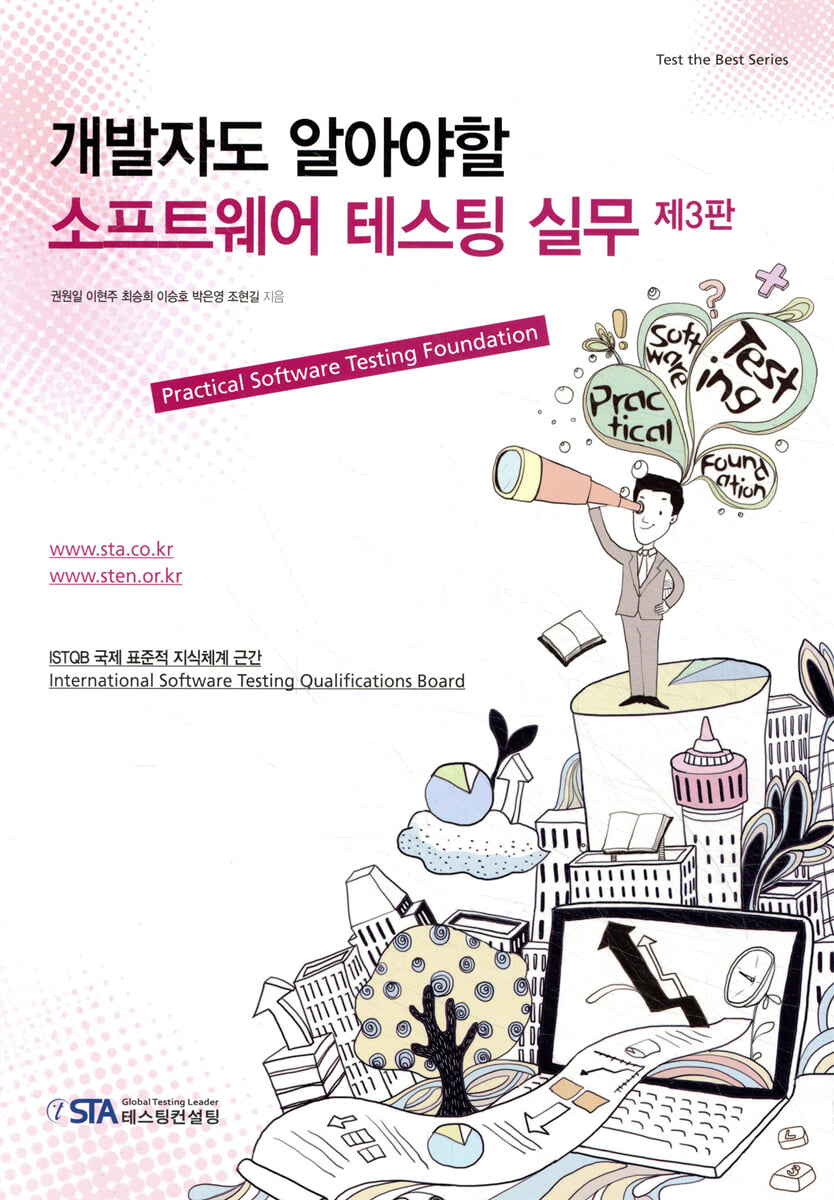
Software Testing Practices Developers Should Know
 |
Description
Book Introduction
The revised third edition reflects the latest content of the international software testing standard ISO/IEC29119.
Additionally, the test strategy and case derivation method have been revised through case studies to make them easier to apply in actual work.
Additionally, the test strategy and case derivation method have been revised through case studies to make them easier to apply in actual work.
- You can preview some of the book's contents.
Preview
index
Part 1.
Fundamentals of Software Testing
1.1 Why is software testing necessary?
1.1.1.
The Need for Testing from a Software Systems Perspective
1.1.2.
Causes of software defects
1.1.3.
The role of testing in software development, maintenance, and operation
1.1.4.
Testing and Quality
1.1.5.
Testing: How Much Is Enough?
1.2.
What is testing?
1.3.
General principles of testing
1.4.
Fundamentals of the Testing Process
1.4.1.
Test Planning and Control
1.4.2.
Test Analysis and Design
1.4.3.
Test implementation and execution
1.4.4.
Test completion criteria and reporting
1.4.5.
Test Closing Activities
1.5.
The Psychology of Testing
1.6.
Factors that limit software testing
1.7.
The allure of testing
1.8.
testing expert
Part 2.
Software Life Cycle and Testing
2.1.
Software development model
2.1.1.
V-model (sequential development model)
2.1.2.
Iterative-Incremental Development Model
2.1.3.
Testing in the Development Lifecycle Model
2.2.
Test level
2.2.1.
Component Testing
2.2.2.
Integration Testing
2.2.3.
System Testing
2.2.4.
Acceptance testing
2.3.
Test Type
2.3.1.
Functional testing
2.3.2.
Non-functional testing
2.3.3.
structural testing
2.3.4.
Verification (re)/regression testing
2.4.
Maintenance Testing
Part 3.
static technique
3.1.
Static techniques and testing processes
3.1.1.
Benefits and Purpose of Reviews
3.1.2.
Reviews and Testing
3.2.
Review Process
3.2.1.
Stages of formal review
3.2.2.
Roles and Responsibilities
3.2.3.
Types of reviews
3.2.4.
Success Factors of Reviews
3.3.
Static analysis by tools
Part 4.
Test design techniques
4.1.
Test Design and Implementation Process
4.2.
Types of test design techniques
4.3.
Basic design techniques
4.3.1.
Specification-based techniques
4.3.2.
Structure-based techniques
4.3.3.
Experience-based techniques
4.4.
Advanced design techniques
4.4.1.
Specification-based techniques
4.4.2.
Structure-based techniques
4.4.3.
Experience-based techniques
4.5.
Selection of testing techniques
4.6.
Testing based on software characteristics
Part 5.
Test Management
5.1.
Test organization
5.1.1.
Test organization and independence
5.1.2.
Duties of Test Leaders and Testers
5.2.
Test Planning and Estimation
5.2.1 Test Plan
5.2.2.
Test Planning Activities
5.2.3.
Completion conditions
5.2.4.
Test estimation
5.2.5.
Testing approach and strategy
5.3.
Monitoring and Control
5.3.1.
Monitoring test progress
5.3.2.
Test Reporting
5.3.3.
Test Control
5.3.4.
Test completed
5.4.
Configuration Management
5.5.
Risk and Testing
5.5.1.
Project Risk
5.5.2.
Product Risk
5.6.
Incident Management
5.7.
Test Process Evaluation
Part 6.
Test Support Tools
6.1.
Types of testing tools
6.1.1.
Classification of testing tools
6.1.2.
Test Management Support Tools
6.1.3.
Static testing support tools
6.1.4.
Test Design Support Tools
6.1.5.
Test execution and logging support tools
6.1.6.
Performance and Monitoring Tools
6.1.7.
Tools for specific application areas
6.1.8.
Tools other than testing tools
6.1.9.
Commercial and open source tools
6.2.
Effective Use of Tools: Potential Value and Risks
6.2.1.
Potential Benefits and Risks of Testing (Tool) Implementation
6.2.2.
Considerations by Tool Type
6.3.
Introduction and distribution of tools
6.3.1.
Tool selection and introduction
6.3.2.
Pilot project application
6.3.3.
Test Automation
6.3.4.
Distribution of tools
6.3.5.
Tool introduction procedure
6.4.
Results of tool introduction
Part 7.
Appendix
Attachment 1.
Control Flow Testing Techniques Application Case Studies
Attachment 2.
Using MC/DC in Black Box Testing
Attachment 3.
Test Case Review Checklist
Attachment 4.
Test Charter Form
Attachment 5.
Review Individual Preparation Form and Review Meeting Form
Attachment 6.
Test Plan Sample Document
Attachment 7.
Risk-Based Testing Strategy Case Study
Attachment 8.
Test Progress Management Document Template
Attachment 9.
Test Case Specification Format
Attachment 10.
Incident Report Form (Short Form)
Attachment 11.
Incident Report Form (Full)
Attachment 12.
Defect Management Ledger Form
Attachment 13.
Test Status Report Form
Attachment 14. ISTQB Sample Questions (Korean)
Attachment 15.
Test Management Automation Support Tool: TPMS
Fundamentals of Software Testing
1.1 Why is software testing necessary?
1.1.1.
The Need for Testing from a Software Systems Perspective
1.1.2.
Causes of software defects
1.1.3.
The role of testing in software development, maintenance, and operation
1.1.4.
Testing and Quality
1.1.5.
Testing: How Much Is Enough?
1.2.
What is testing?
1.3.
General principles of testing
1.4.
Fundamentals of the Testing Process
1.4.1.
Test Planning and Control
1.4.2.
Test Analysis and Design
1.4.3.
Test implementation and execution
1.4.4.
Test completion criteria and reporting
1.4.5.
Test Closing Activities
1.5.
The Psychology of Testing
1.6.
Factors that limit software testing
1.7.
The allure of testing
1.8.
testing expert
Part 2.
Software Life Cycle and Testing
2.1.
Software development model
2.1.1.
V-model (sequential development model)
2.1.2.
Iterative-Incremental Development Model
2.1.3.
Testing in the Development Lifecycle Model
2.2.
Test level
2.2.1.
Component Testing
2.2.2.
Integration Testing
2.2.3.
System Testing
2.2.4.
Acceptance testing
2.3.
Test Type
2.3.1.
Functional testing
2.3.2.
Non-functional testing
2.3.3.
structural testing
2.3.4.
Verification (re)/regression testing
2.4.
Maintenance Testing
Part 3.
static technique
3.1.
Static techniques and testing processes
3.1.1.
Benefits and Purpose of Reviews
3.1.2.
Reviews and Testing
3.2.
Review Process
3.2.1.
Stages of formal review
3.2.2.
Roles and Responsibilities
3.2.3.
Types of reviews
3.2.4.
Success Factors of Reviews
3.3.
Static analysis by tools
Part 4.
Test design techniques
4.1.
Test Design and Implementation Process
4.2.
Types of test design techniques
4.3.
Basic design techniques
4.3.1.
Specification-based techniques
4.3.2.
Structure-based techniques
4.3.3.
Experience-based techniques
4.4.
Advanced design techniques
4.4.1.
Specification-based techniques
4.4.2.
Structure-based techniques
4.4.3.
Experience-based techniques
4.5.
Selection of testing techniques
4.6.
Testing based on software characteristics
Part 5.
Test Management
5.1.
Test organization
5.1.1.
Test organization and independence
5.1.2.
Duties of Test Leaders and Testers
5.2.
Test Planning and Estimation
5.2.1 Test Plan
5.2.2.
Test Planning Activities
5.2.3.
Completion conditions
5.2.4.
Test estimation
5.2.5.
Testing approach and strategy
5.3.
Monitoring and Control
5.3.1.
Monitoring test progress
5.3.2.
Test Reporting
5.3.3.
Test Control
5.3.4.
Test completed
5.4.
Configuration Management
5.5.
Risk and Testing
5.5.1.
Project Risk
5.5.2.
Product Risk
5.6.
Incident Management
5.7.
Test Process Evaluation
Part 6.
Test Support Tools
6.1.
Types of testing tools
6.1.1.
Classification of testing tools
6.1.2.
Test Management Support Tools
6.1.3.
Static testing support tools
6.1.4.
Test Design Support Tools
6.1.5.
Test execution and logging support tools
6.1.6.
Performance and Monitoring Tools
6.1.7.
Tools for specific application areas
6.1.8.
Tools other than testing tools
6.1.9.
Commercial and open source tools
6.2.
Effective Use of Tools: Potential Value and Risks
6.2.1.
Potential Benefits and Risks of Testing (Tool) Implementation
6.2.2.
Considerations by Tool Type
6.3.
Introduction and distribution of tools
6.3.1.
Tool selection and introduction
6.3.2.
Pilot project application
6.3.3.
Test Automation
6.3.4.
Distribution of tools
6.3.5.
Tool introduction procedure
6.4.
Results of tool introduction
Part 7.
Appendix
Attachment 1.
Control Flow Testing Techniques Application Case Studies
Attachment 2.
Using MC/DC in Black Box Testing
Attachment 3.
Test Case Review Checklist
Attachment 4.
Test Charter Form
Attachment 5.
Review Individual Preparation Form and Review Meeting Form
Attachment 6.
Test Plan Sample Document
Attachment 7.
Risk-Based Testing Strategy Case Study
Attachment 8.
Test Progress Management Document Template
Attachment 9.
Test Case Specification Format
Attachment 10.
Incident Report Form (Short Form)
Attachment 11.
Incident Report Form (Full)
Attachment 12.
Defect Management Ledger Form
Attachment 13.
Test Status Report Form
Attachment 14. ISTQB Sample Questions (Korean)
Attachment 15.
Test Management Automation Support Tool: TPMS
Publisher's Review
“Software Testing Practices That Developers Should Know”, also known as “Dog Eggs”
It has finally been published in its third edition.
The third edition reflects the latest content of the international software testing standard ISO/IEC29119.
Additionally, the test strategy and case derivation method have been revised through case studies to make them easier to apply in actual work.
Why you must read the 3rd edition of Gaeal!
1.
Essential books for learning software testing on your own
2.
A book that reflects years of software testing experience and can be applied directly to real-world work.
3.
A must-read book to obtain the ISTQB, an international software testing certification.
4.
International Software Testing Standard (ISO/IEC29119) and ISTQB (International Software Testing Standard)
A book that systematically acquires knowledge about testing based on the Qualifications Board.
5.
A concrete method for strategically approaching testing and systematically deriving test cases.
Books focused on cases
6.
A book that test practitioners and developers should read and study repeatedly as they gain experience.
It has finally been published in its third edition.
The third edition reflects the latest content of the international software testing standard ISO/IEC29119.
Additionally, the test strategy and case derivation method have been revised through case studies to make them easier to apply in actual work.
Why you must read the 3rd edition of Gaeal!
1.
Essential books for learning software testing on your own
2.
A book that reflects years of software testing experience and can be applied directly to real-world work.
3.
A must-read book to obtain the ISTQB, an international software testing certification.
4.
International Software Testing Standard (ISO/IEC29119) and ISTQB (International Software Testing Standard)
A book that systematically acquires knowledge about testing based on the Qualifications Board.
5.
A concrete method for strategically approaching testing and systematically deriving test cases.
Books focused on cases
6.
A book that test practitioners and developers should read and study repeatedly as they gain experience.
GOODS SPECIFICS
- Date of issue: September 15, 2010
- Page count, weight, size: 355 pages | 898g | 188*254*30mm
- ISBN13: 9788994711003
- ISBN10: 8994711007
You may also like
카테고리
korean


korean

![GQ KOREA Mark (Monthly): December [2025]](http://librairie.coreenne.fr/cdn/shop/files/8ef265dbbfbf186523ed75ba7319009d.jpg?v=1765340328&width=3840)


