

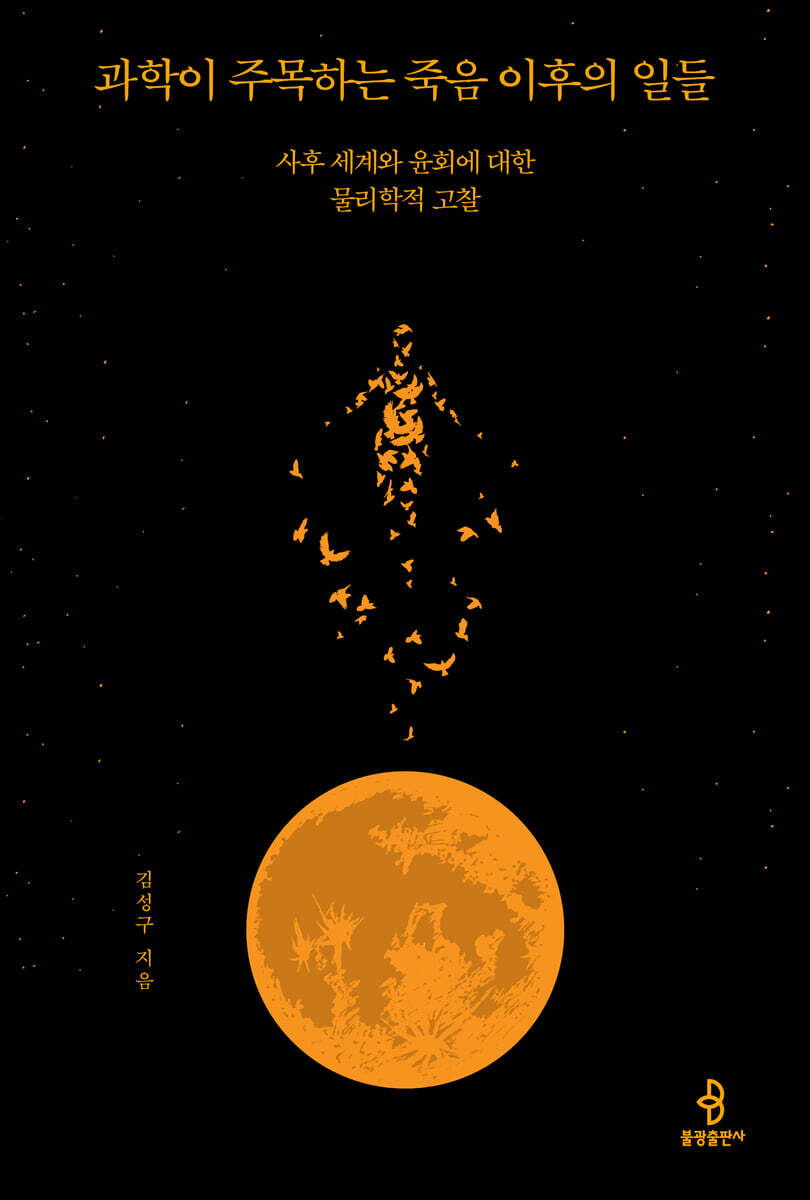
What happens after death that science is paying attention to
 |
Description
Book Introduction
What happens when I die?
A Physical Examination of the Afterlife and Reincarnation!
If you know that death is not the end but the beginning of the next life
You will choose a noble life, not a life of momentary desire!
What happens when I die? Does reincarnation really exist? Are stories about the afterlife just fantasy or fiction? Death and reincarnation have long fascinated humanity.
In modern times, this topic has been dealt with around the concept of 'Near Death Experience', and many interesting scientific research results have been obtained.
Science has begun to focus on what happens after death, which had been primarily discussed in the realms of religion and philosophy.
The mainstream modern academic position on death and reincarnation is based on a materialistic view of life and death.
The view is that there is no life after death, because consciousness disappears when the body ceases activity.
Modern people who have been educated in this way may want to dismiss near-death experiences and reincarnation as mere delusions.
However, objectively verified experiences of near-death experiencers and past-life memory holders demonstrate the possibility of an afterlife and reincarnation.
Could it be that ignoring the truth right before our eyes is actually unscientific and irrational? And if we cling to such an attitude, won't we miss the profound lessons death offers us?
??What happens after death that science is paying attention to?? starts from this very question.
This book introduces various cases collected to date regarding near-death experiences and reincarnation, and examines the fierce debate surrounding the interpretation of these cases from a scientific perspective.
After such reflections, physicist and author Professor Kim Seong-gu acknowledges the possibility that the afterlife and reincarnation are true.
The author also emphasizes that modern physics' understanding of existence and the world has some overlap with the Buddhist concept of reincarnation without self.
Through these connections, readers will be able to shed new light on the meaning of death and reincarnation through the two languages of science and Buddhism.
A Physical Examination of the Afterlife and Reincarnation!
If you know that death is not the end but the beginning of the next life
You will choose a noble life, not a life of momentary desire!
What happens when I die? Does reincarnation really exist? Are stories about the afterlife just fantasy or fiction? Death and reincarnation have long fascinated humanity.
In modern times, this topic has been dealt with around the concept of 'Near Death Experience', and many interesting scientific research results have been obtained.
Science has begun to focus on what happens after death, which had been primarily discussed in the realms of religion and philosophy.
The mainstream modern academic position on death and reincarnation is based on a materialistic view of life and death.
The view is that there is no life after death, because consciousness disappears when the body ceases activity.
Modern people who have been educated in this way may want to dismiss near-death experiences and reincarnation as mere delusions.
However, objectively verified experiences of near-death experiencers and past-life memory holders demonstrate the possibility of an afterlife and reincarnation.
Could it be that ignoring the truth right before our eyes is actually unscientific and irrational? And if we cling to such an attitude, won't we miss the profound lessons death offers us?
??What happens after death that science is paying attention to?? starts from this very question.
This book introduces various cases collected to date regarding near-death experiences and reincarnation, and examines the fierce debate surrounding the interpretation of these cases from a scientific perspective.
After such reflections, physicist and author Professor Kim Seong-gu acknowledges the possibility that the afterlife and reincarnation are true.
The author also emphasizes that modern physics' understanding of existence and the world has some overlap with the Buddhist concept of reincarnation without self.
Through these connections, readers will be able to shed new light on the meaning of death and reincarnation through the two languages of science and Buddhism.
index
Preface _ 4
Part 1: On Near-Death Experiences
Lecture 1: What is Death? _ 13
Lecture 2: The History and Special Nature of Near-Death Experience Research _ 29
Lecture 3: Pam Reynolds' Near-Death Experience _ 47
Lecture 4: Elisabeth Kübler-Ross's Study of Near-Death Experiences _ 61
Lecture 5: Pim van Rommel's Near-Death Experience Study _ 73
Lecture 6: Psychological Factors and Awakening During Anesthesia _ 87
Lecture 7: Brain Function and Oxygen Deficiency _ 99
The spirit of the quarterfinals is not the brain _ 113
Part 2: Hypnotic Regression and Reincarnation
Lecture 9: The Historical Background of the Idea of Reincarnation _ 125
10th Psychic _ 143
Lecture 11 Canon Report _ 157
Episode 12: Finding Bride Murphy _ 169
Lesson 13: Blocksham Tape _ 181
Lesson 14: Edgar Cayce's Physical and Life Readings _ 189
Lecture 15: About Ian Stevenson _ 207
Case of Reincarnation in the 16th Round _ 217
Lecture 17: Alternative Explanations for Past Life Cases _ 227
Lecture 18: The Debate on Ian Stevenson's Research Attitude _ 239
Lesson 19: Rational Judgment on the Concept of Past Life _ 249
Part 3: The Anatta of Buddhism
Lesson 20: The Foundation of Faith _ 261
Lecture 21: Existence-Centered and Event-Centered Worldviews _ 275
Lecture 22: Reincarnation: The Foundation of Buddhist Ethics _ 291
Lesson 23: Karma and Reincarnation _ 305
Lesson 24: The Ship of Theseus _ 319
Lecture 25: The Middle Way, Reincarnation, and the True Truth of Suffering _ 341
Lesson 26: The Effects of Establishing the Idea of Reincarnation _ 355
References _ 370
Search _ 375
Part 1: On Near-Death Experiences
Lecture 1: What is Death? _ 13
Lecture 2: The History and Special Nature of Near-Death Experience Research _ 29
Lecture 3: Pam Reynolds' Near-Death Experience _ 47
Lecture 4: Elisabeth Kübler-Ross's Study of Near-Death Experiences _ 61
Lecture 5: Pim van Rommel's Near-Death Experience Study _ 73
Lecture 6: Psychological Factors and Awakening During Anesthesia _ 87
Lecture 7: Brain Function and Oxygen Deficiency _ 99
The spirit of the quarterfinals is not the brain _ 113
Part 2: Hypnotic Regression and Reincarnation
Lecture 9: The Historical Background of the Idea of Reincarnation _ 125
10th Psychic _ 143
Lecture 11 Canon Report _ 157
Episode 12: Finding Bride Murphy _ 169
Lesson 13: Blocksham Tape _ 181
Lesson 14: Edgar Cayce's Physical and Life Readings _ 189
Lecture 15: About Ian Stevenson _ 207
Case of Reincarnation in the 16th Round _ 217
Lecture 17: Alternative Explanations for Past Life Cases _ 227
Lecture 18: The Debate on Ian Stevenson's Research Attitude _ 239
Lesson 19: Rational Judgment on the Concept of Past Life _ 249
Part 3: The Anatta of Buddhism
Lesson 20: The Foundation of Faith _ 261
Lecture 21: Existence-Centered and Event-Centered Worldviews _ 275
Lecture 22: Reincarnation: The Foundation of Buddhist Ethics _ 291
Lesson 23: Karma and Reincarnation _ 305
Lesson 24: The Ship of Theseus _ 319
Lecture 25: The Middle Way, Reincarnation, and the True Truth of Suffering _ 341
Lesson 26: The Effects of Establishing the Idea of Reincarnation _ 355
References _ 370
Search _ 375
Into the book
If there is an afterlife, our attitude towards life will change greatly.
If it is a universal law that I will eventually reap what I sow, and if we realize that fact, everyone will strive to live righteously.
This book presents the arguments of two groups of experts with opposing views on near-death experiences and reincarnation, allowing the general reader to decide for themselves which of these two claims is more valid.
--- p.6~7
Near-death experiences are experiences that people who were medically declared dead but then survived say they had just before death.
In many cases, near-death experiencers claim to have experienced the afterlife.
Near-death experiences themselves are a problem that everyone acknowledges.
The experiencer cannot deny what he or she experienced.
The crux of the problem is how to explain the out-of-body experience (OBE) or the afterlife that the experiencer claims to have experienced.
If it is proven that a near-death experiencer can discover some secret information that ordinary people cannot know through out-of-body experience, this one case will prove that human consciousness operates outside the brain.
And if what people who claim to remember past lives say is scientifically proven to be accurate, then 'life after death' will be proven to be true.
--- p.19
Scientists who support a non-materialist view of life and death see the current debate over life and death in brain and neuroscience as being in a similar situation to the birth of quantum mechanics.
The idea that life continues after death seems impossible from the perspective of human perception, like a quantum phenomenon.
However, these people believe that we should stick to scientific data rather than the scientific belief that 'brain state = mind'.
The 'scientific data' referred to here is the testimony of people who have had near-death experiences or who remember past lives.
Scientists who support a non-materialistic view of life and death believe that although the cases of near-death experiences already reported in the academic world sufficiently support the existence of an afterlife, those who cannot escape the scientific belief that 'brain state = mind' are unable to acknowledge the existence of an afterlife.
--- p.22~23
Because near-death experiences are subjective experiences, there is no way to objectively confirm the content of the experience; it can only be known through the patient's statement.
When people think of near-death experiences, they think of pseudoscience or superstition because of the afterlife and out-of-body experiences, but near-death experiences themselves are a phenomenon that the scientific community cannot help but acknowledge and accept.
--- p.35
In a 2019 interview, Dr. Rommel said the commonly held medical definition of consciousness needs to be reexamined.
All the patients he reviewed were conscious, emotionally alert, cognitively sharp and had vivid memories even when their brains were not functioning.
Dr. Rommel said that he thought consciousness was not confined to the brain.
--- p.83
Dr. Cannon also initially denied the soul and reincarnation from a scientific standpoint.
However, when we tried to induce age regression using hypnosis, we unexpectedly found that people often experienced past lives.
Canon then investigated what the test subjects had to say to the best of his ability.
As a result, Dr. Cannon concluded that although he did not know the details of their personal history, the historical facts they recounted were all correct in the grand scheme of things.
--- p.164
From a physical perspective, the things of the world ultimately refer to existence and events.
There are two perspectives on understanding this world of beings and events.
One is a worldview that believes that the basis of things is existence, and that this existence causes events.
This can be called an ontological worldview, and the classical mechanical worldview corresponds to this.
Another is the worldview that, as explained above, sees events as the basis of things and that these events create existence.
This can be called an event-centered worldview, which is the worldview of quantum mechanics and the theory of relativity.
--- p.283
If everything is a process, there can be no substance, only a 'flow of events' according to the changing relationships between things.
If so, then the birth and death of existence cannot have existed from the beginning.
There is only one process, a causally connected change.
Even tin cans and stones are ultimately just a process of slow change.
--- p.286
If we accept reincarnation, the ‘flow of events’ called ‘life’ does not end with the ‘event’ called ‘death.’
The whole of 'life and death' is one process that repeats endlessly.
There is no identity in this process, but there is continuity.
When we apply the fact that 'there is no identity but continuity' to a finite time, it becomes 'anatta', and when we apply it to the entire process of 'life and death' repetition, it becomes 'anatta reincarnation'.
--- p.288
Even as the horizons of science expand, if we fail to realize that mind and matter are one, things will still appear the same as they did before the horizons of science expanded.
This is an example of how we feel about the Earth being flat even though we know it is round.
But even if the world seems the same, if we realize that there is an endless world beyond our Umwelt, our attitude toward life will change.
If it is a universal law that I will eventually reap what I sow, and if we realize that fact, everyone will strive to live righteously.
This book presents the arguments of two groups of experts with opposing views on near-death experiences and reincarnation, allowing the general reader to decide for themselves which of these two claims is more valid.
--- p.6~7
Near-death experiences are experiences that people who were medically declared dead but then survived say they had just before death.
In many cases, near-death experiencers claim to have experienced the afterlife.
Near-death experiences themselves are a problem that everyone acknowledges.
The experiencer cannot deny what he or she experienced.
The crux of the problem is how to explain the out-of-body experience (OBE) or the afterlife that the experiencer claims to have experienced.
If it is proven that a near-death experiencer can discover some secret information that ordinary people cannot know through out-of-body experience, this one case will prove that human consciousness operates outside the brain.
And if what people who claim to remember past lives say is scientifically proven to be accurate, then 'life after death' will be proven to be true.
--- p.19
Scientists who support a non-materialist view of life and death see the current debate over life and death in brain and neuroscience as being in a similar situation to the birth of quantum mechanics.
The idea that life continues after death seems impossible from the perspective of human perception, like a quantum phenomenon.
However, these people believe that we should stick to scientific data rather than the scientific belief that 'brain state = mind'.
The 'scientific data' referred to here is the testimony of people who have had near-death experiences or who remember past lives.
Scientists who support a non-materialistic view of life and death believe that although the cases of near-death experiences already reported in the academic world sufficiently support the existence of an afterlife, those who cannot escape the scientific belief that 'brain state = mind' are unable to acknowledge the existence of an afterlife.
--- p.22~23
Because near-death experiences are subjective experiences, there is no way to objectively confirm the content of the experience; it can only be known through the patient's statement.
When people think of near-death experiences, they think of pseudoscience or superstition because of the afterlife and out-of-body experiences, but near-death experiences themselves are a phenomenon that the scientific community cannot help but acknowledge and accept.
--- p.35
In a 2019 interview, Dr. Rommel said the commonly held medical definition of consciousness needs to be reexamined.
All the patients he reviewed were conscious, emotionally alert, cognitively sharp and had vivid memories even when their brains were not functioning.
Dr. Rommel said that he thought consciousness was not confined to the brain.
--- p.83
Dr. Cannon also initially denied the soul and reincarnation from a scientific standpoint.
However, when we tried to induce age regression using hypnosis, we unexpectedly found that people often experienced past lives.
Canon then investigated what the test subjects had to say to the best of his ability.
As a result, Dr. Cannon concluded that although he did not know the details of their personal history, the historical facts they recounted were all correct in the grand scheme of things.
--- p.164
From a physical perspective, the things of the world ultimately refer to existence and events.
There are two perspectives on understanding this world of beings and events.
One is a worldview that believes that the basis of things is existence, and that this existence causes events.
This can be called an ontological worldview, and the classical mechanical worldview corresponds to this.
Another is the worldview that, as explained above, sees events as the basis of things and that these events create existence.
This can be called an event-centered worldview, which is the worldview of quantum mechanics and the theory of relativity.
--- p.283
If everything is a process, there can be no substance, only a 'flow of events' according to the changing relationships between things.
If so, then the birth and death of existence cannot have existed from the beginning.
There is only one process, a causally connected change.
Even tin cans and stones are ultimately just a process of slow change.
--- p.286
If we accept reincarnation, the ‘flow of events’ called ‘life’ does not end with the ‘event’ called ‘death.’
The whole of 'life and death' is one process that repeats endlessly.
There is no identity in this process, but there is continuity.
When we apply the fact that 'there is no identity but continuity' to a finite time, it becomes 'anatta', and when we apply it to the entire process of 'life and death' repetition, it becomes 'anatta reincarnation'.
--- p.288
Even as the horizons of science expand, if we fail to realize that mind and matter are one, things will still appear the same as they did before the horizons of science expanded.
This is an example of how we feel about the Earth being flat even though we know it is round.
But even if the world seems the same, if we realize that there is an endless world beyond our Umwelt, our attitude toward life will change.
--- p.367
Publisher's Review
The afterlife and reincarnation, which were interpreted only in the language of religion and philosophy,
Science responds, starting with near-death experience research!
Death is the mystery that mankind has feared and explored for the longest time.
Questions about death have been repeated countless times in religion, literature, and art, and in modern times, science is also approaching them.
Death began to be studied scientifically in 1969 when American psychiatrist Dr. Elisabeth Kübler-Ross published her book, Death and Dying.
When Dr. Raymond Moody, also a psychiatrist, proposed the concept of the 'near-death experience' in 1975, the subject was no longer a mystery or superstition, but a subject studied in the language of medicine and science.
Controversies surrounding the afterlife and reincarnation:
Let's look at it with an open mind vs. It can never happen!
The cases reported by Dr. Kubler-Ross regarding near-death experiences are widely known, and the cases related to reincarnation are those discussed by Edgar Cayce during his life readings.
Numerous other anecdotes have been reported, but opinions differ as to whether they can truly serve as evidence of the truth.
While some approach it cautiously, leaving open the possibility of an afterlife and reincarnation, others actively deny them through alternative theories.
The key issue is whether these cases can be considered scientifically verifiable 'objective evidence'.
I neither believe it unconditionally nor deny it unconditionally!
Approaching the afterlife and the possibility of reincarnation with a scientific attitude called "benevolent skepticism."
Physicist and author Professor Kim Seong-gu analyzes various cases of near-death experiences and reincarnation, and broadly examines the scientific and medical debate surrounding them.
The author points out that many propositions we consider 'scientific truths', such as the claim that 'consciousness exists only when the brain is functioning', may no longer be true.
And I worry that the attitude of denying new phenomena based solely on existing theories while ignoring objective cases proving near-death experiences or reincarnation may be closer to 'modern superstition.'
At the same time, the author says that accepting phenomena without clear verification can also lead to 'ancient superstitions.'
And, while cautioning against both extremes, he emphasizes that having a 'benevolent skepticism' is an attitude necessary for scientific inquiry.
'Benevolent skepticism' is an attitude of thoroughly examining the unfamiliar, but openly acknowledging its possibility.
The author takes a position of 'benevolent skepticism' and scientifically examines near-death experiences and reincarnation, and based on the results, argues that the afterlife and reincarnation may be true.
The understanding of the self that exists in the flow of events, that is, the non-self
It is in contact with the 'I' in quantum mechanics.
If near-death experiences and reincarnation are true, then what exactly is the "I" who is the subject of these experiences? The author examines this question through the lens of the Buddhist concept of anatta and the worldview of quantum mechanics.
Buddhism denies the idea of a 'self as a fixed entity', but recognizes the idea of a 'self as continuity' that is connected by a causal flow.
And the 'I' that reincarnates also speaks of the 'I' as continuity, not the 'I' as identity.
This view is also in line with the worldview of quantum mechanics.
While classical mechanics supported an 'existence-centered' worldview, quantum mechanics supports an 'event-centered' worldview, believing that existence is composed of events.
That is, from the perspective of quantum mechanics, 'I' is not a noun entity, but a set of verbal events connected causally.
The 'I' explained by quantum mechanics is similar to an electron, which is both a particle and a wave, and therefore can be explained by the principle of complementarity and the principle of duality.
In this way, the author noted that the Buddhist 'anatta' is connected to the 'I' in quantum mechanics.
If you accept the principle of non-self and reincarnation,
We live a more noble life
From a Buddhist perspective, this 'I' becomes the 'I' of the middle way that transcends permanence and annihilation.
It is the ‘I’ that reincarnates as emptiness, neither being nor nothingness.
This journey is a cycle of birth and death until the moment of liberation, and one cannot avoid the consequences of all the karma one has created.
Therefore, accepting reincarnation means going beyond the simple cycle of life and becoming ethically aware of taking responsibility for one's entire life.
Awakening to the cycle of reincarnation will be a crucial turning point in changing your attitude toward life and acquiring character.
Ethics established on the basis of universal laws can be said to be absolute and complete ethics.
And by faithfully following such ethics, we will be able to live meaningful and happy lives.
- In the text
Author's Note
The purpose of this book is to elucidate the meaning of life and death by scientifically examining the issues of near-death experiences and reincarnation, and to discuss the cosmic order that humans must follow to live happily.
Regarding this purpose, many people will question the point of scientifically clarifying the meaning of life and death, saying that religion and science have different purposes and domains, and that it is clear even without scientifically clarifying the meaning of life and death.
Although religion and science generally seem to have different domains and purposes, there are some areas where their interests are the same.
What the universe and the Self are is a common concern of religion, philosophy, and science.
If religion and science differ in this common interest, it is in their different methods of finding truth.
- p.4-5.
Science responds, starting with near-death experience research!
Death is the mystery that mankind has feared and explored for the longest time.
Questions about death have been repeated countless times in religion, literature, and art, and in modern times, science is also approaching them.
Death began to be studied scientifically in 1969 when American psychiatrist Dr. Elisabeth Kübler-Ross published her book, Death and Dying.
When Dr. Raymond Moody, also a psychiatrist, proposed the concept of the 'near-death experience' in 1975, the subject was no longer a mystery or superstition, but a subject studied in the language of medicine and science.
Controversies surrounding the afterlife and reincarnation:
Let's look at it with an open mind vs. It can never happen!
The cases reported by Dr. Kubler-Ross regarding near-death experiences are widely known, and the cases related to reincarnation are those discussed by Edgar Cayce during his life readings.
Numerous other anecdotes have been reported, but opinions differ as to whether they can truly serve as evidence of the truth.
While some approach it cautiously, leaving open the possibility of an afterlife and reincarnation, others actively deny them through alternative theories.
The key issue is whether these cases can be considered scientifically verifiable 'objective evidence'.
I neither believe it unconditionally nor deny it unconditionally!
Approaching the afterlife and the possibility of reincarnation with a scientific attitude called "benevolent skepticism."
Physicist and author Professor Kim Seong-gu analyzes various cases of near-death experiences and reincarnation, and broadly examines the scientific and medical debate surrounding them.
The author points out that many propositions we consider 'scientific truths', such as the claim that 'consciousness exists only when the brain is functioning', may no longer be true.
And I worry that the attitude of denying new phenomena based solely on existing theories while ignoring objective cases proving near-death experiences or reincarnation may be closer to 'modern superstition.'
At the same time, the author says that accepting phenomena without clear verification can also lead to 'ancient superstitions.'
And, while cautioning against both extremes, he emphasizes that having a 'benevolent skepticism' is an attitude necessary for scientific inquiry.
'Benevolent skepticism' is an attitude of thoroughly examining the unfamiliar, but openly acknowledging its possibility.
The author takes a position of 'benevolent skepticism' and scientifically examines near-death experiences and reincarnation, and based on the results, argues that the afterlife and reincarnation may be true.
The understanding of the self that exists in the flow of events, that is, the non-self
It is in contact with the 'I' in quantum mechanics.
If near-death experiences and reincarnation are true, then what exactly is the "I" who is the subject of these experiences? The author examines this question through the lens of the Buddhist concept of anatta and the worldview of quantum mechanics.
Buddhism denies the idea of a 'self as a fixed entity', but recognizes the idea of a 'self as continuity' that is connected by a causal flow.
And the 'I' that reincarnates also speaks of the 'I' as continuity, not the 'I' as identity.
This view is also in line with the worldview of quantum mechanics.
While classical mechanics supported an 'existence-centered' worldview, quantum mechanics supports an 'event-centered' worldview, believing that existence is composed of events.
That is, from the perspective of quantum mechanics, 'I' is not a noun entity, but a set of verbal events connected causally.
The 'I' explained by quantum mechanics is similar to an electron, which is both a particle and a wave, and therefore can be explained by the principle of complementarity and the principle of duality.
In this way, the author noted that the Buddhist 'anatta' is connected to the 'I' in quantum mechanics.
If you accept the principle of non-self and reincarnation,
We live a more noble life
From a Buddhist perspective, this 'I' becomes the 'I' of the middle way that transcends permanence and annihilation.
It is the ‘I’ that reincarnates as emptiness, neither being nor nothingness.
This journey is a cycle of birth and death until the moment of liberation, and one cannot avoid the consequences of all the karma one has created.
Therefore, accepting reincarnation means going beyond the simple cycle of life and becoming ethically aware of taking responsibility for one's entire life.
Awakening to the cycle of reincarnation will be a crucial turning point in changing your attitude toward life and acquiring character.
Ethics established on the basis of universal laws can be said to be absolute and complete ethics.
And by faithfully following such ethics, we will be able to live meaningful and happy lives.
- In the text
Author's Note
The purpose of this book is to elucidate the meaning of life and death by scientifically examining the issues of near-death experiences and reincarnation, and to discuss the cosmic order that humans must follow to live happily.
Regarding this purpose, many people will question the point of scientifically clarifying the meaning of life and death, saying that religion and science have different purposes and domains, and that it is clear even without scientifically clarifying the meaning of life and death.
Although religion and science generally seem to have different domains and purposes, there are some areas where their interests are the same.
What the universe and the Self are is a common concern of religion, philosophy, and science.
If religion and science differ in this common interest, it is in their different methods of finding truth.
- p.4-5.
GOODS SPECIFICS
- Date of issue: August 8, 2025
- Page count, weight, size: 384 pages | 562g | 153*225*19mm
- ISBN13: 9791172611866
- ISBN10: 1172611866
You may also like
카테고리
korean


korean

![GQ KOREA Mark (Monthly): December [2025]](http://librairie.coreenne.fr/cdn/shop/files/8ef265dbbfbf186523ed75ba7319009d.jpg?v=1765340328&width=3840)


