

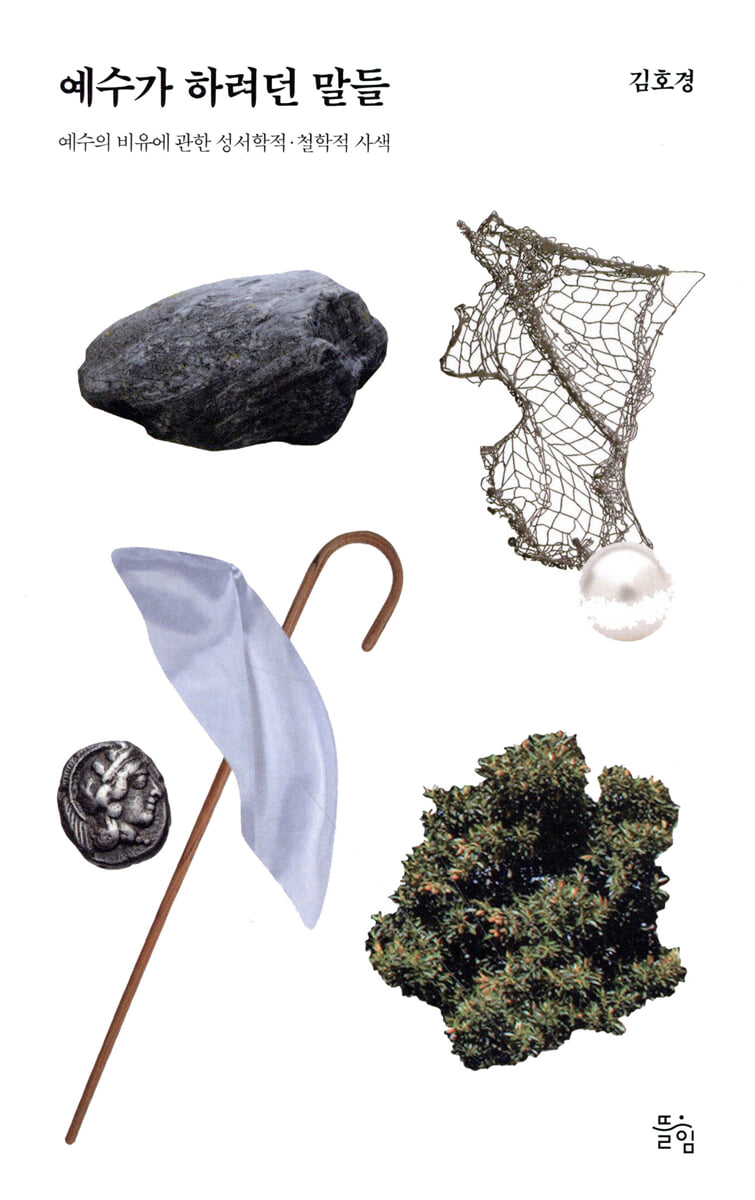
What Jesus Was Trying to Say
 |
Description
Book Introduction
“The radical meaning contained in Jesus’ parables “I don’t think it could be expressed any better than this.” ― Recommended by Kim Ki-seok (Senior Pastor, Cheongpa Church) and Kim Jeong-hyeong (Professor of Religious Philosophy, Yonsei University United Graduate School of Theology) Why can't I be surprised by a story that would have shocked people in Jesus' time? This was the first step toward my interest in parables. In listening to countless parable sermons, I am rarely surprised. Interpretations of the parable seemed to be simply eager to sweep away capitalist hopes. The parable only served to pat our greed. It was hard to believe that Jesus would tell such a story. I wanted to go back to Jesus and hear his story again. I wanted to understand the people who were surprised when they heard Jesus' parables. I wanted to be surprised like them, to worry like them, and to hope for the kingdom of God. |
- You can preview some of the book's contents.
Preview
index
Prologue | The Amazing Man, Jesus
1.
Eyes open
2.
Get a foothold
3.
Act as the subject
4.
Ask questions and ponder
5.
Break free from prejudice
6.
Think about it the other way around
7.
Be with different things
8.
Crossing the boundaries
9.
Become you
10.
Expand the gap
11.
escape from violence
12.
rejoice together
13.
Live as you think
14.
Dream a new dream
15.
Make friends
16.
Hug me
17.
Accept death
18.
Choose happiness
19.
Take responsibility
1.
Eyes open
2.
Get a foothold
3.
Act as the subject
4.
Ask questions and ponder
5.
Break free from prejudice
6.
Think about it the other way around
7.
Be with different things
8.
Crossing the boundaries
9.
Become you
10.
Expand the gap
11.
escape from violence
12.
rejoice together
13.
Live as you think
14.
Dream a new dream
15.
Make friends
16.
Hug me
17.
Accept death
18.
Choose happiness
19.
Take responsibility
Detailed image

Into the book
A metaphor is a way of talking about something A, which is not well known or needs a clearer explanation, by comparing it to something B, which is very common and familiar.
Jesus had to use something as an analogy to show Israel the kingdom of God, which they had not experienced.
But you can't compare what you don't see to what you don't know.
It cannot take a single step in the dark.
Jesus explains what they cannot see by comparing it to a story they know best and are very familiar with.
Jesus concretizes the intangible concept of the kingdom of God by comparing it to the everyday lives of people.
---From "Prologue | The Amazing Man, Jesus"
Considering how large a mustard seed can become, this expression is a baffling exaggeration for Palestinians.
In Israel, the word mustard is commonly used.
Because a fully grown mustard seed does not grow into a large and magnificent tree as one might expect.
It is generally said to have a similar shape to our country's rapeseed flowers.
A mustard seed does not grow into a dense pine or cedar tree.
So what is the true meaning of this exaggeration? This metaphor overturns common understanding.
Because it is compared to a large tree where birds of the air can nest, when it could simply be called mustard grass.
---From "Thinking Backwards"
Epoch makes us take a close look at what we have believed to be right, the rights and power we have enjoyed because of it, and the pain and injustice we have inevitably suffered.
Suspending judgment on things we took for granted and followed without question is the first step toward approaching something new.
Need we further emphasize the need for a pause in judgment in the face of the imminent Kingdom of God? The Kingdom of God calls into question the rule of kings we have taken for granted.
It raises the question, “Is that right, should it have been done that way?”
---From "Eyes Open"
Engagement is the fundamental attitude for living truthfully and is the answer to the question, "How should I live?"
Engagement calls on people who are struggling with the direction and shape of their lives to take responsibility for their actions and the world around them.
Because I and the world cannot be separated.
The external reality surrounding me is a part of me, and I am also a part of the external reality.
This is why I have a responsibility to the world.
As we live, we protect ourselves and create the world through ourselves.
---From "Acting as the Subject"
The host's feast, filled with people gathered from the streets and alleys, main roads and fences of the city, is a truly exciting experience.
Imagine a diverse group of people, people you never expected to see together, all gathered together at the same banquet! It's reminiscent of the philosopher Deleuze's "And... And... And..."
The system that Deleuze proposes as an alternative to the arboreal order is the rhizome.
Rhizome means underground stem, i.e. bulb or tuber.
On the other hand, the tree-like system has a hierarchy of roots, branches, and leaves, which is a centralized system that emphasizes hierarchical order.
---From "Crossing the Boundaries"
Prayer is not to be continued until one's wish is granted, but until the unjust judge disappears from the city.
Also, it is prayer that we cry out together until no more widows are left in that city.
The widow's persistent demand for justice, despite her wish being granted, completely exceeds the judge's intentions and expectations.
The widow's constant cries will send the judge into a terrible anthill.
It's exhilarating just to imagine! So, in fact, prayer is a nonsensical act.
Because it is the powerless people fighting against the power that will not change, it is like throwing eggs at a rock.
---From "Escape from Violence"
What the person who refuses to wear formal attire is trying to protect by refusing to wear formal attire is the value that has protected him up to now.
He was treated with fancy clothes and high status, and maintained his identity by distinguishing himself from others.
What was so wrong with refusing the formal attire? He was simply carrying out what he believed was right.
He simply lived in a society that considered luxury clothes and high status to be good.
At the sudden banquet, he found no reason to abandon what he had treasured and protected.
The problem, however, is that the king who hosted the banquet no longer accepted the values that he had previously taken for granted.
Having already destroyed those who had rejected him, the king now decided to redecorate his feast.
The king's direction changed.
Jesus had to use something as an analogy to show Israel the kingdom of God, which they had not experienced.
But you can't compare what you don't see to what you don't know.
It cannot take a single step in the dark.
Jesus explains what they cannot see by comparing it to a story they know best and are very familiar with.
Jesus concretizes the intangible concept of the kingdom of God by comparing it to the everyday lives of people.
---From "Prologue | The Amazing Man, Jesus"
Considering how large a mustard seed can become, this expression is a baffling exaggeration for Palestinians.
In Israel, the word mustard is commonly used.
Because a fully grown mustard seed does not grow into a large and magnificent tree as one might expect.
It is generally said to have a similar shape to our country's rapeseed flowers.
A mustard seed does not grow into a dense pine or cedar tree.
So what is the true meaning of this exaggeration? This metaphor overturns common understanding.
Because it is compared to a large tree where birds of the air can nest, when it could simply be called mustard grass.
---From "Thinking Backwards"
Epoch makes us take a close look at what we have believed to be right, the rights and power we have enjoyed because of it, and the pain and injustice we have inevitably suffered.
Suspending judgment on things we took for granted and followed without question is the first step toward approaching something new.
Need we further emphasize the need for a pause in judgment in the face of the imminent Kingdom of God? The Kingdom of God calls into question the rule of kings we have taken for granted.
It raises the question, “Is that right, should it have been done that way?”
---From "Eyes Open"
Engagement is the fundamental attitude for living truthfully and is the answer to the question, "How should I live?"
Engagement calls on people who are struggling with the direction and shape of their lives to take responsibility for their actions and the world around them.
Because I and the world cannot be separated.
The external reality surrounding me is a part of me, and I am also a part of the external reality.
This is why I have a responsibility to the world.
As we live, we protect ourselves and create the world through ourselves.
---From "Acting as the Subject"
The host's feast, filled with people gathered from the streets and alleys, main roads and fences of the city, is a truly exciting experience.
Imagine a diverse group of people, people you never expected to see together, all gathered together at the same banquet! It's reminiscent of the philosopher Deleuze's "And... And... And..."
The system that Deleuze proposes as an alternative to the arboreal order is the rhizome.
Rhizome means underground stem, i.e. bulb or tuber.
On the other hand, the tree-like system has a hierarchy of roots, branches, and leaves, which is a centralized system that emphasizes hierarchical order.
---From "Crossing the Boundaries"
Prayer is not to be continued until one's wish is granted, but until the unjust judge disappears from the city.
Also, it is prayer that we cry out together until no more widows are left in that city.
The widow's persistent demand for justice, despite her wish being granted, completely exceeds the judge's intentions and expectations.
The widow's constant cries will send the judge into a terrible anthill.
It's exhilarating just to imagine! So, in fact, prayer is a nonsensical act.
Because it is the powerless people fighting against the power that will not change, it is like throwing eggs at a rock.
---From "Escape from Violence"
What the person who refuses to wear formal attire is trying to protect by refusing to wear formal attire is the value that has protected him up to now.
He was treated with fancy clothes and high status, and maintained his identity by distinguishing himself from others.
What was so wrong with refusing the formal attire? He was simply carrying out what he believed was right.
He simply lived in a society that considered luxury clothes and high status to be good.
At the sudden banquet, he found no reason to abandon what he had treasured and protected.
The problem, however, is that the king who hosted the banquet no longer accepted the values that he had previously taken for granted.
Having already destroyed those who had rejected him, the king now decided to redecorate his feast.
The king's direction changed.
---From "Rejoice Together"
Publisher's Review
characteristic
- Biblically reconstructs the original meaning of Jesus' parables, which modern people misinterpret.
- Understand the implications of biblical texts using easily understandable concepts of modern philosophy.
- This is a theological book written in essay format so that it can be read in short breaths.
Target audience
- All Christians who are interested in the parables of Jesus
- A non-religious person who wants to know about Jesus who walked the land of Palestine 2000 years ago.
- A theology student interested in biblical studies and philosophy
- Biblically reconstructs the original meaning of Jesus' parables, which modern people misinterpret.
- Understand the implications of biblical texts using easily understandable concepts of modern philosophy.
- This is a theological book written in essay format so that it can be read in short breaths.
Target audience
- All Christians who are interested in the parables of Jesus
- A non-religious person who wants to know about Jesus who walked the land of Palestine 2000 years ago.
- A theology student interested in biblical studies and philosophy
GOODS SPECIFICS
- Publication date: September 20, 2022
- Page count, weight, size: 216 pages | 234g | 120*190*14mm
- ISBN13: 9791197924309
- ISBN10: 1197924302
You may also like
카테고리
korean


korean

![GQ KOREA Mark (Monthly): December [2025]](http://librairie.coreenne.fr/cdn/shop/files/8ef265dbbfbf186523ed75ba7319009d.jpg?v=1765340328&width=3840)


